
You should budget about $300–$600 (£240–£480) a year for a DIY-maintained medium backyard pond, with professional cleaning fees and major equipment replacements tracked separately. That starting allowance fits a modest setup, whereas a heavily stocked koi pond or extensive waterfall system needs a budget built around its equipment and feeding load.
Your backyard pond annual cost has three separate parts: bills you pay to operate it (including fish food), services you hire, and money you save for future repairs. Keeping those apart helps you compare your spending with a maintenance quote that covers only labor.
Your local electricity rate, climate, and fish population determine how far that starting budget stretches.
Total pond size also shapes chemical and water demands. Keeping construction expenses outside your operating total helps your backyard pond costs remain useful for planning future years.
How Much Should You Budget for Your Pond Each Year?
Your most useful annual budget matches your pond size and fish load to the work you handle yourself. A planted pond needs a different spending plan from a koi pond, even when both hold the same amount of water.
What Does a Small Planted Pond Cost to Maintain?
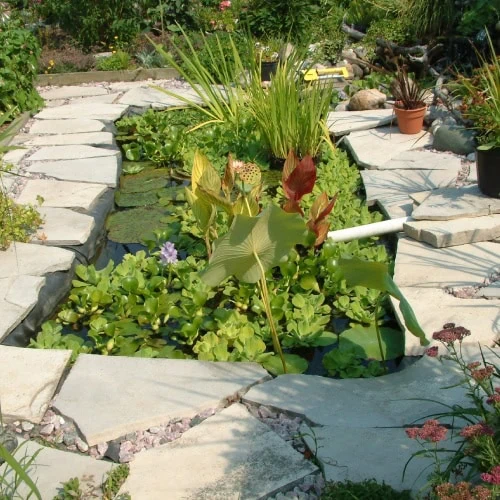
For your small planted pond, expect to spend roughly $100–$250 (£80–£200) per year for DIY maintenance. With no fish to feed, you eliminate food bills and reduce the filtration capacity required.
Your equipment choices determine whether running costs stay at the lower end. A passive wildlife pond needs very little power, while an ornamental planted setup with a small fountain or pump runs continuously.
Use this itemized cost breakdown for a fish-free planted setup:
- Operating expenses ($40–$100): Small pump electricity ($30–$75), top-up water, and dechlorinator.
- Routine supplies ($30–$75): Replacement plants, aquatic fertilizer tablets, planting baskets, and soil media.
- Professional services ($0–$200+): Optional seasonal cleanouts, usually skipped for small DIY setups.
- Replacement reserve ($30–$75): Savings toward replacing small pumps or future liner patches.
- Annual cash budget: Roughly $100–$250 for self-managed setups (or up to $450+ if hiring help).
You can keep plant spending down by dividing established plants and choosing budget-friendly pond plants suited to your climate. Account for tender plants separately if you replace them after freezing weather.
What Does Medium Pond Maintenance Cost?
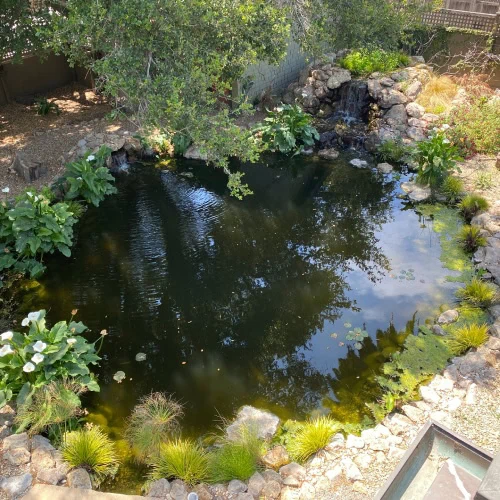
For medium pond maintenance, use $300–$600 (£240–£480) annually as a starting allowance for a DIY-maintained pond around 2,000 gallons (roughly 7,500–9,000 liters). That range assumes modest operating demands and owner-performed routine care; it includes some allowance for eventual replacement parts.
To make that figure useful, separate the repair savings from current spending. Your electricity bill and supplies are expenses incurred during the year, while an unused replacement reserve remains available for later.
For a medium pond (~2,000 gallons) with a modest goldfish population, use these typical itemized estimates:
- Operating expenses ($150–$275): Continuous pump power ($120–$200), top-up water, and municipal dechlorinators.
- Routine supplies ($75–$175): Fish food ($30–$75), test-kit reagents, filter pads/media, and plant care.
- Professional services ($0–$600+): Handled via DIY, or $400–$600+ if hiring an annual spring cleanout.
- Replacement reserve ($75–$150): Amortized savings toward pump replacements or UV ballast repairs.
- Annual cash budget: Roughly $300–$600 for DIY care (or $700–$1,200+ with professional servicing).
Your backyard pond cleaning routine affects the service line directly. Removing accumulated debris and keeping filter access clear helps you handle routine work yourself.
How Do Goldfish and Koi Change Your Budget?
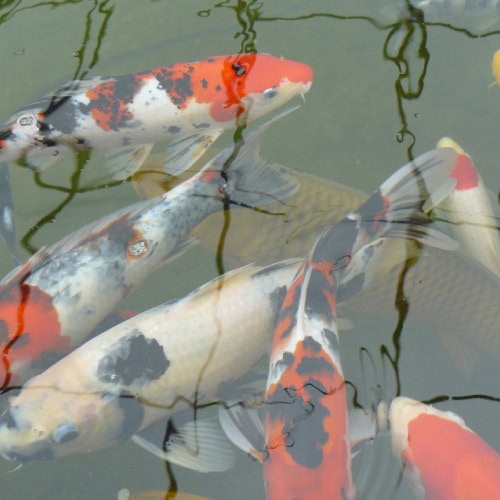
Your fish add feeding expenses and increase the demands on circulation and filtration. Budget around their adult size and total population, because growing fish consume more food and produce more waste.
Food costs scale sharply with species and stocking levels:
- Modest goldfish stock (5–10 fish): Expect to spend roughly $30–$75 per year on quality pellets or flakes.
- Small koi stock (3–5 medium koi): Budget about $100–$250 annually for staple and growth diets.
- Heavy koi stock (8–12+ large adult koi): Plan for $300–$700+ per year, as mature koi consume substantially more bulk and specialized seasonal nutrition.
With goldfish, a restrained stocking level helps keep both food and filtration expenses manageable. With koi, expect overall maintenance costs of $800–$2,000+ (£640–£1,600+) per year (DIY) to cover continuous aeration, heavy filtration, and higher feed volume.
For a dedicated koi pond, use this itemized annual estimate:
- Operating expenses ($350–$800 / £280–£640): Continuous circulation pump, dedicated aerator, UV clarifier power, top-ups, and water conditioners.
- Routine supplies ($200–$550 / £160–£440): Quality koi feed ($100–$350+ / £80–£280+), replacement UV lamp ($40–$80 / £30–£65), test kits, and filter media replacements.
- Professional services ($0–$1,000+ / £0–£800+): Optional seasonal cleanouts, equipment servicing, or specialized health checks.
- Replacement reserve ($150–$400 / £120–£320): Savings toward replacing high-output pumps, air compressors, or filtration units.
- Annual cash budget: Roughly $700–$1,750+ (£560–£1,400+) for DIY care, or upwards of $2,500+ (£2,000+) with professional services.
You should calculate this example from your equipment labels and purchase history before assigning a dollar total. Applying the medium-pond allowance to a heavily stocked koi system risks leaving essential equipment out of your budget.
How Much More Does Professional Maintenance Cost?
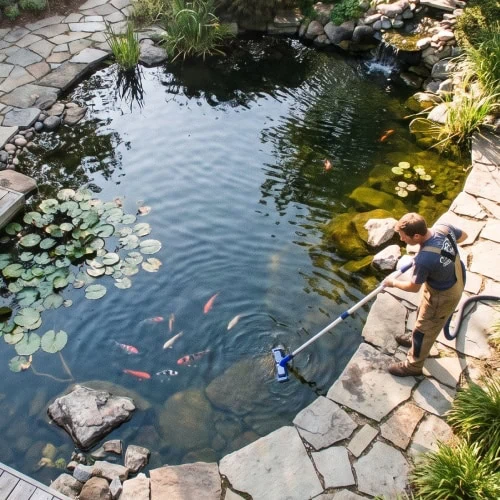
Your professional maintenance bill buys a defined scope of work, which you then add to uncovered ownership expenses. Broad professional pricing runs about $250–$450 (£200–£360) per visit, with annual service spending ranging from $450–$5,000 (£360–£4,000) across different pond sizes and service schedules.
For a medium pond, hiring out a spring cleanout adds approximately $400–$900 (£320–£720) to a DIY operating budget. Confirm whether your quote includes debris disposal, filter cleaning, fish handling, or replacement water.
Your annual calculation should follow this structure:
Uncovered operating expenses + professional service fees + uncovered supplies + replacement savings = annual cash budget.
Check for duplicate charges when a contract includes treatments or consumables. Your seasonal maintenance schedule also helps you distinguish recurring visits from occasional heavy cleaning.
What Makes Up Your Yearly Pond Expenses?
Your yearly expenses come from equipment operation, water management, routine care, and eventual repairs. Recording each category separately shows whether a higher bill comes from a utility rate increase, additional fish, or aging equipment.
How Much Electricity Do Pumps, Lights, and Winter Equipment Use?
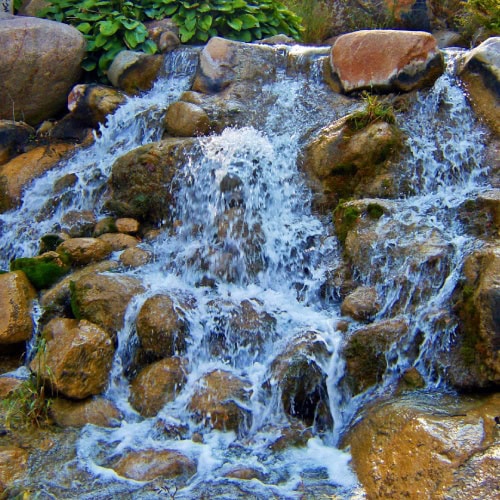
Your pond pump is a predictable recurring expense because you can calculate its electricity use from operating wattage and runtime.
Selecting an energy-efficient pond pump keeps running expenses low. Use the wattage at your operating setting, or a meter reading, together with the electricity rate on your bill.
Calculate each device separately:
Annual electricity cost = watts ÷ 1,000 × operating hours per year × your electricity rate per kWh.
For equipment running continuously throughout a non-leap year, use 8,760 operating hours. For pond lighting on a timer, multiply its daily operating hours by the number of days you use it.
Your equipment worksheet should include:
| Your equipment | Wattage to enter | Runtime to enter |
|---|---|---|
| Circulation pump | Operating watts at your setting | Actual annual operating hours |
| Pond lighting | Combined watts of operating fixtures | Timer hours across the lighting season |
| Aerator | Operating watts | Hours used during the year |
| UV clarifier | Equipment input watts | Hours used during its operating season |
| Winter equipment | Operating or measured average watts | Actual cold-weather operation |
A thermostatically controlled de-icer cycles with conditions, so its maximum wattage multiplied by the entire winter overstates consumption when it cycles off. Your winter pond preparation should establish which equipment remains running and which equipment you remove or bypass.
Preserve the circulation your fish and biofiltration require when reducing electricity use. Start with lighting schedules and unnecessary pumping resistance before changing essential life-support equipment.
What Should You Budget for Water, Testing, and Treatments?

- Contains one (1) API POND MASTER TEST KIT Pond Water Test Kit 500-Test, including 6 bottles of testing solution, 3 color cards and 4 test...
- Helps monitor water quality and prevent invisible water problems that can be harmful to fish
- Measures ornamental pond pH balance, Ammonia content, Nitrite levels and Phosphate content

Your water allowance should reflect measured replacement volume and your local billing structure. Include evaporation top-ups, water changes required by your fish-care routine, and water lost while cleaning filters.
Use your bill’s unit conversion before calculating the cost. If your utility applies sewer charges to outdoor water use, include those charges unless your property has a qualifying separate meter or allowance.
For testing and water treatments, budget for what your setup uses:
- Your test-kit reagents and their replacement dates.
- Your conditioner for chlorine or chloramine in incoming municipal water.
- Your replacement water used during maintenance.
- Your water treatments justified by a diagnosed problem.
Dose conditioner for the water volume and application method specified on its label. Rather than adding frequent water treatments for algae blooms, evaluate fish feeding and filtration performance first.
During hot weather, your summer pond maintenance also needs to account for evaporation and increased attention to oxygen availability.
How Do Filtration, Fish Feeding, and Plant Care Affect Costs?
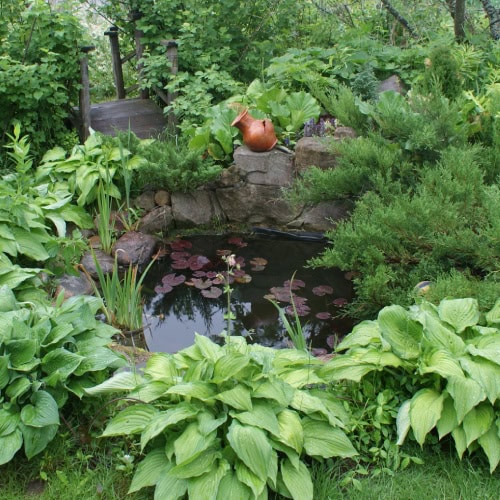
Your pond filtration expenses include electricity and the specific parts your equipment requires you to replace. Separate mechanical filtration, which captures debris, from biofiltration, where microorganisms process fish waste.
Follow your equipment’s cleaning instructions and replacement schedule. Washable media and disposable cartridges create different annual expenses, so record your filter’s actual requirements.
Your feeding budget should follow consumption across the feeding season. Adjust portions to fish activity and water temperature using appropriate guidance for your fish and food; uneaten food adds waste that your system must handle.
For aquatic plants and general aquatic vegetation, include fertilizer used for potted containers and supplies for division or repotting.
Healthy aquatic plants absorb excess nutrients and balance water clarity naturally. Remove dying growth before it decays, and budget separately for tender plants that need replacement.
How Much Should You Set Aside for Repairs and Replacements?
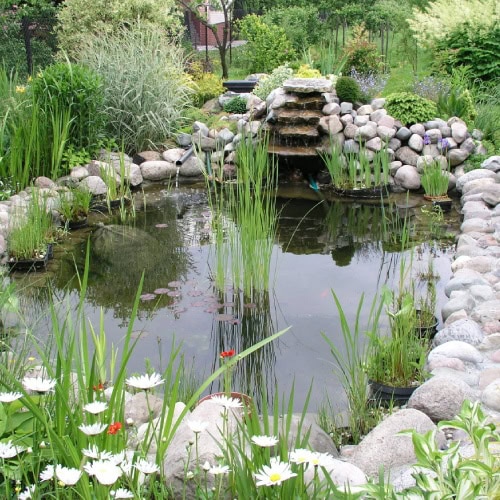
Your replacement reserve should reflect the equipment you own and the cost of restoring essential operation. Keep this savings line separate from your recorded pond maintenance cost, then record an expense when you spend the money.
For context, you might face pump replacement costs of $150–$500 (£120–£400) and liner leak repairs of $200–$1,000 (£160–£800).
Larger pond size usually drives up repair and equipment replacement estimates. Your actual bill depends on access and the labor involved.
Use the following calculation for each major component:
Annual reserve contribution = expected replacement cost ÷ your planning interval in years.
Choose the interval using the equipment’s age, condition, warranty terms, and maintenance history.
Your pond liner needs particular attention around exposed edges and penetrations. Inspecting your pond liner regularly helps you identify developing problems before leaks worsen.
When you pay for a repair from accumulated savings, record the repair expense and the reserve withdrawal. Avoid counting the withdrawal as an additional expense.
Which Installation Choices Reduce Long-Term Spending?
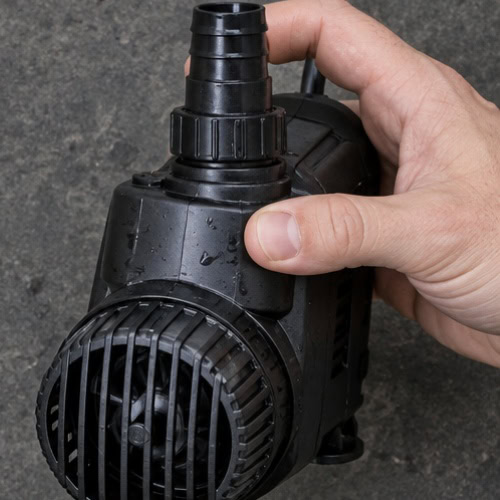
Your pond installation choices reduce future spending when they make essential equipment efficient and routine cleaning accessible. Include operating requirements when comparing your initial backyard pond cost.
Match your pump to the required flow at the actual lift height and plumbing resistance. Accessible valves and unions make servicing easier, while sufficient filtration capacity supports the fish population you intend to keep.
Your lower-cost pond construction choices should also account for underlayment and liner protection. A cheaper installation loses its advantage when a preventable leak requires excavation or extensive dismantling.
For less labor-intensive pond care, prioritize reachable filters and straightforward debris removal. Keep the pump model, operating wattage, liner details, and replacement-part numbers with your annual expense record so your next budget uses your own equipment costs and utility bills.