
Prepare your pond for winter by following water temperatures, removing decaying debris, adjusting fish feeding, and maintaining adequate oxygen and an opening for gas exchange. Start while you still have comfortable working conditions, before ice makes equipment and plant pots difficult to reach.
Your koi and goldfish continue using oxygen through winter, even as their activity slows. Leaves and dying vegetation also consume oxygen as they decay, so a clean-looking surface tells you only part of the story.
Match your preparations to your pond’s depth, fish load, and local freeze conditions. If your pond risks freezing through, arrange a suitable indoor overwintering system before cold weather arrives. A de-icer maintains an opening; it does not make an undersized outdoor habitat safe.
1) Track Water Temperature With a Pond Thermometer

- Ideal for monitoring pond water temperature throughout the year
- Allows for proper adjustment of water treatments based on temperature
- Important for adjusting fish feeding schedules and water treatment applications during seasonal changes

Use a pond thermometer to time feeding changes and winter preparations from the water your fish occupy. Air temperature alone gives you an incomplete picture, especially during sunny afternoons followed by freezing nights.
Position your thermometer away from a waterfall outlet or shallow, sun-warmed edge. Take readings at a consistent location and time, following the thermometer’s instructions for an accurate measurement.
Keep a short record of your pond water temperature as autumn progresses. During unsettled weather, check daily so you recognize a sustained cooling trend.
If your pond has a deep refuge, compare its temperature with shallower water without stirring the bottom. You will use those readings when deciding where to position winter aeration and whether feeding conditions remain suitable.
2) Remove Fallen Leaves, Dead Vegetation, and Excess Sludge

- Dual-chamber Vacuum System: Two cylinders alternate suction and drain cycle to provide continuous suction.
- Sludge Drain with Drain Hose: Dual-discharge option for draining waste water directly into flower bed or attach debris bag and place into...
- Aluminum Extension Tubes: Lightweight bend-resistant tubes.
Remove accumulated organic debris before ice limits your access and traps its oxygen demand beneath the surface. Start with floating leaves, then lift out sunken leaves and loose dead stems with a pond net.
Work slowly around resting fish. When cleaning your pond bottom, use a pond vacuum in small areas to remove concentrated deposits without churning the entire floor.
Keep your work focused:
- Lift debris out of the water before it breaks apart.
- Remove decaying foliage lodged behind pots and rocks.
- Leave attached surfaces undisturbed where practical.
- Stop if your work clouds the water heavily or unsettles your fish.
Avoid turning a routine fall cleanup into a complete drain-and-scrub. If you uncover deep, foul-smelling sludge, arrange a controlled cleanup with appropriate fish protection before disturbing more sediment.
3) Stretch Pond Netting Above the Water to Catch New Leaves
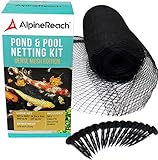
- Reliable Fish Protection – Brilliantly designed to keep your fish safe against Blue Heron birds, cats and other predators. The protective...
- 3/8 Inch Heavy Duty Woven Mesh – The net’s extra strength comes from a tightly woven mesh and works extremely well. The 15’ x...
- Keep Out Smallest Leaves & Debris – The dense mesh will keep your pond & pool staying beautiful and clean; capturing the smallest leaves...
Stretch supported pond netting above your water before the next heavy leaf fall. Keeping leaves dry makes removal easier and prevents a loaded net from dipping into your pond.
Choose pond netting with openings suited to the leaves around your yard. Secure the edges and support the center with a frame or suitable poles, keeping the material clear of fish and equipment.
Check the net after windy weather. Clear leaves before their weight pulls the mesh down, and keep access available for water testing and equipment checks.
Once leaf fall ends, remove and dry your net before heavy snow or ice loads it. If mesh freezes into the pond, leave it undisturbed until it thaws; pulling against frozen material risks damaging the net or pond edge.
4) Adjust Koi and Goldfish Feeding as Water Cools

- Offers rapid acceptance and accelerated digestive capacity
- Developed to offer proper form and excellent skin condition
- The floating pellet allows most koi ready access to the nutritional package
Reduce your koi and goldfish portions as their appetite declines, using measured water temperature and the food’s labeled feeding range. Give only what your fish promptly eat, and remove leftovers.
For an unheated backyard pond, use these practical checkpoints:
- Above about 60°F: Adjust portions to appetite and water quality.
- Around 50–60°F: Reduce feeding and use a food labeled for cool-water conditions if you continue feeding.
- Around 50°F: Use stopping as a conservative approach, particularly with sluggish fish or reduced filtration.
- Below 40°F: Stop feeding outdoor koi and goldfish.
You will encounter different recommendations for feeding koi in winter, including lower thresholds for certain cool-water foods. Follow the product’s temperature limits and your fish’s response; wheat-germ ingredients do not make unrestricted cold-water feeding appropriate.
Apply these checkpoints to koi and common pond goldfish. For other species, use species-specific guidance.
5) Test Ammonia, Nitrite, pH, and Dissolved Oxygen

- Contains one (1) API POND MASTER TEST KIT Pond Water Test Kit 500-Test, including 6 bottles of testing solution, 3 color cards and 4 test...
- Helps monitor water quality and prevent invisible water problems that can be harmful to fish
- Measures ornamental pond pH balance, Ammonia content, Nitrite levels and Phosphate content
Test your pond water before winter equipment changes, then repeat testing after changes that affect filtration or circulation. Clear water still needs testing, especially as plant growth and biological filtration slow.
Use a pond water test kit for ammonia, nitrite, and pH, plus a dissolved oxygen test or meter. Record water temperature alongside your results.
Aim for:
- Ammonia: Zero detectable on your routine test.
- Nitrite: Zero detectable.
- pH: A stable reading within roughly 6.5–9 for koi and goldfish.
- Dissolved oxygen: At least 5 mg/L, with additional margin desirable.
If you detect ammonia or nitrite, pause feeding and check filtration and accumulated waste. Interpret ammonia alongside temperature and pH because warmer water and higher pH increase its toxic fraction.
If oxygen falls below 5 mg/L, improve aeration promptly. Avoid abruptly adjusting pH to chase a particular number; check alkalinity when readings fluctuate.
6) Make a Temperature-Matched Partial Water Change if Needed

- Contains one (1) API POND CHLORINE & HEAVY METAL NEUTRALIZER Pond Water Neutralizer 32-Ounce Bottle
- Removes harmful-to-fish chemicals from tap water to make water safe
- Made with a super-strength, highly concentrated formula for effectiveness
Make a modest partial water change when testing or accumulated waste gives you a reason to replace water. Choose the volume according to the problem and the difference between your pond and replacement water.
For routine correction, start with about 10–20%. A large automatic fall exchange creates unnecessary temperature and chemistry changes, especially when your source water differs substantially.
During your pond water change:
- Compare replacement-water temperature and pH with your pond.
- Treat municipal water with a conditioner labeled for chlorine and chloramine, following its directions.
- Refill gradually while watching your fish.
- Retest after the added water has mixed.
Protect your remaining water depth throughout the process. If ammonia or nitrite remains elevated, use follow-up testing to guide further small exchanges and address the underlying filtration or waste problem.
7) Trim Hardy Pond Plants and Move Pots Below the Freeze Zone
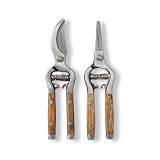
- Bypass Pruner for Clean, Healthy Cuts – Our sharp and durable bypass pruning shears slice effortlessly through live stems and branches...
- Precision Snips for Detailed Work – Narrow, finely crafted blades allow close access to delicate foliage, perfect for harvesting herbs...
- Ergonomic, Comfortable Design – Wooden handles crafted for secure grip, smooth control, and reduced hand fatigue. Perfect for gardeners of...
Trim decaying growth from your hardy plants and position suitable pots where their crowns and roots will remain protected from ice. Check each plant’s identity and hardiness before lowering it.
Stop fertilizing as growth slows. Remove yellow or dead leaves without cutting into healthy crowns, rhizomes, or growing points.
When overwintering pond plants, match the winter position to the species. Hardy water lilies tolerate submerged dormancy, while marginal plants have different crown-depth requirements.
Use your local ice history and the pot’s height to judge protection. Measure the water above the vulnerable plant parts, since total pond depth alone does not tell you whether a crown will freeze.
Leave your fish room to settle in their winter refuge, and keep pots clear of pump intakes and the aeration area.
8) Bring Tropical Plants Indoors and Remove Tender Floaters

- DURABLE RIGIDCELL CONSTRUCTION: For superior performance and long-lasting durability in all types of weather.
- CATEGORY LEADING WARRANTY: Backed by a 10-Year Limited Warranty
- MADE IN THE USA: Rubbermaid Commercial Products BRUTE Stock Tanks are proudly made in the USA.
Move your cold-sensitive plants to their winter location before frost damages their foliage. Remove tender floating plants before they collapse into the pond and add more decaying material.
Identify each plant before choosing its storage method. For tropical water lilies and taro kept in water, use a frost-free location above 50°F and follow the species’ light and dormancy requirements.
Inspect plants for pests before bringing them inside. Use suitable containers, remove dying leaves, and refresh the water as needed to prevent stagnation.
Dispose of unwanted floaters responsibly. Keep aquatic plants and fragments out of storm drains and natural waterways, and follow your state’s disposal rules for restricted species. Bag invasive or readily spreading plants when composting would allow them to escape.
9) Clean Filters According to Their Winter Operating Plan
- Effective Cold-Temperature Performance: Formulated to work in water temperatures below 50°F (10°C), making it ideal for fall and winter...
- Promotes Natural Waste Breakdown: Supports the biological process that helps manage excess nutrients and organic debris as temperatures...
- Professional Strength Formula: Highly concentrated with 1.5 billion CFU per ounce and eight pure strains of beneficial bacteria for...
Clean your filters according to whether each unit will remain running or be drained for winter. Separate debris removal from the care of the bacteria living on biological media.
For equipment staying in service, clear skimmer baskets and mechanical pads so water flows freely. Gently rinse biological media in removed pond water when accumulated debris restricts flow, following the filter manufacturer’s maintenance instructions.
Keep operating biological media supplied with circulating, oxygenated water. Avoid leaving a loaded external filter full of stagnant water after its pump stops.
For equipment being shut down, disconnect power and clean and drain the housing as directed. Winterize UV clarifiers and other freeze-sensitive components according to their manuals.
Expect biological filtration to need re-establishing after a winter shutdown. Include ammonia and nitrite testing in your spring restart before increasing feeding.
10) Winterize Pumps, Waterfalls, and Exposed Plumbing

- LARGE OUTDOOR STORAGE BOX: Fashionably store your outdoor furniture cushions, pool floats, and more. This outdoor storage bench offers lots...
- VERSATILE DECK BOX: This multipurpose outdoor storage container has a large interior with a 150-gallon storage capacity and gives you extra...
- DURABLE & ATTRACTIVE RESIN CABINET: This deck storage box is attractive and rugged and is made from strong, durable resin with a wood-plank...
Choose your pump and waterfall operating plan before sustained freezing weather. Continued operation suits systems you can monitor reliably; shutdown reduces maintenance where long freezes or limited access make flowing water difficult to manage.
If you shut down:
- Disconnect power before handling equipment.
- Remove the pump and check valve where required for drainage.
- Empty exposed lines, low spots, and external equipment.
- Clean and store components according to their manufacturers’ instructions.
Follow your pump’s specified wet or dry storage method, and keep stored equipment frost-free.
If you keep the system running, maintain continuous flow through freezing conditions. Inspect the waterfall for ice dams that divert water outside the liner, and check water level and intake clearance frequently.
Have a drainage plan for a power outage or blocked intake. Buried plumbing still needs protection when trapped water is exposed to prolonged freezing.
11) Move the Aeration Diffuser to Shallower Water

- Aquascape 2-Outlet Pond Aeration Kit, Quiet Energy-Efficient Pond Aerator with Weighted Air Stones, Airline, Check Valves, for Ponds up to...
- Oxygenates Ponds: 2-outlet pond aeration kit helps keep water healthy, clean, and clear by supporting oxygen levels in ponds up to...
- Complete Aerator System: Includes two weighted 4-inch aeration discs, two 25-foot rolls of 3/16-inch silicone airline, and preassembled...
Move your winter diffuser onto a shallow shelf or suitable raised support to preserve a quieter deep-water refuge. Position it before ice forms, while you still have easy access to the airline.
Use gentle surface agitation appropriate to your pond’s size and fish load. In deeper ponds, vigorous bottom aeration mixes the relatively warmer bottom water with colder surface water.
Keep the diffuser submerged according to its operating instructions, away from the area where your fish gather. Check that the bubbles reach the surface and that the airline remains clear.
Your pond’s oxygen supply still needs monitoring after you reposition the diffuser. If readings decline, adjust aeration and reassess waste buildup or stocking pressure.
Install the compressor in its manufacturer-approved location with ventilation and weather protection. Use a ground-fault circuit interrupter (GFCI) for outdoor electrical equipment.
12) Install a Pond De-Icer Where Ice Could Seal the Surface

- Ideal for keeping a small hole opening the ice during cold winter months
- Ensures proper gas exchange; helps prevent winter fish loss and increases oxygen levels
- Energy efficient design helps keep down operation cost
Install a pond-rated de-icer before freezing weather if ice threatens to close your pond’s gas-exchange opening. Choose a unit suited to your climate and pond material, and follow its placement and clearance instructions.
Use the de-icer to maintain a localized opening. Continue aeration where needed to support oxygen levels; an open patch alone does not establish that dissolved oxygen is adequate.
Keep the unit clear of netting and debris. Use GFCI-protected power, inspect the cord, and keep electrical connections protected as specified by the manufacturer.
During freezing weather, check the opening and equipment operation daily from the bank. Stay off pond ice, especially near aeration.
If the opening freezes shut, use a pond-rated de-icer according to its instructions to restore it. Avoid hammering or chopping the ice, which disturbs fish and risks damaging equipment or the liner.