
To clean your backyard pond without harming fish, test the water, skim debris, vacuum settled sludge in small areas, rinse filter media in pond water, and replace only part of the water with dechlorinated water. Keep aeration running and leave the fish in place for routine cleaning.
A living pond does not need a spotless bottom, as a thin layer of algae on rocks and colonies of beneficial bacteria support the nitrogen cycle to process waste. The trouble starts when fallen leaves rot, pond sludge builds up, or circulation slows during lapses in pond maintenance.
What Is the Safest Cleaning Sequence?
Understanding how to clean a pond safely means removing loose waste first and disturbing the pond bottom as little as possible. Keep water moving for your fish throughout the job, except when you must briefly switch off equipment to clean it.
First Perform a Water Quality Test

- Contains one (1) API POND MASTER TEST KIT Pond Water Test Kit 500-Test, including 6 bottles of testing solution, 3 color cards and 4 test...
- Helps monitor water quality and prevent invisible water problems that can be harmful to fish
- Measures ornamental pond pH balance, Ammonia content, Nitrite levels and Phosphate content
Test pH, ammonia, and nitrite before you begin, and note the water temperature. These readings give you a baseline: cloudy water alone tells you little about whether your fish are in danger. If fish are gasping at the surface, increase aeration and investigate the water readings before disturbing the bottom.
Check that your pond pump and pond filter are moving water normally. A blocked intake can make a pond look dirty even when the bottom needs little attention.
Ensuring your pond filtration system operates smoothly prevents debris from overwhelming the pond. Record the water test results so you can compare them after cleaning, especially if you plan partial water changes.
Skim Leaves and Remove String Algae
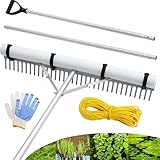
- Versatile Rake: PVNIEFC landscape and pond rake are 36-inch wide and equipped with 34 tines, the leading edge of the tip of each rake tooth...
- Maximum Reach: With its 11-foot aluminum handle, this rake provides an extended reach to tackle shoreline debris. Attach the included...
- Lightweight and Durability: Weighing only 5.5 lbs. and made of rustproof, powder-coated aluminum, this rake is durable and reasonably easy...
Lift floating leaves and dead plant pieces with a fine-mesh pond net before they sink. For thicker mats of submerged debris, use a pond rake to pull waste toward the bank gently. Empty the pond skimmer basket too, taking care to return any trapped pond creatures to the water.
String algae forms strands you can wind around a small brush or lift with a net. Pull it out gently, a little at a time, so you do not drag plants or stir up the bottom. For free-floating green water, running a UV clarifier offers an effective solution alongside steps for clearing green pond water.
Vacuum Bottom Sludge Without Stirring It Up

- Max. Suction depth: 6 ft.
- High-power suction to a depth of 59 inch.Maximum suction depth of 78 inch.Suction hose length: 13 ft
- Power consumption: 1200-1400w
Use a pond vacuum on visible pockets of soft muck, working from one small area to the next. Hold the nozzle just above the pond liner or gravel and let suction collect the waste. If a brown cloud follows the nozzle, slow down and give the water time to settle.
Leave clean-looking areas alone, and watch for fish approaching the nozzle. Route discharged water away from the pond so the collected pond sludge cannot wash back in. When cleaning a pond with light debris, this no-drain cleaning approach avoids the disruption of moving every fish.
Rinse Filter Media & Top-Up Beneficial Bacteria

- Maintains a strong biological balance providing clean, clear and healthy water conditions
- Contains 8 pure strains of concentrated beneficial bacteria, including PSB bacteria and enzymes
- PSB help quickly clear pond water by clumping fine debris and allowing it to settle
Switch off the filter pump before opening the housing, while keeping a separate aerator running. Swish clogged sponges in a bucket of pond water, squeezing only enough to restore flow. Protecting your biological filtration is vital during routine pond cleaning, so rinse biological media gently without scrubbing it clean.
Keep the media wet and return it promptly. Untreated tap water damages beneficial bacteria, stripping away the microbes that protect water quality. If your filter relies on separate mechanical filtration and biological stages, clean the filter media with each stage’s job in mind.
After cleaning, you can top up the filter box or pond water with additional beneficial bacteria using a high concentration natural bacteria solution to give your system a kick-start.
Replace Some Water and Restore Circulation

- Contains one (1) API POND CHLORINE & HEAVY METAL NEUTRALIZER Pond Water Neutralizer 32-Ounce Bottle
- Removes harmful-to-fish chemicals from tap water to make water safe
- Made with a super-strength, highly concentrated formula for effectiveness

Replace the water removed by vacuuming with a modest, partial water change. Treat tap water for both chlorine and chloramine using a pond dechlorinator labeled for fish, following bottle directions for the volume of new water. Add it gradually to avoid a sudden temperature shift.
Reassemble the filter, restart the pump, and confirm that water flows through the system. Check the intake for trapped debris and watch your fish for unusual behavior. Retest ammonia and nitrite after a substantial cleaning or water change; a rising reading needs prompt attention to aeration, feeding, and water quality.
When Does a Pond Need a Full Clean-Out?
A full clean-out is warranted when heavy muck or a repair cannot be handled safely with the pond filled. For recurring cloudy water, algae, or reduced flow, first check the water and equipment; draining the pond disrupts fish and the established biological filter.
If sludge accumulation is severe or physical labor is daunting, scheduling a professional pond cleaning can restore water conditions safely.
Recognize When Routine Cleaning Is Not Enough
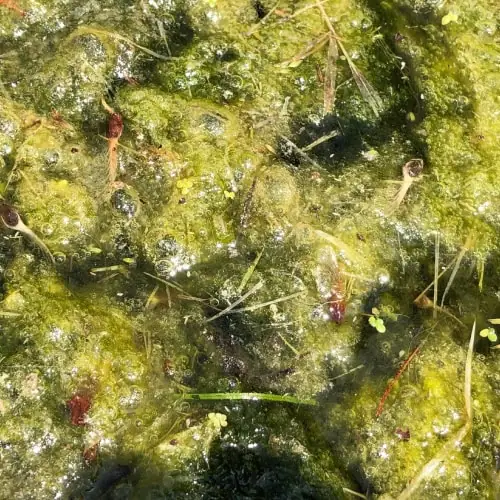
Consider a clean-out if thick pond sludge covers much of the bottom and a vacuum cannot remove it without repeatedly clouding the water. A pond liner repair or major change to the pond layout also requires access to the empty basin. Persistent foul odors or poor test results call for immediate attention to determine how much waste needs removal.
A thin layer of sediment, some algae on the rocks, or a brief spell of cloudy water is a reason to investigate, not an automatic reason to drain. If the pond smells bad, trace and remove decaying material where you can; smelly pond water also warrants checking circulation and water quality.
Move Fish Safely and Remove Built-Up Muck
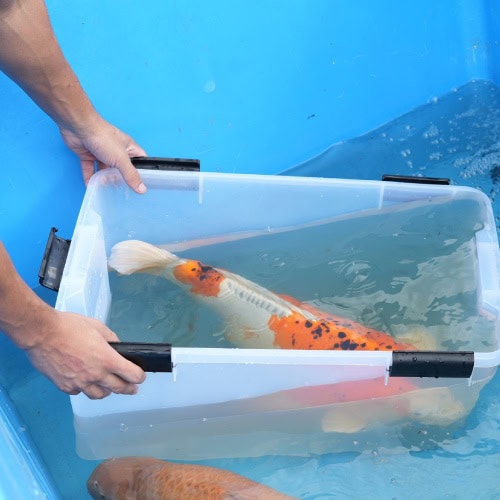
Prepare a clean, detergent-free holding tub before you drain. Fill it with pond water, place it in shade, provide aeration, and cover it with a secure, breathable net. Move fish gently as the level falls, while there is still enough water to net them without chasing them through shallow muck.
Pump out the remaining water, then scoop or vacuum out the accumulated debris. Rinse dirty surfaces gently and remove the rinse water. Avoid stripping every rock and liner surface clean: intact biofilm and wet, established filter media help the pond recover.
If you are uncertain where to send drained water, plan its route before opening the pump discharge; draining a garden pond needs enough space to keep wastewater from flowing back in.
Refill, Dechlorinate, and Reintroduce Fish
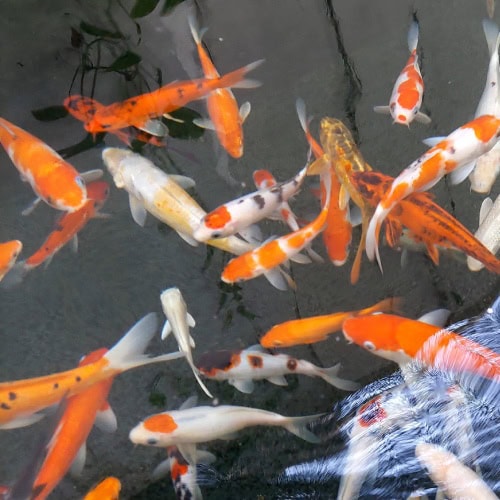
Return pond plants and equipment, then refill the pond gradually. Add a trusted dechlorinator to neutralize chlorine and chloramines, and check that the temperature and pH match the holding tub. Restart circulation and verify that the pond filter is running before fish return.
Acclimate fish gradually to the refilled pond water, transferring them with as little handling as possible. Keep testing ammonia and nitrite afterward: established pond filters may need time (a process called “cycling”) to regain biological capacity after a major clean-out.
Feed lightly while readings remain stable, and maintain aeration in both the holding tub and pond during the transfer.
How Do You Keep the Pond Clean Longer?
Consistent pond maintenance, vibrant plant growth, and reliable circulation keep waste from accumulating between cleanings. Small routine checks also make it easier to spot a blocked pump or shifting water quality while the problem is manageable.
Control Algae Without Disrupting the Pond
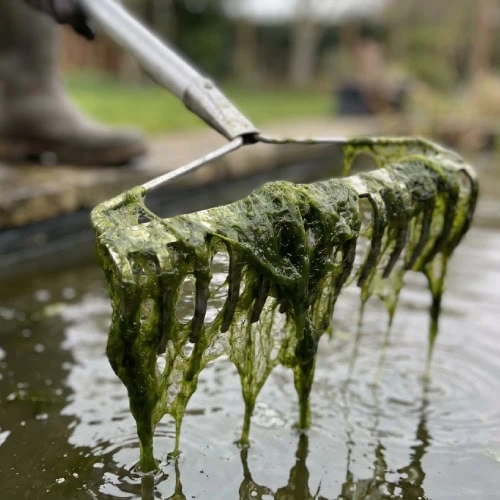
Remove string algae by hand and take the collected strands out of the pond. For green water, check nutrient inputs such as uneaten fish food and decaying leaves, then look at plant cover and pond filtration. Avoid treating every green patch as an emergency; fish benefit from stable water more than from a sudden attempt to make every surface bare.
Keep lawn fertilizer and grass clippings out of the water. Established pond plants provide natural shade and consume dissolved nitrates, though dying foliage needs trimming before it turns into sludge. Chemical algae treatments require extra care in fish ponds because dying algae and sudden water changes stress fish.
Maintain Plants, Pumps, and Filtration
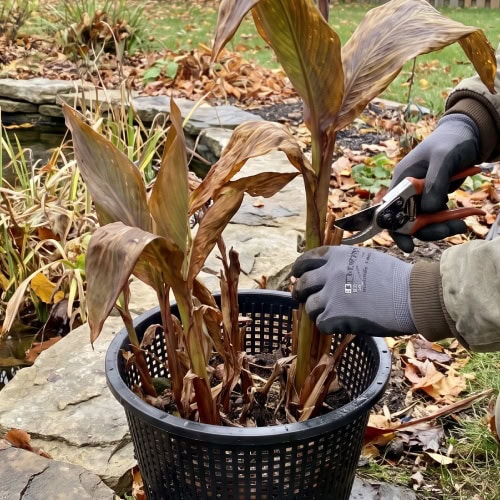
Remove yellowing leaves before they detach, and thin plants that block the skimmer or pump intake. Check that water is moving at its normal rate and clear debris from intake screens as needed. A slowing waterfall or fountain is a useful cue to inspect the system before waste accumulates.
Clean mechanical filter parts when flow drops, while handling biological media gently. If leaves repeatedly clog the pump, address where they enter the pond as well as the intake; keeping a pond pump from clogging begins with catching debris upstream.
Follow a Simple Seasonal Cleaning Routine
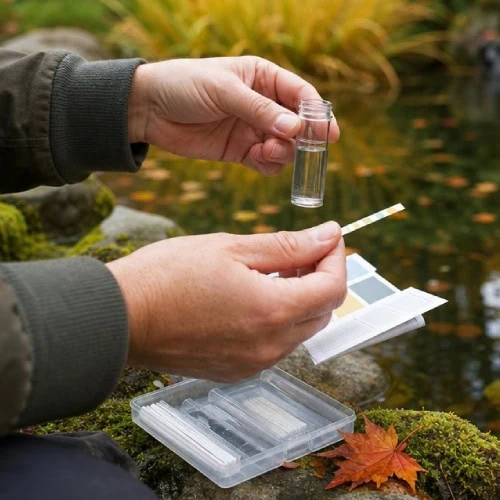
In spring, remove winter debris, inspect equipment, and test the water as fish become more active. Through summer, skim regularly, trim dying plant growth, and watch for lower water levels and sluggish flow. When leaves fall, net them frequently or fit a pond net above the surface.
During cold weather, avoid stirring deep sediment while fish are inactive. Check the equipment you keep running and maintain the open-water or aeration arrangement appropriate for your pond. After storms and heavy leaf fall, a quick skim is easier on your fish than clearing a thick layer of decaying leaves later.