
A well-chosen pond liner in a protected backyard pond commonly serves for 15 to 40 years, with premium rubber liners reaching the upper end when installation and care are sound. How Long Should a Pond Liner Last? Plan around the material’s expected range, then protect it from sun damage, sharp stone, shifting soil, and strain at the edges.
Your submerged liner usually ages slowly. Exposed margins, waterfall shelves, and poorly supported folds face far more wear, which explains why two ponds with the same liner can have very different replacement timelines.
Whether you maintain fish ponds, a water garden, or smaller water features, early inspections help you catch water loss before it disrupts aquatic life or turns into a full pond rebuild.
What Is a Realistic Service Life for a Pond Liner?
A high-quality pond liner should give you 15 to 40 years of service under protected conditions. Material establishes the starting point, while installation quality and exposure determine how much of that pond liner lifespan you receive.
Typical Lifespan Range for a Quality Flexible Liner
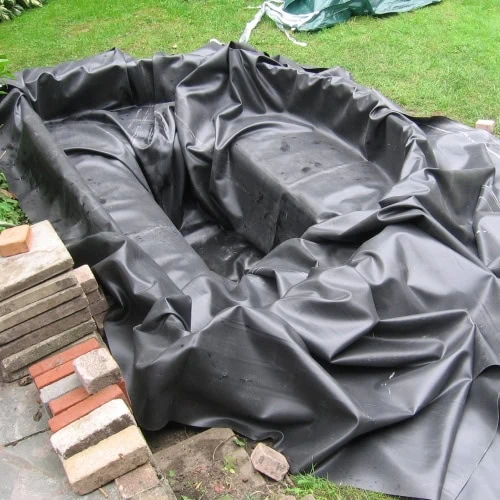
PVC liners commonly serve for about 10 to 20 years. Quality EPDM rubber liners often reach 20 to 40 years, especially when soil, rocks, and direct sun are managed well. These ranges are planning estimates, not fixed deadlines.
A durable pond liner beneath water and covered edges can remain flexible long after an exposed section begins to weather.
Why a Warranty Is Not an Expiration Date
A warranty describes the manufacturer’s coverage terms, exclusions, and claim process. It does not predict the exact year your liner will fail.
Keep your purchase record and check whether coverage requires specific underlayment, installation methods, or approved repair materials. Damage from roots, animal activity, or improper installation often falls outside warranty coverage.
Why Exposed Edges Often Wear Out First
Sunlight, temperature swings, and foot traffic concentrate at the pond perimeter. An exposed liner edge can become faded, stiff, or cracked while the submerged liner remains sound.
Cover margins with flat stone, gravel, planting pockets, or plants that hide pond liner. Leave enough slack beneath the cover so settling soil does not pull the liner tight.
Which Pond Liner Materials Last the Longest?

EPDM rubber offers the best long-term balance of flexibility and liner durability for most residential ponds. PVC, reinforced polyethylene, HDPE, and butyl rubber each fit particular budgets, shapes, and site demands.
| Criteria | EPDM Rubber | PVC | Reinforced Polyethylene | HDPE | Butyl Rubber |
|---|---|---|---|---|---|
| Expected service range | 20 to 40 years | 10 to 20 years | 15 to 30 years | 20+ years | 20 to 40 years |
| Flexibility | Excellent | Good | Moderate | Low | Excellent |
| Puncture resistance | Good | Moderate | High | High | Good |
| UV resistance | Strong | Moderate | Strong | Strong | Strong |
| Complex pond shapes | Excellent | Good | Fair | Limited | Excellent |
For a deeper material comparison before you buy, use this pond liner material guide.
EPDM Rubber Liners: Flexible, Long-Term Performance

- EPDM rubber pre cut and boxed pond liner
- Flexible for creative designs
- Environmentally friendly; fish friendly
EPDM rubber liners are the standard choice for many backyard ponds because they remain flexible through seasonal temperature changes. An EPDM pond liner conforms well around shelves, curves, and plant pockets.
EPDM liners also have strong UV resistance and chemical resistance. Use compatible tape and primer for any repair, since patch products designed for PVC will not bond correctly.
PVC Liners: Budget-Friendly but More Exposure-Sensitive

- FLEXIBLE AND EASY TO INSTALL POND LINER: PVC material is light, malleable, puncture resistant, and long-lasting.
- PROTECT YOUR POND: This liner will help to contain your pond, while also creating a safe and healthy environment for wildlife and plants...
- IDEAL SIZE: This 8'x10' Precut piece is easy to place for any small pond. This liner is .5mm/20 mil thick. Large enough to hold up to...
PVC pond liner material costs less upfront and works well for small decorative ponds with protected edges. PVC liners become less flexible as they age, especially after repeated heat and cold exposure.
Choose a thicker PVC liner for fish ponds, and use a protective underlayment beneath it. Thin PVC is more vulnerable to punctures during installation and routine maintenance.
Reinforced Polyethylene: Strength for Demanding Sites

- [Trustable & Leakproof Pond Liner]: The 40x40FT KOI pond liner is with unique five-layer structure design. The middle is reinforced HDPE...
- [Easier to Work With Pond Liner]: Thanks to its unique structure, the fish/KOI pond liner is softer and more flexible. It's easier to fold...
- [Reinforced PE Pond Liner]: Because of its five-layer structure, the pond liner is with relatively high puncture & scratch resistance...
Reinforced polyethylene combines a polyethylene core with reinforcing scrim, giving you high puncture resistance at a relatively low weight. It suits larger ponds, irregular ground, and locations where you expect more physical stress.
Its stiffness makes detailed folds and tight curves harder to form. Build broad, smooth transitions into the pond shape before installation.
HDPE and Other Polyethylene Liners

- Quality Materials: HDPE pond liners are the most heavy-duty and long-lasting option, made of a thick, high-density plastic material that is...
- Protect Your Pond: Pond liner can reduce the soil accumulation since it creates a plat surface. It can also keep away the harmful substances...
- Long Lasting: The thickness of our pond liner is 20mil, which is stronger and more long-lasting, sun-proof and waterproof, can be used for...
HDPE liners provide excellent chemical resistance and strength for larger containment projects. Their lower flexibility makes them challenging for small ornamental ponds with shelves, bends, and waterfall basins.
Other polyethylene liners, including LLDPE, offer more flexibility than HDPE. Professional seaming is often required for large installations.
Butyl Rubber Liners: A Durable Legacy Option
Butyl rubber liners have a long history in water gardens and remain highly flexible. You may encounter them when repairing an older pond.
They perform much like EPDM in many conditions, though EPDM pond liners are now easier to source in common residential sizes.
What Causes Pond Liners to Fail Early?
Early liner failure usually starts with physical stress, sun damage, or poor support beneath the membrane. Small punctures and stressed edges then develop into leaks that lower water quality and create structural issues around the pond.
UV Exposure, Weather Conditions, and Extreme Temperatures
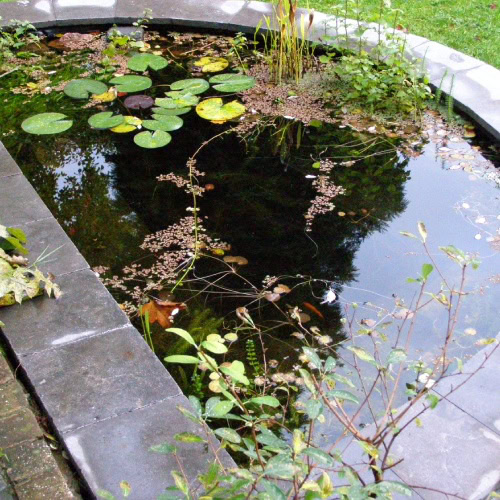
UV exposure breaks down unprotected liner surfaces over time. Weather conditions also cause expansion and contraction, particularly at exposed edges and shallow shelves.
Cover visible liner and inspect it each spring for discoloration, chalky texture, or stiffness. A shaded pond still needs edge protection because reflected light reaches the perimeter.
Sharp Rocks, Roots, and Poor Ground Preparation
A sharp rock beneath the liner creates a pressure point that can puncture it as soil settles. Roots from nearby shrubs and trees can press against the liner or lift sections of the pond base.
Remove stones, roots, construction debris, and hard clods before laying underlayment. Leveling the base also prevents concentrated weight beneath fish caves and large boulders.
Animal Activity and Everyday Physical Damage
Raccoons, dogs, herons, and digging wildlife can disturb rocks along the edge. Heavy tools, dropped stones, and careless cleaning can cause tears in shallow areas.
Use stable coping stones and avoid dragging equipment across the liner. Pond netting also helps limit wildlife disturbance in ponds with fish.
Water Chemistry and Installation Stress Points
Severe water chemistry problems can contribute to liner deterioration, especially when unsuitable treatments contact the material. Keep pH levels stable and use pond-safe products.
Inspect folds, seams, pipe penetrations, and waterfall transitions closely. These points carry extra strain when water movement, settling, or poorly placed rock pulls on the liner.
How Proper Installation Extends Liner Life
Proper installation gives your liner even support and prevents the pressure points that lead to punctures. A smooth base, geotextile underlayment, correct pond liner size, and protected edges do more for service life than a thicker liner alone.
Prepare a Smooth, Stable Pond Base
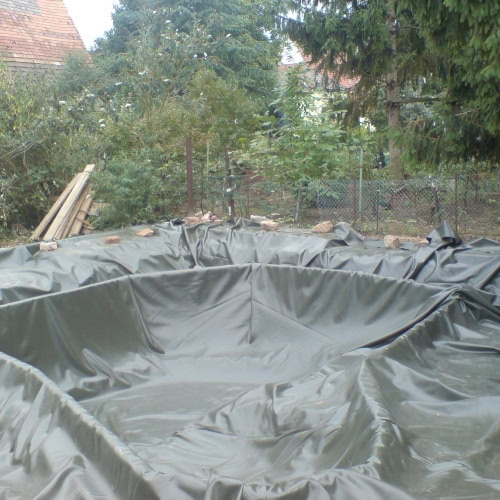
Excavate shelves with gentle transitions and remove every sharp object you can feel by hand. Compact loose soil lightly, then correct low spots before the liner goes down.
Avoid steep unsupported walls that slump after filling. Ground movement places tension on folds and edges.
Use Underlayment to Prevent Punctures

- Pond-Tex Puncture Protection: Engineered 4.5 oz non woven geotextile underlayment cushions your pond liner or preformed pond tub against...
- Keeps the Pond Bed Stable: Dense, permeable geotextile padding lets ground gases and moisture vent through instead of pushing the liner up...
- Longer Liner Life, Less Upkeep: A protective felt layer under the liner stops it stretching and reduces premature wear and tear, so outdoor...
Geotextile underlayment is a thick, fabric-like protective layer placed between soil and pond liners. It cushions the liner from stones, roots, and minor soil movement.
Use heavier underlayment beneath rock shelves, pathways, and waterfall basins. Add a second layer where large stone will rest.
Choose the Right Pond Liner Size
Measure maximum length, maximum width, and maximum depth. Add twice the maximum depth plus at least 2 feet of overlap to both length and width.
Extra material gives you room to anchor the perimeter and make relaxed folds. A liner pulled tight across a shelf is prone to tearing as the ground settles.
Protect Edges, Folds, Seams, and Waterfall Areas
Install an anchor trench around the pond edge and secure the liner before placing coping material. Keep folds broad and direct them toward low-stress areas.
At waterfalls, support the liner continuously under every stone and extend it well beyond the splash zone. Water traveling behind the liner can resemble a leak.
How Can You Tell Whether the Liner Is the Problem?
A falling water level points to a liner leak only after you rule out evaporation, splash-out, and plumbing faults. This step saves you from draining a pond and disturbing aquatic life when the problem sits in a hose, filter, or waterfall stream.
Evaporation, Splash-Out, and Plumbing Issues vs. a Leak
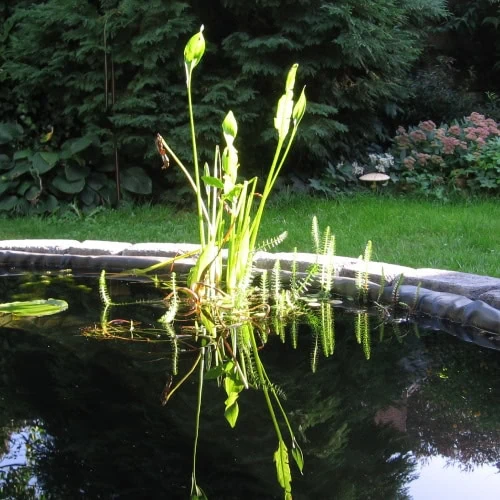
Mark the waterline and switch off the pump for 24 hours. If water loss slows sharply, inspect the pump, tubing, filter, waterfall, and stream edges for escaping water.
Hot, dry, windy conditions increase evaporation. Water splashing onto surrounding mulch or soil also produces steady loss.
Visible Signs of Deterioration
Look for discoloration, brittle exposed edges, stretched folds, tears, and wet soil beyond the pond border. Check beneath loose rocks where physical damage can remain hidden.
Persistent algae growth does not prove a liner leak, though low water can concentrate nutrients and complicate pond maintenance.
How to Locate a Suspected Liner Leak
Let the pond level fall with the pump off. When the loss stops, inspect the liner at and slightly above that waterline, including folds and pipe penetrations.
Use a clean cloth to dry small areas and look for pinholes. For a detailed patching process, follow this guide on how to repair a leaking pond liner.
When Should You Repair or Replace a Pond Liner?
A localized puncture or clean tear is worth repairing when the surrounding liner remains flexible and sound. Replacement becomes the safer investment when deterioration affects broad areas or leaks return in multiple locations.
When Pond Liner Repair Is a Reliable Option

- Pond Repair Kit: This kit includes 5 pieces of pond liner repair patches, designed to repair damage, leaks, or cracks in pond liners...
- High-Quality EPDM Material: The thickened rubber pond liner seams are made from premium EPDM material, known for its high strength, aging...
- Ideal Size: The 12 x 12-inch waterproof patch & seal tapes are large enough to cover significant damage while remaining compact for easy...
Pond liner repair works well for a single puncture, a small tear, or a failed seam with stable surrounding material. Drain only enough water to expose and dry the repair area.
Clean the liner thoroughly, use a patch system matched to your liner type, and extend the patch beyond the damaged area. EPDM pond liner repairs require EPDM-compatible primer and tape; PVC pond liner repairs require PVC-specific materials.
When Repeated Leaks Signal Replacement
Multiple patches, widespread cracking, stiff exposed edges, and recurring water loss indicate aging material. Replacing the liner before a major failure protects fish, plants, pumps, and surrounding landscaping.
If you need repeated repairs in different parts of the pond within a short period, plan a replacement during mild weather when fish and aquatic plants can be temporarily housed safely.
Choosing a Replacement Liner for Long-Term Value
Choose a high-quality pond liner sized with generous edge allowance and matched to your pond’s shape. EPDM suits most flexible backyard builds, while reinforced polyethylene fits sites with heavier physical demands.
Install new geotextile underlayment even if the old layer looks intact, then inspect your pond each season for exposed liner, shifted stone, and early signs of leaks.