
You can create a hummingbird bathing spot with repurposed bowls, bottles, or buckets, using gentle moving water and textured perches to make a small garden fountain useful. For a beginner-friendly project, a pebble-filled bowl with a small bubbler gives you accessible materials and an easy-to-clean design.
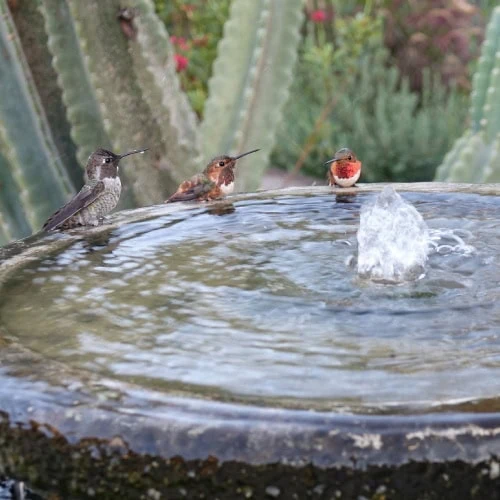
Keep your accessible bathing water no deeper than about 0.5 inches, with shallower wet surfaces available. Securely cover deeper reservoirs, and keep your pump submerged to the manufacturer’s specified level. Afternoon shade helps limit water heating, while an open view around the bath gives your visitors room to watch for predators.
Plan for fresh water and regular scrubbing, including inside tubing and beneath stones. Circulation still leaves you with cleaning duties and mosquito checks, especially when solar pumps stop overnight.
1) Flower Pot Hummingbird Bath

Repurposing an upside-down terracotta pot gives you a compact bathing feature that fits near an established hummingbird visiting spot. Your main attraction is the small wet surface beneath a gentle trickle, with a secure perch close enough for easy access.
You get the satisfaction of rescuing usable parts from an old feeder, particularly when its reservoir or hanging hardware remains sound. If you enjoy making hummingbird feeders, this project gives you another use for spare components while keeping bathing water separate from nectar.
Your most useful design feature is easy access for cleaning. Narrow openings and hidden cavities add scrubbing work, so favor parts that come apart readily. Keep the finished bath level and check its support regularly, especially after windy weather.
2) Solar Power Pebble Fountain Bath

Solar power gives your pebble fountain moving water without an electrical cord running across the garden. A broad bowl and a small bubbler make this one of your most approachable options, with plenty of room to adjust the look.
Your pebbles serve a practical purpose: broad, lightly textured stones provide footing beside the bubbling outlet. Water slipping over their tops creates shallow bathing surfaces without requiring a large pool.
When comparing solar-powered pumps, focus on a gentle adjustable flow and the panel arrangement. A separate panel lets you keep the basin in afternoon shade while the panel receives direct sunlight.
You also get an easy project to revise. Removable stones give you access to the bowl, though a tightly packed layer of tiny gravel adds considerably more cleaning work.
3) Endless Fountain Cup Bird Bath

A cup fountain gives your garden a small bubbling focal point with a shallow overflow area around it. You get the appeal of trickling water in a project sized for a modest garden corner or sturdy outdoor table.
The cup adds personality without requiring elaborate decoration. Your useful bathing space comes from the wet rim and nearby textured landing surfaces, so the cup’s shape deserves more attention than its color.
Among DIY bird bath designs, this style offers plenty of scope for repurposing sound plastic or ceramic pieces. Keep any chipped crockery out of your build, and use fully cured materials rated for the intended water contact.
Treat “endless” as recirculating: your pump reuses reservoir water, while evaporation and splashing still require water-level checks. A removable cup keeps those checks and cleaning manageable.
4) Ground-Level Solar and River Rock Bath

At ground level, your river rock bath blends easily into a planting bed and avoids the need for a pedestal. Its low profile suits a natural garden, especially where you already use rocks in your landscaping.
You have room to enjoy choosing stones for function as well as appearance. Broad rocks with some surface texture offer useful wet perches; highly polished stones give small feet less purchase.
This option deserves extra care with placement. Keep your bath away from dense ground cover where cats conceal themselves, and maintain a clear approach around the water. A raised design is a better choice wherever roaming cats frequent your yard.
Your other maintenance issue is soil splash. After heavy rain, check the basin for grit and plant debris before restarting the fountain.
5) Bucket and Water Bottle Endless Fountain

Extra reservoir capacity makes a bucket-and-bottle fountain useful when your smaller bowls lose water quickly. You get a larger water supply beneath a compact bathing surface, with inexpensive containers doing most of the structural work.
The water bottle gives your project a lightweight fountain form, while the bucket offers room for a submerged pump. An opaque reservoir also limits the sunlight reaching stored water, although you still need regular cleaning.
Your most important feature is a secure, load-bearing cover over the deep water. The top should remain stable under visiting wildlife, with small return openings and access for pump maintenance.
You also need to account for the bucket’s weight when full. A firm, level location keeps the fountain steady, and a low bubbling outlet helps contain splash within the return area.
6) DIY Floating Rock Bird Bath

With a concealed support, your floating rock bath gives a wet stone the appearance of hovering above its basin. You get an interesting garden feature while keeping attention on a useful hummingbird bathing surface.
The appeal comes from a thin film of water spreading over the rock. Your best choice is a broad, gently sloping stone with enough texture for footing and no sharp edges.
This design fits neatly into landscaping around a bird bath, particularly where surrounding planting softens the basin’s outline. Keep that planting low enough to preserve a clear view around the landing area.
Your hidden support needs to hold the stone firmly without rocking or shifting. Removable components are especially valuable here because algae and debris collect beneath the stone, out of everyday view.
7) Power Bank Glass Bowl Hummingbird Bath

For a shaded patio, your power-bank fountain offers pump operation without relying on direct sunlight at the basin. A compatible low-voltage USB pump gives you flexibility over where the bowl sits.
Your glass bowl brings a useful advantage: you can see sediment and a falling water level quickly. A broad, heavy-bottomed bowl provides a steadier base, while removable textured stones supply footing over the slippery glass.
Battery capacity and pump power draw determine your running time. Check the pump’s voltage requirements and whether your power bank supports continuous operation at that load.
Keep your power bank and connections dry using equipment rated for the outdoor conditions. An ordinary plastic bag provides poor long-term weather protection. Recharge batteries indoors in a dry location, and reserve this design for a secure surface away from edges.
8) DIY Tupperware & Waffle Tray Bird Bath

A DIY Tupperware and waffle tray solar bird bath is an easy way to create a small water feature using everyday household items. The waffle tray provides a textured surface where birds can perch, while the Tupperware basin holds water and helps create a welcoming spot for bathing.
A solar-powered fountain can add gentle movement without needing a nearby electrical outlet. Keep the water shallow, make sure the tray is stable, and position the fountain so birds have room to land and move around safely.
Regularly refresh and clean the water to keep the bath inviting. Check the plastic containers for sun damage or rough edges, and replace them if they become cracked or britt
9) Hanging Plastic Bottle & Bowl Solar Bath

Hanging your bottle-and-bowl bath frees up ground space and puts a small water feature within view from a porch or window. You get a lightweight craft suited to a sheltered garden position.
The bowl provides a wider bathing area than the bottle alone, with room for a low bubbler and a secure perch. Your choice of support determines how comfortably the bath holds its position when birds land.
Account for the full weight of water and stones when selecting hanging hardware. Several evenly spaced suspension points help keep your bowl level, and a sheltered location reduces swinging.
Keep the bath easy to lower for cleaning. If your solar panel hangs with the assembly, check its exposure through the day; nearby leaves and roof overhangs cast moving shadows that interrupt pump operation.
10) DIY Cement Multi-tier Bird Bath

Cement tiers give your garden a durable cascading feature with several wet ledges at different heights. You get the most involved craft on this list, along with greater freedom over basin shape and surface texture.
Your hummingbird-friendly detail is a shallow upper ledge where water spreads gently before spilling downward. Larger lower basins need secure covers or stable infill wherever they expose deep water.
Allow your cement to cure fully according to its product instructions, then rinse and soak it through repeated water changes. Any coating needs an explicit rating for the intended water contact and its full curing period.
When choosing a fountain pump, account for the lift to your highest tier and look for adjustable flow. For mains-powered equipment, use GFCI protection and outdoor-rated connections. Provide access to each basin so you can scrub away buildup beneath the spillways.