
Achieving clear pond water requires balancing nutrient inputs with proper filtration. While many keepers desire crystal clear pond water, a healthy pond ecosystem still experiences natural seasonal shifts.
Learning how to keep pond water clear comes down to supporting that ecosystem. The aim is water that supports your fish and lets you enjoy them, without draining the pond every time its appearance changes.
1) Install a Biological Filter Sized for Your Pond

- Highly effective and reliable pond filter.
- Designed for larger ponds, perfect for ponds up to 6,000 gallons with koi and 24,000 gallons with no fish.
- Features an active LED display, which shows the required cleaning measures.
Robust biological filtration helps your pond process fish waste before it builds up. Water passing through an efficient biofilter supports beneficial bacteria that convert ammonia to nitrite and then nitrate. Plants can take up some of that nitrate, but a filter cannot make excess food and waste disappear.
Match the filter’s rated capacity to your pond volume, fish load, and pump flow. A dedicated koi pond places heavier demands on biological filtration than a lightly stocked water garden. Adding supplemental beneficial bacteria can help establish the biofilter media more quickly.
When maintenance is needed, gently rinse biological media in removed pond water and leave some media undisturbed. If you are comparing setups, look at how a pond filter accommodates both your pump and your fish population.
2) Reduce Fish Feeding and Avoid Overstocking
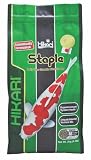
- Floating pellets allow easy monitoring of amount eaten
- Will not cloud water
- Supports immune system health
Feed your fish only what they promptly eat, and remove uneaten food before it sinks. Leftover pellets and fish waste create decomposing organic waste that feeds nuisance algae, even when the filter is working well.
Watch the pond as your fish grow. A stocking level that worked for small fish can overwhelm filtration later, especially in a heavily stocked koi pond. Excess organic waste fuels algae blooms and clouds the water.
If ammonia or nitrite rises, reduce feeding and review fish stocking alongside the biofilter. Cutting nutrient inputs gives your biological filtration less work to do.
3) Use a Mechanical Filter to Capture Suspended Debris
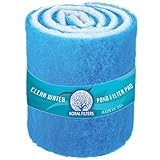
- Suitable for Koi Ponds and Aquariums: Our blue bonded and dye-free bonded filters are specially designed for both fresh and saltwater...
- Cost-Efficient Cut-to-Fit Roll: Our trusted filter is supplied in a roll format, allowing you to effortlessly tailor it to your specific...
- Durable and Reusable: Our robust design ensures that the filter is resistant to warping, breaking, and tearing. It's easy to clean, making...
Effective physical filtration catches the floating particles that make water look hazy. A dedicated pond skimmer collects leaves and surface debris, while filter pads or finer media trap particles moving through the water.
Check the media when flow slows or water begins bypassing it. Rinse debris from mechanical pads as needed, taking care to preserve separate biological media.
If a fine pad clogs quickly, clear the larger leaves and organic waste first. Removing debris early allows fine mechanical pads to polish the water toward crystal clear pond water.
You can also place activated carbon in a media bag inside the filter. High-grade activated carbon absorbs dissolved organic compounds and removes unsightly discoloration.
4) Add Water Lilies and Other Aquatic Plants for Shade
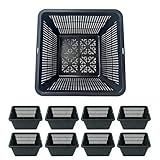
- Square Aquatic Plant Baskets: Each basket measures approximately 9.06 x 9.06 x 5.24 inches / 23 x 23 x 13.3 cm across the outer rim and in...
- 8 Pack Set for Extensive Planting Needs: Our package includes 8 aquatic plant baskets, great for satisfying various pond planting...
- Flat Bottom for Placement: Each plastic basket features a flat base for placement on a level pond bottom or shelf. Position the basket at a...
Incorporating diverse aquatic plants creates a well-rounded pond ecosystem. Sturdy marginal aquatic plants and water lily pads absorb nitrates while providing essential surface shade.
Adding a dedicated bog filter packed with hungry plants like cattails helps strip excess nutrients from the water. These pond plants compete directly with nuisance algae for dissolved nitrates. This natural form of algae control starves blooms before they can spread.
Leave open water for circulation and gas exchange, and trim dead leaves before they decay. Fast-growing options like water hyacinth quickly absorb dissolved nutrients while providing shade. Be sure to choose plants suited to your pond depth; floating pond plants offer a practical way to shade exposed water.
Healthy aquatic plants establish gradually, making them a foundational element for anyone wondering how to keep pond water clear long term.
5) Use a UV Clarifier for Green Water

- Powerful 18 watt UV bulb for maximum cleaning results in a crystal clear pond by eliminating green water
- Easily integrates into an existing or new pond system
- For best results, connect to an OASE BioSmart biological filter
A UV clarifier targets the free-floating single-cell algae and green water algae responsible for stubborn green pond water. The pump sends water through the UV chamber, where exposure disrupts algae reproduction before downstream filtration collects the affected cells.
Eliminating green water algae is often the quickest path from murky pea soup to clear pond water. Size the unit for your pond volume and flow rate, and maintain the bulb as directed.
Keep in mind that UV works on water passing through the chamber, so attached string algae remains on rocks and liner. If green pond water keeps returning, review feeding, shade, and biological filtration alongside the UV clarifier.
6) Net Leaves and Vacuum Bottom Sludge

- Max. Suction depth: 6 ft.
- High-power suction to a depth of 59 inch.Maximum suction depth of 78 inch.Suction hose length: 13 ft
- Power consumption: 1200-1400w
Consistent pond maintenance keeps settled debris from ruining water clarity. Remove fallen leaves before they sink, then vacuum accumulated sludge from accessible areas of the pond floor. Decaying organic waste releases nutrients and can tint the water brown.
A long-handled net handles surface debris, while a specialized pond vacuum reaches settled sludge without requiring a full drain. Using a pond vacuum during routine pond maintenance prevents waste buildup from destabilizing the pond ecosystem.
During heavy leaf fall, a cover net can intercept debris before it reaches the water. You can clean a pond without draining it by tackling the dirtiest pockets in stages.
7) Keep Water Moving with an Aerator

- COMPLETE PRO-GRADE AERATION KIT: Comes complete with outdoor-rated, weather-proof, energy-efficient 45 watt compressor, (2) clog-resistant...
- EFFECTIVE OXYGENATION: Powerful air flow rates and with powerful, yet energy-efficient pump, provides oxygenation levels to keep water clean...
- IMPROVES POND CONDITIONS: Designed for ponds up to 15,000 gallons, the Pro Air 60 provides 2.1 CFM of maximum airflow to promote healthier...
Steady circulation carries pond water through its filters and reduces stagnant pockets. An aerator, waterfall, or water fountain also increases surface movement, which supports oxygen exchange for fish and beneficial bacteria.
Dissolved oxygen helps aerobic beneficial bacteria break down waste inside the biofilter. A well-oxygenated pond ecosystem resists foul odors and clarifies more reliably.
Check that the pump intake is clear and water reaches debris collection zones. During hot weather, watch fish behavior closely and increase aeration if fish linger at the surface.
8) Divert Fertilizer and Soil Runoff Away from the Pond
Keep lawn fertilizer and muddy stormwater out of the pond to prevent fresh nutrient and sediment loads. Watch where water flows during rain, especially from slopes, patios, and nearby planting beds.
A shallow berm, planted buffer, or redirected downspout can steer runoff away from the pond edge. Keep fertilizer application clear of areas that drain into the water, and stabilize exposed soil with appropriate planting or mulch. If cloudiness repeatedly follows rain, deal with the incoming flow before changing your filter media again.
9) Pull Out String Algae Manually
No products found.
Remove visible string algae by winding it around a pond brush or stick and lifting it out. This filamentous algae grows on surfaces, so a UV clarifier cannot reach the strands attached to rocks, liner, and waterfall edges.
Work in small areas to avoid disturbing fish or uprooting plants. Collect loose pieces before they drift to the pump intake, and leave firmly attached plant roots alone.
Hand removal gives you immediate control of a mat; reducing excess nutrients helps limit its return. Combining manual clearing with nutrient management creates an effective strategy for algae control.
10) Use a Pond-Safe Flocculant for Fine Cloudy Particles

- The information below is per-pack only
- Clears Pond Water Fast -- CrystalClear RapiClear flocculant quickly restores cloudy pond water to a brilliant shine within 1-3 hours. No...
- Use When Water Gets Disturbed by Storms or Vacuuming -- RapiClear flocculant allows suspended particles in the water to clump together...
A flocculant helps when fine suspended particles pass through your filter or take too long to settle. It binds small particles into larger clumps that filtration or careful vacuuming can remove.
Confirm that the product is labeled for ponds containing your fish and plants, calculate your pond volume, and follow the label dose. Maintain aeration during treatment and clear the collected material afterward.
A flocculant addresses the particles already in the water; recurring cloudiness calls for a check of runoff, bottom disturbance, and filter performance.
How to Keep Pond Water Clear (Summary)
| Method | Primary Benefit | Key Details |
|---|---|---|
| 1. Biological Filter | Processes waste and ammonia | Supports beneficial bacteria to convert toxins; size to pond volume and fish load. |
| 2. Reduce Feeding & Stocking | Cuts excess nutrient inputs | Prevents uneaten food and heavy waste from feeding nuisance algae blooms. |
| 3. Mechanical Filter | Captures suspended debris | Pads and skimmers catch particles; carbon removes discoloration. |
| 4. Aquatic Plants | Shades water and starves algae | Lilies and marginals absorb nitrates and block direct sunlight. |
| 5. UV Clarifier | Eliminates green water algae | Disrupts single-cell floating algae so filtration can collect it. |
| 6. Netting & Vacuuming | Removes organic sludge | Extracts fallen leaves and floor muck before they rot and tint water. |
| 7. Aeration & Circulation | Increases oxygen levels | Prevents stagnant zones and aids aerobic bacteria in waste breakdown. |
| 8. Divert Runoff | Blocks outside contaminants | Berms and borders keep lawn fertilizer and muddy stormwater out. |
| 9. Manual Algae Removal | Controls string algae | Physical removal targets surface-clinging strands that UV cannot treat. |
| 10. Flocculant Treatment | Clears fine suspended particles | Binds tiny particles into larger clumps for filtration or vacuuming. |
Diagnose the Water Before Choosing a Fix
The color and texture of the water point you toward the right remedy. Take a sample in a clear container and compare what you see there with the pond itself, especially after rain or maintenance.
Is the Water Green, Cloudy, or Brown?
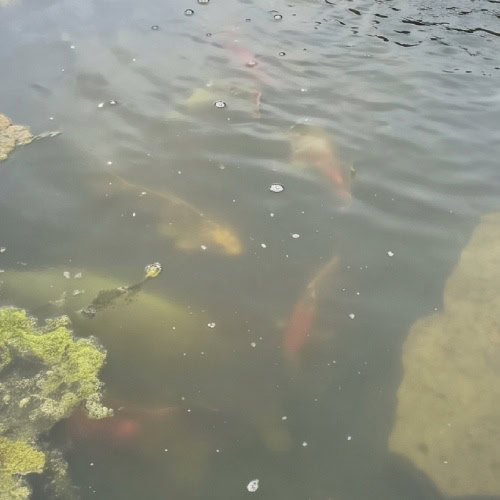
Uniform green pond water points to free-floating green water algae. White or gray haze suggests fine sediment or a bacterial bloom, particularly in a newly established pond ecosystem. Giving beneficial bacteria time to populate the biofilter often resolves cloudy new water.
Brown water needs a closer look. A clear, tea-colored sample suggests organic tannins from leaves or wood, while murky brown water suggests suspended soil. Running activated carbon in the filter helps pull out those stubborn brown stains.
Remove fallen organic waste and stop incoming sediment before treating the water. For persistent haze, the steps for clearing cloudy pond water begin with identifying what keeps entering or stirring up the bottom.
Is the Algae Floating in the Water or Attached to Surfaces?
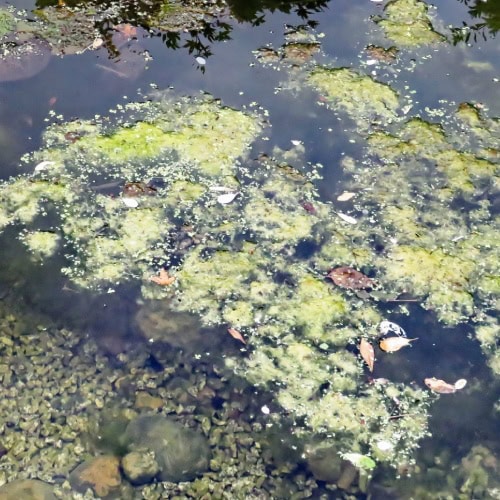
If the water itself looks green when scooped into a container, microscopic single-cell algae is the likely cause. These drifting cells multiply rapidly under sunlight, creating typical green water algae blooms.
That is the green pond water issue a correctly installed UV clarifier treats.
Visible strands clinging to stones, liner, or plants are string algae. Lift out excess growth by hand and look for nutrient inputs that support it. Checking both water samples and pond surfaces helps you choose the right approach for clear pond water.
Keep the Pond Clear Without Harming Fish
Protect fish by treating water clarity and water quality as related checks. Clear-looking water can still contain harmful ammonia or nitrite, while a temporary green tint does not by itself tell you that fish are in danger.
Which Water Tests Matter Most?
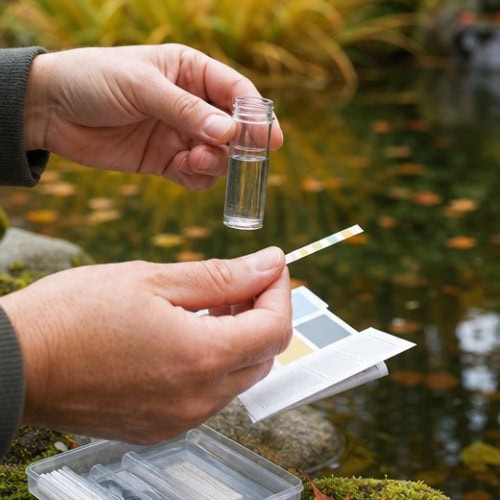
Test ammonia, nitrite, and pH when the pond changes appearance or your fish behave differently. Nitrate gives you another clue about nutrient buildup, while alkalinity (KH) helps you assess the pond’s ability to resist pH swings. A dissolved oxygen test is useful if fish gasp at the surface, particularly during hot weather.
Record results alongside recent feeding, rain, filter cleaning, and water changes. That pattern is more useful than a single reading.
When adding tap water during water changes, use a reliable dechlorinator to neutralize harmful chlorine or chloramine before it reaches your fish or biological filter. Dosing a dechlorinator every time you top off the pond also protects sensitive beneficial bacteria from chemical burns.
When Is a Treatment a Temporary Fix Rather Than a Long-Term Solution?
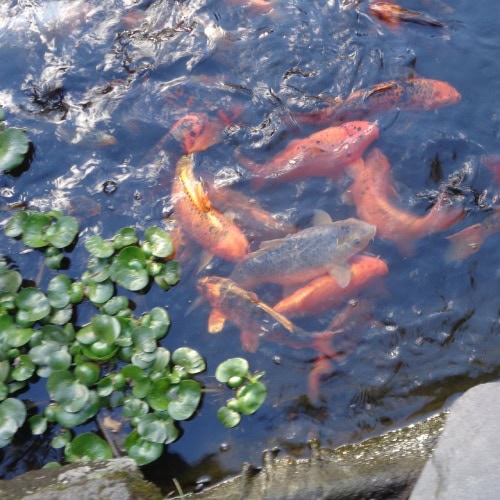
A treatment is temporary when the condition feeding the problem remains. A UV clarifier can clear green water algae, and a flocculant can gather fine particles, yet neither stops nutrient runoff or a failing biofilter.
Preventative options like barley straw or liquid barley straw extract can help inhibit new algae development as they break down. Adding barley straw extract early in spring provides gentle maintenance, though it cannot replace mechanical and biological filtration.
Use an algaecide only as labeled for your pond and its inhabitants. Rapidly killing a large algae bloom leaves organic waste to decompose and can strain oxygen levels, so keep aeration running and vacuum debris.
Sustainable algae control relies on addressing root causes rather than repeatedly treating symptoms with chemicals.
Ultimately, knowing how to keep pond water clear involves consistent pond maintenance rather than quick fixes. With balanced feeding, active biological filtration, and healthy aquatic plants, you can enjoy crystal clear pond water year after year.