
You can improve water quality in your pond by choosing plants that thrive in shallow, gravel-filled bog filters and actively absorb excess nutrients. When you select species adapted to wet soil and steady water flow, you strengthen your natural filtration system without relying only on mechanical equipment.
This guide walks you through twelve reliable options, from rushes and irises to flowering marginals and nutrient-hungry sedges. You will see how different root structures, growth habits, and seasonal traits work together to keep water clearer while adding structure and color to the pond’s edge.
1) Soft Rush (Juncus effusus)
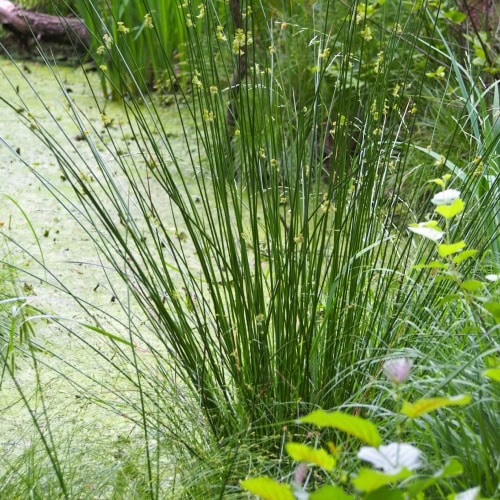
Soft Rush is a hardy, clump forming native plant that works well in pond margins and bog filters. You can use it to add upright structure and consistent green texture around your filter bed.
It tolerates constantly wet soil and shallow water. It adapts to gravel filled filter zones.
Its dense root system helps stabilize the substrate and supports biological filtration. Plant it in full sun or light shade for steady growth.
2) Blue Flag Iris (Iris versicolor)

Blue Flag Iris is a hardy native plant that performs well in bog filters and shallow pond margins. You can rely on it to tolerate saturated soil and a few inches of standing water.
It produces blue to violet flowers in late spring to early summer. The upright, sword shaped leaves typically reach about 24 inches tall.
Plant the rhizomes in loam soil with light coverage and place them in full sun for best growth. You can also use it to stabilize pond edges and naturalize wet areas.
3) Sweet Flag (Acorus calamus)
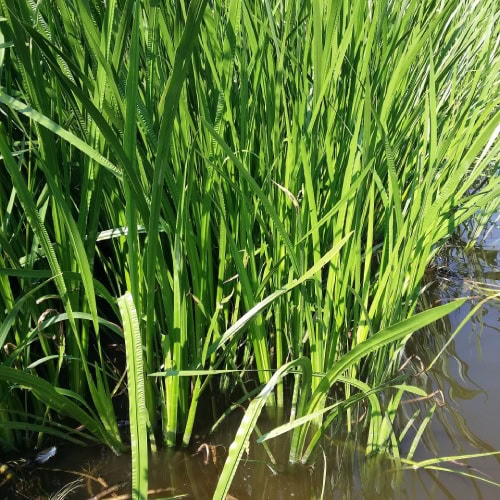
Sweet Flag is a hardy marginal plant that performs well in bog filters and shallow pond edges. You can plant it directly in saturated soil or in a few inches of standing water.
Its upright, sword shaped leaves add vertical structure and release a light fragrance when crushed. The dense rhizomes spread steadily, helping you stabilize soil while absorbing excess nutrients.
This species tolerates full sun to partial shade. It returns reliably each year in temperate climates.
4) Water Mint (Mentha aquatica)

Water mint grows well in bog filters, where you can plant it in shallow water or saturated soil. You can place it along pond margins or on planting shelves with aquatic media.
It produces lilac to pink flowers in summer and releases a clear mint scent when you crush the leaves. The foliage may show purple tones on reddish stems.
This fast grower helps fill gaps quickly. You should trim it to control spread.
5) Marsh Marigold (Caltha palustris)

Marsh marigold is an early spring bloomer that brings bright yellow flowers to your bog filter. Its glossy green, heart-shaped leaves stay compact, typically reaching 6 to 12 inches tall.
You can plant it in consistently moist soil or shallow water up to a few inches deep. It performs well in part sun to shade and suits hardiness zones 3 to 7.
This clumping perennial helps stabilize wet margins. It suits pond edges, rain gardens, and slow-moving water.
6) Bog Bean (Menyanthes trifoliata)
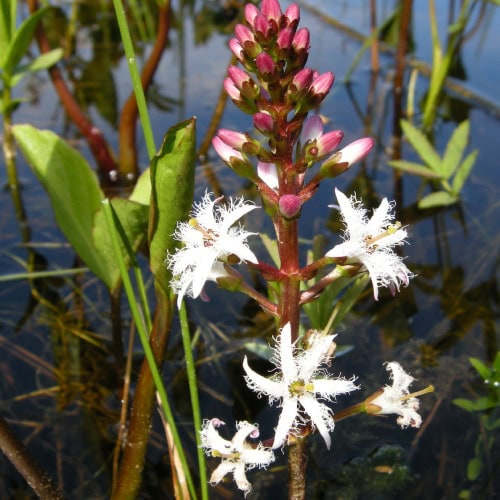
Bog bean is a rhizomatous, emergent perennial suited for shallow water and saturated soil. You can plant it in bog filters where water stays consistently moist.
It produces olive green leaves with three leaflets and sends up white, fringed flowers in spring. The blooms attract pollinators and add seasonal interest.
Grow it in full sun for best flowering. You can divide the rhizomes to control spread and expand coverage in your filter.
7) Water Forget-me-not (Myosotis scorpioides)

Water forget-me-not grows well in shallow water or consistently moist soil, making it suitable for bog filters. You can plant it on a marginal shelf or in saturated gravel where water flows slowly.
It produces small blue flowers with yellow centers from late spring into summer. These blooms attract bees and other pollinators.
This hardy perennial spreads gradually and forms low mats. Trim it after flowering to control growth and keep your filter area tidy.
8) Golden Canna (Canna indica)

Golden canna adds bold foliage and bright yellow blooms to your bog filter. You can plant it in consistently wet soil or in shallow water along the pond edge.
Its broad leaves help absorb excess nutrients as water moves through the root zone. This supports filtration while adding height and structure.
Place it in full sun for steady growth. Divide the rhizomes as needed to control spread and maintain strong flowering.
9) Pickerelweed (Pontederia cordata)
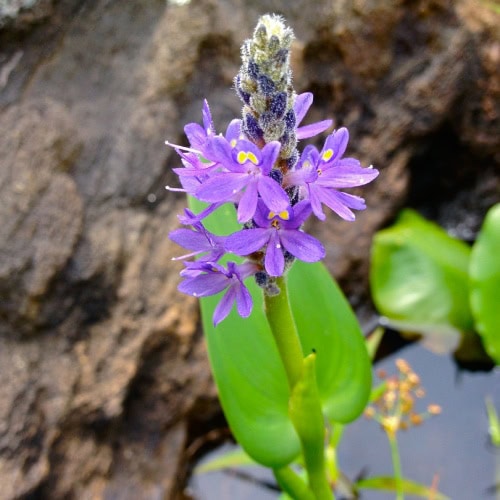
Pickerelweed is an emergent native perennial that grows 2 to 4 feet tall in shallow water. You can plant it along pond margins or directly within a bog filter.
Its upright, lance shaped leaves create structure, while blue violet flower spikes appear through summer. These blooms attract pollinators and add seasonal color.
Place the roots in consistently moist soil or a few inches of water. Divide clumps to control spread.
10) Soft Stem Bulrush (Schoenoplectus tabernaemontani)

Soft stem bulrush is a reliable emergent plant for bog filters. You can identify it by its round, smooth stems that feel soft and compress easily when squeezed.
It grows 3 to 6 feet tall and spreads by rhizomes, forming dense stands. You can plant it in shallow water up to about 12 inches deep or along pond margins.
Use it to absorb excess nutrients and stabilize wet soils. Its upright stems also add vertical structure to your filter zone.
11) Yellow Flag Iris (Iris pseudacorus)

Yellow flag iris is a hardy marginal plant that performs well in bog filters. You can grow it in shallow water, typically 6 to 12 inches deep, or in consistently wet soil.
It produces upright, sword like leaves and bright yellow flowers from late spring to early summer. The dense root system helps stabilize the substrate and supports nutrient uptake.
Plant it along pond edges or within the bog zone where water flows slowly through the roots.
12) Square-stemmed Sedge (Carex rhynchophysa)
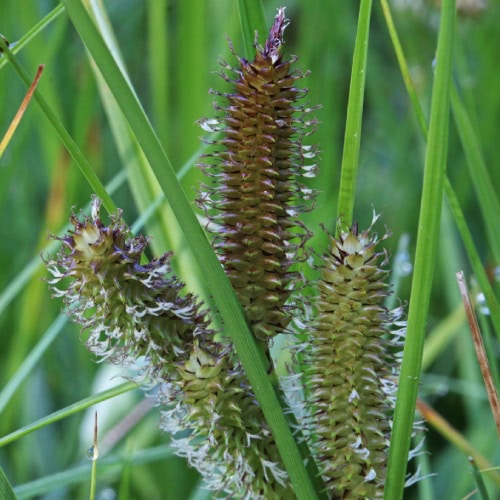
Square-stemmed sedge adds height and structure to your bog filter. You can use it along the back or center of the bed, where its upright, four-angled stems create vertical contrast.
This species thrives in consistently wet soil and shallow water. It tolerates nutrient-rich conditions, making it suitable for gravel-based bog filters that receive pumped pond water.
Its dense root system helps trap fine particles. You also gain seasonal interest from its narrow foliage and subtle seed heads.