
A clean pond pump is the foundation of a healthy aquatic ecosystem. To keep your pond pump clean, you need to combine regular inspection and debris removal with proper maintenance schedules and strategic placement to prevent blockages before they start. Without consistent care, your pump can clog, lose efficiency, and fail prematurely, leaving your pond water stagnant and unhealthy.
This guide walks you through practical strategies to maintain your pond pump’s performance year-round. You’ll learn how your pump operates, what causes it to clog, and proven techniques to prevent problems rather than just react to them.
Preventing Debris Buildup
Strategic pump placement, effective pre-filtration, and thoughtful plant management create a defense system against debris accumulation. These measures reduce cleaning frequency and extend your pump’s operational life.
Optimizing Pump Placement

Position your pump at least 12 inches above the pond bottom to avoid direct contact with settled debris and sludge. This elevation keeps the intake away from the heaviest concentration of organic matter that naturally settles in lower areas.
Place the pump in a zone with minimal debris flow, typically away from overhanging trees, shrubs, or areas where leaves tend to accumulate. The center of the pond often provides better water quality than edges where wind pushes floating material.
Avoid positioning your pump near feeding areas where uneaten fish food can be drawn directly into the intake. If you have waterfalls or streams, place the pump in calmer water rather than turbulent zones where debris churns constantly.
Consider creating a pump chamber or housing using decorative rocks or pond-safe materials. This physical barrier shields the pump from larger debris while maintaining adequate water flow for cooling and operation.
Using Pre-Filters and Strainers
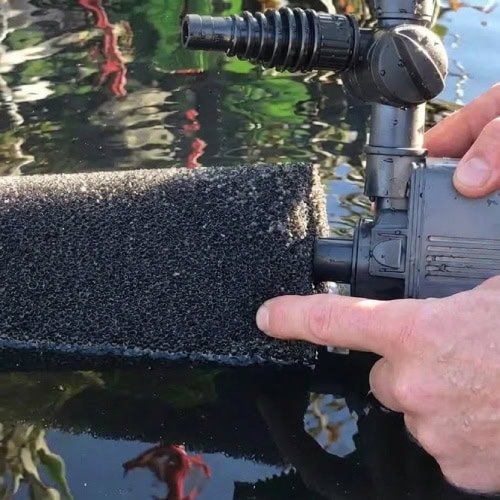
Install a foam pre-filter sleeve over your pump’s intake screen to trap particles before they reach the pump mechanism. These inexpensive sleeves capture fine debris, algae, and sediment that would otherwise clog the impeller.
Replace or rinse foam pre-filters weekly during high-debris seasons like spring and fall. A clogged pre-filter restricts water flow and forces your pump to work harder, but cleaning takes only minutes compared to full pump disassembly.
Consider upgrading to a larger intake screen or cage if your pump came with minimal protection. Increased surface area distributes debris collection across a wider space, reducing how quickly the screen becomes blocked.
For ponds with heavy debris loads, add a separate pre-filter box between the pump and main filtration system. These boxes provide mechanical filtration stages that remove progressively smaller particles before water reaches your pump.
Managing Aquatic Plants Around the Pump
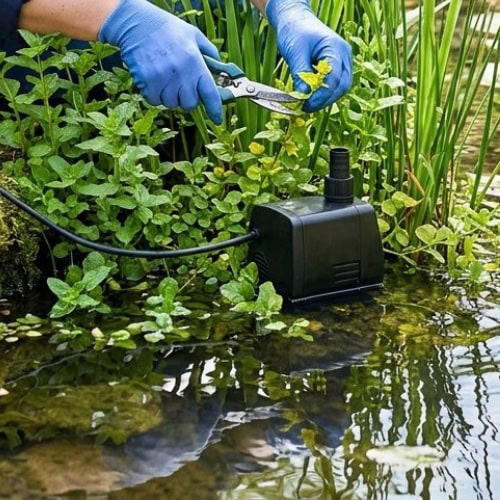
Trim aquatic plants regularly to prevent decaying leaves and stems from drifting into the pump intake. Dead plant material breaks down into fine particles that slip through screens and accumulate inside the pump chamber.
Maintain a clear zone of at least 18 inches around your pump by removing aggressive spreaders like duckweed or water meal that can overwhelm the intake. String algae poses particular problems as it wraps around impellers and restricts rotation.
Position marginal plants and lilies away from the pump’s direct water flow path. While these plants benefit water quality, their proximity to pumps creates maintenance challenges as they shed organic material throughout the growing season.
Use plant baskets with fabric liners to contain soil and prevent substrate from entering the water column. Loose soil particles are among the most damaging debris types, causing abrasive wear on pump components and creating stubborn buildup inside the impeller chamber.
Routine Maintenance Practices
Regular cleaning prevents pump failure and maintains water quality. Most pumps need attention every 2-4 weeks during active months, though timing varies based on debris load and pond conditions.
Recommended Cleaning Frequency
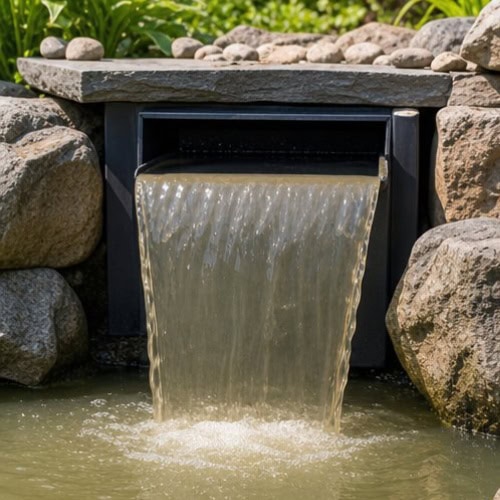
Clean your pond pump every 2-4 weeks during spring and summer when biological activity peaks. If your pond contains heavy debris, fish waste, or sits near trees, inspect the pump weekly.
Winter maintenance requires less frequent attention. Check your pump monthly during cooler months when organic matter accumulates more slowly. Ponds with koi or high fish populations need more frequent cleaning regardless of season.
Watch for warning signs between scheduled cleanings. Reduced water flow, unusual noises, or visible debris buildup means immediate cleaning is necessary. A pump running hot to the touch also signals obstruction inside the impeller chamber.
Create a maintenance log to track cleaning dates and observed issues. This record helps you identify patterns and adjust your cleaning schedule to match your pond’s specific needs.
Safe Power Down and Disassembly Steps

Always disconnect power at the outlet before touching your pump. Unplugging prevents electric shock and protects the motor from damage during handling.
Let the pump sit for several minutes after unplugging to allow internal components to stop completely. Remove the pump from the pond carefully, keeping it upright to prevent debris from entering the motor housing.
Place the pump on a clean, flat surface. Remove the outer cage or pre-filter by twisting or unclipping according to your model’s design. Most cages lift off easily once you locate the release mechanism.
Access the impeller chamber by removing the faceplate or cover. This typically requires unscrewing several screws or releasing clips. Keep all hardware together in a container to prevent loss during cleaning.
Tools and Supplies for Effective Cleaning
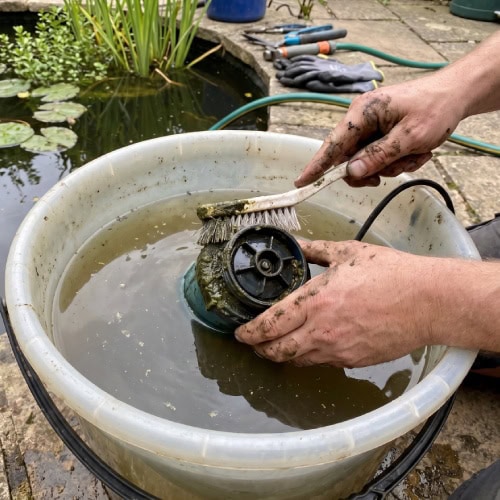
Gather these essential items before starting:
- Soft-bristled brush or old toothbrush
- Garden hose with spray nozzle
- Clean bucket or container
- White vinegar for mineral deposits
- Soft cloths or paper towels
- Screwdriver set for disassembly
A soft brush removes algae and debris without scratching plastic components or damaging seals. Avoid wire brushes or abrasive pads that can create rough surfaces where algae attaches more easily.
Keep white vinegar on hand for dissolving calcium and limescale buildup on the impeller and chamber walls. Soak affected parts for 15-20 minutes, then scrub gently.
Your garden hose provides adequate pressure for rinsing without forcing water into sealed motor compartments. Use moderate pressure to flush debris from tight spaces around the impeller shaft.
Eco-Friendly Cleaning Methods
Natural cleaning approaches protect your pond’s ecosystem while maintaining pump performance. Using biodegradable products and waste reduction strategies keeps your equipment running efficiently without introducing harmful chemicals into the water.
Non-Toxic Cleaning Solutions
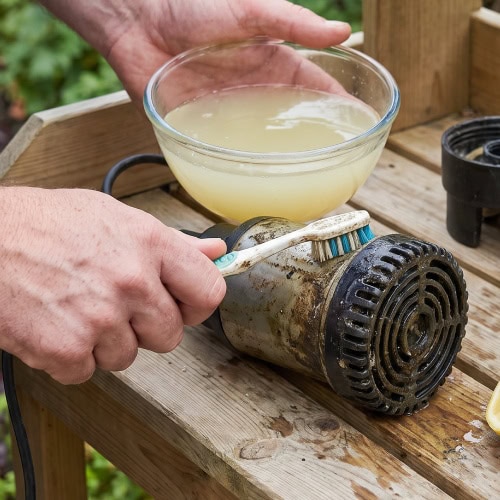
White vinegar serves as an effective natural cleaner for removing mineral deposits and algae buildup from your pond pump. Mix equal parts white vinegar and water in a bucket, then soak pump components for 15-20 minutes before scrubbing with a soft brush.
Baking soda provides gentle abrasive cleaning power without toxic residues. Create a paste with water and apply it to stubborn deposits on the impeller and housing. This method works particularly well for removing calcium buildup without scratching sensitive components.
Natural cleaning alternatives include:
- Lemon juice for light mineral deposits
- Hydrogen peroxide (3% solution) for algae removal
- Plain water with mechanical scrubbing for routine cleaning
Avoid commercial cleaning products containing phosphates, ammonia, or chlorine bleach. These chemicals can disrupt beneficial bacteria in your biofilter and harm fish even in small residual amounts.
Reducing Waste During Cleaning
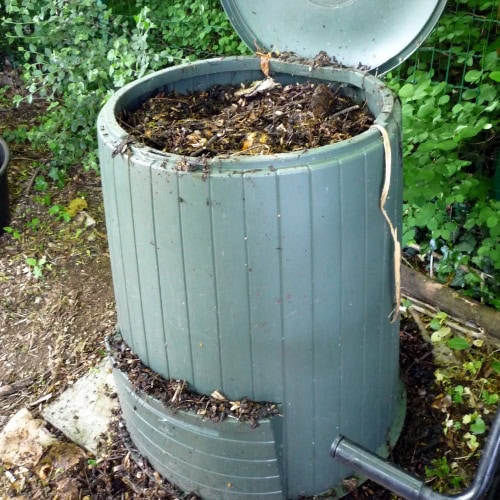
Collect debris removed during pump cleaning and add it to your compost pile rather than disposing in trash. Organic matter like algae and plant material breaks down naturally and enriches garden soil.
Reuse cleaning water from pump maintenance to water surrounding landscaping instead of letting it drain away. This approach conserves water while putting nutrient-rich pond water to beneficial use.
Use washable cleaning cloths and brushes instead of disposable products. A dedicated set of tools for pond maintenance eliminates ongoing waste while providing better cleaning performance than paper towels or disposable wipes.
Install a pre-filter or skimmer basket to catch debris before it reaches your pump. This preventive measure reduces cleaning frequency and extends the time between deep maintenance sessions, minimizing resource use over time.