
String algae can cover rocks, spill from a waterfall, and trap debris around your plants even while the water looks clear. It grows when sunlight and dissolved nutrients give attached algae a steady food supply.
For safe, lasting control, pull out the bulk of the algae first, then reduce the fish waste, runoff, sunlight exposure, and trapped debris that fuel its return. That order protects your fish and keeps dead algae from consuming oxygen as it decays.
When you learn how to get rid of string algae in ponds, aim for balance instead of sterile water. A little pond algae belongs in a functioning backyard pond. The goal is clear pond water, healthy fish, and growth that stays manageable.
Remove the Existing Algae First
Physical removal gives you the fastest visible improvement and removes nutrients locked inside the stringy algae before they break down in the pond. Work slowly, lift algae out in small bundles, and collect every loose piece you dislodge.
How to Pull Out Stringy Algae Without Spreading It
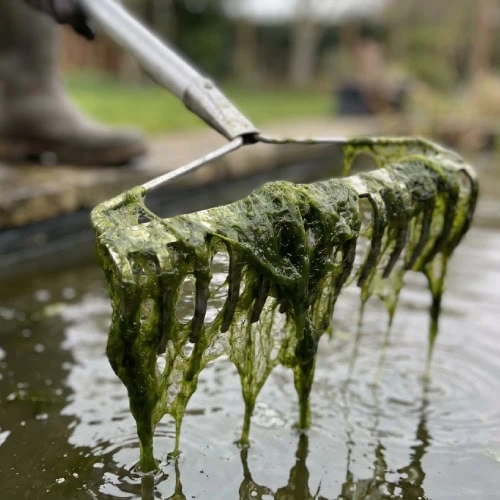
Stringy algae, also called hair algae, filamentous algae, or blanket weed, forms long green threads that cling to rocks, plant baskets, liner folds, and equipment. Twist the strands around a pond brush, algae brush, or gloved hand, then lift them straight into a bucket.
For larger mats, use a pond rake or pond net. Sweep from the pond edges toward one collection point so fragments do not drift across the pond. Avoid aggressive raking around plant roots, fish spawning areas, and flexible liner seams.
Pull algae from your waterfall by turning off the pump briefly, if your pump instructions allow it. Let water drain from the stream before you remove the mat, then restart circulation once the channel is clear.
Cleaning Pond Walls, Edges, and Waterfalls
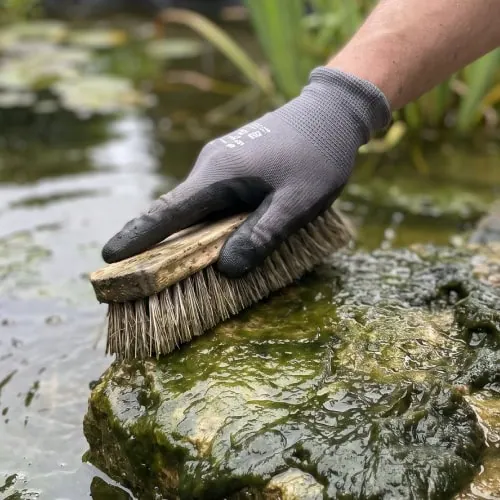
Brush pond walls and shallow margins with a soft pond brush while holding a fine pond net below the work area. This catches loosened algae and organic matter before it settles into gravel or reaches the skimmer.
Focus on places where water slows down: behind marginal plant baskets, around pump housings, at pond edges, and in waterfall spillways. These areas collect fish waste, leaves, and sludge that support repeat growth.
Avoid stripping every green film from every surface. A light coating on rocks supports the pond ecosystem and gives grazing fish a natural surface to explore. Remove the thick, trailing growth that blocks water flow or shades pond plants.
Why Dead Algae Must Be Removed From the Pond
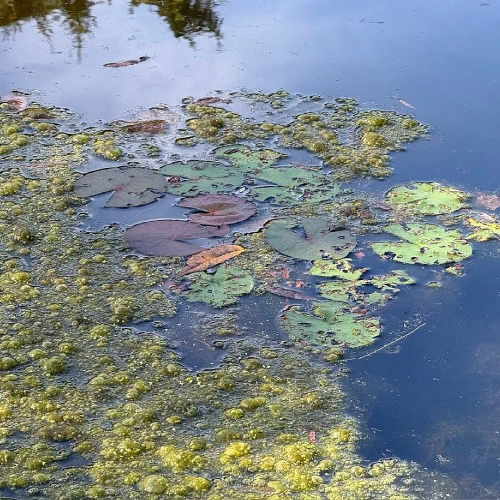
Dead algae must leave the pond because decomposition uses dissolved oxygen and releases nutrients back into the water. A large mass dying at once can create oxygen depletion, especially overnight or during warm weather.
Bag algae and compost it away from the pond, provided your compost system accepts wet plant material. Keep runoff from the compost pile out of the water.
If you have removed a heavy load, clean your skimmer basket and filter pads the same day. For additional hands-on methods, use this guide on cleaning a pond without draining the water.
Confirm You Have String Algae, Not Green Water
String algae is attached filamentous growth, while green water algae consists of tiny suspended cells that tint the whole water column. The distinction determines whether you need a brush and nutrient control or a UV unit aimed at suspended algae.
Species such as Cladophora form coarse branching strands, while other filamentous algae form soft green hair. Both are different from the pea-green haze created by green water algae.
What Filamentous Algae Looks Like
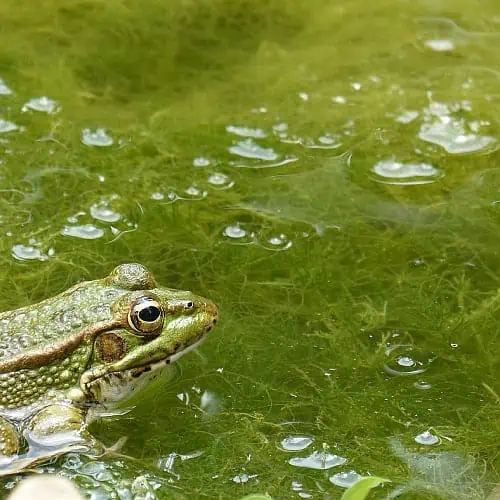
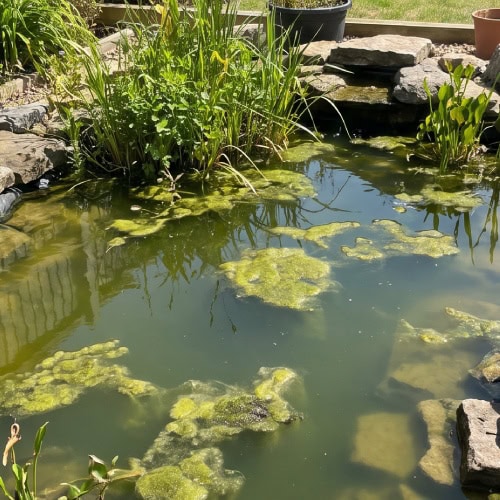
Filamentous algae looks like wet hair, cottony threads, or a slimy green blanket. It anchors to rocks, gravel, pond walls, plant stems, and waterfall surfaces, then forms floating clumps as sections detach.
Clear water around a heavy algae mat is a common clue. Your water clarity may look good because the algae is attached to hard surfaces instead of floating through the pond.
Use a pond net to lift a sample. If it comes out in long strands or a woven mass, you are dealing with string algae. If water remains uniformly green without strands, focus on ways to clear green pond water.
Why UV Clarifiers Do Not Remove Attached Algae

- Powerful 18 watt UV bulb for maximum cleaning results in a crystal clear pond by eliminating green water
- Easily integrates into an existing or new pond system
- For best results, connect to an OASE BioSmart biological filter
A UV clarifier, UV sterilizer, UV light, or UV filter works on water that passes through its chamber. The ultraviolet exposure damages suspended green water algae cells, allowing filtration to capture them.
Attached algae stays on rocks and pond walls, outside the UV chamber. UV lights can improve green-water visibility while string algae continues to grow in the waterfall or along sunny edges.
Keep the quartz sleeve clean and match flow rate to the unit’s instructions if you use UV sterilizers. Treat the unit as a water-clarity tool, then manage attached growth through removal, shade, and nutrient reduction.
When a Small Amount Is Part of a Healthy Pond
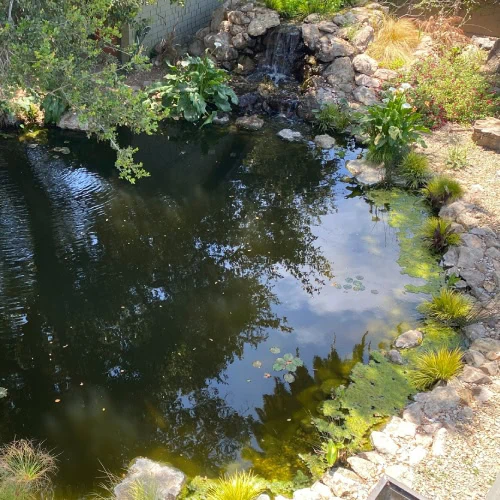
A small amount of attached algae is part of a healthy pond ecosystem. It provides surfaces for microscopic life and can absorb some dissolved nutrients.
Take action when mats trap fish food, choke a waterfall, crowd plants, or spread across a large share of the surface. Keep the pond visually clean without trying to make every rock bare.
Fix the Nutrients That Feed Regrowth
Excess nutrients drive repeat algae growth, so reducing nutrient inputs gives your pond a more stable long-term result. Fish waste, decaying leaves, runoff, and excess food all add nitrogen and phosphorus to pond chemistry.
Start with feeding and debris control, then use water testing to identify ammonia, nitrite, nitrate, and phosphate levels that need attention.
How Fish Waste and Overfeeding Raise Nutrients
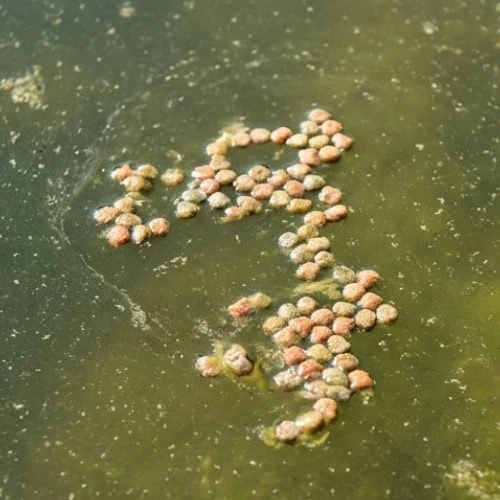
Fish convert food into fish waste, ammonia, and organic solids. Beneficial bacteria in your filter process ammonia into nitrite, then nitrate, but nitrate still feeds algae when it accumulates.
Feed koi and goldfish only what they finish promptly. Remove uneaten food before it sinks, especially in a koi pond with a heavy fish load. Reduce feeding during cool weather when fish metabolism slows.
Overstocking creates a nutrient load beyond what your biological filtration and pond plants can process. If repeated testing shows rising nitrate despite careful feeding and maintenance, reduce the fish load or expand filtration.
For broader strategies that apply to many pond algae problems, see practical pond algae control methods.
Test Ammonia, Nitrite, Nitrate, and Phosphates

- Contains one (1) API POND MASTER TEST KIT Pond Water Test Kit 500-Test, including 6 bottles of testing solution, 3 color cards and 4 test...
- Helps monitor water quality and prevent invisible water problems that can be harmful to fish
- Measures ornamental pond pH balance, Ammonia content, Nitrite levels and Phosphate content
Test your water before applying treatments and after any major algae die-off. Ammonia and nitrite should read zero in an established fish pond because both harm fish.
Nitrate and phosphates show the nutrient reserve available to algae. Track phosphate levels and phosphorous levels over several tests, since a single reading can shift after rain, feeding, or a water change.
Use a liquid pond test kit where possible, and write down results with the date, weather, feeding level, and any treatment. This record helps you recognize whether nitrates rise after leaf fall, heavy rain, or increased fish feeding.
Make partial water changes with dechlorinated water when nitrate rises or water quality declines. Avoid large sudden changes that alter temperature and pond chemistry too quickly for koi or goldfish.
Stop Runoff, Leaves, and Grass Clippings From Entering

Keep lawn fertilizer, soil, mulch, grass clippings, and roof runoff out of your pond. Grass clippings decompose quickly and add a concentrated organic load.
Create a planted border or shallow swale that directs rainwater away from the pond. Choose ground cover plants around ponds to help stabilize bare soil where rain carries sediment toward the water.
Skim leaves before they sink. A leaf net for keeping leaves out of your pond is especially useful through fall and during windy periods.
Use Plants, Shade, and Filtration for Natural Control
Pond plants, shade, water circulation, and biological filtration reduce the resources that string algae uses to spread. Build these supports after manual removal so new plant growth and filtration capacity work on a cleaner pond.
You do not need to cover every open area. You need enough plant uptake, shade, and oxygenated circulation to keep excess nutrients from collecting in still, sunny zones.
Which Aquatic Plants Compete Best With Algae
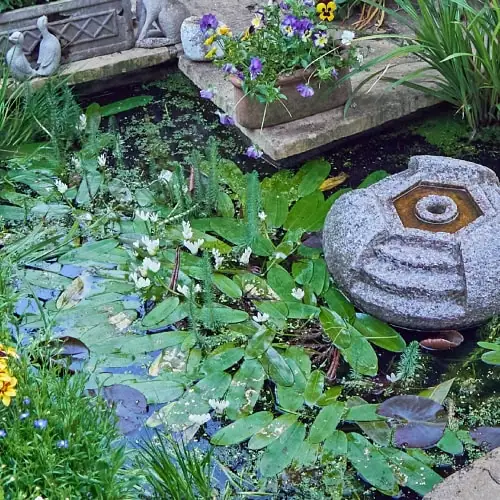
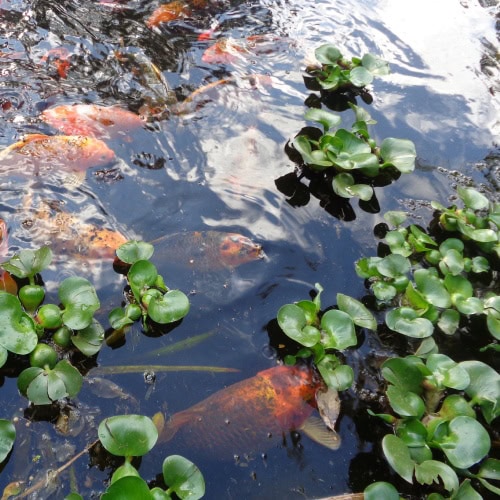
Fast-growing aquatic plants take up nutrients that algae would otherwise use. Hornwort and anacharis grow submerged in the water column, while water lilies, water lettuce, and water hyacinth shade the surface.
Water lettuce and water hyacinth face restrictions in several U.S. states because they can become invasive. Check state and local rules before buying either species, and never release pond plants into natural waters.
Marginal pond plants such as irises, cattails, and water hawthorne draw nutrients through their roots. Cattails spread aggressively in small ponds, so keep them contained in baskets or choose compact alternatives.
A mix of floating pond plants and rooted marginals gives you nutrient uptake at more than one level of the pond.
How Much Shade and Surface Coverage Help
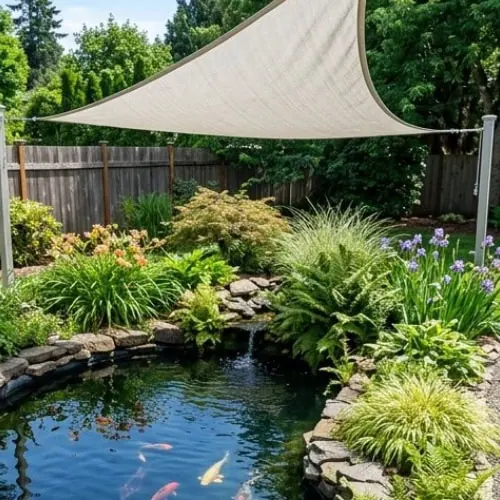
Shade limits the direct sunlight that drives rapid algae photosynthesis. Water lilies and floating plants are useful where the pond receives long hours of direct sunlight.
Adjust coverage gradually so your fish retain open swimming space and enough gas exchange. Watch your pond through the day because nearby trees, fences, and a water feature can create shade patterns that differ sharply between morning and afternoon.
Pond dye can reduce sunlight penetration in ornamental ponds where you want open water and fewer floating plants. Use pond dyes only as directed, and avoid relying on dye where runoff or overfeeding continues to raise nutrient levels.
Improve Circulation, Aeration, and Biological Filtration

- Aquascape 2-Outlet Pond Aeration Kit, Quiet Energy-Efficient Pond Aerator with Weighted Air Stones, Airline, Check Valves, for Ponds up to...
- Oxygenates Ponds: 2-outlet pond aeration kit helps keep water healthy, clean, and clear by supporting oxygen levels in ponds up to...
- Complete Aerator System: Includes two weighted 4-inch aeration discs, two 25-foot rolls of 3/16-inch silicone airline, and preassembled...

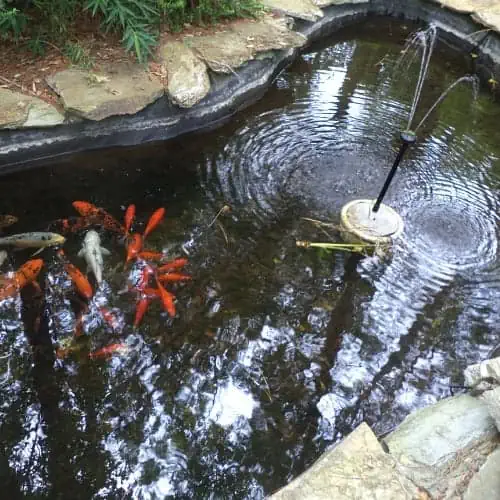
Water circulation moves oxygen and nutrients toward your filter while reducing stagnant pockets. Position the return flow to sweep debris toward the skimmer or intake without turning the pond into a strong current.
An aerator raises dissolved oxygen and protects fish when warm water holds less oxygen. Run aeration continuously during algae removal, hot spells, and any chemical treatment.
Biological filtration houses the bacteria that process ammonia and nitrite. Rinse filter media in removed pond water, never chlorinated tap water, so you preserve the bacterial colony.
A bog filter adds plant roots and filter media where water passes slowly through the system. It complements a mechanical filter by capturing fine organic matter before it decays.
Treatments That May Help (and When to Avoid Them)
Treatments serve as limited, label-directed tools after you remove algae and correct the conditions that feed it. Large chemical die-offs place the greatest stress on fish because decomposing algae consumes oxygen.
Keep strong aeration running, test water first, and treat only the portion of algae specified by the product label. Do not combine treatments unless both labels explicitly allow it.
What to Know About Barley Straw and Barley Straw Extract

- Natural Pond Conditioner: An environmentally responsible, cost-efficient solution that provides a clean and organic approach to maintaining...
- Liquid Barley Straw Extract: A concentrated extract of barley straw, particularly effective where bottom drains are present, helping to...
- Safe for Aquatic Life: This pond conditioner is safe for koi fish, plants, decorations, humans, and pets, offering a non-toxic way to...
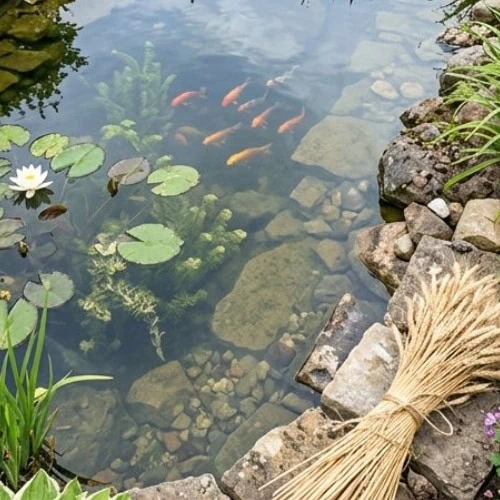
Barley straw and barley straw extract are marketed for algae control, mainly as preventative support. Their effects vary with water temperature, oxygen, product quality, and contact time, so they do not provide a fast cleanup for an established blanket weed mat.
Place loose straw where water moves through it and follow the product directions for your pond volume. Remove old material before it breaks down into organic matter.
Use barley products alongside physical removal and nutrient control. They work poorly when thick mats, fish waste, and decaying leaves remain in the pond.
Using Algaecides Without Harming Fish
An algaecide kills algae, which makes oxygen management essential. Choose a product specifically labeled for ornamental ponds with fish and plants, and follow the label for pond volume, temperature limits, treatment area, and repeat dosing.
Copper-based algaecides require particular care because copper toxicity changes with water chemistry. Test alkalinity before use, and avoid treating a full pond of dense algae in one application.
Treat a limited area at a time where the label permits, remove dead algae promptly, and keep aeration running. This overview of pond algaecide and algae killer options can help you compare product types before you select one.
Hydrogen Peroxide and Sodium Percarbonate Safety
Hydrogen peroxide and sodium percarbonate products can damage algae on contact. Sodium percarbonate releases hydrogen peroxide and sodium carbonate in water, which can raise pH as it reacts.
Use only a pond product with fish-safe label directions. Spot treatment suits a small patch you can monitor, while whole-pond use creates a greater oxygen-depletion risk after algae dies.
“SAB” appears in some product discussions and retailer descriptions, yet product abbreviations are not a substitute for reading the active ingredient and label. Avoid adding corbicula clams for algae control. Corbicula clams can be invasive, face legal restrictions, and add another living population to manage.
Maintain a Pond That Resists Future Algae Blooms
Consistent pond maintenance prevents algae blooms by keeping fish waste, leaves, and excess nutrients from building up between cleanings. Your routine should keep water circulation and dissolved oxygen steady through the seasons.
A pond with stable pond chemistry needs less intervention than a pond repeatedly pushed into heavy growth and treatment cycles.
A Simple Seasonal Pond Maintenance Routine
Use this practical schedule to keep algae control manageable:
- Spring: Pull out early string algae, restart filtration, inspect the pump, test ammonia and nitrite, and begin light feeding as fish become active.
- Summer: Empty skimmer baskets, remove visible algae weekly, monitor water temperature, run an aerator, and test nitrate and phosphates when growth accelerates.
- Fall: Install a leaf net, trim dead pond plants, reduce feeding as water cools, and remove settled leaves before they become sludge.
- Winter: Keep a gas-exchange opening where your climate freezes ponds, avoid disturbing dormant fish, and check that essential circulation equipment runs safely.
If your pond supports wildlife as well as fish, adapt plant trimming and debris removal around breeding and shelter needs with a wildlife pond maintenance guide.
How to Prevent Spring Outbreaks
Spring outbreaks begin when increasing sunlight reaches cold water while plants and biological filtration are still waking up. Remove last season’s leaves and dead plant stems before water warms.
Start aeration early, inspect filter media, and clear algae from the waterfall before it thickens. Add or divide pond plants before the algae gains access to open, nutrient-rich water.
Keep feeding restrained until koi and goldfish are actively digesting food. Watch feeding response closely instead of setting a fixed amount by habit.
Warning Signs That Need Fast Action
Fast action is warranted when fish gasp near the surface, a waterfall slows from algae blockage, or the pond develops a rotten-egg smell. These signs point to low dissolved oxygen, impaired water circulation, or accumulating organic matter.
Test ammonia and nitrite immediately if fish show stress. Stop feeding temporarily, increase aeration, remove decaying algae and debris, and make a partial dechlorinated water change if water tests show a problem.
A sudden algae collapse after an algaecide treatment also needs close monitoring. Keep aeration running day and night, clear dead growth from the pond, and avoid adding another treatment until oxygen and water tests remain stable.

Great article
I so t have a teaspoons but I did mild a creek which becomes a dry creek in the winter. I have a 40 gal holding tank at the bottom of the run and a strong pump using a 1” line to return the water. Is algae something I need to worry about?
Thanks
Javier
Thanks, Javier! Algae can grow in a creek-style feature, especially where sunlight and nutrients are plentiful, but some algae is normal and usually isn’t a problem. Keep an eye out for long, stringy growth that starts clogging the pump or restricting water flow.
Your 40-gallon holding tank may be more vulnerable to algae because it has a relatively small volume of water. Regularly remove excess debris, make sure the pump intake stays clear, and avoid overfeeding any fish, if you have them. You can also add aquatic plants to compete with algae for nutrients, as long as they suit your setup.
Since the creek dries up in winter, check that the pump and plumbing are protected from freezing, and follow the pump manufacturer’s guidance for seasonal operation. Thanks for reading, and I hope this helps!