
You keep a fishless pond clean by limiting nutrients, removing decaying debris, supporting plant and microbial growth, and adding circulation or filtration when the pond’s design needs it.
Removing fish reduces nutrient load from food and waste they produce, yet leaves, pollen, lawn runoff, dying plants, and sunlight still feed algae. A pond without fish can become green, murky, or smelly when that material accumulates.
A planted wildlife pond can settle into a low-maintenance balance. A bare ornamental pond needs more help from a pump, skimmer, or filter because it has fewer roots and surfaces available to capture nutrients. Clear water is useful, though healthy water also supports insects, amphibians, and plant life without heavy chemical treatment.
What Keeps a Fishless Pond Clean?
A fishless pond stays clean when you reduce the material that feeds algae and give water a place to circulate, settle, and be naturally processed. Plants, bacteria, shade, and routine debris removal work together, while equipment fills gaps in a lightly planted or highly exposed pond.
How Nutrients, Sunlight, and Debris Cause Murky Water
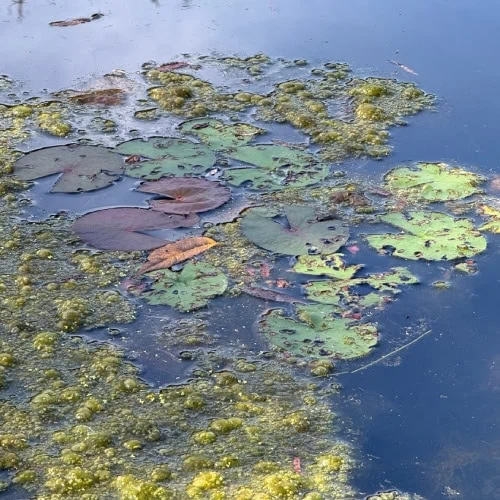
Fallen leaves, grass clippings, dead algae, and sediment release nutrients as they decay. Those nutrients feed microscopic algae, which turn water pea-green, and string algae, which forms mats along edges and on rocks.
Direct sun accelerates the problem, especially in shallow water. Keep lawn fertilizer, soil runoff, and mulched garden beds away from the pond edge. A planted buffer around the pond catches loose soil before rain carries it into the water.
Cloudiness also comes from suspended silt. If you see brown or gray water after wind, wildlife activity, or rain, focus on reducing turbidity in pond water before treating algae. Algae treatments will not remove stirred-up soil!
Why Beneficial Bacteria Still Matter
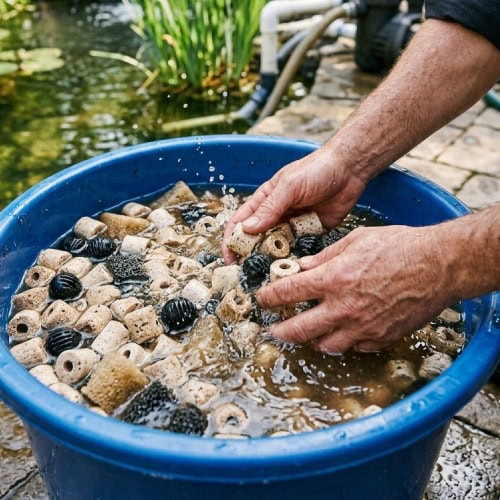
Beneficial bacteria colonize rocks, plant roots, filter media, and the pond bottom. They break down organic material before it becomes a deep layer of sludge.
You support these microbes by leaving stable biofilm on rocks and filter media while removing loose muck. In a natural pond design, an 8-inch-deep planted shelf filled with small stones provides extensive microbial habitat.
Avoid stripping every surface clean during routine maintenance. Rinse filter pads in a bucket of pond water, then return them promptly, so you preserve much of the established bacterial colony.
When a Filter Is Necessary for a Fishless Pond
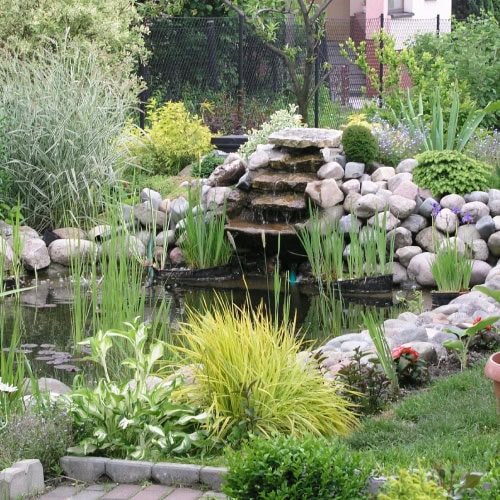
A filter is necessary when your pond has little planting space, receives long hours of direct sun, sits beneath deciduous trees, or repeatedly develops green water. A pump-driven filter also gives you dependable circulation in formal ponds with steep sides and smooth liners.
Use mechanical filtration to trap particles and biological media to provide bacterial surface area. For a small decorative pond, a compact pump and filter unit often supplies both functions. Keep the intake raised slightly above the pond floor so it does not pull in large stones or compacted sludge.
A natural, densely planted wildlife pond can operate with minimal equipment when its shallow margins, plants, and debris load are in balance. For ponds designed around open water and clean sightlines, pond filters suited to different pond layouts provide steadier clarity.
Build Natural and Mechanical Filtration
The most dependable fishless pond uses plants to absorb nutrients and equipment to remove particles before they settle. You can scale the system to match the pond’s size, planting area, shade, and leaf exposure.
Choose Plants That Remove Excess Nutrients
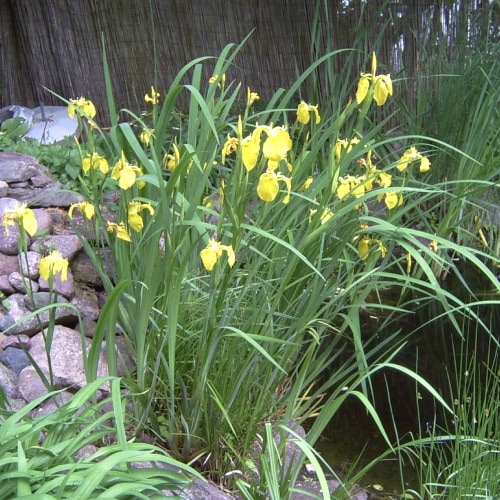
Use a mix of marginal, submerged, and floating plants suited to your climate. Marginal plants such as pickerelweed, arrowhead, rushes, and native water iris grow along shallow shelves, where their roots draw nutrients from the water.
Submerged plants offer cover and additional growing surfaces for microbes. Floating-leaved plants shade the water and limit the light available to algae. Water lilies are especially useful in open ponds because their leaves shade broad areas while their roots take up nutrients.
Aim to cover about half of the water surface with plant leaves during the growing season. Keep an open area for gas exchange and wildlife access, and thin plants before they blanket the whole pond.
Add Aeration and Water Movement

- Aquascape 2-Outlet Pond Aeration Kit, Quiet Energy-Efficient Pond Aerator with Weighted Air Stones, Airline, Check Valves, for Ponds up to...
- Oxygenates Ponds: 2-outlet pond aeration kit helps keep water healthy, clean, and clear by supporting oxygen levels in ponds up to...
- Complete Aerator System: Includes two weighted 4-inch aeration discs, two 25-foot rolls of 3/16-inch silicone airline, and preassembled...

Water movement keeps fine debris moving toward a skimmer or intake and reduces stagnant corners. A small waterfall, fountain, or return jet also creates surface disturbance, which supports gas exchange.
Place the return point across from the pump intake so water travels through the pond instead of looping through one small area. In long ponds, direct the flow along the length. Watch for quiet pockets where leaves gather or where string algae returns first, then adjust the outlet toward those areas.
A fountain adds visible movement but does little for deep water in a larger pond. Bottom aeration serves deeper ponds better because bubbles lift water from below and circulate it upward.
Use a Skimmer, Pump, and UV Clarifier

- Powerful 18 watt UV bulb for maximum cleaning results in a crystal clear pond by eliminating green water
- Easily integrates into an existing or new pond system
- For best results, connect to an OASE BioSmart biological filter
A skimmer catches floating leaves, seed pods, pollen clumps, and insects before they sink. Empty its basket frequently during leaf drop, when a full basket restricts flow and leaves debris drifting past the opening.
A pump moves water through a filter, waterfall, or stream. Check the intake screen whenever flow weakens, and use these steps for keeping a pond pump from clogging when plant fragments and sludge build up.
A UV clarifier treats free-floating algae that causes green water. It does not remove string algae attached to rocks or pond edges. Ultraviolet units expose suspended algae to light inside a sealed chamber, destroying them at the cellular level and preventing growth.
Shade the Water to Limit Algae Growth
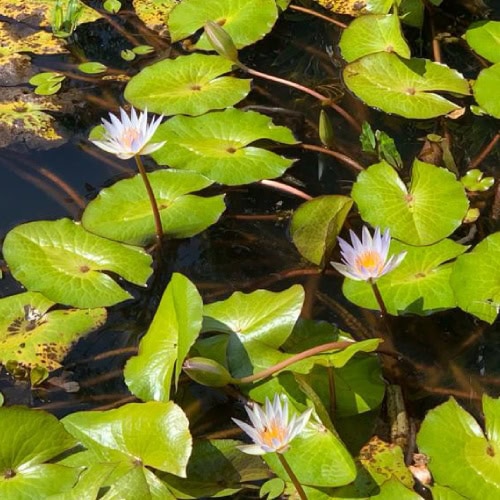
Shade lowers the light available for algae, particularly in shallow ponds that heat quickly. Use water lilies, floating plants, marginal plants, or nearby shrubs placed far enough back that leaves will not constantly fall into the water.
Avoid covering every inch of the pond. You need open water for viewing, surface movement, and wildlife. In hot weather, combine shade with circulation and use practical measures for keeping pond water cooler in summer.
Control Algae, Sludge, and Surface Debris
You control most pond mess by removing organic material before it decays and by treating algae as a nutrient problem first. Fast chemical fixes have a limited role, especially when your pond supports frogs, tadpoles, dragonflies, and other wildlife.
Remove Leaves and Sediment Before They Decay
No products found.
Skim leaves and floating debris every few days during autumn and after storms. A fine net works for surface litter, while a pond vacuum removes settled leaves and loose sludge from the bottom.
Focus on low spots, beneath waterfalls, and around plant baskets. Those areas collect sediment even when the water looks clear from above. Use a pond cleaning method that avoids draining water for routine sediment removal, reserving a full drain-down for severe buildup or liner repairs.
Trim yellowing leaves from aquatic plants before they drop into the pond. Pull out excess plant growth and compost it away from the edge.
Treat Green Water and String Algae Safely
- API POND-ZYME SLUDGE DESTROYER – Contains natural active ingredients to break down fish waste and consume pond sludge with natural...
- Fast and Effective – This pond muck and sludge remover breaks down dead algae and digests leaves and grass clippings.
- Safety First – Our pond sludge remover helps to reduce overall pond maintenance and keep ponds clean while being safe for pets and...
Green water comes from suspended algae, while string algae forms visible strands and mats. Remove string algae by hand, with a rake, or with a long-handled net before it breaks apart and spreads.
For green water, improve shade, circulation, filtration, and nutrient control first. A UV clarifier helps clear suspended algae when those measures are already in place. You can use our guide on clearing green pond water to help you match the approach to the type of discoloration you see.
Keep removed algae out of the pond area, as rain can wash nutrient-rich piles back into the water.
Use Pond Treatments Only When Needed

- Maintains a strong biological balance providing clean, clear and healthy water conditions
- Contains 8 pure strains of concentrated beneficial bacteria, including PSB bacteria and enzymes
- PSB help quickly clear pond water by clumping fine debris and allowing it to settle
Use bacterial treatments to help break down organic waste when water warms and sludge begins building. Apply any treatment at the label rate for your pond volume, and keep aeration running during application.
Algaecides can rapidly kill algae, which leaves a large amount of dying material in the pond. Treat a limited area at one time, remove dead algae, and avoid broad chemical treatment in ponds used by amphibians or beneficial insects.
Skip treatments when the underlying issue is leaf litter, runoff, excess sun, or a blocked filter. Correcting the cause prevents repeat blooms more effectively than repeated dosing.
Maintain Clear Water Through the Seasons
Clear, low-odor water comes from small regular tasks adjusted for weather and plant growth. Your schedule should become more active during warm weather and leaf fall, then shift toward protection and cleanup as temperatures change.
Create a Weekly and Monthly Care Routine
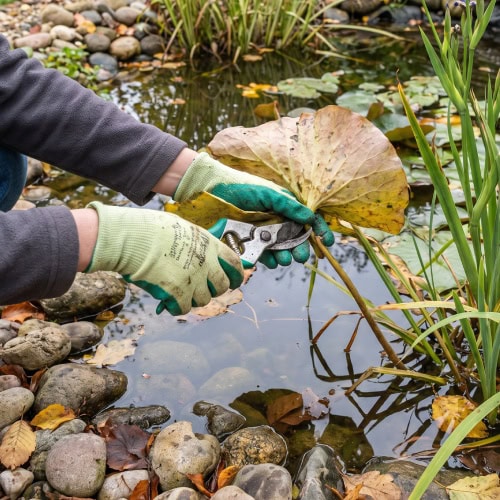
Each week, skim debris, empty the skimmer basket, check pump flow, and remove fresh string algae. Look closely at pond edges, where early algae growth and trapped leaves are easy to miss.
Each month, inspect filter media, trim spent plant growth, and vacuum loose sediment from collection areas. Clean mechanical pads when water flow slows, using pond water to protect the bacteria on biological media.
During autumn, increase surface skimming as leaves fall. A pond net helps, though you should still clear leaves that collect along the edge or sink through openings. These ways to keep leaves out of a pond are especially helpful for ponds beneath maples, oaks, and other heavy-dropping trees.
Test Water Quality After Rain and Heatwaves

- Contains one (1) API POND MASTER TEST KIT Pond Water Test Kit 500-Test, including 6 bottles of testing solution, 3 color cards and 4 test...
- Helps monitor water quality and prevent invisible water problems that can be harmful to fish
- Measures ornamental pond pH balance, Ammonia content, Nitrite levels and Phosphate content
Test after heavy rain, extended heat, sudden cloudiness, persistent odor, or an algae bloom. Check pH, ammonia, nitrite, and nitrate with a freshwater pond test kit, especially when your pond supports tadpoles or other sensitive wildlife.
Heavy rain can bring soil, fertilizer, and debris into the pond. Heat speeds plant and algae growth while lowering the amount of oxygen water holds. Watch for a sour or sulfur-like odor, which points to decomposing material in low-oxygen sediment.
Record test results and weather conditions in a simple notebook. Patterns such as cloudy water after storms or algae after a fertilizer application reveal the problem faster than random treatment changes.
Prepare the Pond for Winter and Spring

- Max. Suction depth: 6 ft.
- High-power suction to a depth of 59 inch.Maximum suction depth of 78 inch.Suction hose length: 13 ft
- Power consumption: 1200-1400w
In fall, remove most dead foliage, thin crowded plants, and clear accumulated sludge from shallow areas (a pond vac works great for this!). Keep some stems standing above the surface if wildlife uses the pond, since they provide shelter and routes for insects to emerge.
Before freezing weather, remove and store equipment that is not rated for winter use. Where ice forms, maintain a small opening with an appropriate aeration or de-icing setup so gases can escape. Avoid smashing ice, which sends shock waves through the water.
In spring, restart circulation, inspect hoses and fittings, and remove winter debris before it begins decomposing in warming water. Divide overgrown plants, refresh marginal planting areas, and address early green water while the bloom is still small.