
Yes! Koi fish eat algae, especially the soft growth they find on pond walls, rocks, and liners. You may see them mouth a green patch as they forage. That grazing is a normal part of pond life, but it will not clear a heavy bloom or turn green water transparent.
Many owners wonder, do koi fish eat algae enough to keep the water clean? Your koi can reach a film on a rock, but they cannot graze through microscopic blooms. Treating persistent pond algae as a water-quality issue yields much better results.
Which Pond Algae Can Koi Graze?
Your koi graze soft algae growth attached to accessible surfaces, including green algae films and some strands of string algae. Suspended green-water algae remain out of reach as a food source, while blue-green algae call for caution.
Surface Films, Diatoms, and String Algae
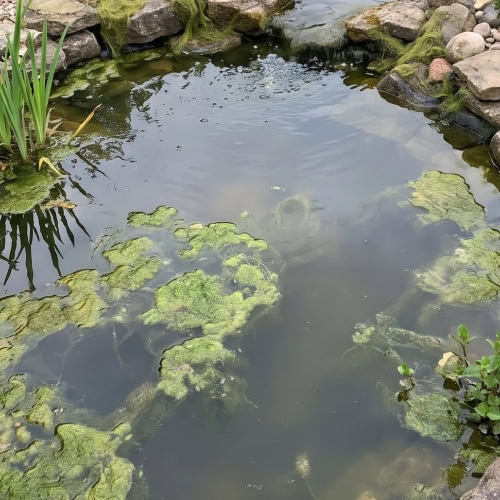
A thin green coating on a pond wall gives koi an easy surface to mouth. What they pick up is often biofilm, a mix of algae and microorganisms. Thin, brownish coatings of diatoms or brown algae are common in newer ponds and are also grazed.
String algae, also known as filamentous algae, grows in long attached strands. Koi nibble tender growth, but dense filamentous algae spreads quickly across waterfalls and rocks. Lifting it out by hand addresses the immediate problem without waiting for the fish.
Why Won’t Koi Clear Green Water?
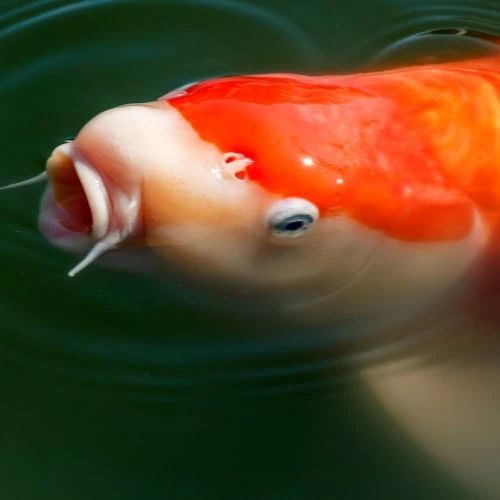
Green water comes from planktonic algae: tiny cells suspended throughout the pond. Your koi feed by picking at surfaces and visible morsels, so they cannot consume enough suspended cells to make a bloom disappear.
If you can barely see your fish, focus on the conditions supporting the bloom. A properly sized UV clarifier can help clear suspended algae, while clearing green pond water for the long term also means dealing with the nutrients that keep new cells growing.
Is Blue-Green Algae Safe for Koi?
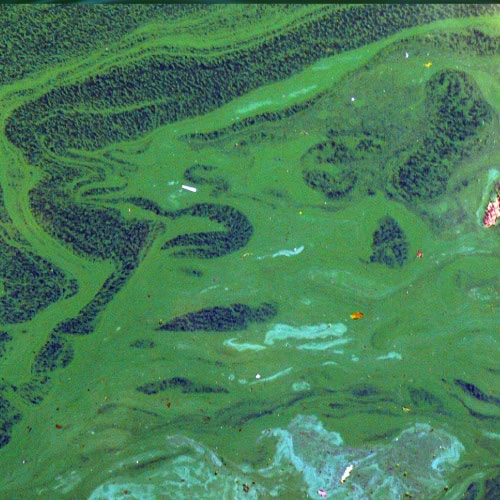
Treat a suspected blue-green algae bloom as a water-quality hazard, not koi food. Blue-green algae are cyanobacteria, and some blooms produce toxins harmful to fish, people, and other animals. You cannot tell whether a bloom is toxic by its color alone.
A surface scum or an unusual, rapidly spreading bloom deserves particular care. Keep pets away from the water, avoid handling the scum with bare hands, and seek guidance from your local health or environmental agency about testing.
Maintain aeration while you investigate, since dense blooms and their decay can also strain the pond’s oxygen supply.
Can Algae Replace Koi Food?
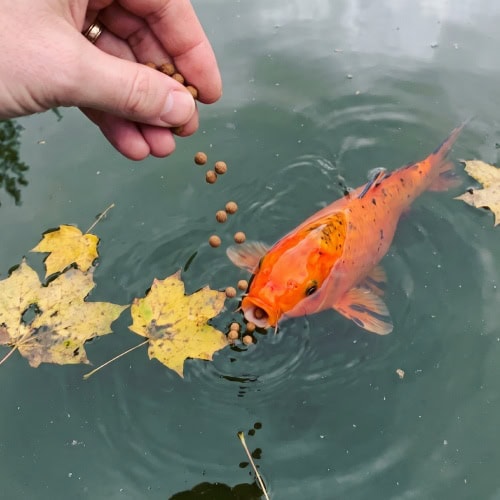
While do koi fish eat algae regularly while foraging, it cannot replace a balanced diet. Keep high-quality koi food as your fish’s primary nutrition. Pond algae lacks the complete protein and vitamin balance koi require year-round.
If your fish nose along the liner, it does not mean they are starving. When feeding koi, use a consistent koi feeding guide based on water temperature. Extra pellets left uneaten will decay and trigger rapid algae growth.
How Can Pond Owners Control Excess Algae?
You control excess algae most reliably by limiting nutrient inputs, removing debris, and keeping filtration working. Sunlight fuels algae growth too, so shade from suitable aquatic plants can help when your pond has room for them.
What Causes Algae Blooms?
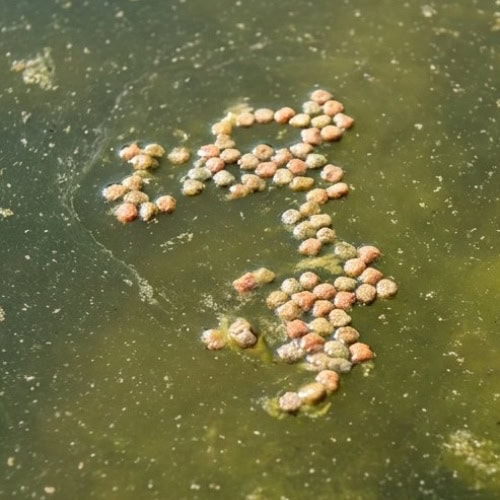
Algae blooms take hold when light and available nutrients support rapid growth. Fish waste, uneaten food, decaying leaves, and fertilizer runoff all contribute nutrients; phosphates and nitrates are especially relevant to nutrient management.
Watch what enters the pond during rain as well as what happens inside it. Runoff from a fertilized lawn can undermine careful koi feeding, while a pond with more fish than its filtration can support accumulates waste quickly. An established light coating of algae is less concerning than a sudden change in water clarity or a thick, spreading mat.
How Do Feeding and Debris Removal Help?

Careful habits when feeding koi prevent nutrient spikes. Offer only what fish consume in a few minutes, removing any floating leftovers promptly. Proper feeding koi routines limit fish waste and prevent uneaten pellets from fueling blooms.
Skim fallen leaves before they sink, and clear trapped material from skimmers and accessible pond-bottom areas. If string algae has collected debris, remove manageable clumps without stirring up large amounts of sludge. These steps take away material that would otherwise decompose and release more nutrients.
What Roles Do Filtration and Aquatic Plants Play?
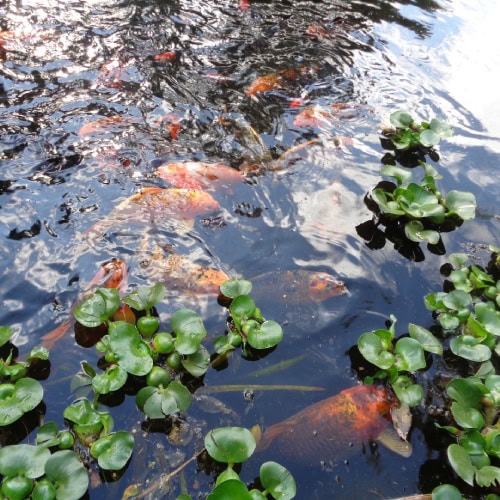
Mechanical filtration captures suspended debris so you can remove it from the system by cleaning the filter as directed. Biological filtration processes fish waste, but it does not make excess feeding harmless: the nitrogen cycle ultimately leaves nutrients, including nitrate, available in the water.
Aquatic plants absorb nutrients and shade parts of the pond. Choose plants suited to koi ponds and protect their roots where your fish dig. If you use a UV clarifier for green water, continue debris removal and nutrient management after the water clears.
Should You Add Other Algae-Eating Fish?
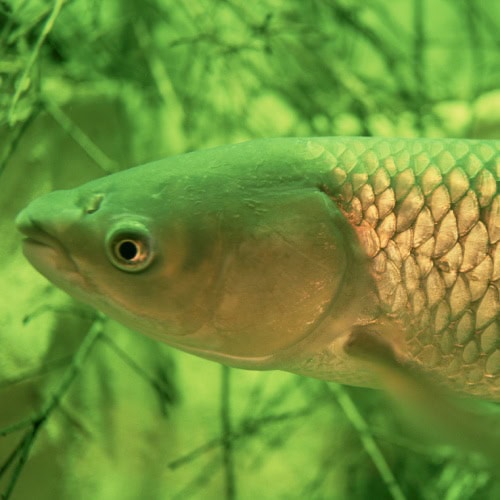
Adding fish solely for algae control increases the amount of waste your pond and filter must handle. Goldfish may graze, but they also add to the stocking load; catfish vary widely in size and feeding habits, so the name alone tells you little about their suitability. Grass carp are often used in commercial ponds for algae graving, but they grow large, so your pond needs to be ready for them.
Be especially careful with plecos, or plecostomus. Most plecos are tropical fish poorly suited to cold outdoor pond winters. In addition, large plecos may rasp at a koi’s protective slime coat, causing stress and infection.
If you are considering koi pond mates, check their adult size and compatibility first. Removing nutrients is far more dependable than adding another mouth to the pond.