
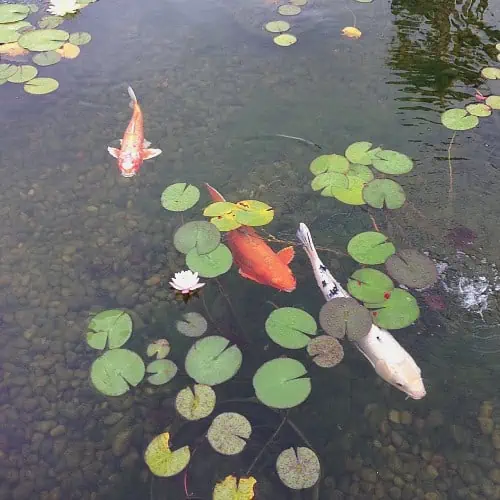
A hardy and attractive species encompassing over 100 different varieties, koi are understandably a highly sought-after ornamental pond fish. Their general requirements are simple enough to take care of – water that is at least a meter deep and 1,000 gallons, with a temperature between 55 and 79 degrees Fahrenheit and a pH of 7.5 to 8.
However, populating your pond with plants that are well suited for koi may require a bit more finesse. Here we will discuss why incorporating plants into your pond may be useful and which ones are the cream of the crop for koi ponds.
Overall, plants are a welcome addition to any pond regardless of its other inhabitants and perform an array of essential functions. Some varieties are excellent water oxygenators, and most provide valuable shelter and food for everything from fish and frogs to birds and snails, all of which can add to your pond’s biodiversity, health, and charm.
Still others help soak up excess nutrients, such as fertilizers and harmful nitrates, and thereby help deter algae overgrowth. Having plants will also provide shade and aid in naturally regulating your pond’s temperature, while also supplying female koi with a secure surface on which to affix their eggs.
Best Plants for Koi Ponds
While buying plants for a koi pond is fairly simple (many can be purchased either online or at nurseries), figuring out which ones work best for your fish and pond will take a little bit more time as different species have different requirements and will also offer different benefits and drawbacks.
Here are some plant species that we consider good choices for koi ponds which should be available for purchase in the US, UK, and Canada:-
1) Water Hyacinth (Eichhornia crassipes)
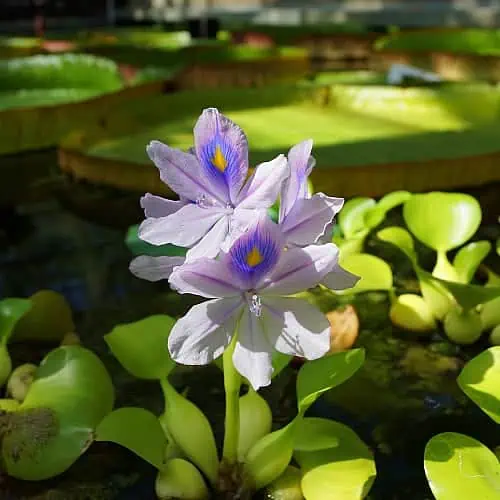
A free-floating surface plant, the water hyacinth can grow in shallow water as well as water that is several meters deep. They require little to no care, able to grow in both the northernmost reaches of the U.S. as well as temperate regions close to the equator.
As an added bonus, they produce purple and blue flowers that will attract ecologically vital pollinators like hummingbirds and bees. Koi do like to nibble on this plant, but that may be desirable as water hyacinth are able to reproduce and spread easily.
Without some form of predation or manual cutting and removal, they can crowd out other plants. However, because koi like to eat them you will have to regularly clean your filter(s) to prevent clogging from the leftovers.
2) Pickerel rush (Pontederia cordata)
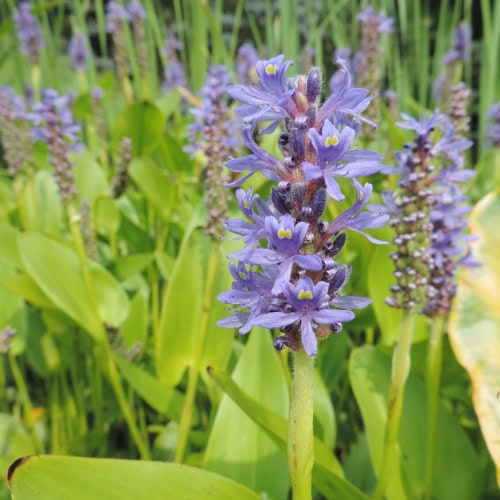
Pickerel rush is a versatile marginal plant that thrives in shallow water but can also tolerate consistently moist soil along pond edges. It tends to form dense clumps, typically reaching 2 to 4 feet in height, and may need occasional thinning to keep it from spreading too aggressively.
While some pond owners find its vigorous growth a bit much, pickerel rush is highly valued for its ability to absorb excess nutrients and improve water quality. It also provides habitat and food for pollinators and aquatic insects, which in turn become a natural food source for koi. From late spring through summer, it produces upright spikes of vivid violet-blue flowers that add a striking vertical accent to the pond.
3) Water Lotus (Nelumbo lutea)

A beautiful and popular floating aquatic plant, lotuses require little to no maintenance but prefer specific conditions. They do best in water that is approximately 75 to 87°F and at least 18 inches deep, with low humidity and a minimum of 5 hours per day of sun.
They also require plenty of space (some have leaves as long as 2 feet across!), so these exotic-looking plants are best for larger koi ponds. If you have a smaller pond, there are some dwarf lotus varieties available.
Koi don’t find lotuses particularly palatable, and they provide plenty of shade in the hot summer months while also supporting local pollinators.
4) Water Lily (Nymphaea)
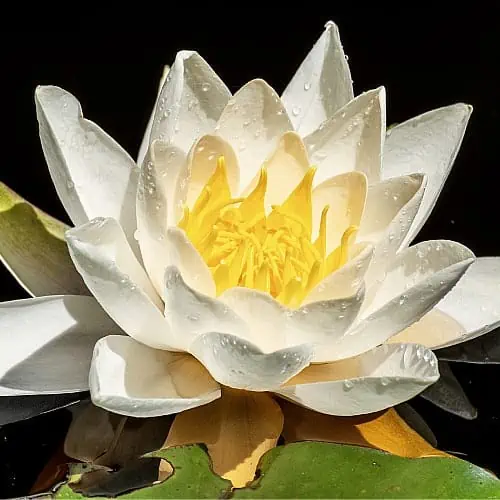
Similar to the lotus but smaller and able to grow in cooler waters with less sun, lilies are also a very popular plant for koi ponds.
Another floating plant, they can grow in as little as 6 inches of water or as much as several feet, and have a striking and fragrant flower. Koi can hide beneath the lily pads, lay their eggs on the undersides of the leaves, and will also feed on the leaves and roots.
5) Scouring Rush (Equisetum)
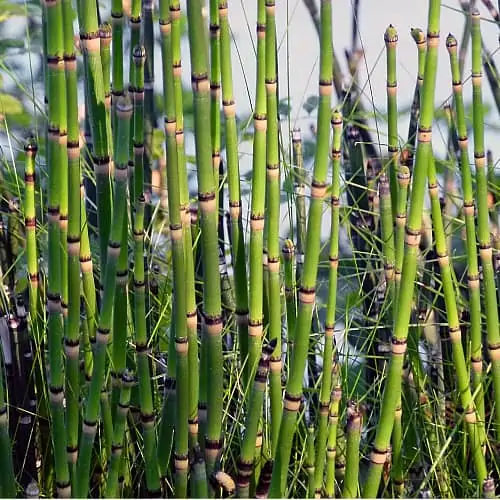
A prehistoric plant that has been around for hundreds of millions of years and the only one left of its kind, scouring rushes are hardy and grow along the edges of water bodies or in water that is only a few inches deep. A very similar species that functions much the same is horsetail, also in the Equisetum genus.
They’re excellent at filtering water, and grow in tall segments that hold water and can be removed or browsed without killing the plant. They don’t generally overtake areas or outcompete other plants, and can be relatively easily removed if they do begin to become too numerous for your liking.
They have a deep root system with rhizomes similar to cattails, so you’ll have to gently pull up all of the rhizomes if you don’t wish for them to return. Koi will utilize horsetails for shade, but don’t usually eat them.
6) Water Lettuce (Pistia stratiotes)
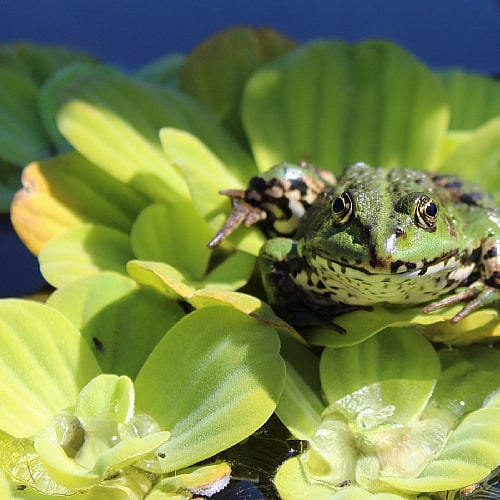
This floating plant provides shelter, shade, and food for you koi. They also naturally remove algae by filtering excess nutrients via their extensive root systems and competing for sunlight that algae need to grow.
Water lettuce takes minimum effort to establish and maintain, preferring a water temperature between 66 and 80°F and has been found in water ranging from only a few inches in depth to as much as 30 feet!
A few of these guys go a long way, as a single plant can easily grow to cover an area of 3 or more feet. It’s so well-adapted that it’s found on every continent except Antarctica.
7) Eelgrass (Vallisneria)
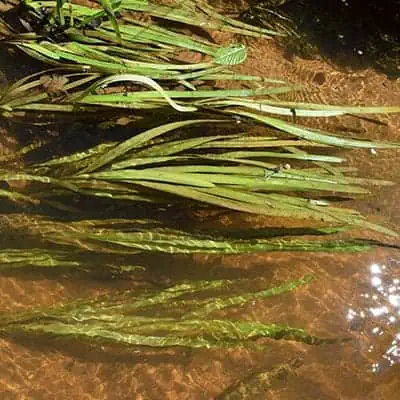
Discussed in a previous article, eelgrass is deemed one of the top submerged oxygenating plants. They’re exceptionally resilient, and typically will not be ripped up or browsed on by koi or other large fish.
However, they can grow several feet tall and as such do best in deeper ponds where their wavy, grass-like leaves can thrive and provide plenty of habitat and shade for your koi.
8) Water iris (Iris ensata)
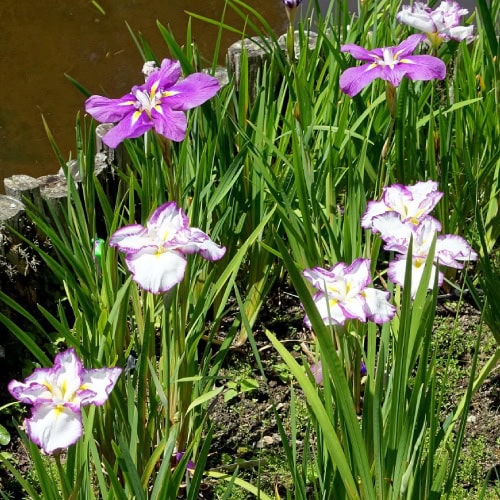
Water iris is a hardy marginal plant that thrives in shallow water or consistently wet soil along pond edges. It grows in upright, fan-like clumps that can reach 2 to 4 feet tall, and may gradually spread over time, requiring occasional division to keep it tidy.
Often appreciated for both its resilience and ornamental value, water iris helps absorb excess nutrients and stabilize pond margins. Its dense foliage provides shelter for small aquatic life, while its blooms attract pollinators. In late spring to early summer, it produces elegant, showy flowers in shades of yellow, blue, or purple that bring a classic, natural look to any pond setting.
9) Taro (Colocasia esculenta)
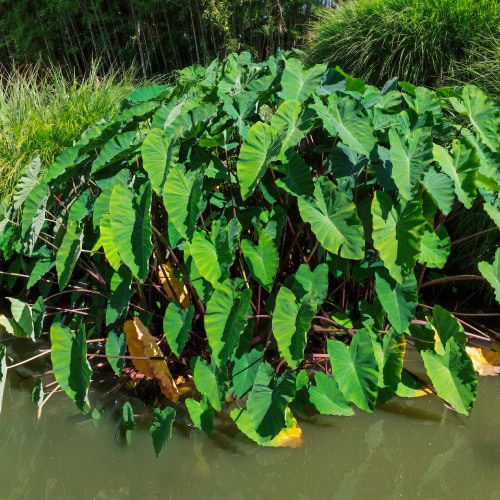
Taro, also known as elephant ear, is a bold marginal plant that prefers shallow water or saturated soil and warm conditions. It features large, dramatic leaves that can reach several feet in height, quickly forming a lush, tropical-looking cluster that may need space and occasional thinning to manage its spread.
While prized for its striking appearance, taro also contributes to water quality by absorbing excess nutrients. Its broad leaves provide shade that helps reduce algae growth and offers cover for fish. In the right conditions, it may produce subtle, calla-like flowers, though it’s most often grown for its impressive foliage and strong visual impact.
10) Hornwort (Ceratophyllum demersum)
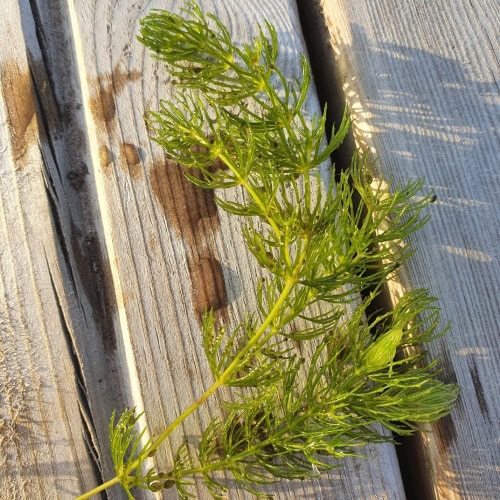
Hornwort is a fully submerged plant that thrives in a wide range of water conditions, floating freely or lightly anchored in the substrate. It grows in long, feathery strands that can quickly fill in open water, often reaching several feet in length and forming dense underwater clusters that may need occasional thinning.
Valued for its durability, hornwort is especially well-suited to koi ponds, as it tolerates nibbling better than many other submerged plants. It plays an important role in maintaining water quality by absorbing excess nutrients and helping to limit algae growth. Its dense foliage also provides shelter for small aquatic organisms, which can become a natural food source for koi, making it both a functional and low-maintenance addition to the pond.
Will Koi Eat My Pond Plants? (And How to Stop them)
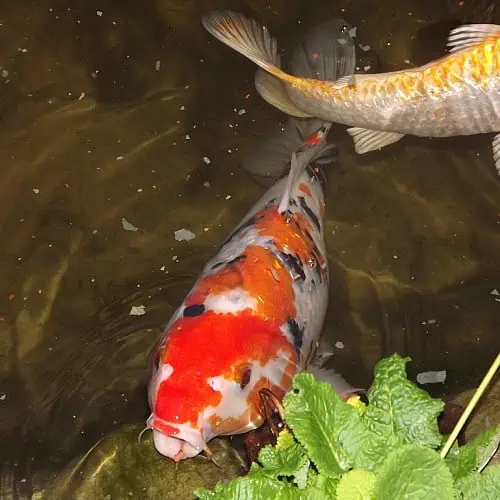
In short, yes, it’s likely that your koi will at least sample your pond plants. However, some are more palatable to koi than others. As mentioned above, koi enjoy eating the roots of water hyacinth, water lily, and water lettuce.
This can be viewed as a positive, as it means less supplemental feedings from you (this is especially useful if your koi are picky eaters or you’re just trying to save some money), and a natural means to control the plant population.
If you wish to deter this behavior, there are a number of approaches you could take. Placing the plants in pots submerged in the water, encasing the roots in wire mesh, or positioning large rocks around the roots will all act to stop or at least discourage koi from browsing on the plants.
You could also provide extra feedings so they are not hungry enough to consume your plants, try different foods to find some that are more appetizing than the vegetation, or simply utilize plants that koi don’t customarily consume, such as waterweed, horsetail, eelgrass, and water lotus.
Maximizing Plant Growth & Plant Health
Though plants provide a wonderful aesthetic and natural means of oxygenating and filtering your pond, they rather act as enhancers and are by no means a substitute for proper water filtration and maintenance.
Mechanical pond filters, aerators, and a consistent maintenance routine will ensure that both your koi and plants will flourish! Moreover, make certain that you’re clearing out any dead vegetation to prevent filter obstructions and algae growth that will use up much-needed oxygen for your koi and plants.

Very helpful in deciding what to put in my Koi pond. Thank you.
Hi Jack,
Thanks for reading! We’re glad the information was helpful to you!
im looking for the best potted plants to put in my koi pond
Hi Susie,
Sorry about the delayed reply!
What zone do you live in, and approximately how large is your pond? By potted plants, do you mean you want to plant them in pots around the perimeter of the pond, or in aquatic baskets in the water?
Please help i need a plant that does not spread fast and is fully aquatic it also needs to be fish safe what do i do i cant find anything :/
Excellent! Packed with information that we will use in our Puttenahalli Lake in Bangalore, India. Look forward to reading more and learning.
Hi Usha,
Thanks so much for reading and commenting. We’re glad that you’re enjoying the articles and finding them helpful!