
Milky pond water can make you worry that something is seriously wrong, especially when your koi or goldfish suddenly disappear behind a white or gray haze. The color alone does not identify the problem. It can come from a bacterial bloom, suspended clay, mineral particles, or a filter that has not caught up with the pond’s waste load.
Your safest first step is to identify what is floating in the water before adding any treatment, because the wrong quick fix can stress fish and prolong the cloudiness.
Watch your fish while you investigate. If they are gasping near the surface, hanging around a waterfall, clamping their fins, or acting unusually still, add aeration immediately and test ammonia and nitrite as soon as possible.
What Milky Water Usually Indicates
White or gray cloudiness is usually caused by tiny particles or microorganisms suspended throughout the water column. The practical clue is whether the water looks dusty or muddy, or more like diluted milk with no visible particles.
Suspended Clay And Fine Sediment
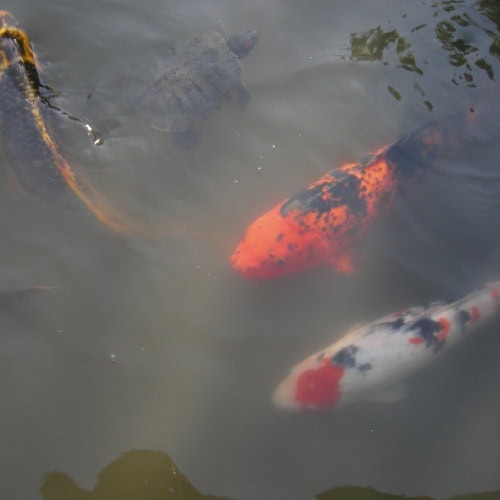
Fine clay, silt, and soil can turn pond water gray, tan, or pale brown after heavy rain, pond digging, fish rooting through the bottom, or runoff from an exposed bank. Clay particles are so small that ordinary filter pads often cannot catch them quickly.
You will often see this type of cloudiness after a storm or after fish have been active near bare soil. The water may look muddy rather than bright white, and it can stay cloudy even when your fish seem healthy.
Start by stopping the source. Cover bare pond edges with stone, gravel, plants, or erosion-control fabric, and keep runoff from lawns, garden beds, and downspouts out of the pond. Add fine filter floss or a polishing pad to the mechanical filter, then rinse or replace it as it clogs.
Avoid stirring the bottom while you wait for sediment to settle. If koi are constantly nosing through loose soil, remove exposed planting soil and use aquatic plant baskets topped with larger gravel.
New Pond Syndrome And Immature Filtration
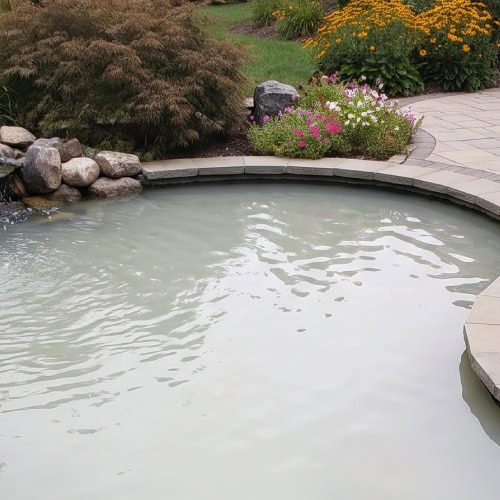
A newly filled pond, a recently cleaned filter, or a pond with newly added fish can develop a milky-white bacterial bloom. This happens when fast-growing bacteria feed on dissolved organic waste from fish food, fish waste, decaying leaves, or other debris.
Your pond’s biological filter needs time to grow colonies of beneficial bacteria on filter media, rocks, and other wet surfaces. During that cycling period, the water can look like watered-down milk even when no dirt is visible.
A bacterial bloom often clears in a few days to a week once the available waste drops and the filter matures. Do not strip-clean your biological filter or rinse its media under chlorinated tap water. That removes the bacteria your pond needs.
Increase aeration, pause feeding for a few days, and test ammonia and nitrite daily if fish are present. Any detectable ammonia or nitrite deserves prompt action with partial, dechlorinated water changes and additional biological filtration support.
Diagnosing The Cloudiness
Before treating cloudy water, use its color, timing, and behavior in a jar to narrow down the cause. A five-minute check can save you from adding a product meant for algae when the real issue is sediment or excess organic waste.
White Or Gray Water Versus Green Cloudiness
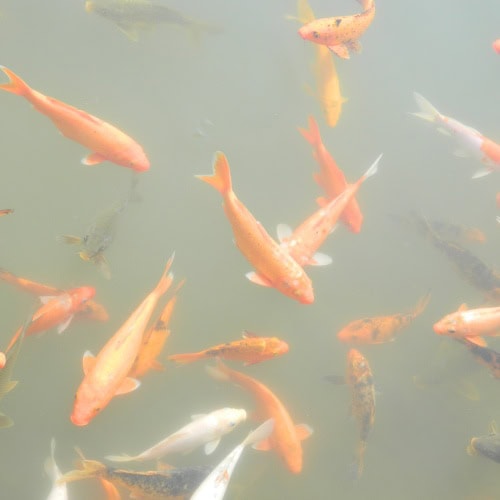
Milky white or light gray water most often points to a bacterial bloom, mineral precipitation, or suspended fine sediment. A bloom often appears after overfeeding, a filter disruption, a large pond cleaning, or a sudden increase in fish waste.
Green, pea-soup water is usually suspended algae. It needs a different approach, focused on limiting nutrients, strengthening filtration, adding shade or plants where appropriate, and using a properly sized UV clarifier if needed.
A white cloud that appears immediately after adding lime, hardness boosters, or another water treatment may be mineral precipitation. Stop adding products, check pH and hardness, and do not stack additional treatments until the water chemistry stabilizes.
| What You See | Likely Cause | Useful First Response |
|---|---|---|
| White, milk-like haze | Bacterial bloom | Add aeration, reduce feeding, test water |
| Gray, tan, or muddy haze | Clay or sediment | Prevent runoff, add fine mechanical filtration |
| Bright green cloudiness | Suspended algae | Check nutrients, filtration, and UV setup |
| White cloud right after treatment | Mineral reaction | Stop dosing and test pH and hardness |
Simple Jar Test And Water Checks
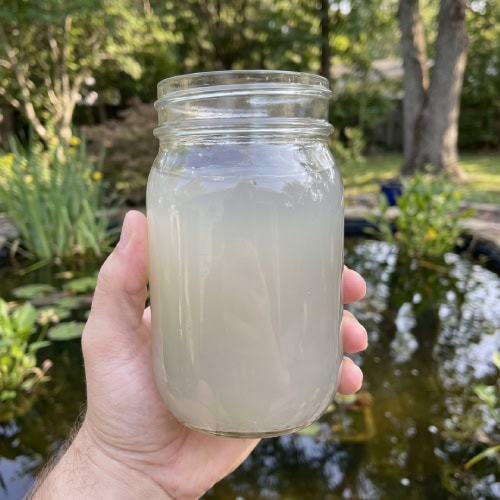
Fill a clear jar with pond water and set it somewhere undisturbed for 24 hours. If sediment collects at the bottom and the water above it clears, you are likely dealing with soil or fine debris.
If the jar remains evenly milky with little settling, a bacterial bloom is more likely. If it becomes clearer only after several days, very fine clay may still be involved.
Use a pond test kit to check:
- Ammonia, which should be zero
- Nitrite, which should be zero
- pH, especially after rain or chemical additions
- Temperature, because warm water holds less oxygen
- Nitrate, which can signal accumulated fish waste and plant debris
If ammonia or nitrite is present, treat that as the priority rather than chasing visual clarity. Add vigorous aeration, stop feeding temporarily, make small dechlorinated water changes, and consider professional pond help if readings persist or fish show distress.
Safe Ways To Restore Clarity
Clear water returns most reliably when you reduce the waste source, improve oxygen and filtration, and give the pond time to rebalance. Aim for staged changes rather than a dramatic drain, scrub, and refill that can destabilize your fish.
Improve Filtration And Water Circulation

- Aquascape 2-Outlet Pond Aeration Kit, Quiet Energy-Efficient Pond Aerator with Weighted Air Stones, Airline, Check Valves, for Ponds up to...
- Oxygenates Ponds: 2-outlet pond aeration kit helps keep water healthy, clean, and clear by supporting oxygen levels in ponds up to...
- Complete Aerator System: Includes two weighted 4-inch aeration discs, two 25-foot rolls of 3/16-inch silicone airline, and preassembled...

Make sure water is actually moving through the filter rather than bypassing clogged pads or a blocked intake. A weak waterfall, reduced fountain flow, or overflowing filter often means the mechanical stage needs attention.
Rinse dirty mechanical pads in a bucket of removed pond water, not chlorinated tap water. Keep biological media damp and disturb it as little as possible, since it houses the bacteria that process ammonia and nitrite.
For a bacterial bloom or fine sediment, add temporary filter floss or a fine polishing pad after the coarser filter material. Check it daily, because a clogged polishing pad can reduce flow and oxygen exchange.
Increase surface movement with an air stone, waterfall, fountain, or dedicated pond aerator. This matters most during a bacterial bloom, since the bacteria use oxygen as they break down organic material.
Do not perform a full pond drain to fix milkiness. If water tests show a problem, make smaller partial changes with temperature-matched, dechlorinated water instead.
Use Clarifiers And Beneficial Bacteria Carefully

- Once applied, Pondworx Bacteria will instantly SUPER charge bacteria that get to work on your behalf
- This concentrated formulated is designed for large ponds but also works great in water gardens, koi ponds and other water features
- Treated bodies of water may be used for recreation, fishing, and other activities immediately after applying
A pond clarifier can clump fine suspended particles so your filter can catch them, though it is best reserved for confirmed sediment issues and used exactly as labeled. You need enough active mechanical filtration to remove those clumps, or the debris simply settles into the pond.
Avoid flocculants when fish are already stressed, oxygen is low, or ammonia and nitrite are elevated. They can create a sudden filtration load and do not remove the underlying source of waste.
Beneficial bacteria products may help digest organic debris and support a recovering biofilter. They work gradually, so expect improvement over days or weeks rather than overnight clarity.
If you use bacteria, keep the pond aerated and do not combine the treatment with antibacterial chemicals or unnecessary filter sterilization. For a new pond, patience, stable water conditions, and modest fish feeding do more than repeated product changes.
Preventing Cloudy Water From Returning
A clear pond depends less on a single treatment than on keeping waste, runoff, and filtration in balance. Once you know what triggered the cloudiness, prevention usually becomes straightforward.
Manage Fish Waste And Feeding
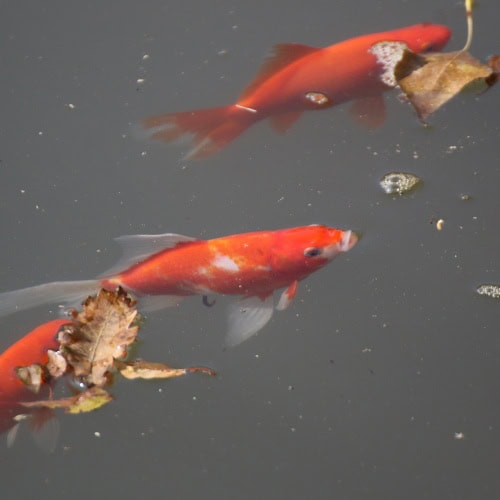
Feed only what your fish finish within a few minutes, and remove leftovers if food begins drifting into corners or settling on the bottom. In warm weather, fish eat more and produce more waste, so your filter has to work harder.
Do not add many fish at once to a newly established pond. Give the biological filter time to adjust (a process called “pond cycling“), and test ammonia and nitrite after increasing the fish load.
Remove fallen leaves, dead plant material, and sludge before they decay into dissolved organic waste. A net, skimmer, or regular light vacuuming keeps debris from becoming fuel for a bacterial bloom.
Keep your pump and filter sized for the pond volume and fish load. Koi ponds usually need more filtration and oxygen than lightly stocked goldfish ponds, particularly during hot summers.
Protect Soil From Runoff And Erosion
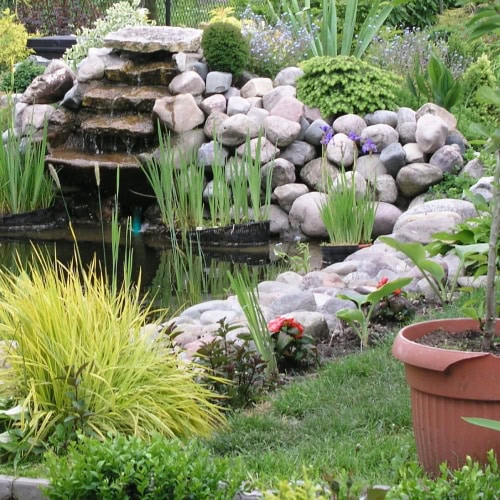
Direct roof runoff and lawn drainage away from the pond. Stormwater can carry soil, fertilizer, mulch, and organic debris straight into the water, creating both sediment cloudiness and nutrient spikes.
Stabilize bare banks with rock, gravel, moisture-tolerant plants, or other pond-safe edging. If you see cloudy water after every rain, inspect the pond perimeter while the ground is wet to find where soil is entering.
Keep garden soil and loose mulch out of planting shelves. Use contained aquatic planting media, and top plant baskets with gravel large enough that fish cannot easily scatter it.
After a major storm, check water clarity, pump flow, and fish behavior before adding treatments. A little patience, extra aeration, and prompt removal of visible debris often prevent a short-lived haze from becoming a larger water-quality problem.