
Managing aquatic vegetation is a constant battle for pond owners. Let too much grow, and suddenly you’ve got murky water, low oxygen, and a pond that feels a bit out of control.
Adding fish that love munching on plants is a straightforward, eco-friendly way to keep those weeds in check. These species act like little underwater gardeners, picking at algae, nibbling weeds, and generally helping your pond stay balanced. If you pick the right fish for your setup, you’ll spend less time scooping out plants and more time enjoying clear, healthy water.
1) Koi (Cyprinus sp.)
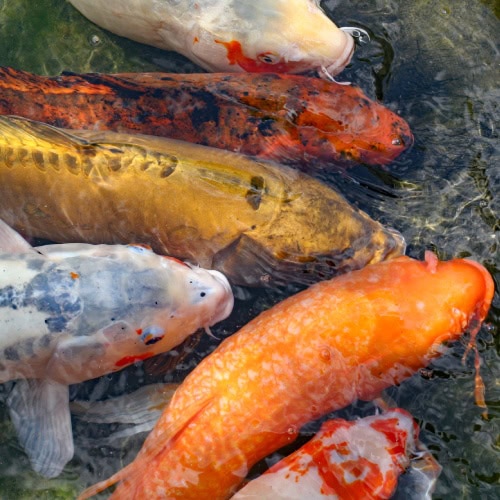
Koi are omnivorous pond fish and will eat aquatic plants like water hyacinth, water lettuce, and duckweed if they find them. Sometimes they’ll even go for water lily leaves and roots, especially if they’re hungry or the pond is crowded.
If you keep your koi population reasonable (think one inch of fish per 10 gallons) your plants stand a better chance. Giving them good commercial food on a regular basis also helps keep them from raiding your favorite lilies.
2) Grass Carp (Ctenopharyngodon idella)
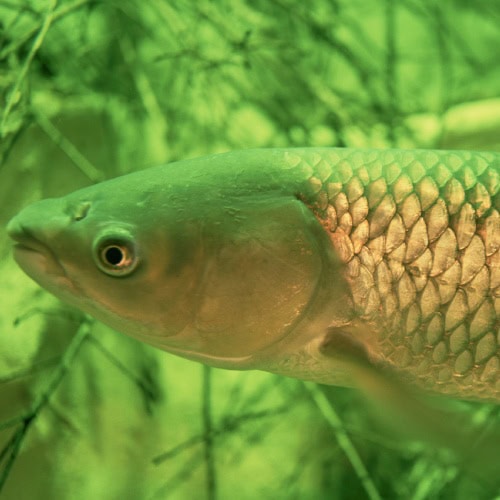
Grass carp are big, plant-loving fish from eastern Asia and are kind of famous for their ability to clear out pond weeds. They’ll devour higher aquatic plants, submerged grasses, and just about any pond weed you throw at them.
Introduced to North America back in the 1960s, grass carp are now a go-to solution for overgrown ponds and lakes. Just a heads-up: in many places, you’ll need sterile triploid grass carp so they don’t take over.
3) Common Goldfish (Carassius auratus)
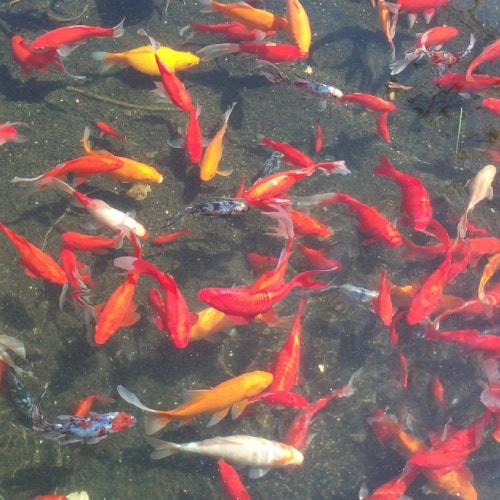
Common goldfish will eat just about anything, including soft pond plants like water hyacinth, water lettuce, and duckweed. If food is scarce or space is tight, they won’t hesitate to sample water lily leaves and even dig at the roots.
To keep plant damage to a minimum, avoid overstocking. Regular feedings with a balanced commercial food also go a long way toward keeping their attention off your pond plants.
4) Golden Orfe (Leuciscus idus)
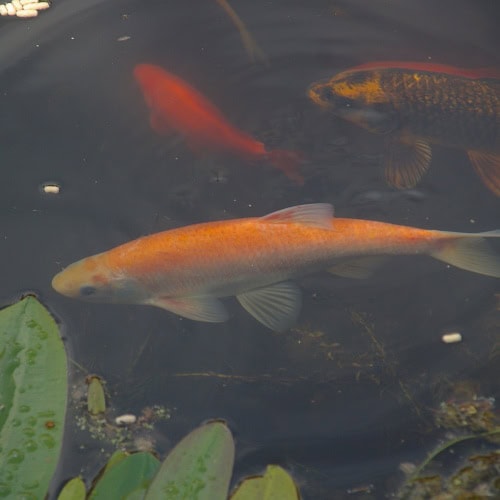
Golden Orfe are often recommended for ornamental ponds, but honestly, they’re not going to help with plant control. These lively fish focus on insects, larvae, mollusks, and small invertebrates.
Unlike some of their pond-mates, Golden Orfe leave aquatic plants alone. If you want your pond plants to thrive, they’re actually a solid choice.
5) Tench (Tinca tinca)
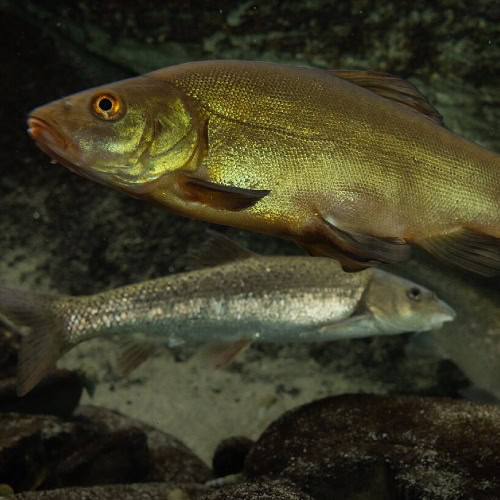
Tench are bottom-dwellers that include aquatic vegetation in their diet. They do well in ponds with dense plant growth, rooting around for food among the stems and leaves.
They’re pretty tolerant of different water conditions and like things on the cooler side; anywhere from 15-25°C. Tench prefer shallow, slow-moving water with plenty of plant cover for both food and hiding spots.
They can reach up to 66cm, so make sure your pond is roomy enough for these gentle giants.
6) Bluegill (Lepomis macrochirus)
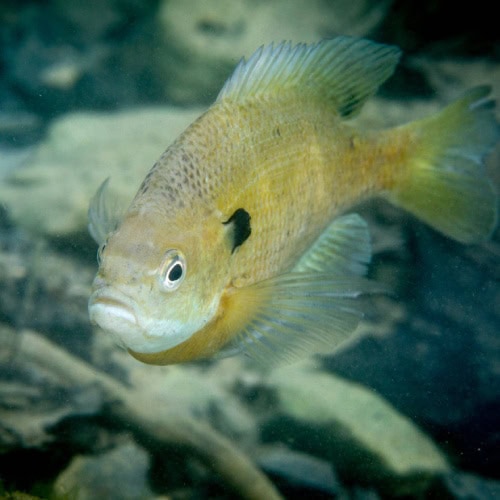
Bluegill are native North American freshwater fish, and they’re surprisingly handy for managing a pond’s ecosystem. Sure, they mostly snack on insects, zooplankton, worms, and tiny crustaceans, but the younger ones will feed on algae too; it’s a solid part of their diet.
These sunfish tend to move in schools and seem to adapt pretty well to ponds all over North America. If you’re hoping for a bit of help keeping things balanced, bluegill are a classic choice.