
You can transform your pond into a polished focal point without stretching your budget. The right mix of hardy native bloomers, graceful water lilies, upright reeds, and floating greens adds structure, color, and texture that rival high-end water gardens.
This guide highlights budget-friendly choices that deliver strong visual impact across seasons, from bold shoreline flowers to delicate floating varieties. You will discover plants that support a balanced ecosystem while elevating the overall design.
1) Native Pickerelweed (Pontederia cordata)
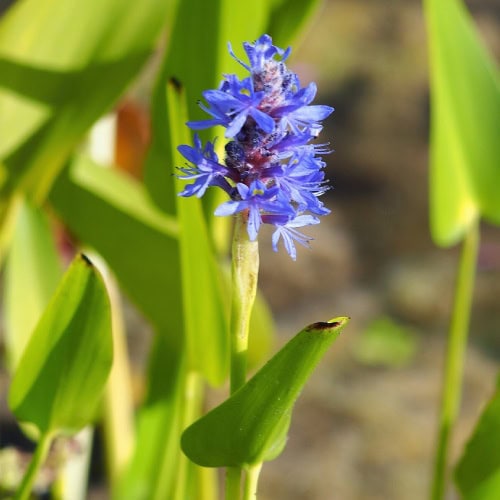
Native pickerelweed adds height and color to your pond without raising your budget. You get upright spikes of violet blue flowers that bloom through summer, paired with glossy, heart shaped leaves.
Plant it in shallow water, up to about 12 inches deep, where it can root in rich soil. It thrives in full sun and spreads slowly by rhizomes, forming neat clumps.
You also support pollinators and improve shoreline stability with this low maintenance native.
2) Blue-flag Iris (Iris versicolor)
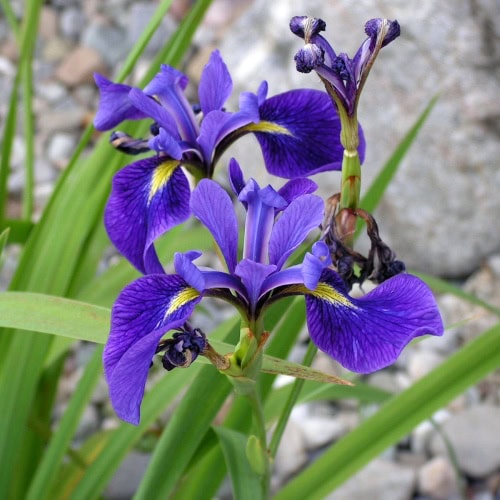
You can add strong color to your pond edge with blue-flag iris, a North American native that thrives in wet soil and shallow water. Its violet-blue flowers show purple veining and yellow accents in late spring.
Sword-shaped, blue-green leaves stay upright through summer and reach about 24 to 30 inches tall. Plant it in 4 to 12 inches of water or in consistently moist ground.
It naturalizes well along stream banks and rain gardens, giving you an upscale look at a modest cost.
3) Northern Water Lily (Nymphaea odorata)
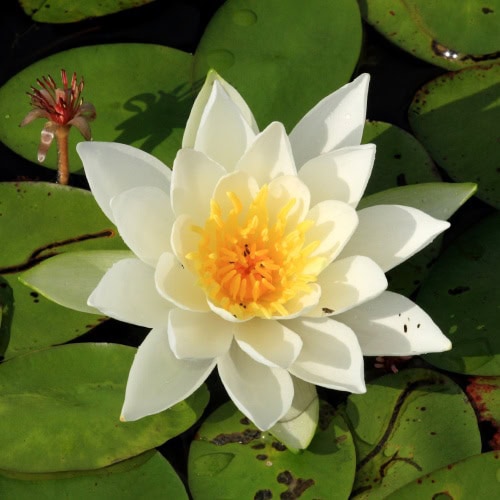
Give your pond a refined look with Northern Water Lily, a native species known for its white, lightly fragrant blooms. The flowers float above broad green pads and open in full sun during summer.
This hardy perennial returns each year in many climates. You can plant it in still or slow-moving water, where it helps shade the surface and reduce algae growth.
4) Water Smartweed (Persicaria amphibia)
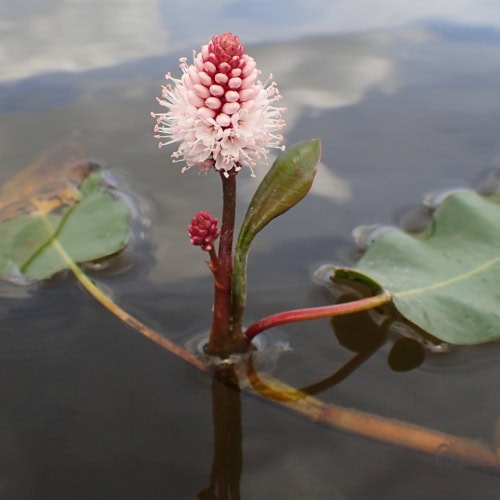
Water smartweed provides elegance with floating leaves and soft pink flower spikes. You can grow it in shallow water or along muddy edges, where it spreads steadily.
It tolerates wet soil and full sun with little effort from you. The plant adapts well to ponds, rain gardens, and naturalized areas.
You can divide established clumps to expand coverage at minimal cost.
5) Dwarf Cattail (Typha minima)

Add classic cattail texture without overwhelming a small pond by planting dwarf cattail. This compact marginal plant grows about 2 feet tall and features narrow blue green leaves with small brown catkins that appear in late summer.
You can place it in containers or along shallow pond edges. It suits small ponds and water gardens where full sized cattails would look too large.
Divide clumps in spring to control spread and keep plants tidy.
6) Cardinal Flower (Lobelia cardinalis)

Cardinal flower adds bold color to your pond edges without raising your budget. You get tall spikes of vivid red blooms that stand out against green foliage.
Plant it in moist soil along pond margins or shallow water. It prefers partial to full sun and consistently damp conditions.
This North American native returns reliably and may self seed in ideal spots. You can divide clumps in spring to expand your display at little cost.
7) Horsetail Reed (Equisetum hyemale)

Horsetail reed gives your pond a clean, architectural look without a high price. Its tall, jointed green stems grow upright and create strong vertical lines.
You can plant it along pond edges, in shallow water, or in a container with moist soil. It thrives in consistently damp conditions and works well in rain gardens or bog areas.
Contain it in a pot, as it spreads by underground runners. With minimal care, you maintain a polished, modern display year round in mild climates.
8) Japanese Water Iris (Iris ensata)

Plant Japanese water iris for a refined look with large, flat blooms in purple, blue, pink, or white. The flowers rise above slender, sword shaped leaves in early to mid summer.
Plant it at the pond edge, in boggy soil, or in consistently moist borders. You can also grow it in shallow water during summer, then move it to damp soil for winter.
It prefers moist, slightly acidic soil and full sun.
9) Bog Rosemary (Andromeda polifolia)

Bog rosemary gives your pond edge a rustic feel with its narrow evergreen leaves and soft pink, urn-shaped flowers. You can plant it along boggy margins or in consistently moist, acidic soil near the water.
This compact shrub typically grows just a few inches tall, making it ideal for small ponds or tight spaces. It pairs well with other acid-loving plants.
You get year-round foliage and spring blooms without high cost or demanding care.
10) Marsh Marigold (Caltha palustris)

You can brighten your pond in early spring with Marsh Marigold’s glossy leaves and clear yellow flowers. The blooms resemble buttercups and typically appear before many other pond plants wake up.
Plant it along pond edges, shallow shelves, or moist bog areas. It prefers consistently wet soil and tolerates partial shade.
This hardy perennial returns each year and spreads by division, giving you a full, natural look at a low cost.
11) Floating Duckweed (Lemna minor)
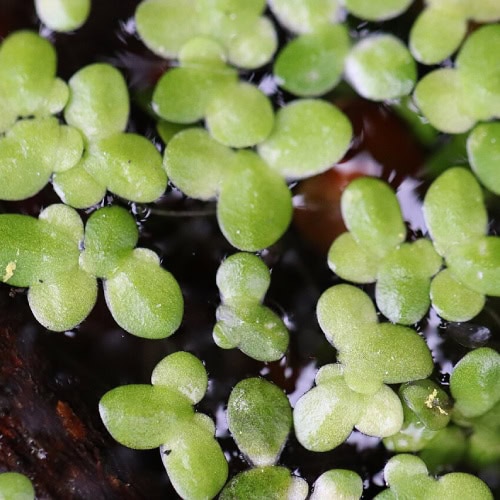
Floating duckweed, Lemna minor, gives your pond a lush green surface at very low cost. Each tiny leaf measures about 1/8 inch across and spreads quickly across still water.
You can use it to shade the surface, which helps limit algae growth. It also absorbs excess nutrients, improving overall water quality.
Fish, turtles, and ducks may graze on it, adding practical value. You can easily thin it out to control coverage and maintain balance.
12) Water Hawthorn (Aponogeton distachyos)

You can add soft detail to your pond with water hawthorn, a deep water plant that flowers in cooler months. It produces narrow floating leaves and white blooms that sit just above the surface.
Place it in still water, about 6 to 12 inches below the surface, in full sun or partial shade. The foliage often dies back in late summer.
It regrows as temperatures drop.