
You put your pond at risk in winter when you allow prolonged ice sealing, feed fish in water that is too cold, disturb their deeper refuge, or leave equipment vulnerable to freezing. Your first priorities are steady oxygen access and enough unfrozen water for your fish.
Winter pond care varies by climate, from mild winters to prolonged freezing, and depends on your pond’s depth, stocking level, and equipment. Use these factors to choose the right precautions for your region.
You’ll be able to avoid many winter emergencies by preparing before the first sustained freeze, then checking your pond regularly without disturbing resting fish.
1) Letting Ice Seal the Entire Pond Surface

- Ideal for keeping a small hole opening the ice during cold winter months
- Ensures proper gas exchange; helps prevent winter fish loss and increases oxygen levels
- Energy efficient design helps keep down operation cost

Keep an opening in your fish pond’s ice so gases can move between the water and the air. Under prolonged ice cover, your fish and decomposing debris continue using oxygen while snow reduces the light available for underwater photosynthesis.
Use a pond-rated de-icer and appropriately positioned aeration for your conditions. A floating de-icer maintains a localized opening; you should expect very little change in the temperature of the entire pond.
Size your setup for your pond and winter conditions using the equipment instructions. With a heavily stocked pond, you need to monitor oxygen even when an opening remains visible.
2) Banging on Ice to Open a Vent Hole
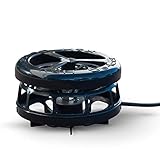
- ENERGY SAVING: 3 different wattages of pond deicers for outdoor ponds of virtually any size, see our zone chart to choose the right wattage...
- THERMOSTATICALLY CONTROLLED: Deicer is thermostatically controlled to turn on and off as needed to keep your pond from freezing over
- FLOATING & SUBMERSIBLE: Can be used as a floating pond deicer out of the box or in seconds converts to a submersible pond deicer
Open a frozen pond through controlled melting, keeping hammers and chopping tools away from the ice. When you strike the surface, you transmit noise and vibration through the water and risk damaging your liner.
If your pond has already sealed over, follow your de-icer’s instructions for installation on existing ice. Some models permit a specific placement that lets the unit gradually melt through; you should never assume every heater supports that method.
When you need to open ice on a fish pond, work from stable ground. Keep boiling water and salt out of the pond, and allow time for controlled melting.
3) Feeding Koi and Goldfish When Water Is Too Cold

- COOL-WATER KOI & GOLDFISH FOOD — Feed Blue Ridge Cool Water Wheat once your pond water drops below 60F. As water cools, koi and goldfish...
- FAST-SOFTENING 3/16" FLOATING PELLETS — The 3/16" pellet floats and softens within minutes, so fish take it easily and uneaten food is...
- WHEAT-GERM BASED FOR EASY COOL-WATER DIGESTION — In cool water a koi's digestive system slows down, and food that lingers too long in the...
Base your winter feeding on sustained water temperature and fish species. A warm afternoon gives you little information about conditions where your fish are resting.
For an unheated backyard pond with koi or common goldfish, use about 50°F as a conservative stopping point. Reduce portions as the water cools toward that temperature, following your food’s temperature guidance. When feeding koi during winter, remove leftovers promptly because they add waste while biological filtration is slowing.
Avoid restarting food after one warm day. Wait for consistently suitable water temperatures and active feeding behavior. If you keep tropical fish or cold-sensitive fancy goldfish, arrange species-appropriate protected housing before cold weather arrives.
4) Placing Winter Aerators at the Deepest Point

- Aquascape 2-Outlet Pond Aeration Kit, Quiet Energy-Efficient Pond Aerator with Weighted Air Stones, Airline, Check Valves, for Ponds up to...
- Oxygenates Ponds: 2-outlet pond aeration kit helps keep water healthy, clean, and clear by supporting oxygen levels in ponds up to...
- Complete Aerator System: Includes two weighted 4-inch aeration discs, two 25-foot rolls of 3/16-inch silicone airline, and preassembled...
Move your winter diffuser to a shallower location so you preserve a quieter deep-water refuge. Strong bubbling from the bottom mixes the water column and reduces the warmer layer available to resting fish.
In sufficiently deep freshwater ponds, water near 39°F settles below colder surface water. You lose some of that temperature separation when you run vigorous bottom aeration throughout a freeze.
Position your air stone on a shelf or suspend it above the bottom according to your system’s winter instructions. Adjust airflow to maintain useful surface movement without churning the entire pond. Keep people and pets away from the weakened ice surrounding your aerated opening.
5) Leaving Fallen Leaves and Sludge to Decompose

- Dual-chamber Vacuum System: Two cylinders alternate suction and drain cycle to provide continuous suction.
- Sludge Drain with Drain Hose: Dual-discharge option for draining waste water directly into flower bed or attach debris bag and place into...
- Aluminum Extension Tubes: Lightweight bend-resistant tubes.
Remove accumulated leaves and heavy sludge before winter because decomposition consumes oxygen your fish still need. Your autumn cleanup reduces that demand before ice limits replenishment.
Start by keeping leaves out of your pond with supported netting, then skim anything that gets through. Empty your skimmer basket frequently during leaf fall so a packed basket doesn’t restrict flow.
Remove thick bottom deposits while the water is still accessible and your fish remain active. Once sustained cold arrives, avoid an aggressive cleanout around resting fish. In a wildlife pond, preserve some natural sediment and shelter while removing excessive rotting material.
6) Overwintering Fish in Ponds Too Shallow for Local Freezes

- DURABLE RIGIDCELL CONSTRUCTION: For superior performance and long-lasting durability in all types of weather.
- CATEGORY LEADING WARRANTY: Backed by a 10-Year Limited Warranty
- MADE IN THE USA: Rubbermaid Commercial Products BRUTE Stock Tanks are proudly made in the USA.
Assess your pond against local freeze severity before leaving fish outdoors. You need adequate liquid water beneath the expected ice, along with sufficient oxygen throughout the cold spell.
A depth of roughly 3–4 feet appears in guidance for many ornamental ponds, but you should never treat that range as a nationwide guarantee. Your exposure to wind, pond volume, and duration of freezing all affect the outcome.
If your pond risks freezing nearly solid, plan a protected holding tank before winter. To keep pond fish alive through winter, provide space appropriate to their size and number, established filtration, and aeration. Acclimate your fish gradually to the holding water.
7) Running Waterfalls That Form Ice Dams

- Efficient Sump Pump: Aquastrong sump pump with 1HP powerful motor. Draining water up to 4500GPH Per Hour( 75 gallons per minute) at 5ft...
- Portable Design: Plug in to play while unplug to stop. Bottom suction design filters debris and removes water down to 1/5 inch from the...
- Easy Installation: 1-1/4'' NPT discharge comes with 1-1/2'' elbow adapter and snap coupling adapter of 3/4'', 1'' or 1-1/4'', which makes...
Shut down or bypass your waterfall when ice starts diverting its return flow. An ice dam redirects pumped water outside the liner, allowing substantial water loss while the feature still looks as though it is running.
Inspect your stream edges and waterfall spillway during freezing weather. Watch for water tracking over ice toward the bank and for a narrowing return channel.
You can keep suitable pond pumps running in winter when your climate and equipment support continuous operation. During prolonged freezes, a protected return below the surface avoids the exposed waterfall route. Maintain separate winter aeration when you shut down a feature that previously supplied surface movement.
8) Failing to Check De-Icers and Air Pumps During Freezes

- DESIGN: Thermometer constructed of weather resistant and shatterproof materials for increased durability during use.
- PRECISION MEASUREMENT: Factory calibrated to accurately measure temperatures from -60 degrees Fahrenheit to 120 degrees Fahrenheit (-50 to...
- EASY TO USE: Bold black lettering with large numbers and a bright red pointer makes temperature readings easier.
Check your winter equipment daily during sustained freezing and after power interruptions. A plugged-in cord gives you no assurance that your heater is warming or your air pump is delivering air.
Look for an open patch and visible bubbling. Interpret indicator lights using your model’s manual: a thermostat-controlled unit cycles according to its design, so a nonheating indication alone doesn’t establish a fault.
Use GFCI-protected outdoor power and keep connections protected from precipitation. Before handling equipment, disconnect power and observe the manufacturer’s cooling interval. Keep your air pump sheltered as specified, with ventilation unobstructed, and inspect tubing for kinks or frozen condensation if airflow drops.
9) Skipping Winter Water Quality Tests

- Contains one (1) API POND MASTER TEST KIT Pond Water Test Kit 500-Test, including 6 bottles of testing solution, 3 color cards and 4 test...
- Helps monitor water quality and prevent invisible water problems that can be harmful to fish
- Measures ornamental pond pH balance, Ammonia content, Nitrite levels and Phosphate content
Continue testing your pond through winter because cold water still contains fish waste and decomposing material. Clear water gives you no reliable measure of ammonia or dissolved oxygen.
Check ammonia, nitrite, and pH every few weeks, with additional tests after equipment failures or unusual fish behavior. Include dissolved oxygen when you have suitable testing equipment, particularly during extended snow-covered ice.
Aim for zero measurable ammonia and nitrite. If either appears, check for waste buildup and interrupted filtration. When a partial water change is needed, add replacement water slowly, match its temperature closely, and use a conditioner appropriate for your tap water’s chlorine or chloramine.
10) Leaving Vulnerable Pipes and Filters Exposed to Freezing

- Highly effective and reliable pond filter.
- Designed for larger ponds, perfect for ponds up to 6,000 gallons with koi and 24,000 gallons with no fish.
- Features an active LED display, which shows the required cleaning measures.
Drain and protect equipment that will sit idle through freezing weather. Trapped water expands as it freezes, threatening pipework and filter housings.
Include exposed plumbing in your winter pond preparation. Follow the manufacturer’s shutdown procedure for your pump, external filter, UV unit, and connected lines. A cover leaves trapped water inside, so complete the draining steps before covering or storing components.
If you operate filtration all winter, protect vulnerable sections according to their specifications and plan for an outage. Running water still freezes when conditions overwhelm the system. After a freeze, inspect for ice blockage before restarting a stopped circuit.
11) Ignoring Falling Pond Water Levels

- Contains one (1) API POND CHLORINE & HEAVY METAL NEUTRALIZER Pond Water Neutralizer 32-Ounce Bottle
- Removes harmful-to-fish chemicals from tap water to make water safe
- Made with a super-strength, highly concentrated formula for effectiveness
Investigate a falling winter water level promptly because you risk exposing equipment and reducing your fish’s available refuge. Start with any running waterfall or stream, where ice commonly changes the return path.
Mark your normal waterline so you can distinguish a steady decline from a casual impression. Check accessible fittings and look for wet ground beyond the pond edge without stepping onto ice.
If a water feature is sending water outside the liner, isolate that circuit and maintain your winter aeration. Refill gradually with appropriately conditioned water while watching the temperature. Avoid leaving a hose unattended, especially when your pond’s surface makes the rising level difficult to judge.
12) Leaving Frost-Sensitive Aquatic Plants Outdoors
- DURABLE RIGIDCELL CONSTRUCTION: For superior performance and long-lasting durability in all types of weather.
- CATEGORY LEADING WARRANTY: Backed by a 10-Year Limited Warranty
- MADE IN THE USA: Rubbermaid Commercial Products BRUTE Stock Tanks are proudly made in the USA.
Move tender aquatic plants into suitable protected conditions before cold damages them. You need to identify your plants first because tropical water lilies and hardy varieties require different winter care.
When overwintering pond plants, give tender species the moisture, warmth, and light their particular variety requires. A frost-free room alone won’t sustain every tropical aquatic plant.
Keep hardy lily crowns below the expected ice depth where your pond allows it, and remove dead foliage before it rots underwater. If you choose to discard tender plants, use an appropriate disposal method for the species and your local rules. Never release aquatic plants into nearby waterways.
13) Leaving Fish Unprotected From Winter Predators

- 【5 Different Working Modes】 Our gdend Ultrasonic Animal Repellent effect on Deer,Cat, Squirrel, Raccoon, Dog, Skunk, Rabbit and other...
- 【Waterproof & Solar Powered】gdend Animal Deterrent Device features a High-Efficiency solar panel, converting sunlight into energy for...
- 【Easy To Use】Just plug into the ground, turn on, start working. For the first use, charge with cable or place in direct sunlight. Mode...
Maintain predator protection after your summer vegetation dies back. Your fish have less cover, and their slower winter movement leaves them vulnerable near accessible edges or openings.
Use securely supported pond netting where appropriate, leaving enough clearance to prevent a bird from striking fish through the mesh. Check for sagging after snowfall and keep loose edges from trapping wildlife.
Provide stable underwater shelters with openings large enough for your fish to enter and leave freely. Position shelters before sustained cold so you avoid rearranging the pond around resting fish. Inspect your protection for tracks or displaced supports during routine checks; a stationary decoy offers limited reassurance once predators become accustomed to it.
14) Adding Pond Treatments Without Checking Temperature Limits
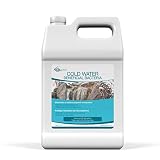
- Effective Cold-Temperature Performance: Formulated to work in water temperatures below 50°F (10°C), making it ideal for fall and winter...
- Promotes Natural Waste Breakdown: Supports the biological process that helps manage excess nutrients and organic debris as temperatures...
- Professional Strength Formula: Highly concentrated with 1.5 billion CFU per ounce and eight pure strains of beneficial bacteria for...
Check the label’s water-temperature range before adding any winter treatment. You need a product suited to the measured conditions and a clear reason to use it.
Cold-water bacterial products are formulated for lower temperatures, but you still need physical debris removal and adequate oxygen. Avoid treating a bottle of bacteria as permission to leave heavy sludge beneath the ice.
For fish medications, follow the stated temperature limits and aeration requirements. Seek aquatic veterinary advice when your fish show illness during cold weather, especially before combining treatments.
Measure your pond volume carefully, calculate the dose from that volume, and follow every label restriction on repeat applications.