
Water lilies serve as the centerpiece of many garden ponds, providing vibrant color, natural shade, and essential shelter for aquatic life. Leaving them unprepared for freezing weather, however, can quickly destroy their delicate crowns and root systems.
Proper winter care protects your investment and ensures your plants return healthy when warm weather arrives. Successfully overwintering water lilies is vital for maintaining a thriving water garden year after year.
Winter Care Quick Checklist
Use this checklist as a quick reference to prepare, protect, and transition your water lilies through the cold season.
| Step | Hardy Water Lilies | Tropical Water Lilies |
|---|---|---|
| Fall Preparation | Halt fertilizer; trim dying leaves slightly above the crown. | Halt fertilizer; remove fading foliage and lift before freezing weather. |
| Winter Location | Deepest pond zone below the freeze line, or cool indoor storage (40–45°F). | Indoors: stored dormant tuber or active illuminated water container. |
| Target Temperature | Keep crown submerged in unfrozen water, or 40–45°F in damp storage. | 55–60°F for dormant tuber storage; above 68°F for active growth. |
| Winter Monitoring | Confirm ice depth remains above pot; keep stored pots damp. | Inspect tubers periodically for rot or drying; refresh cloudy water. |
| Spring Return | Raise pots to shallow shelf once fresh leaves emerge. | Sprout tubers at 70–75°F; return to pond only after water warms (approx. 70–75°F). |
Should Your Water Lily Stay in the Pond or Come Indoors?
Start by identifying your lily and checking how deeply your pond freezes. Those two facts determine whether overwintering water lilies means lowering a pot, protecting it in frost-free storage, or moving a tropical plant inside.
Is Your Water Lily Hardy or Tropical?
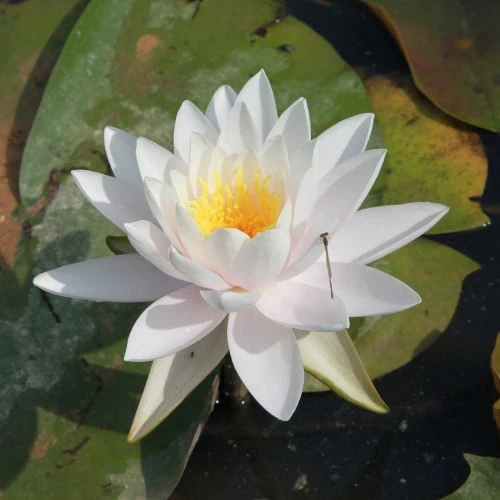
Check the plant label or cultivar name first. A hardy water lily is adapted to a cold winter rest, provided its rhizome stays unfrozen. A rhizome is the thick stem from which the lily’s roots and leaves grow. A tropical lily needs protection from cold and must come out of a pond that freezes.
Flowers offer a clue if you have lost the label: hardy lily blooms commonly sit on the water, while tropical blooms frequently rise above it. That clue is imperfect, so use the cultivar name when you have one. Give your other aquatic plants their own winter plan; a lily’s hardiness does not tell you what a nearby marginal plant can withstand.
Will Your Pond Freeze to the Bottom?

Look at the water depth where your pot sits, then consider whether ice has reached the bottom in previous winters. If liquid water remains around a hardy lily’s crown and rhizome, the plant can stay outdoors. If your shallow pond or container freezes solid, lift the pot before that happens.
For a hardy lily removed from the pond, keep the rhizome damp in a cool, frost-free garage or cellar. The Missouri Botanical Garden’s guidance for a hardy cultivar gives a preferred storage range of 40–45°F when a potted rhizome must be brought in. Keep it protected from both freezing and drying throughout its winter rest.
How Do You Protect Hardy Lilies in the Pond?
Lower hardy lily pots into the pond’s deepest unfrozen water after tidying dying growth. When overwintering water lilies directly in the pond, keep the crown submerged below ice while allowing cold dormancy.
When Should You Remove Dying Leaves and Stop Fertilizing?
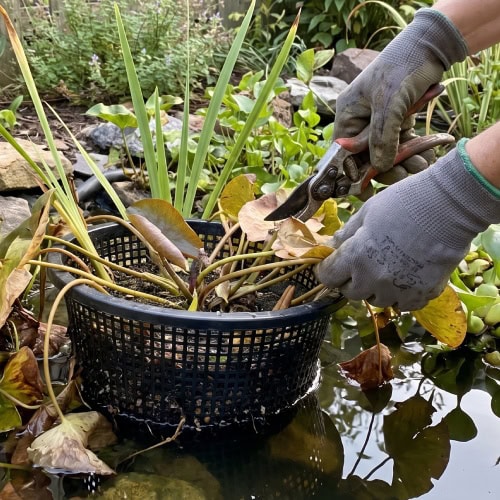
As growth slows in fall, stop adding fertilizer. Feed left in the pot will not help a dormant lily, and the plant no longer needs encouragement to produce new leaves.
Remove yellowing leaves and spent stems before they decay in the water. Cut mature dying leaves a little above the crown, leaving the small growth at the center undisturbed. If your lily grows in a permanent planting pocket, reach what you safely can without digging up the rhizome.
How Deep Should You Move the Pots?
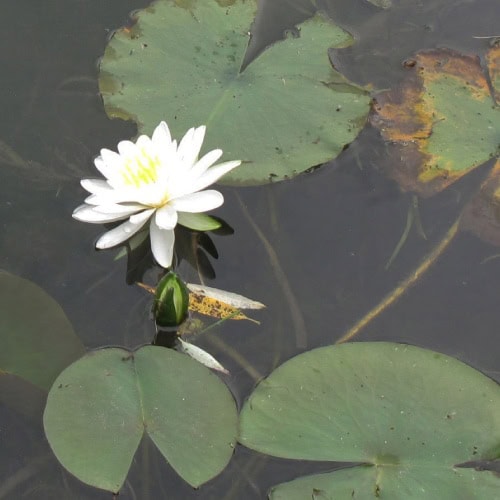
Move each pot to the deepest suitable spot before ice makes it difficult to handle. Set it flat so the crown remains below the expected ice layer, and choose a place where the pot will stay stable.
You do not need to chase a universal depth: the safe position depends on how far your pond freezes. Colorado State University’s winterizing guidance advises lowering hardy lilies to the deepest part of the pool in October or November and keeping their rhizomes from freezing or drying out.
What Can a Pond Heater Do and What Can’t It Do?

- laguna-water-garden-powerheat-de-icer-1
- BC952217
- Laguna Water Garden
A pond heater or de-icer can maintain an opening at the surface during freezing weather. That surface opening is useful for a pond, but it does not make the entire pond warm.
Check the water around your lily’s crown, not just the patch of open water near the heater. If the pond freezes to the bottom, move the pot to frost-free storage. A heater cannot protect a rhizome encased in ice.
How Do You Keep Tropical Lilies Through Winter?
You can overwinter water lilies indoors if you grow cold-sensitive tropical varieties. Bring them inside before damaging frost, then choose between dormant-tuber storage and active indoor growth.
Tuber storage requires a sound tuber and regular moisture checks. Active growth, by contrast, requires warm water and sufficient light.
How Do You Store Dormant Tubers?
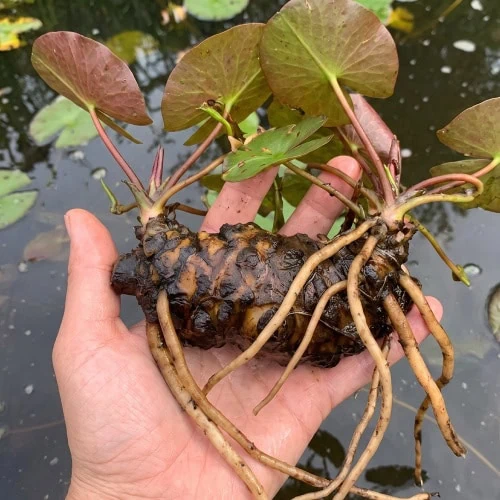
Lift the pot and look at the plant’s base for a firm tuber, the compact storage organ some tropical lilies form. Remove decaying foliage and loose roots, then place the tuber in its chosen storage medium without allowing it to dry out. Damp sand and water are established options.
Match the temperature to the lily and the storage method. Colorado State University describes storing certain tropical tubers in water at 55–60°F, while tropical-tuber storage guidance also describes warmer methods and warns that a rotting tuber can affect others sharing its water.
Label each stored tuber by cultivar if you know it, and keep tubers separate when practical.
How Do You Keep a Lily Growing Indoors?
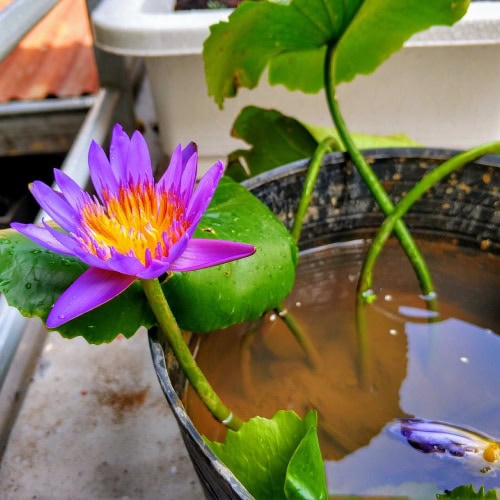
To overwinter water lilies indoors as active plants, set up an illuminated container. Trim back old foliage and roots, repot the lily, and position it under strong light.
Keep the water warm enough to support growth. Colorado State University specifies above 68°F for this method.
Watch the water and remove dying leaves as they appear. This approach requires ongoing warmth and light through winter, so choose it only if you can maintain those conditions; a cool storage spot suits a dormant tuber, not a plant you expect to keep growing.
How Do You Check Stored Tubers for Rot or Drying?
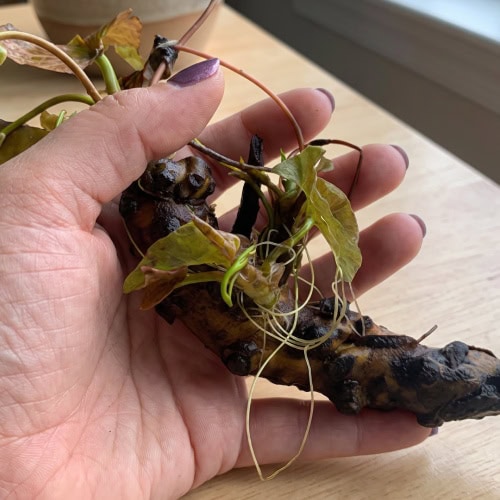
Inspect stored tubers periodically. A healthy tuber should feel firm. If its medium is drying, moisten it; if a tuber becomes soft, smells foul, or starts to break down, separate it promptly from healthy ones.
For tubers stored in water, check whether the water has turned cloudy and refresh it when needed. For those packed in sand, feel the material near the tuber: it should remain damp without being waterlogged. These checks give you a chance to correct drying or isolate rot before spring.
When Can Water Lilies Return to the Pond in Spring?
Return tropical lilies only after frost danger has passed and the pond water has warmed; raise hardy pots once their new growth begins. Spring air can feel mild while the water remains too cold for a tropical plant.
How Do You Restart Stored Tropical Lilies?
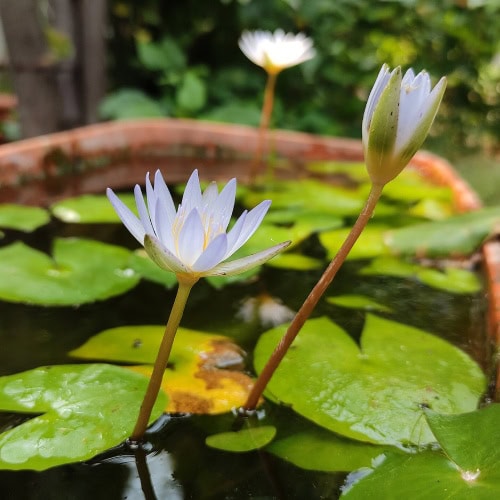
Place a firm stored tuber in warm water to encourage sprouting, then pot it with its growing point exposed. A water temperature around 70–75°F is recommended for sprouting stored tropical tubers. Start the new plant in a small pot and give it room as growth develops.
Wait to put it outside until the water suits your cultivar. For example, the Missouri Botanical Garden’s planting guidance for the tropical lily ‘Tina’ calls for water warmed to about 75°F. Move an indoor-grown lily outdoors gradually so its leaves adjust to direct sun.
When Should You Raise Hardy Lily Pots?

When you see fresh leaves emerging, move hardy pots up from their winter position to the growing depth suited to your lily. Raise them in stages if the pond is deep, keeping developing leaves close enough to reach the surface.
Clear away remaining dead foliage as you work, and check that the crown is sound before resuming seasonal feeding. If your hardy lily stayed in a planting pocket all winter, leave its rhizome in place and remove only the spent growth around it.