
Winter throws a curveball at pond owners hoping to keep fish year-round. As the temperature plummets and ice creeps across the surface, not every species is cut out for the challenge. Picking cold-hardy fish species means your pond can stay lively, even when it’s freezing out, and you won’t have to haul your fish inside.
Some fish are just built for it. They’ve evolved to handle cold water, and when the pond freezes over, these guys slow down, save their energy, and basically hunker down until spring. Knowing which fish can handle the cold lets you stock your pond with species that’ll make it through the winter and come back strong when things thaw out.
1) Common Goldfish (Carassius auratus)
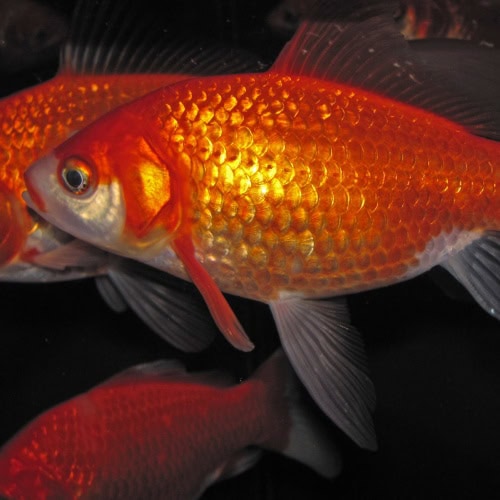
Common goldfish are right up there among the hardiest pond fish for winter. They’re naturally able to handle temperature swings, so year-round outdoor living is no big deal for them.
Give each fish at least 50 gallons and aim for a pond depth of 18 inches minimum. If you’re somewhere really cold, bump that up to 24 inches to keep things from freezing solid.
When it gets chilly, goldfish slow way down and basically nap through the cold. That’s how they make it through winter without any fancy heaters.
2) Koi (Cyprinus carpio)
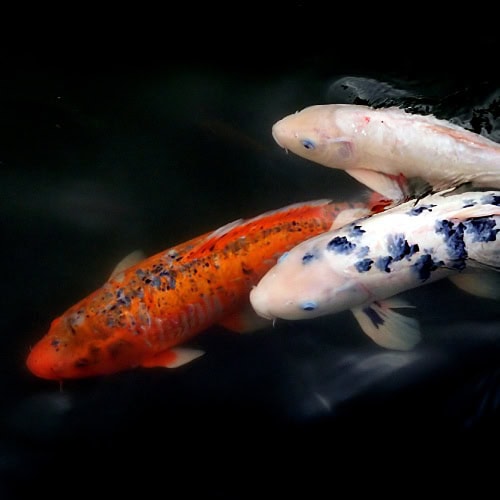
Koi are a classic choice for winter ponds, and it’s easy to see why, as they’re tough! These fish can stick it out all year, even when there’s a layer of ice on top.
You’ll want a pond that’s deep enough for koi to ride out the cold, though. A minimum depth of 3 to 4 feet gives them a cozy spot at the bottom where the water stays a bit warmer and more stable.
3) Shubunkin Goldfish

Shubunkin goldfish are another solid bet for winter ponds. They’re cold-hardy and don’t mind staying outside as long as your pond’s deep enough and well-oxygenated.
These calico beauties show off wild patterns of blue, red, black, and pearl. In a healthy pond, shubunkins can live 20 years or more, so you’re getting a long-term pond buddy here!
4) Comet Goldfish

Comet goldfish can handle winter in outdoor ponds as long as you give them what they need. Shoot for a pond that’s at least 3 feet deep, but if you’re in a place with brutal winters, 4 feet is safer.
Once water drops below 50°F, comets go into torpor (think of it as fish hibernation) and get pretty sluggish. At that point, cut back on feeding or switch to wheat germ-based foods, since those are easier for them to digest when it’s cold.
It’s important to keep a hole in the ice with a deicer or aerator for gas exchange, so don’t skip that step.
5) Fathead Minnow (Pimephales promelas)
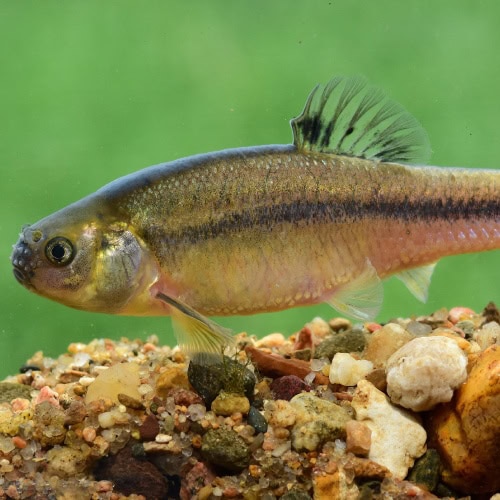
The fathead minnow is a tough little North American fish, and honestly, it puts up with more than most freshwater species. They’ll overwinter in zone 5-7 ponds if you give them at least 3 feet of depth.
They’re surprisingly resilient when oxygen drops in the winter. These minnows can survive in water with dissolved oxygen below 0.30 mg/l, grabbing oxygen from bubbles trapped under the ice. Their olive-brown color and small size make them great forage fish, and they help keep your pond’s ecosystem steady all year.
6) Rosy Red Minnow (Pimephales promelas)
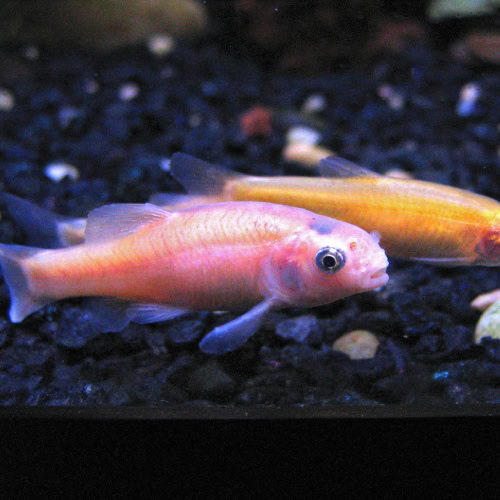
Rosy red minnows are small, colorful fish (basically a color variant of native fathead minnows) that can actually make it through winter in outdoor ponds. These little guys are surprisingly tough, handling cold snaps as long as your pond stays decently oxygenated during those icy months.
You’ll find rosy red minnows pretty easygoing in small backyard ponds. They’re cheap, a bit lively, and their reddish color pops against the water; even when the weather’s less than ideal.
7) Sticklebacks (Gasterosteidae spp.)
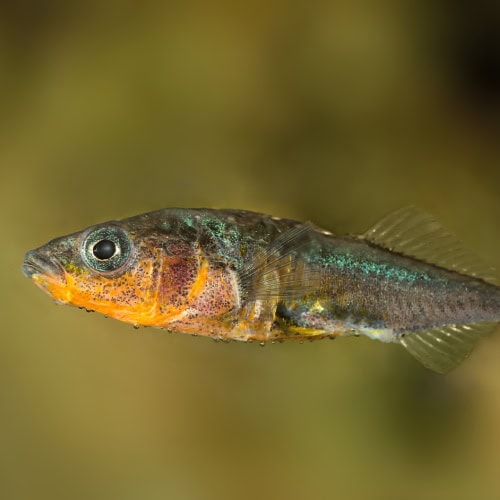
Sticklebacks are small but surprisingly hardy pond fish, and they can handle cold weather better than you might expect. They’ll overwinter outdoors in many temperate ponds, provided they have enough depth, shelter, and decent water quality.
When temperatures drop, sticklebacks become less active and spend more time hiding among plants, stones, or leaf litter near the bottom. They may eat very little during the coldest part of winter, so avoid overfeeding them; uneaten food can quickly damage water quality.
A pond with deeper areas gives them somewhere stable to retreat when the surface freezes. It’s also important to keep part of the surface ice-free with an aerator or pond deicer, allowing gases to escape and helping maintain oxygen levels.
8) Sturgeon (Acipenseridae spp.)
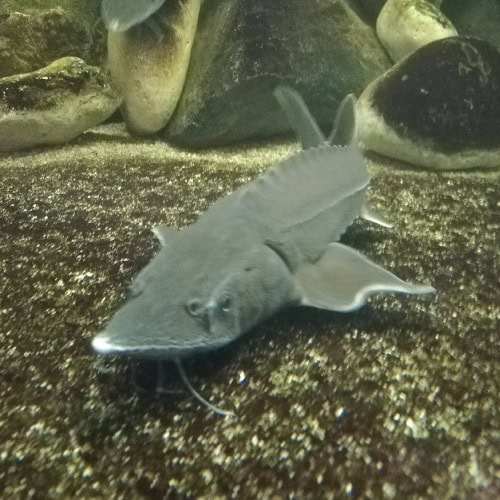
Sturgeon are impressive pond fish, but they’re not the easiest species to keep outdoors. They need plenty of room, excellent water quality, and a pond that stays well oxygenated throughout the year. A large, deep pond is essential, with at least 4 feet of depth, and more is better for larger species!
These fish remain active in cold water, so don’t assume they’ll simply hibernate through winter. They continue swimming and may keep feeding when temperatures are low, although their appetite will naturally decrease. Use a suitable sturgeon food and avoid overfeeding, especially when the water is cold.
Oxygen is one of the biggest priorities. Sturgeon are sensitive to low oxygen levels, so keep the pond well aerated and prevent the entire surface from freezing over. A deicer or aerator can help maintain gas exchange, but avoid creating excessive turbulence throughout the pond during the coldest weather.
Sturgeon can grow very large and may outgrow most garden ponds, so check the adult size before adding one. They also do best with plenty of open swimming space, a smooth pond bottom, and minimal competition from aggressive or overly boisterous fish. If you’ve got a suitably large pond and can keep the water clean, a sturgeon can be a spectacular long-term addition.