
Shaded corners of the garden can feel like a bit of a puzzle, right? But honestly, they’re also a great excuse to experiment with lush, low-maintenance plants! If you’ve ever wondered what to plant under trees, beside the house, or in those perpetually dim spots, you’re definitely not alone.
Ground cover plants that actually like shade are a lifesaver for filling in tricky areas, keeping weeds down, hanging on to moisture, and honestly just making things look a lot more interesting. Whether you’re after a pop of color from flowers or want something green all year (who doesn’t?), there’s a surprising range of shade-loving ground covers to choose from.
Here’s a rundown of twenty solid ground cover plants that actually do well in low-light. Each one brings its own vibe, whether it’s foliage texture or quirky flowers, so you’ve got options for every awkward, shady spot.
1) Hosta
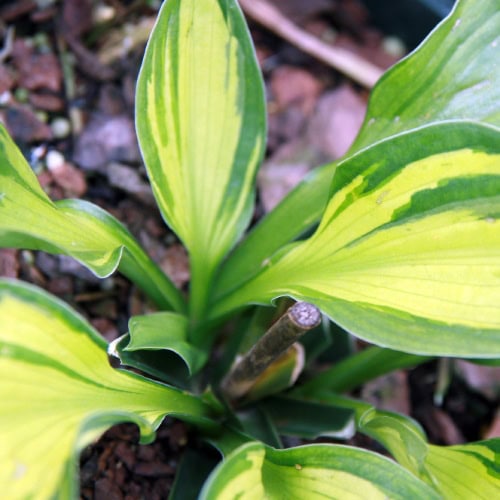
Hostas are about as reliable as it gets for shade-tolerant ground cover. Their big, leafy clumps just take over where grass gives up, especially under trees. There’s a hosta for almost every mood! Tiny ones, massive ones, and leaves in all sorts of colors and patterns.
They spread by clumping (not by sending roots everywhere), so you don’t have to worry about them getting out of control. Once they settle in, they’re pretty much hands-off. Plus, a lot of them send up delicate flower spikes in the summer, which is a nice bonus.
2) Periwinkle (Vinca minor)
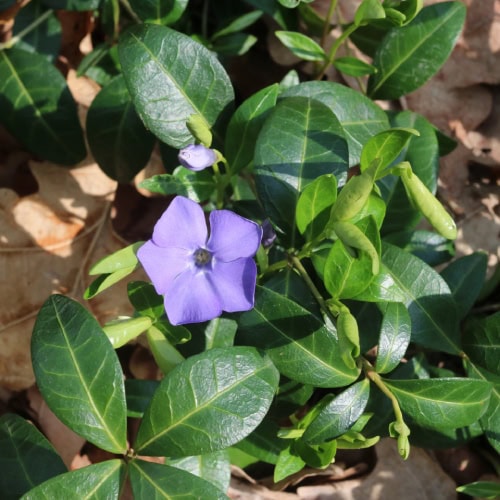
Vinca minor (periwinkle, or creeping myrtle) is an evergreen ground cover that just doesn’t quit. The dark green leaves are shiny and tough, and it throws out sweet little flowers in purple, blue, white, or pink from mid-spring into early summer.
Its stems root as they creep along, so you get a dense carpet that’s great at keeping weeds down. It’s a go-to for tough spots under trees and shrubs.
Maintenance? Pretty much none, once it’s going. Just keep in mind, in some places, it can be a bit too enthusiastic, so containment might be needed.
3) Lilyturf (Liriope muscari)
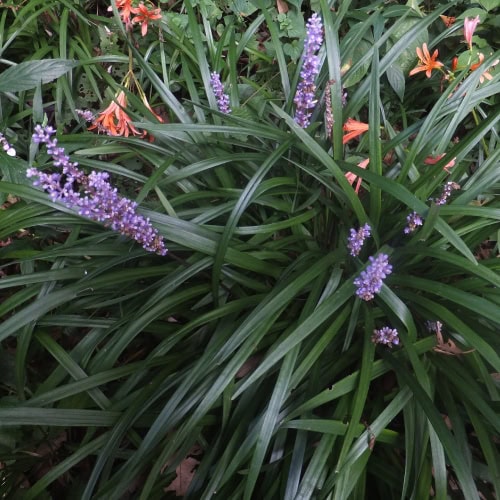
Liriope muscari, or lilyturf, is one of those plants that looks like grass but is way more interesting. It’s evergreen, forms neat little clumps, and does well in shade. It’s originally from East Asia and tends to stay around 12 to 18 inches tall and wide.
The arching leaves are a deep green, and by late summer, you’ll spot spikes of purple flowers followed by tiny black berries. It’s perfect for edging, tucking under trees, or filling in around shrubs when you want something that looks tidy all year.
4) Barren Strawberry (Geum fragarioides)
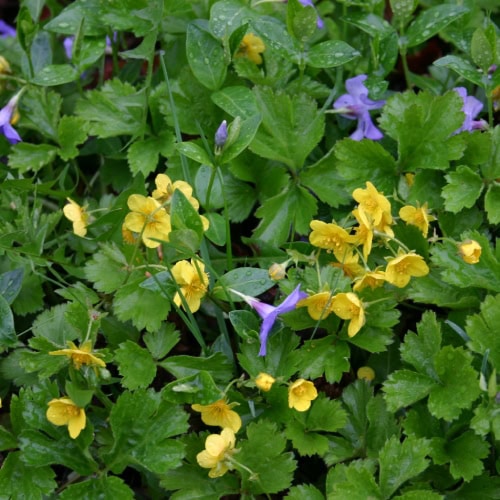
Despite its name, Barren Strawberry is a powerhouse ground cover that looks very similar to a strawberry plant but produces bright yellow flowers.
It forms a very low, thick mat of trifoliate leaves that turn a beautiful bronze-red in the autumn. It is incredibly tough and can handle a variety of soil types, making it a reliable choice for filling in gaps between larger shade perennials.
5) Canada Anemone (Anemone canadensis)
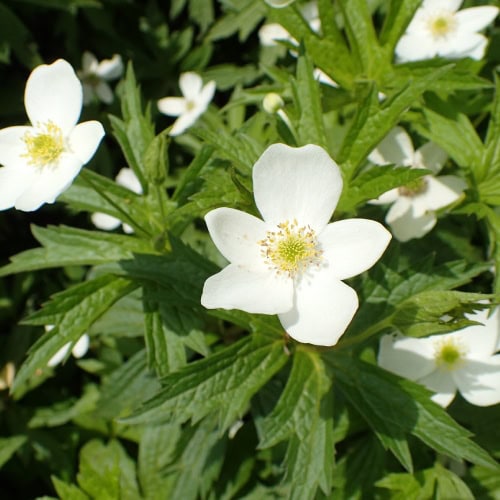
If you have a large, shaded area that you want to fill quickly, Canada Anemone is the plant for the job. It is a vigorous spreader that forms a dense, mid-height ground cover (about 12 inches tall).
It features deeply lobed foliage and beautiful, bright white flowers in late spring. Because it spreads rapidly via underground rhizomes, it is an excellent choice for “wilder” areas where you want to completely replace weeds with native beauty.
6) Dead Nettle (Lamium maculatum)
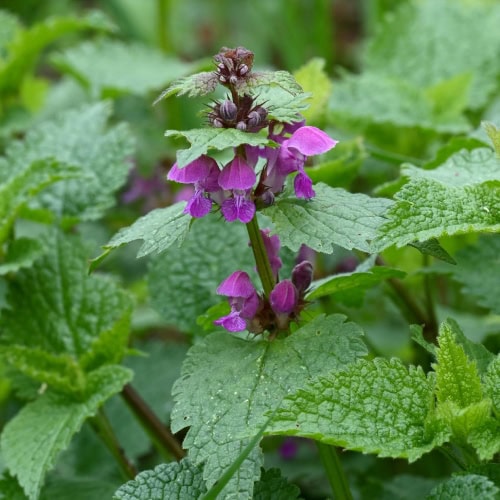
Lamium maculatum (spotted dead nettle) is a surprisingly pretty ground cover for shade. It forms a thick mat, usually 3 to 9 inches tall and up to 2 feet wide, with leaves that have cool variegated patterns.
Flowers in white, pink, or purple show up, and the plant’s low-key maintenance and deer resistance make it even better.
It likes moist, shady spots and spreads well without taking over the whole garden.
7) Coral Bells (Heuchera spp.)
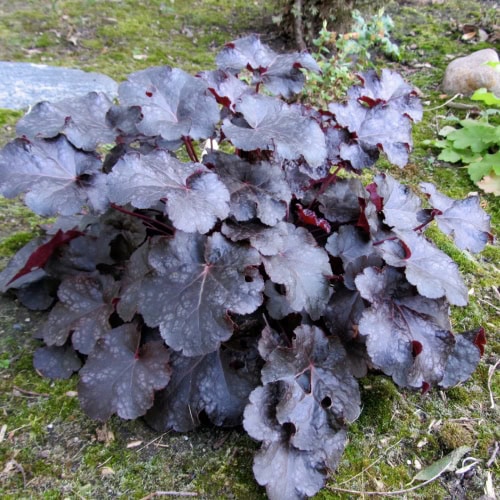
Heuchera, or coral bells, bring a splash of color to shade gardens with their wild foliage in deep purples, bronzes, chartreuse, even silvery tones. They form neat little mounds that work nicely as ground cover.
They’re pretty chill about care and send up bell-shaped flowers in spring and summer. The leaves stick around all year, and they’re happy in containers or borders. Just give them part shade and decent drainage.
8) Barrenwort (Epimedium spp.)
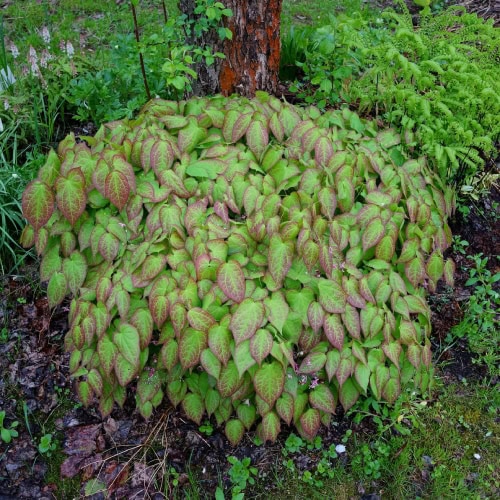
Epimedium, also called barrenwort or fairy wings, is a bit of a hidden gem for shady areas. It spreads slowly, forming a mat of delicate leaves and tiny spring flowers.
It’ll do well in partial to full shade with moist, well-drained, organic-rich soil. Once it’s settled, it even handles dry shade and deer don’t bother it. Give them some space; approx12 to 15 inches apart is about right.
Every few years, split up the clumps to keep things healthy.
9) Creeping Jenny (Lysimachia nummularia)
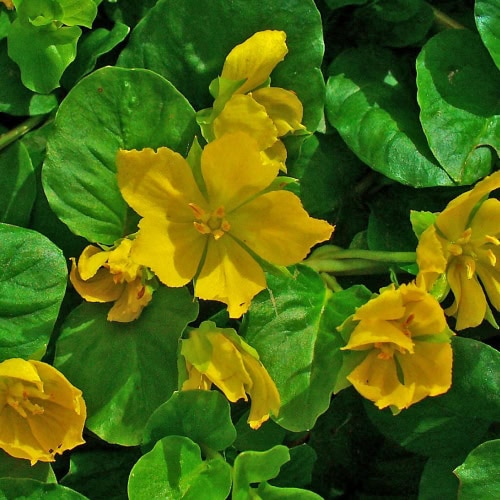
Creeping Jenny is a speedy spreader that handles partial shade to full sun. It’s super low (just 2 to 4 inches tall) but can stretch out 12 to 18 inches wide.
The rounded leaves come in bright green or golden yellow, depending on the variety. ‘Aurea’ is a favorite, with its chartreuse to yellow-gold foliage lighting up shady spots in no time.
10) Sweet Woodruff (Galium odoratum)
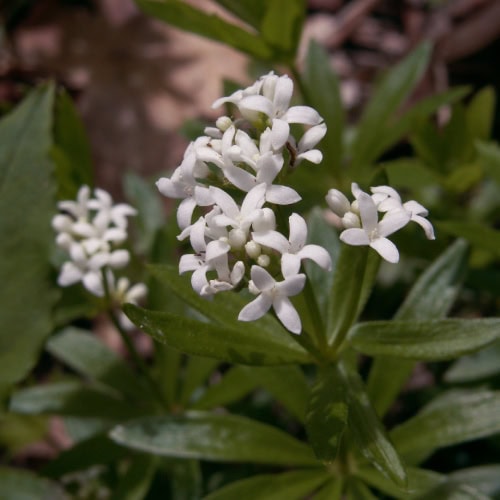
Sweet woodruff forms a soft, low mat (8 to 12 inches tall) that’s perfect under trees. The dark green, lance-shaped leaves grow in whorls along square stems.
Come late spring, you’ll see clusters of tiny, four-petaled white flowers. The leaves smell like vanilla when dried and are great for potpourri.
It spreads by creeping roots and likes moist, rich soil with shade.
11) Siberian Bugloss (Brunnera macrophylla)
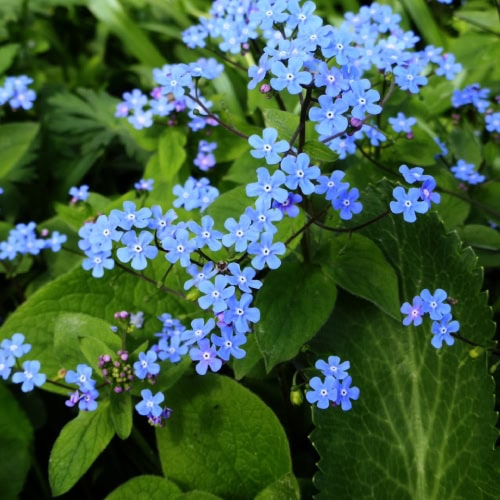
Brunnera macrophylla has those big, heart-shaped leaves that really stand out as ground cover in shade. In spring, it throws up delicate blue flowers, but the foliage sticks around and looks good for months.
It’s happy in partial to full shade and likes moist, well-drained soil. Tuck it under trees, in woodland gardens, or along shady borders, wherever you want a solid, low patch of green (and blue, for a bit).
12) Lungwort (Pulmonaria spp.)
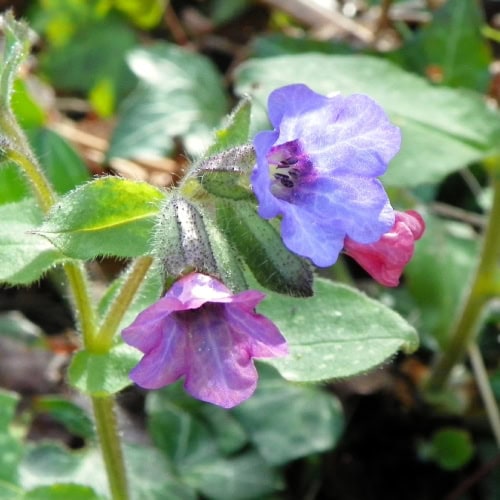
Lungwort is one of those plants with funky, silver-spotted leaves that stay interesting even after the flowers are done. Early spring brings pink buds that open to blue or purple blooms.
It’s best to plant lungwort from fall to spring, just not during a freeze. It likes partial shade and moist, well-drained soil, and doesn’t ask for much once it’s happy.
13) Foamflower (Tiarella cordifolia)
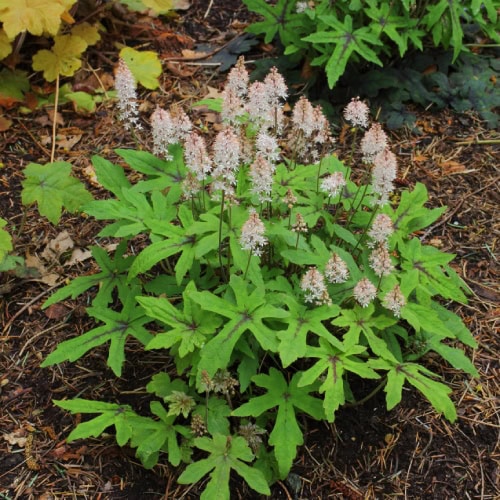
Foamflower is native, easygoing, and brings a froth of white blooms in early spring. It spreads by runners, forming a dense patch about 1 to 2 feet wide.
It likes moist, well-drained soil and dappled light. Foamflower pairs well with other shade lovers and is great along borders or in woodland gardens.
Bonus: deer usually leave it alone, and pollinators dig the flowers.
14) Wild Stonecrop (Sedum ternatum)
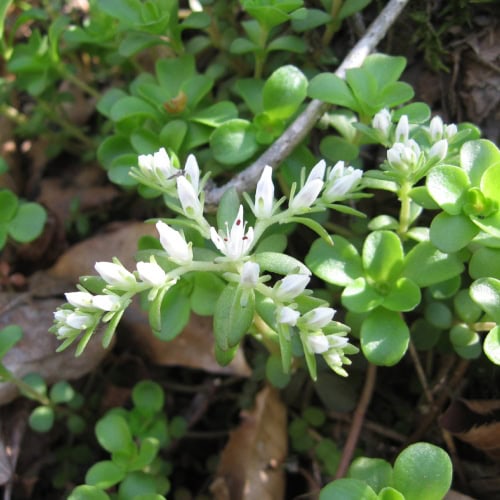
Most succulents love the sun, but Wild Stonecrop is a rare native that thrives in the shade. It forms a low, succulent mat of rounded green leaves that are excellent at tucking into the crevices of stone walls or between pavers in a shaded patio.
In the spring, it is covered in tiny, star-shaped white flowers. It is drought-tolerant once established and stays green for most of the year.
15) Golden Ragwort (Packera aurea)
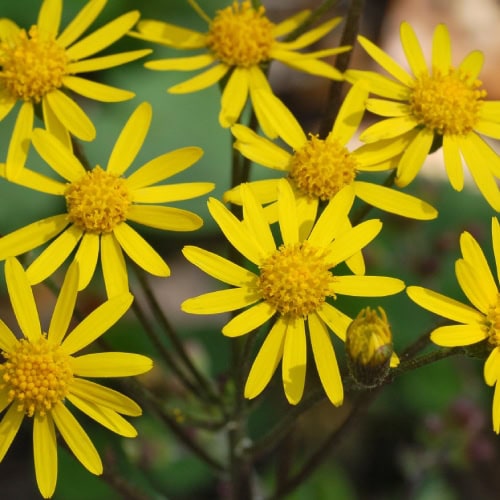
Golden Ragwort is a powerhouse native ground cover that is famous for its ability to form a thick, weed-proof mat in challenging shady spots. It features rounded, heart-shaped basal leaves that stay deep green and evergreen in many climates.
While the foliage stays low to the ground, in early spring it sends up cheerful clusters of bright yellow, daisy-like flowers that light up dark corners of the garden.
16) Ground Ivy (Glechoma hederacea)
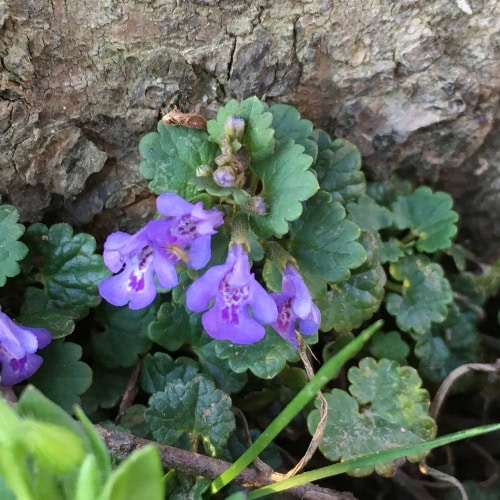
Ground ivy, or creeping charlie, is a tough evergreen from the mint family that covers shady ground fast. It creeps along, forming mats up to a foot tall (usually less).
It does best in partial to full shade and moist, well-drained soil, and prefers moderate temps. The foliage is aromatic and stays green year-round, so it’s handy for spots where you want something persistent.
17) Solomon’s Seal (Polygonatum spp.)
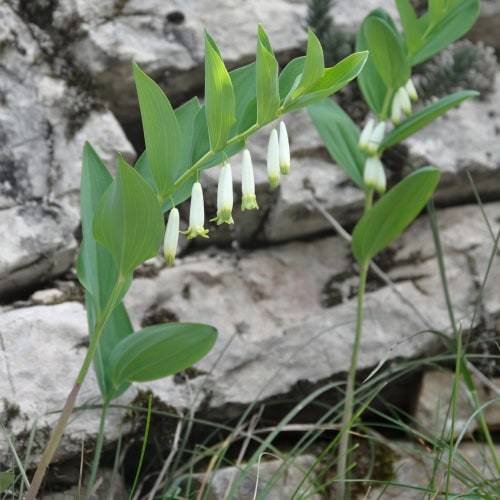
Solomon’s Seal brings a bit of elegance to shade with its arching stems and dangling, bell-shaped flowers. It likes cool, moist, humus-rich soil and can handle even pretty dark corners.
Depending on the type, it can grow from 1 to 5 feet tall, with a spread of about 2 feet. If you’re using it as ground cover in woodland areas, spacing plants around 20 inches apart works well.
18) Sweet Violet (Viola odorata)
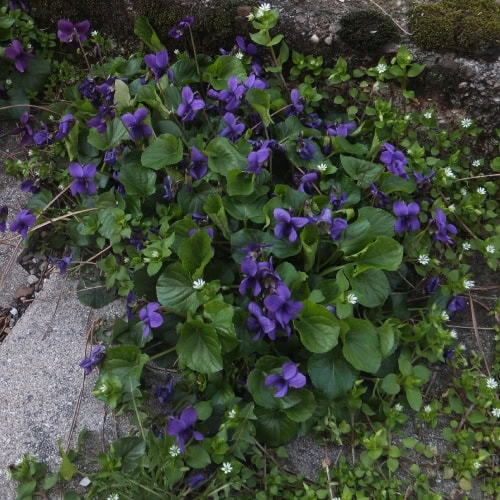
Sweet Violet is a classic for shaded spots! With it’s fragrant flowers and heart-shaped leaves, what’s not to love? It’s a small perennial (four to eight inches tall), spreading by creeping runners.
Flowers appear from late winter into spring in purple, violet, white, or pale rose. It’s great under trees and shrubs, thriving as ground cover in moist, well-drained soil. Best in USDA zones 5-9, and it handles full to partial shade just fine.
19) Wintergreen (Gaultheria procumbens)
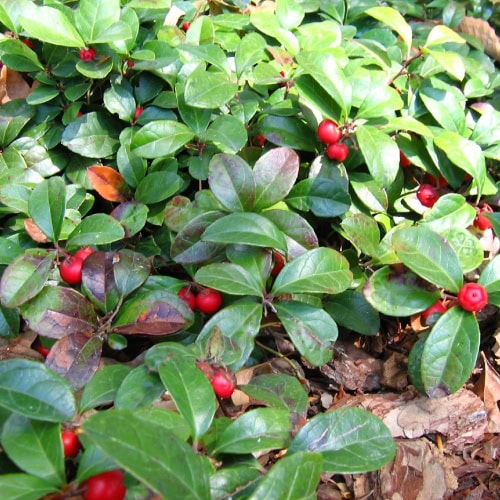
Wintergreen is a native evergreen that really shines in shaded, acidic, well-drained soil. It spreads by underground stems, so you’ll get dense coverage if you space plants 10 to 14 inches apart.
The oval leaves are glossy and turn reddish in cold weather. You’ll see small white or pink flowers in summer, followed by bright red berries that hang on through winter. Crush a leaf, and you’ll get that unmistakable wintergreen scent.
20) Christmas Fern (Polystichum acrostichoides)
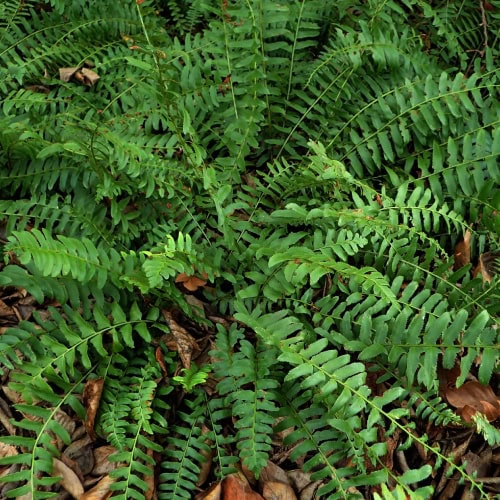
The Christmas Fern is one of those plants that just keeps looking good, even when winter rolls around. Its glossy, evergreen fronds stick around all year, adding a bit of life when everything else seems to disappear. Native to North America, it’s surprisingly adaptable, and happy in anything from dry to moist soils.
Usually, mature clumps end up somewhere between 1 and 2 feet wide, which is pretty manageable. It does best in partial to full shade, and once it’s settled in, it can actually handle a bit of drought.
People use it for edging, as a little accent, or just to fill in shady, woodland spots. It’s tough too, hardy from zones 4 to 9.