
Evergreen ground cover plants are a real game-changer if you want your garden to look good all year. These low growers creep along the soil, making thick patches of green that stick around even in the dead of winter. Besides just looking nice, they help out with stuff like keeping soil from washing away, crowding out weeds, and cutting down on how much mowing you have to do.
Choosing the right evergreen ground cover really depends on your specific growing conditions – do you need something for full sun, deep shade, or maybe somewhere in the middle? Some of these plants show off with flowers or berries, while others just do their thing with steady, reliable foliage. In this guide, you’ll find everything from low-maintenance herbs to little spreading shrubs, each with its own quirks and uses in the garden.
1) Creeping Thyme (Thymus serpyllum)

Creeping thyme makes a thick, low mat that stays green year-round in zones 4 through 9. This fragrant herb bursts into tiny flowers (pink, purple, or white) during summer, which is a magnet for pollinators.
It’s great between pavers, in rock gardens, or even as a quirky lawn substitute. You can walk on it, and it’ll reward you with a fresh scent. Just give it full sun and well-drained soil, and it barely asks for anything else once it’s settled in.
2) Bearberry (Arctostaphylos uva-ursi)
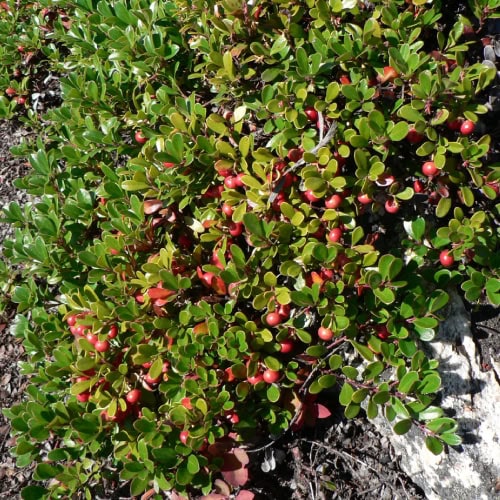
Bearberry is a rugged, slow-growing evergreen that forms a thick, leathery mat of small, glossy leaves. It is incredibly hardy, often used to stabilize slopes or cover rocky areas where other plants fail.
In the winter, its deep green foliage often takes on a beautiful reddish-purple tint, and it produces bright red berries that persist through the cold months, providing food for birds.
3) Japanese Pachysandra (Pachysandra terminalis)
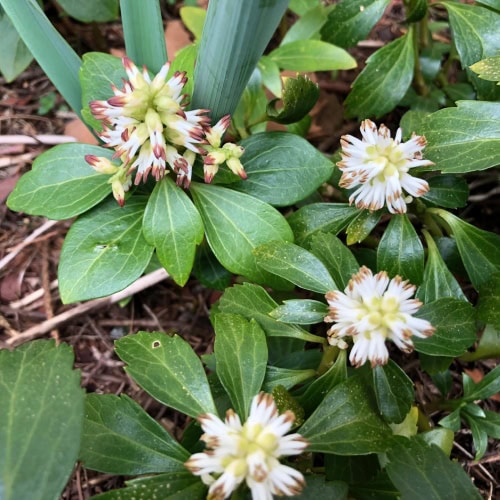
Pachysandra terminalis gives you a thick carpet of deep green leaves, growing about 8 to 12 inches tall. It spreads by underground rhizomes, making it a go-to choice for shady areas where grass just won’t cooperate.
Japanese pachysandra prefers partial to full shade, and direct sun is a no-go. It’s tough in different soils, from clay to dry shade, and deer usually leave it alone.
4) Periwinkle (Vinca minor)
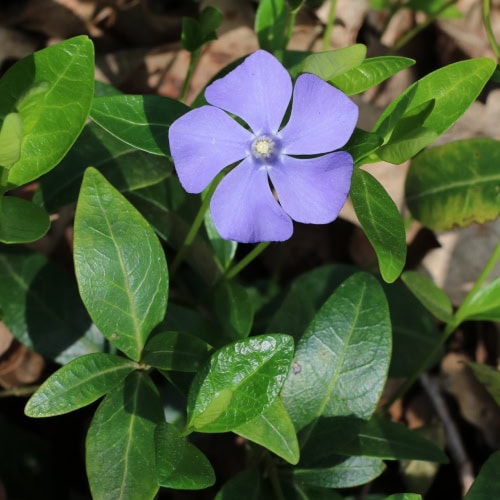
Vinca minor is a classic evergreen ground cover for shaded areas where grass struggles. It has shiny green leaves and dainty blue, purple, or white flowers.
The stems root as they sprawl, making it useful for erosion control on slopes. You can tuck it under trees, between shrubs, or anywhere you want a low-maintenance green patch.
This periwinkle keeps itself tidy, so you don’t have to fuss over it.
5) Lilyturf (Liriope muscari)

Liriope muscari, or lilyturf, is a super-flexible evergreen with grass-like leaves that stay green all year. It sends up spikes of purple or blue flowers in late summer, with dark berries showing up in fall.
You can use lilyturf as edging, a border for shrubs, or just as ground cover under trees. It doesn’t mind sun or shade, so it fits in almost anywhere.
6) Wintergreen (Gaultheria procumbens)
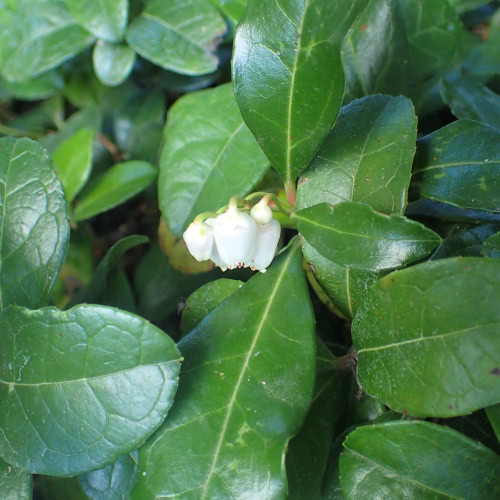
Wintergreen is a charming, low-growing native shrub that acts as a creeping ground cover. Its glossy, dark green leaves stay vibrant all winter and give off a refreshing minty scent when crushed.
It spreads slowly via underground runners to form a tidy carpet. In autumn and winter, it is decorated with bright red, edible berries that look beautiful against the snow.
7) Wintercreeper (Euonymus fortunei)

Wintercreeper is an all-rounder! It can be a ground cover, a climber, or even a low shrub, depending on what you want. The dense leaves can be solid green or have fun variegated patterns in white, gold, or pink.
As ground cover, it usually grows 6 to 9 inches tall and spreads like crazy. Give it something to climb, and it’ll go vertical. It’s happy in hardiness zones 4 to 9 and can handle partial shade to full sun.
8) Creeping Juniper (Juniperus horizontalis)
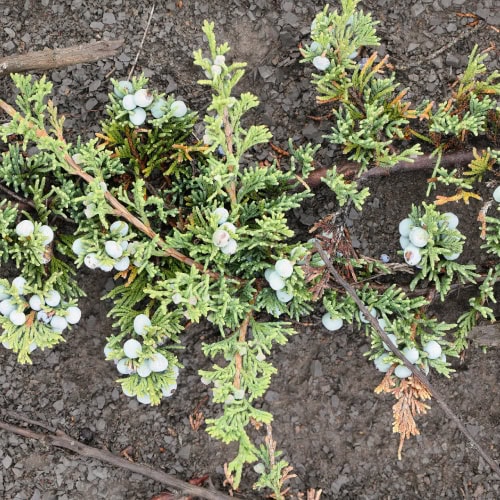
Creeping juniper is a North American native that’s perfect for ground cover. It only gets about 10 inches tall but covers a lot of ground.
It’s great for rocky slopes, sandy spots, or banks where you need erosion control. Full sun and well-drained soil are its best friends, and it’s happy with minimal care after it settles in. Plus, it’s drought-tolerant, so it’s a good call for dry gardens.
9) Allegheny Spurge (Pachysandra procumbens)
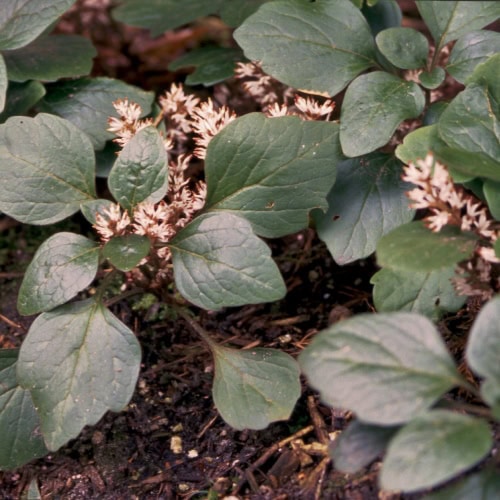
This is the superior native alternative to the common Japanese Pachysandra. Allegheny Spurge features beautiful, matte-green leaves with a unique mottled or “silver-veined” appearance.
While it is “semi-evergreen” in the coldest climates (it may flatten in heavy snow), it remains green throughout the winter in many regions. It forms a dense, non-aggressive clump that slowly expands into a lush, weed-proof carpet.
10) Bearberry Cotoneaster (Cotoneaster dammeri)

Bearberry cotoneaster is a low, spreading evergreen shrub, usually reaching 1 to 2 feet tall but stretching out 6 feet or more. Its trailing stems root wherever they touch the ground, making a thick cover.
You’ll notice its small, glossy green leaves that turn reddish-bronze in winter, then green up again in spring. It’s handy for slopes or as ground cover along borders.
11) Red Carpet Sedum (Sedum spurium)
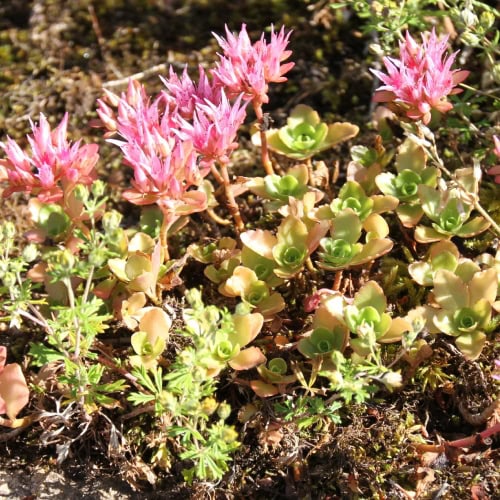
Sedum spurium forms a mat of fleshy leaves, growing 3 to 6 inches tall and spreading up to 2 feet wide. The leaves shift from bronze and green to deep red in fall and winter, nice for year-round interest.
This easy-care ground cover pumps out clusters of pinkish star-shaped flowers in summer. It thrives in hot, dry spots and doesn’t mind poor soil, so it’s perfect for rock gardens, borders, or tough slopes.
12) Creeping Jenny (Lysimachia nummularia)

Creeping Jenny is a low, fast-spreading perennial with round, coin-like leaves. It roots wherever the stems hit the soil, so it fills in empty patches quickly.
It’s hardy in USDA zones 3 to 9 and puts out bright yellow flowers in early summer. The ‘golden’ variety has chartreuse to golden-yellow leaves that change with the light.
13) Green and Gold (Chrysogonum virginianum)
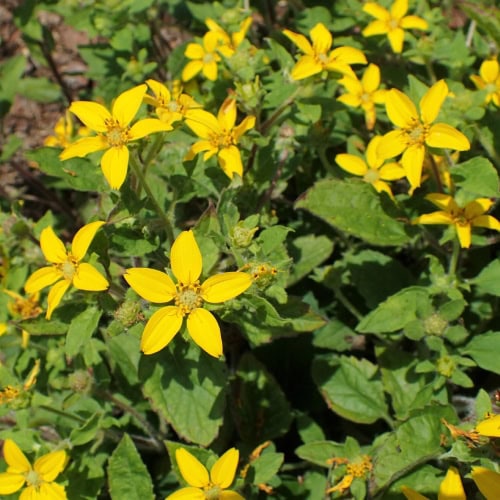
Goldenstar is a low-profile native that keeps its foliage year-round in milder climates. It is highly valued for its ability to form a thick, green mat that is punctuated by bright yellow, star-shaped flowers.
It spreads by creeping stems that root as they go, making it an excellent choice for filling in edges of woodland gardens or shaded pathways where you want green life during the winter months.
14) Spotted Deadnettle (Lamium maculatum)
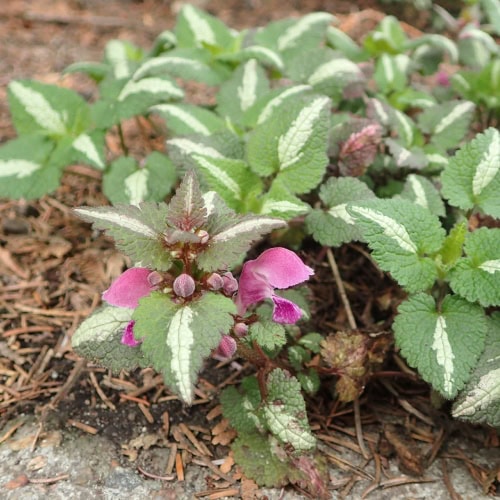
Spotted deadnettle is a bright spot for shady gardens, thanks to its variegated leaves. This low perennial from the mint family grows about 6 to 9 inches tall and can spread up to 2 feet.
You can pick cultivars with green-and-white or silver leaves, paired with pink, white, or purple flowers. It blooms from mid to late spring for a long stretch of interest.
Spotted deadnettle likes moist, shady spots with loamy, acidic soil. It makes a dense mat where other plants might just give up.
15) Sweet Woodruff (Galium odoratum)

Sweet woodruff is a low perennial that’s right at home in shady spots. It grows 8 to 12 inches tall, with dark green leaves in whorls along square stems.
In late spring, you’ll see small, white, star-shaped flowers, perfect for woodland gardens. The leaves are evergreen to semi-evergreen, depending on how cold it gets.
Sweet woodruff spreads by creeping roots, so it covers ground nicely under trees or in shady corners.
16) Purple Gromwell (Buglossoides purpurocaerulea)

Blue gromwell, or purple gromwell, spreads by creeping runners to make a dense ground cover. The flowers start as purple-red buds, then open up to a gentian blue from April to June.
It’s happy in well-drained soil and works in full sun or partial shade. The plant usually grows 20 to 30 cm tall and spreads about 40 cm wide, so it’s a nice choice for open spots.
17) Christmas Fern (Polystichum acrostichoides)
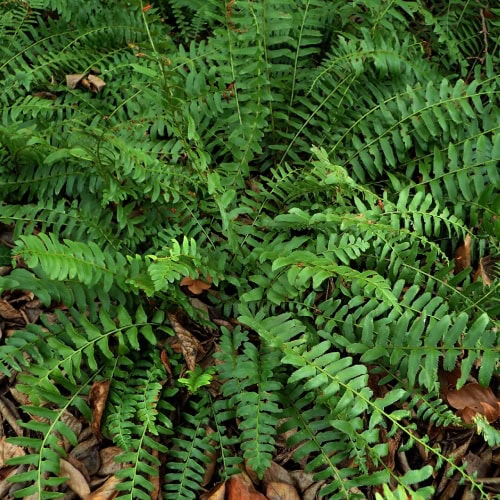
While not a “creeper” that roots at the stems, the Christmas Fern is one of the few US native ferns that stays glossy and deep green all through the winter.
When planted in groups, these ferns provide excellent ground coverage for shaded hillsides or woodland borders. They are incredibly tough and help prevent soil erosion year-round.
18) Plumbago (Ceratostigma plumbaginoides)

Plumbago forms a low mat, usually 6 to 10 inches tall. The shiny green leaves show up late in spring and turn bronze-red or purple in fall.
Its gentian blue, five-petaled flowers bloom from late summer through September. The plant spreads moderately by rhizomes, so it’s good for covering ground without getting out of hand.
Hardy plumbago is pretty flexible, as it’ll grow in sun or partial shade as long as there’s decent drainage.
19) Pennsylvania Sedge (Carex pensylvanica)

For those who want the look of a lawn without the maintenance, Pennsylvania Sedge is a top-tier native choice. This grass-like perennial stays green year-round in many climates and forms soft, flowing mounds of delicate foliage.
It spreads via rhizomes to create a lush, “shaggy” carpet that thrives under the shade of oak trees where traditional grass fails. It requires no mowing and is a perfect, low-maintenance alternative for shaded hillsides or woodland edges
20) Heartleaf (Hexastylis arifolia or Hexastylis minor)

Heartleaf (also known as Little Brown Jug) is a stunning, slow-growing evergreen that features thick, leathery, heart-shaped leaves. The foliage is often beautifully mottled with silver-grey patterns, making it look like a piece of living art on the forest floor.
It forms a low, dense clump that gradually expands into a solid ground cover. Because its leaves are so sturdy, it holds up beautifully through the winter, providing consistent color and texture in the deepest shade.