
If you’ve got a sunny patch in your yard, you’ve actually got a great chance to create something pretty special! Ground cover plants made for full sun can turn those awkward, bare spots into lush, living carpets. Plus, they help keep weeds at bay and can even stop soil from washing away, which is always a bonus.
The trick is picking ground covers that genuinely love the sun and can handle the heat, spreading out nicely to fill the gaps between bigger plants or across open spaces.
There’s a surprising variety here, from fragrant, touchable herbs to colorful, pollinator-friendly options, so you can find something that fits your style, whether you’re dealing with a slope, rocky ground, or just want less lawn to mow. Sun-loving ground covers are pretty adaptable and can really make your outdoor space pop, even when conditions get tough.
1) Creeping Thyme (Thymus serpyllum)
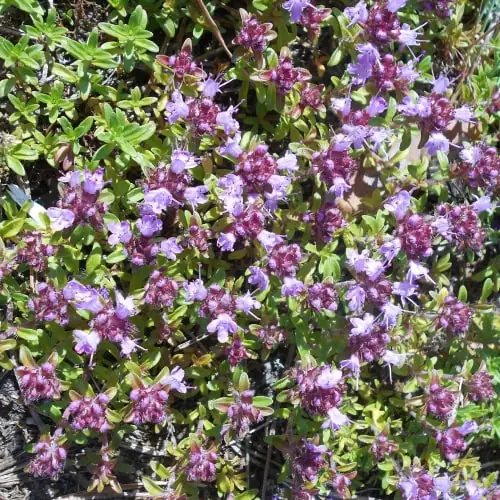
Creeping thyme grows into a low, aromatic mat and really loves full sun; think at least six hours of direct light. It’s a tough little perennial herb, perfect for replacing grass, tucking between stepping stones, or adding to a rock garden.
It likes well-draining soil and is happy in USDA Hardiness Zones 4-9. Once it’s settled in, creeping thyme barely asks for anything, shrugs off deer, and brings in pollinators with its dainty flowers.
2) Missouri Primrose (Oenothera macrocarpa)
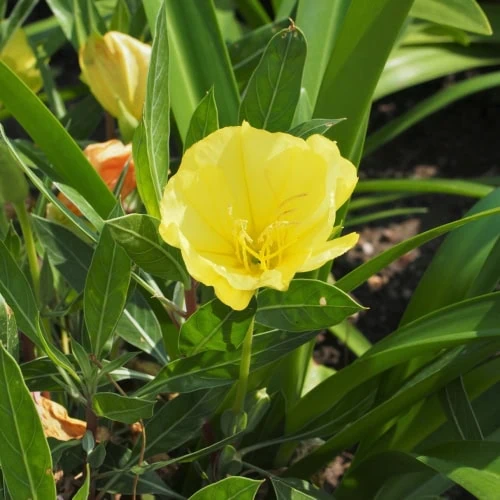
Missouri Primrose is a show-stopping native that trails along the ground, producing some of the largest flowers of any ground cover. The massive, 4-inch wide canary-yellow blooms open in the evening and stay open through the morning.
It features narrow, silver-green leaves and is incredibly drought-tolerant once established. It’s a perfect choice for sunny slopes or the edge of a driveway where the soil is poor and the sun is intense
3) Blue Fescue (Festuca glauca)
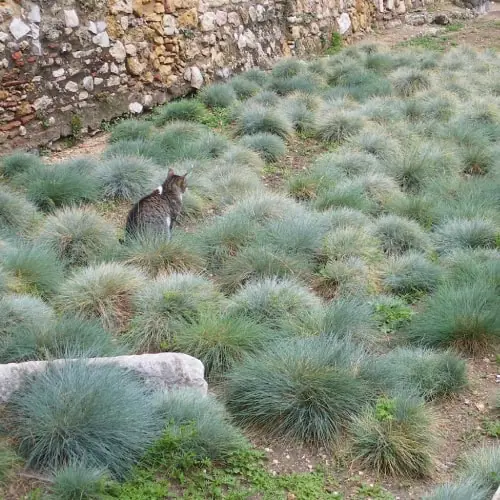
Blue fescue is a compact ornamental grass, forming silvery-blue tufts in the sun. It’s drought-tolerant and sticks around in USDA zones 4 to 8, keeping its cool color all season.
The fine foliage adds texture and interest along borders or in mass plantings. If you want something that pretty much takes care of itself once it’s going, blue fescue is worth a look. Its clumping habit means it fits nicely in rock gardens or perennial beds, and it’s great for spots where you want reliable coverage.
4) Creeping Juniper (Juniperus horizontalis)
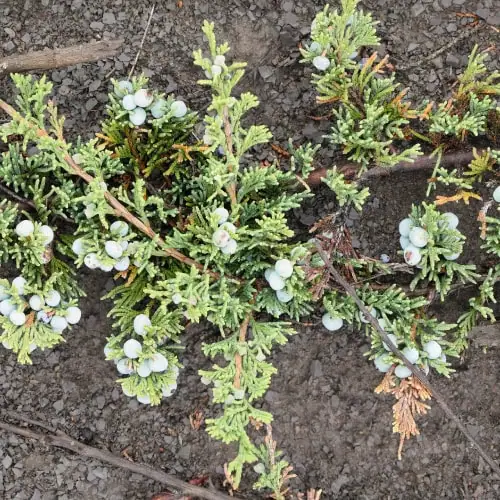
If you need a “set-it-and-forget-it” plant, Creeping Juniper is a rugged native evergreen that forms a dense, woody mat. It is one of the best plants for stabilizing sunny hillsides or preventing erosion.
The blue-green foliage stays vibrant all year, often turning a plum-purple color in the winter. Because it grows so thick, it provides excellent habitat for small birds and completely suppresses weeds.
5) Lilyturf (Liriope muscari)
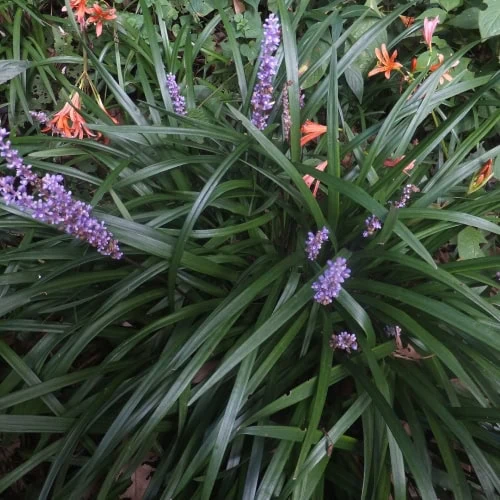
Liriope, or lilyturf, is a tough perennial that does well in full sun or partial shade. It’s got dense, grass-like leaves that stay nice year-round.
You’ll see spikes of lavender or white flowers pop up in late summer. Hardy in zones 5-10, liriope is another one that’s easy to care for once it’s settled.
Plant it in spring or summer, give each one about a foot of space, and make sure the soil drains well to avoid any rot issues.
6) Creeping Jenny (Lysimachia nummularia)
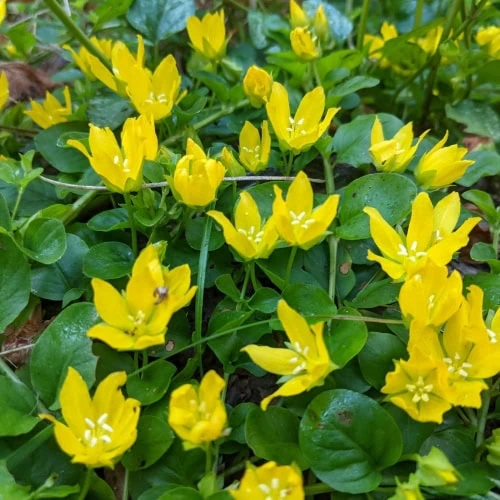
Creeping Jenny forms a thick carpet of bright green leaves and can handle full sun or partial shade. It stays low, just a few inches tall, but spreads out 12 to 18 inches.
If you want a pop of color, try the ‘Aurea’ variety, as it’s got lime to chartreuse leaves that really stand out. It’s not fussy about soil, as long as it drains.
In summer, you’ll get small yellow flowers that play off those coin-shaped leaves.
7) Ice Plant (Delosperma)
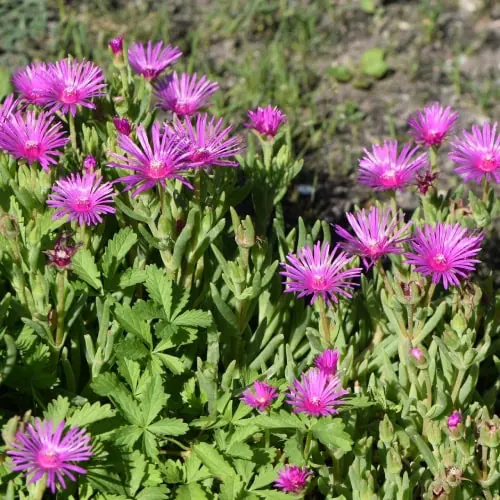
Ice plant is a sun-loving succulent that handles hot, dry spots where most other plants just give up. Its name comes from tiny hairs that sparkle like ice when the sun hits them.
This perennial stays low and spreads out, putting on a show with vibrant, daisy-like flowers from June to October. The foliage is fleshy and evergreen in warmer climates.
Plant it in full sun and make sure the soil drains well. It’s perfect for rock gardens, slopes, or any tough, sunny patch.
8) Trailing Rosemary (Rosmarinus officinalis)
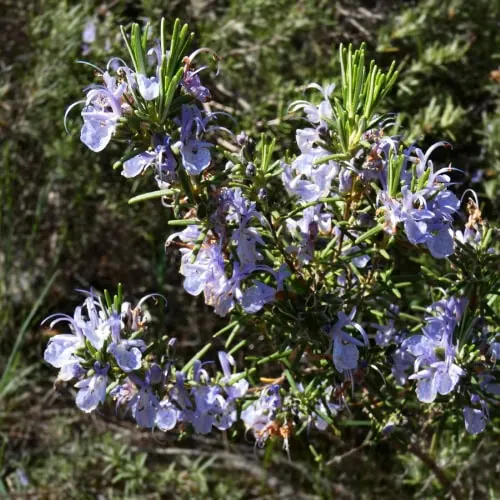
Trailing rosemary gives you a fragrant, evergreen ground cover that loves hot sun. It creeps along the ground or spills nicely over walls and raised beds.
You’ll get delicate blue flowers from winter to spring. Once it’s established, it shrugs off drought, poor soil, and heat; definitely a plant for the low-maintenance crowd.
Trailing rosemary usually gets about two to three feet tall as it layers over itself. It’s a solid pick for rock gardens, slopes, or just as an aromatic border.
9) Silver Carpet (Dymondia margaretae)
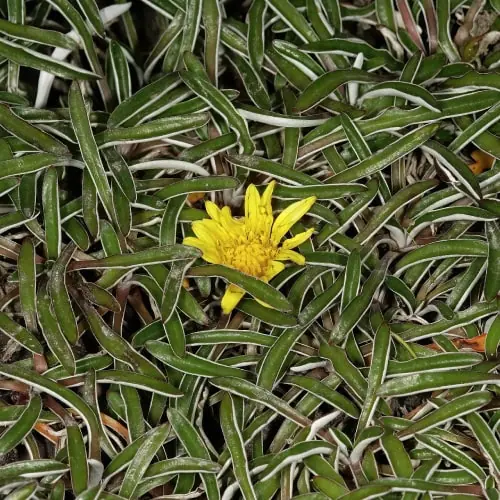
Silver Carpet makes a tight, silvery-green mat, only an inch or two high. This South African plant has narrow, gray-green leaves with white undersides that curl up, giving it a cool, variegated look.
Try this drought-tolerant groundcover between pavers, in rock gardens, or as a quirky lawn alternative. It handles full sun to a bit of shade and gives you small yellow daisy-like blooms in spring and summer.
10) Creeping Phlox (Phlox subulata)
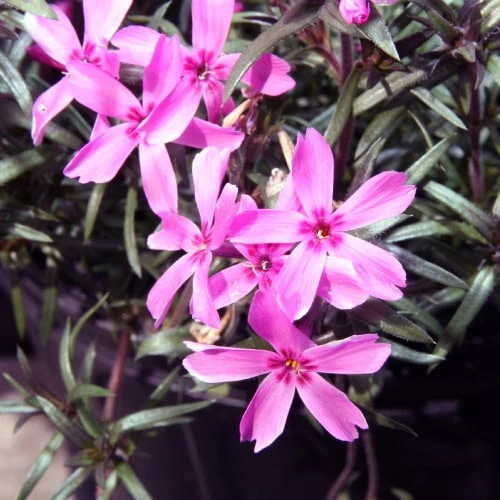
Creeping phlox grows into a dense, spreading mat that quickly covers bare sunny spots. In spring, it’s covered in vivid blooms in colors of pink, purple, blue, white.
It likes full sun and well-drained soil, and it’s not needy once it’s going. Creeping phlox is great for rock gardens, along paths, or tumbling over walls where it can really show off.
11) Lyreleaf Sage (Salvia lyrata)
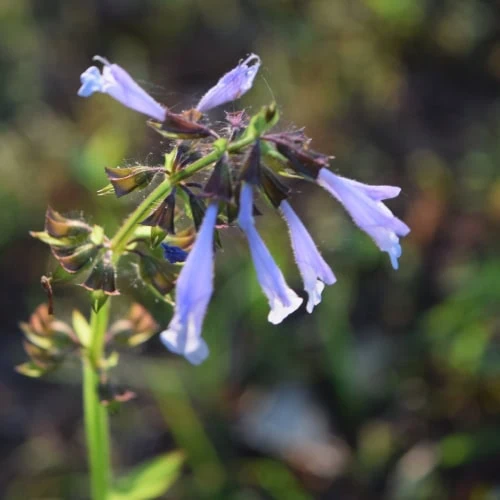
Lyreleaf Sage is a tough-as-nails native that is often used as a “living mulch.” It forms a flat rosette of purple-tinged leaves that hug the ground, making it very resistant to foot traffic.
In the spring, it sends up spikes of delicate blue flowers that attract butterflies and hummingbirds. It is a prolific self-seeder, meaning it will quickly fill in bare patches and create a dense, semi-evergreen carpet that requires very little water.
12) Bearberry (Arctostaphylos uva-ursi)
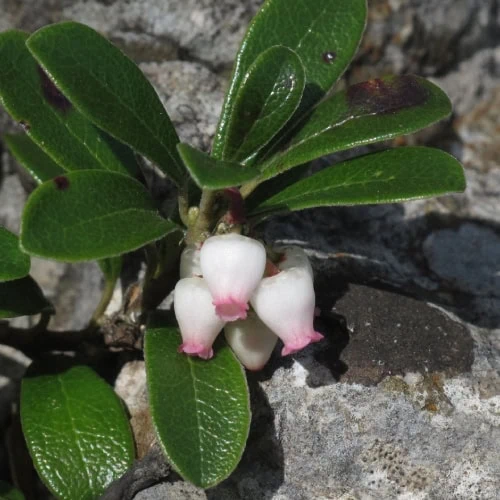
Bearberry is an evergreen ground cover that’s great for tough, sunny spots. It spreads out 3 to 6 feet but only gets about 6 to 12 inches high, so it’s perfect for big areas.
It has small, leathery dark green leaves that turn reddish in winter. Spring brings delicate pink or white bell-shaped flowers, followed by bright red berries. Bearberry isn’t picky! It handles rocky or sandy soil and is impressively winter-hardy.
13) Apache Plume (Fallugia paradoxa)
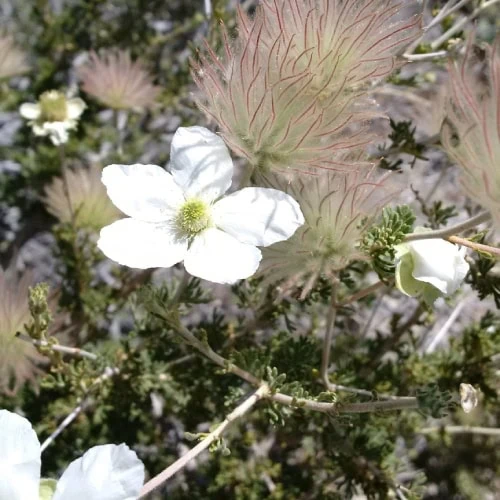
Apache plume is a semi-evergreen shrub that works as ground cover in hot, sunny places. It usually grows 4 to 5 feet tall and wide and has a spreading habit.
You’ll see white, rose-like flowers in spring (and maybe again in fall), and after that, feathery, purplish-pink seed clusters that look pretty cool.
It’s extremely drought-tolerant once established and thrives in well-drained soil with full sun, making it a good pick for erosion control on slopes.
14) Rock Cress (Aubrieta deltoidea)
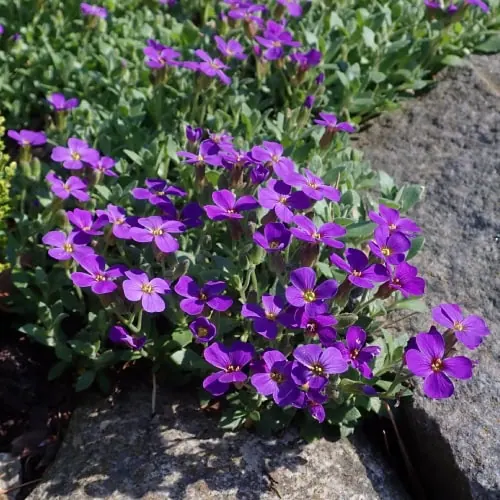
Rock cress is a low, evergreen perennial that spills over walls, paths, and rocks with a blanket of blooms. It’s happiest in full sun and well-drained, limey soil.
It grows just 4 to 6 inches high but spreads out to 2 feet wide. Expect a splash of purple, red, or violet flowers in mid-spring to early summer, nearly hiding the gray-green leaves.
Rock cress is easygoing, thriving in USDA zones 4 to 9.
15) Silver Ponyfoot (Dichondra argentea)
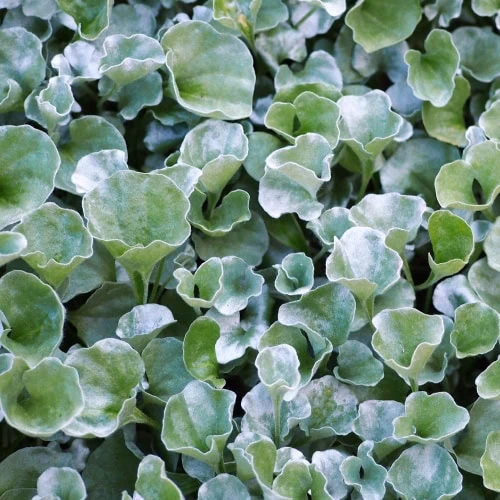
Native to the desert southwest, Silver Ponyfoot is a unique ground cover that looks like a carpet of shimmering silver coins. It grows very low to the ground and spreads rapidly via trailing stems.
While it is often used in hanging baskets, it makes a spectacular ground cover in hot, dry areas, creating a bright, reflective mat that contrasts beautifully with green-leaved plants. It is exceptionally heat-tolerant and thrives in well-drained soil.
16) Fan Flower (Scaevola aemula)
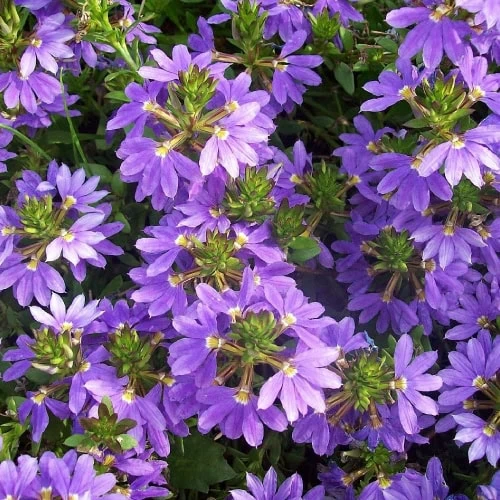
Scaevola thrives in full sun and can take the heat, so it’s a strong pick for baking-hot spots. This Australian native puts out fan-shaped flowers in blue, purple, pink, or white from late spring through early fall, and its trailing habit covers ground efficiently.
It’s drought-tolerant once established and needs well-drained soil to avoid root rot. You can use Scaevola in borders, containers, or as a stabilizing ground cover.
17) Purple Lovegrass (Eragrostis spectabilis)
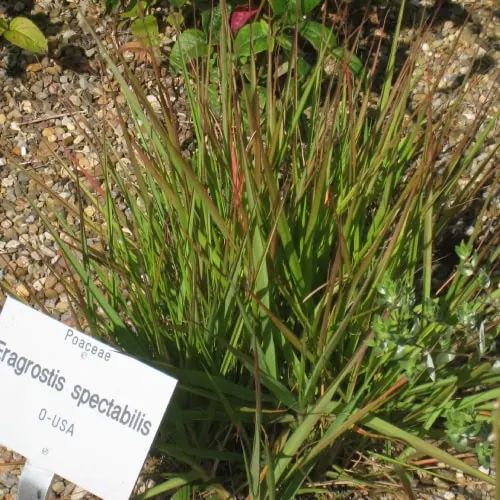
For a soft, ethereal look, Purple Lovegrass is a stunning native bunch-grass that functions as a ground cover when planted in groups. It stays in low, tidy clumps for most of the year, but in late summer, it produces a “cloud” of tiny reddish-purple flowers that hover just above the foliage.
When planted en masse, it creates a hazy, purple carpet that looks incredible in the afternoon sun. It is very drought-tolerant and thrives in the poorest, sandiest soils.
18) Beach Sunflower (Helianthus debilis)
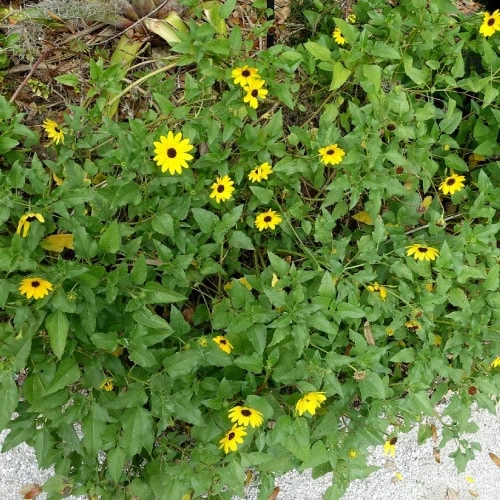
If you have a lot of space to fill, the Beach Sunflower is a butterfly magnet that spreads quickly to form a dense, flowering mound. It features small, daisy-like yellow flowers with dark centers that bloom almost year-round in warmer climates.
It is highly salt-tolerant and thrives in sandy, nutrient-poor soil, making it the ultimate low-maintenance choice for sunny coastal gardens or bright, open landscapes.
19) Robin’s Plantain (Erigeron pulchellus)
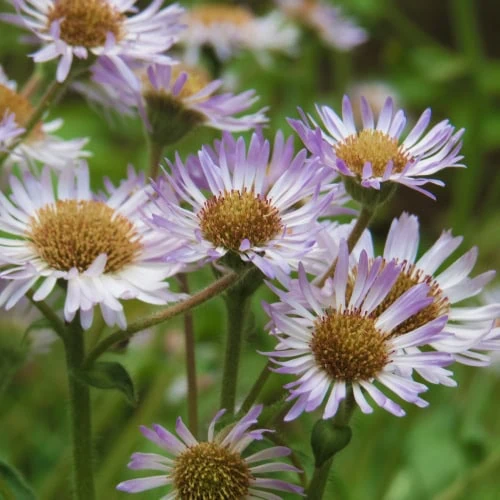
Robin’s Plantain is a charming, low-growing native perennial that spreads via runners (stolons) to form a tight, fuzzy mat of foliage. While it can handle some shade, it flourishes in the sun, where it produces a profusion of pale violet or white daisy-like flowers in the spring.
The variety ‘Lynnhaven Carpet’ is particularly popular as a ground cover because its grey-green leaves stay very flat to the ground, creating a dense “rug” that prevents weeds from popping up. It is a great choice for planting along sunny paths or as a soft, flowering edge to a garden bed.
20) Pink Evening Primrose (Oenothera speciosa)
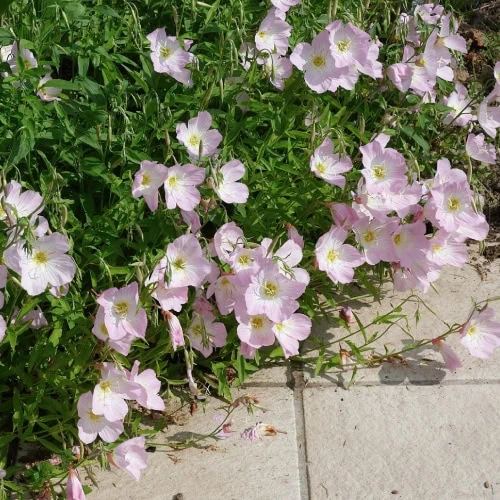
Pink Evening Primrose (also known as Showy Evening Primrose) is a vigorous native that is perfect for anyone who needs to cover a large, sunny area quickly. It spreads through underground rhizomes to form a dense, flowering colony that can outcompete most weeds.
In late spring and early summer, it is covered in a sea of delicate, bowl-shaped pink flowers that have a lovely fragrance. It is extremely drought-tolerant and thrives in poor soil, making it a “tough-as-nails” solution for meadows, slopes, or large garden borders.