
Ground cover plants can be a real lifesaver when you’re dealing with those stubborn sunny spots in the yard. Not only do these low-growing perennials fill in bare patches, but they also help keep weeds at bay, prevent erosion, and generally cut down on the amount of maintenance you have to do. Honestly, compared to a traditional lawn, they’re a lot less needy, as once they get going, you won’t be out there mowing or watering all the time.
Picking the right perennial ground covers for full sun means you get a garden that sort of takes care of itself, year after year. There’s a surprising variety, too: some give you bursts of color, others have cool textures or fragrant leaves, and there are even drought-tolerant options if you’re tired of babying thirsty plants. Whether you’re into herbs, flowers, or evergreens, there’s something out there that’ll handle the sun and bring your landscape together.
1) Goldmoss Stonecrop (Sedum acre)
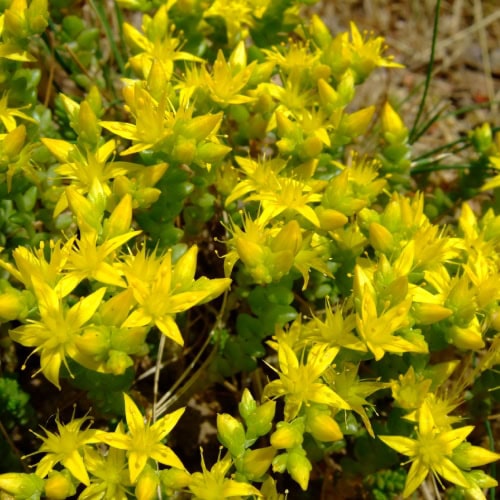
Sedum acre is one of those plants you almost forget about until it’s doing its thing, forming a tight, low mat (just 3 inches tall!) but spreading way out, sometimes over 2 feet. It’s an evergreen succulent with tiny, needle-like leaves and cheerful yellow, starry flowers in summer.
It’s really tough, too. Drought? No problem. Crummy, sandy soil? It doesn’t care. Once it’s settled in, you barely have to water it. It loves full sun and good drainage, and it’s perfect for rock gardens, between pavers, or those dry, sunny corners where nothing else wants to grow.
2)Bugleweed (Ajuga reptans)
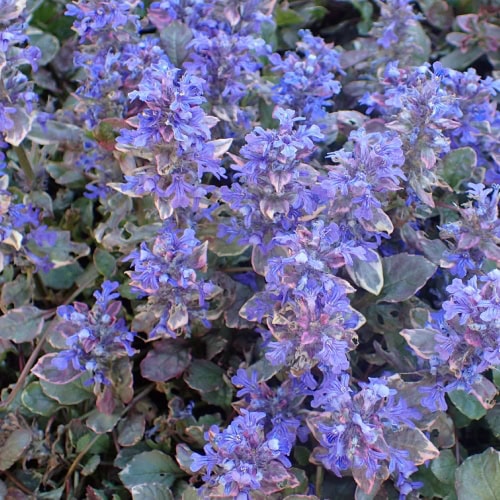
Ajuga reptans (bugleweed if you’re feeling casual) spreads fast, thanks to its creeping rhizomes, and makes a thick mat of colorful leaves. It stays pretty low (about 4 to 8 inches) and throws up spikes of blue-violet flowers in the spring.
It’s happy in sun or part shade, though a bit of sun seems to bring out its best. It likes moist, well-drained soil and settles in easily across zones 3 to 10.
Bugleweed is a strong weed suppressor and makes for really attractive ground coverage.
3) Creeping Thyme (Thymus serpyllum)
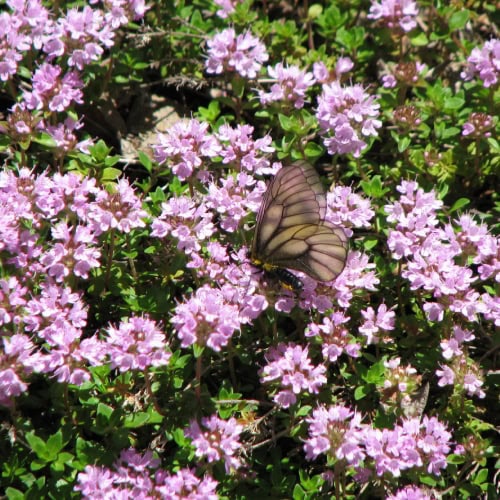
Creeping thyme is one of those ground covers that smells great and looks good, too. It hugs the ground, loves the sun, and the fragrant leaves release a lovely scent if you brush past or step on them.
In summer, you’ll spot small pink or purple flowers that draw in pollinators. It works just about anywhere; between pavers, in rock gardens, along paths, or even as a quirky lawn alternative if you don’t mind a little foot traffic.
Once it’s established, it handles drought and doesn’t ask for much attention.
4) Lilyturf (Liriope muscari)
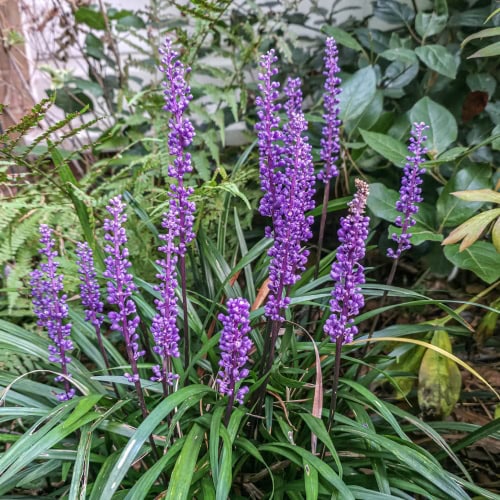
Liriope muscari (often called lilyturf) grows in tidy clumps of arching, grass-like leaves, usually 12 to 18 inches tall. It’s evergreen and puts out spikes of purple, lavender, or white flowers late in the summer, sometimes followed by little black berries in fall.
People use lilyturf as an edging plant, under trees, or between shrubs. It’s pretty flexible about sun, though in hotter climates, it does seem to prefer partial shade.
5) Silver Carpet (Dymondia margaretae)
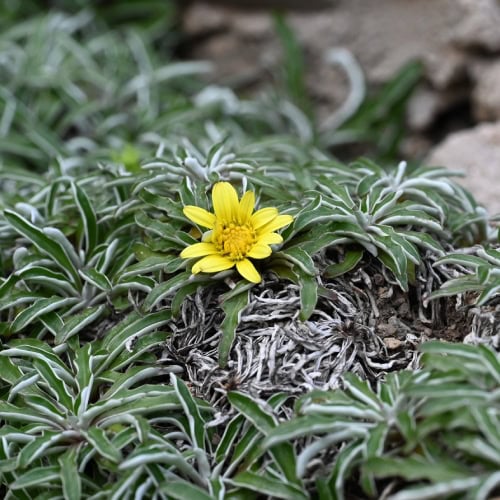
Dymondia margaretae is a bit of a hidden gem. It forms a tight, silvery-green mat, rarely growing more than 1 to 3 inches tall. The narrow leaves curl up, showing off their white undersides, which gives it a cool, variegated look.
It spreads slowly by offsets and can eventually get about 20 inches wide. In summer, you’ll notice small yellow daisy-like flowers popping up.
This one likes full sun to part shade and well-drained soil, and it can handle a bit of foot traffic, so it’s great between stepping stones.
6) Creeping Phlox (Phlox subulata)
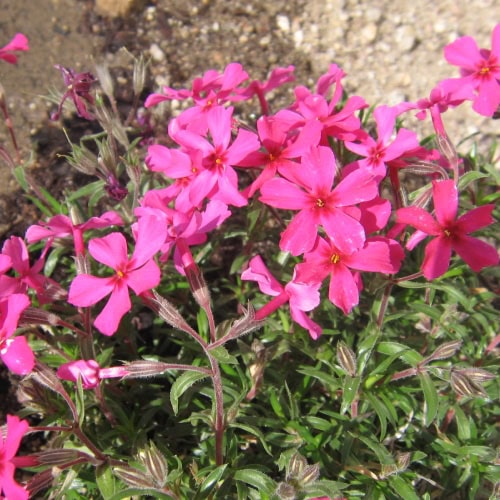
Creeping phlox is a springtime show-off, covering itself in a dense mat of flowers just 6 inches high but spreading up to 2 feet wide. It thrives in sunny spots with well-drained soil, so it’s perfect for slopes, rock gardens, or anywhere you need erosion control.
Come spring, you’ll get a riot of flowers in pink, purple, white, or blue. The foliage stays a bit green through winter, and once it’s in, you don’t have to fuss over it.
7) Vinca Minor (Periwinkle)
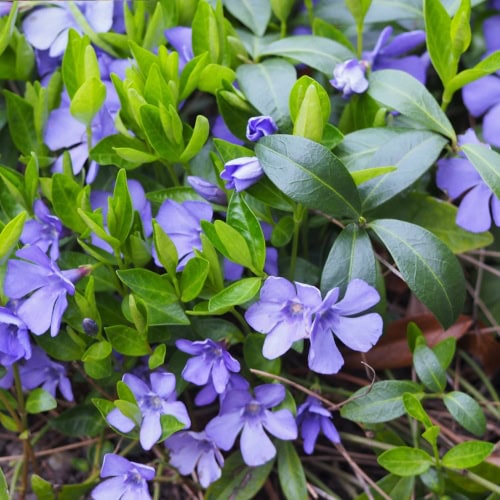
Vinca minor is a super reliable evergreen groundcover that takes both sun and shade in stride. Its glossy leaves form a thick mat, and it sports lavender-blue flowers from mid-spring into early summer, with a few surprise blooms later on.
The trailing stems root as they go, making it great for slopes or under trees. It’s low-maintenance and good at keeping weeds out of your hair.
8) Sea Thrift (Armeria Maritima)
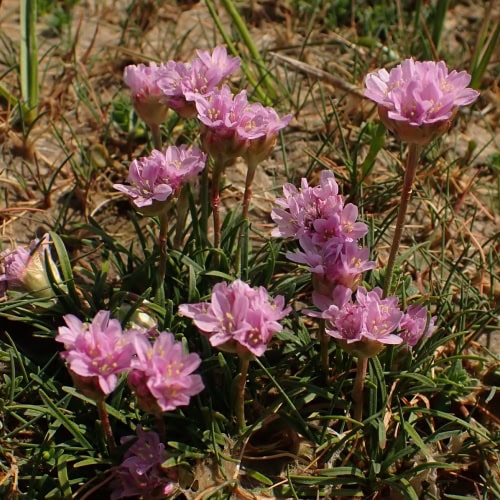
Sea thrift is one of those plants that just keeps looking good. It makes compact, evergreen mounds of grass-like leaves, usually around 4 inches tall.
In late spring and early summer, globe-shaped flower clusters pop up on slender stems, with colors from pink to lavender or white. It’s a tough perennial for well-drained soil and can handle salty, coastal conditions better than most.
9) Lamb’s Ear (Stachys Byzantina)
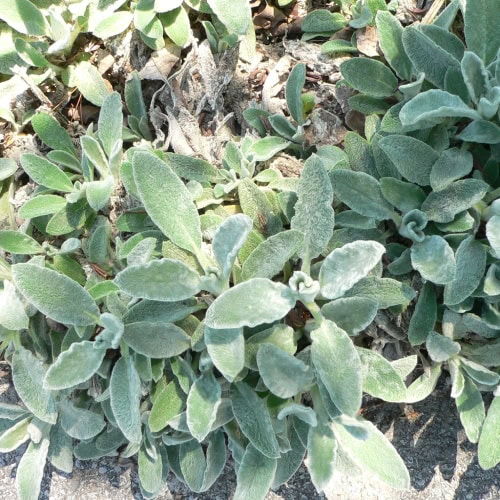
Lamb’s ear is impossible not to touch! The fuzzy, silvery leaves really do feel like a lamb’s ear. It’s drought-tolerant, loves full sun, and spreads fast to create a dense, soft mat.
It’s happy in poor soils and is a go-to for xeriscaping or rock gardens. In warmer zones, it stays evergreen, and you might get purple or pink flower spikes in summer for a little extra flair.
10) Barrenwort (Epimedium spp.)
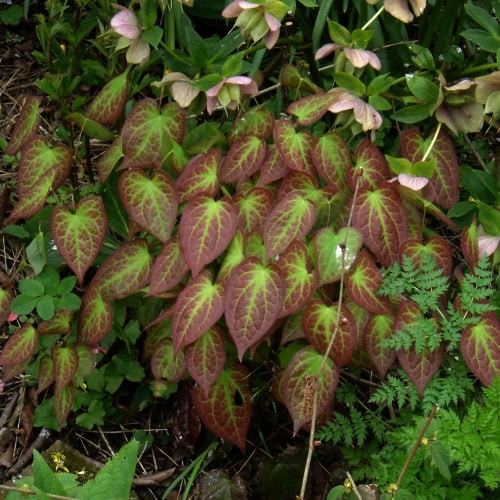
Epimedium (sometimes called barrenwort or fairy wings) is a real workhorse for dry shade, but it’s worth mentioning here because it’s so versatile. In spring, it sends up delicate flowers in shades from white and yellow to rose and lilac, floating above pretty, heart-shaped leaves.
It’s especially handy where tree roots make life tough for other plants, and it tolerates rocky soil and lower light while still looking elegant.
11) Rose Verbena (Glandularia canadensis)
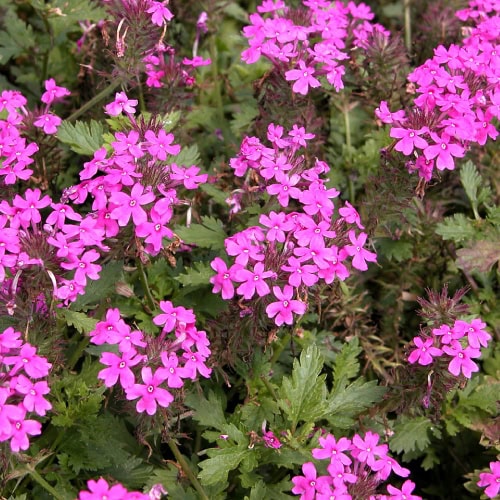
Rose Verbena is a fast-growing, sun-loving native that creates a low mound of lacey foliage. It spreads quickly by rooting at the stem nodes, effectively smothering weeds and filling in open garden spaces.
It is prized for its long blooming season, providing a constant carpet of rose-pink flowers from spring until the first frost.
12) Nepeta (Catmint)
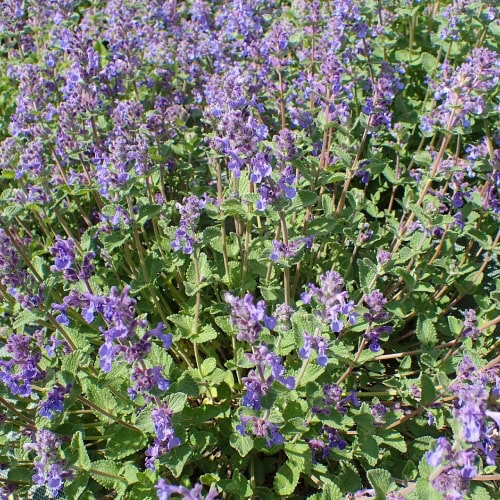
Nepeta (catmint) is a favorite for sunny spots, with its gray-green leaves and lavender-blue flower spikes. This hardy perennial grows in zones 4–8 and doesn’t ask for much once it’s settled.
It can get up to 3 feet tall and spreads out nicely. Drought doesn’t bother it, and it’ll bloom for ages if you just shear off the spent flowers.
Catmint draws pollinators and also keeps some pests away. Just trim it back now and then to keep the blooms coming.
13) Low-Growing Lavender (Lavandula Angustifolia)
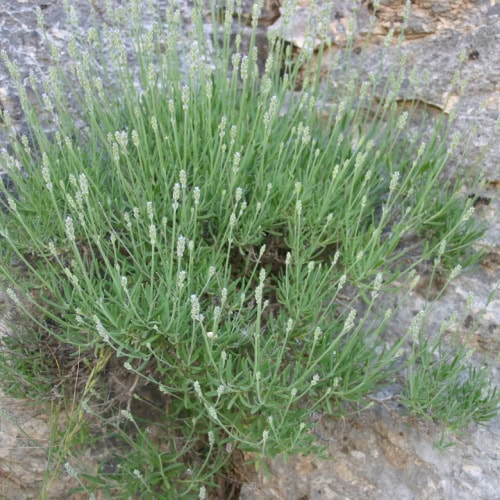
Shorter lavender varieties like ‘Munstead’ and ‘Wee One’ are perfect for sunny ground cover. They stay compact – usually 10 to 15 inches tall.
You get that classic fragrant purple flower spike and aromatic gray-green leaves. They want full sun and well-drained soil, so don’t plant them where water pools.
Once they’re established, lavender shrugs off drought and doesn’t need much water. Plus, the dense growth keeps weeds down and looks good all year.
14) Creeping Jenny (Lysimachia Nummularia)
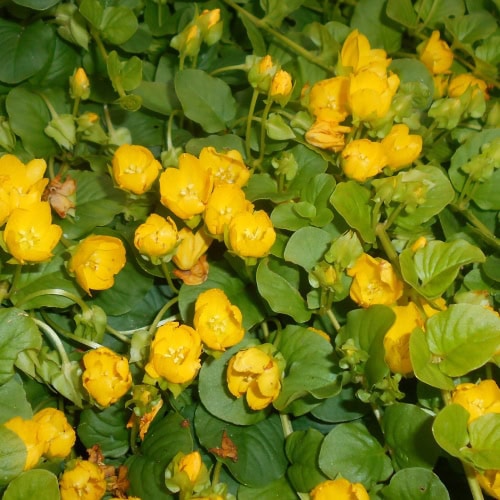
Creeping Jenny is a fast spreader with bright chartreuse or golden leaves that really light up a sunny spot. It trails nicely, so it’s great between stepping stones or spilling out of pots.
The round leaves look like little coins (hence the nickname moneywort), and you might see bright yellow flowers popping up here and there through the season.
It’s hardy in zones 3 to 9, not picky about soil, but does best with steady moisture.
15) Speedwell (Veronica spp.)
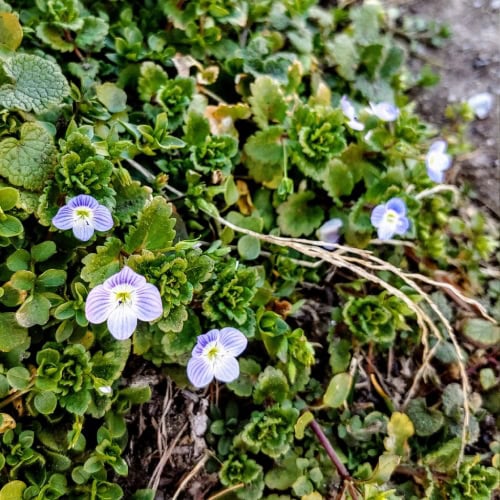
Veronica’s got options! Upright types and groundcover varieties that form nice mats in sunny areas. The low ones are great for rock gardens, between flagstones, or along paths.
They flower in spring and, once established, don’t mind some dry spells. Veronica is hardy in zones 4–10 and brings in pollinators. You can split the plants in spring or fall to spread them around.
16) Winecups (Callirhoe involucrata)
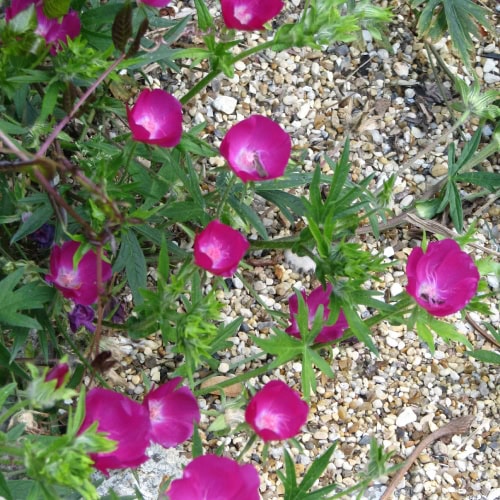
Winecups are vigorous native perennials that sprawl across the ground to form a low, thick canopy of scalloped leaves.
They are perfect for filling large, sunny gaps quickly and are famous for their deep magenta, cup-shaped flowers. Because they are deep-rooted and drought-tolerant, they are a fantastic “set-it-and-forget-it” ground cover for hot, dry spots
17) Pussytoes (Antennaria neglecta or A. parlinii)
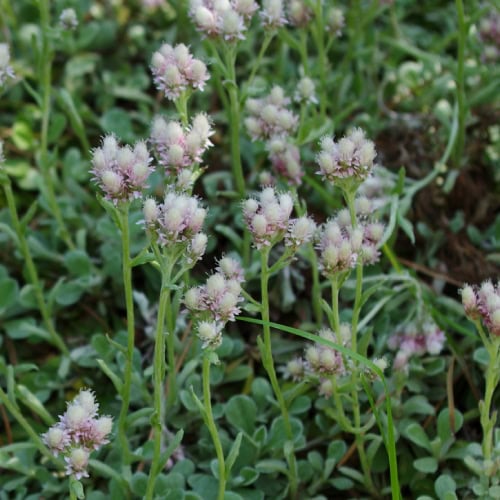
Pussytoes are low-profile, silver-green natives that form a tight, velvety mat through creeping stolons. They thrive in poor, dry soil and full sun where other plants might struggle.
Because they stay so low and spread into a dense carpet, they are perfect for planting between stepping stones or in the front of a sunny border where you want a maintenance-free “living mulch.”
18) Blue Star Creeper (Isotoma Fluviatilis)
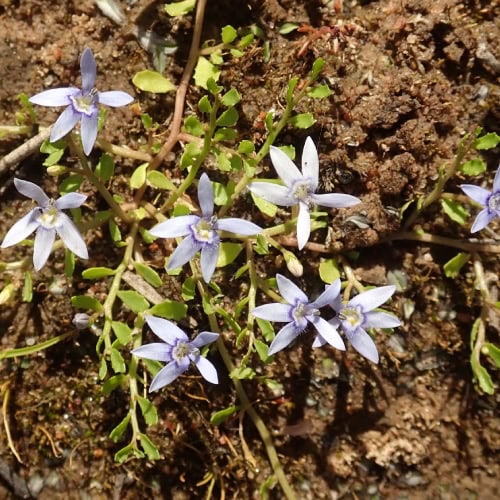
Blue Star Creeper forms a soft, low mat covered in delicate blue star-shaped flowers from late spring into early autumn. It hails from Australia and New Zealand, tolerates some foot traffic, and is happy in anything from partial shade to full sun.
It’s handy between stepping stones, along paths, or even as a quirky lawn in moderate climates. It likes consistently moist soil and can sneak under taller plants since it doesn’t mind a bit of shade.
19) Snow-in-Summer (Cerastium tomentosum)
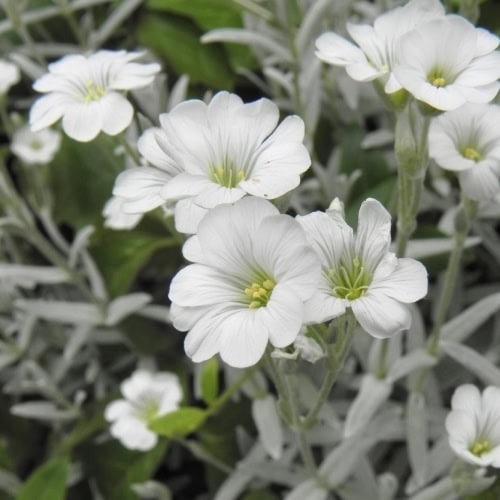
Snow-in-summer is great for hot, sunny spots where other plants give up. It makes a silvery-gray, dense mat and, come late spring, is smothered in white, starry flowers.
It grows 6 to 12 inches tall, handles drought, and actually prefers poor, well-drained soil. Use it in rock gardens, between stones, or let it spill over walls where it’ll really shine.
20) Sweet Woodruff (Galium odoratum)
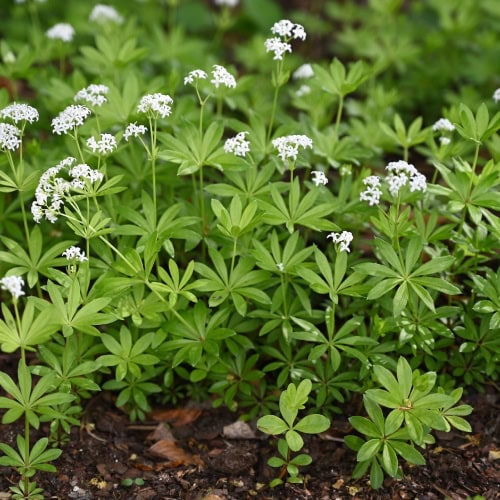
Sweet Woodruff is mostly a shade lover, not really a sun perennial, and honestly, it just seems happiest tucked under trees or nestled in woodland corners. It forms a soft, low mat about 8 to 12 inches tall, with dark green, lance-shaped leaves that show up in neat little whorls along those quirky square stems.
In late spring, you’ll spot clusters of tiny white flowers, and honestly, they’re pretty charming and give shaded spots a gentle lift. And if you ever crush or dry the leaves, there’s this subtle vanilla scent that’s just… well, it’s kind of addictive. No wonder people toss it into potpourri!