
Yes! Koi and goldfish can breed together and produce hybrid fry when they spawn in the same pond. Because their breeding seasons overlap and both scatter eggs among plants, it’s possible for them to spawn without any special setup.
But finding fry in your pond doesn’t necessarily mean you have hybrids; koi and goldfish may also have spawned with their own kind. As the young grow, their body shape, mouth, and coloring may offer clues, but no single feature can confirm their parentage.
What Happens When Koi and Goldfish Breed?
A koi-goldfish hybrid displays physical traits that differ from both parents. Koi and goldfish hybrids often show intermediate features, though siblings can vary significantly.
Furthermore, goldfish and koi hybrids typically grow faster than pure goldfish. Still, a mixed-pond spawning does not guarantee that every surviving fry is a hybrid.
Why Is Crossbreeding Possible?
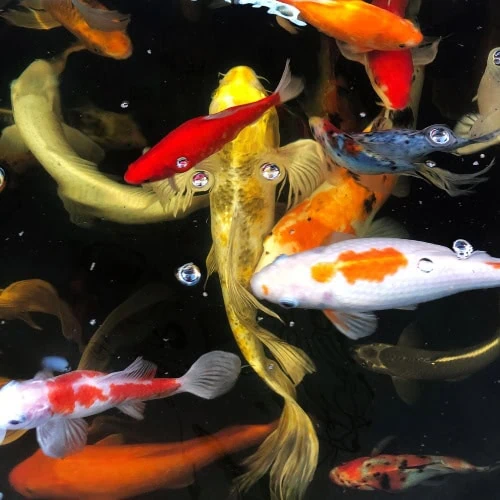
Koi fish are domesticated common carp (Cyprinus carpio), tracing their ancestry to the East Asian Amur carp through centuries of selective breeding. Goldfish (Carassius auratus) are close relatives with genetic links to the wild Prussian carp.
Because both belong to the Cyprinidae or carp family, cross-fertilization is biologically possible when mature fish spawn simultaneously in the same area.
This is more than a theoretical possibility: research on koi–goldfish crosses describes offspring produced from koi eggs fertilized by goldfish sperm. That research also found reproductive differences among koi-goldfish hybrids, meaning a koi goldfish hybrid may be sterile or possess limited fertility.
Can Either Species Produce the Eggs?
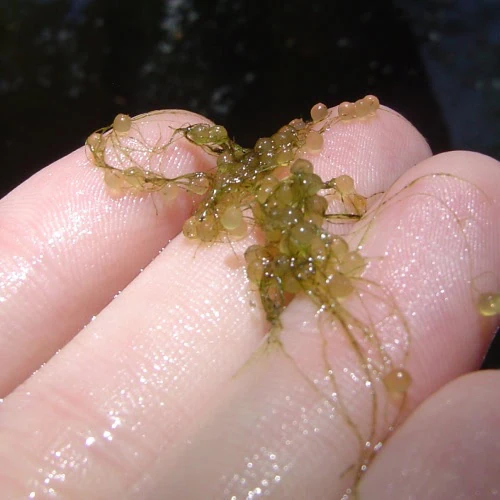
Either species can be the mother in a koi–goldfish cross. You need a female of one species to release eggs and a male of the other to fertilize them; documented crosses include both directions, although their offspring need not develop identically.
In your pond, watching the spawning is your best chance to narrow down parentage. Females are pursued and bumped by males as they release eggs, sometimes with several males involved. If you are unsure which fish are female, koi sex identification can help you assess your adult koi before spawning begins.
How Can You Recognize a Koi–Goldfish Hybrid?
When considering koi vs goldfish traits, you can treat appearance as a set of clues, with the mouth offering the most useful starting point. Colors and body proportions become easier to judge as your fry grow, but neither confirms parentage on its own.
What Can Barbels Tell You?
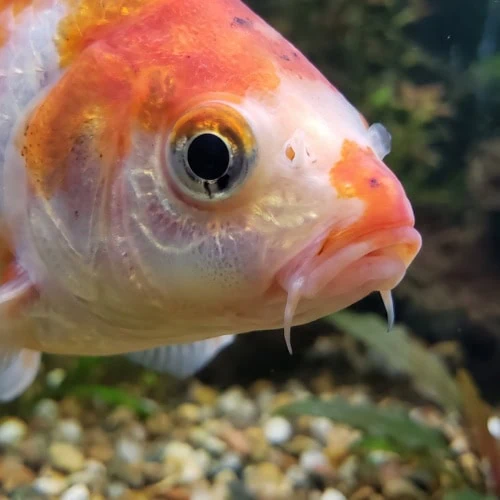
Barbels are the small, whisker-like sensory projections beside a fish’s mouth. Koi have them; goldfish do not. If a young fish develops a single visible pair, you have a reason to suspect hybrid ancestry, especially if its other features look intermediate.
Check carefully before drawing a conclusion. Small barbels can be difficult to see on a moving fry, and a viewing angle may hide some of a koi’s barbels. You will get a better look when the fish is calm and feeding near the surface or against the side of a clear container. Handle fry as little as possible.
Mouth Tilt and Shape
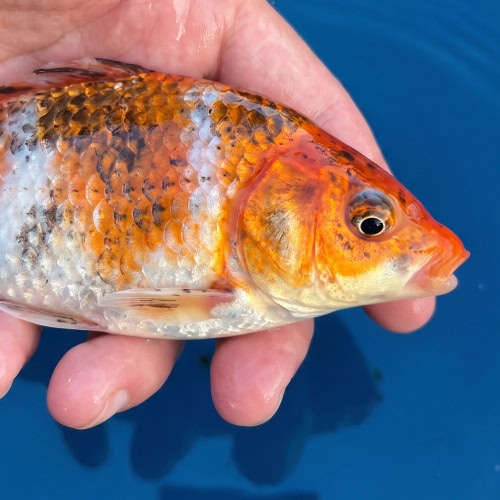
The mouth can offer another clue, though it won’t confirm a hybrid on its own. Goldfish typically have a lower mouth that tilts upward, an adaptation for feeding near the surface or level feeding. Koi mouths tend to angle downward, helping them forage along the bottom. A young fish with an intermediate shape (or a mouth that seems to show a mix of both traits) may have hybrid ancestry.
Look at the mouth from the side while the fish is still. Fry can be difficult to assess, and the angle of view or a feeding motion may make the mouth appear different. Compare this feature with the fish’s other traits rather than relying on it alone.
How Do Color and Body Shape Vary?

You might see a slender, carp-like fish with muted coloring, or a youngster whose pattern changes noticeably with age. Offspring also vary in lateral line scales, where hybrids often have counts between those of pure koi and goldfish.
Those appearances alone tell you little about its parents, as young fish continue shifting in form. Give your fish time to develop before comparing them.
Koi fry color development can make an early color-based guess especially unreliable. A clear record of the adults that spawned is stronger evidence than a photograph of a single juvenile; certainty about an individual fish’s ancestry requires genetic testing.
When Are Hybrid Fry Most Likely?
Your chances of finding hybrid fry rise when mature koi and goldfish spawn together and some of their eggs escape being eaten. Shared timing creates the opportunity; the males present around an egg-laying female affect which sperm reaches her eggs.
What Pond Conditions Trigger Spawning?
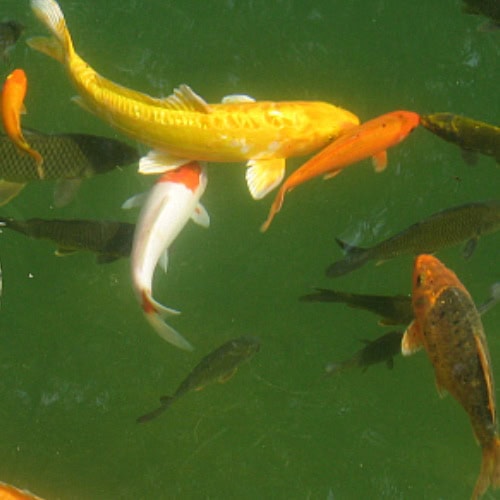
Spring warming is the main cue to watch. During peak goldfish breeding season, active varieties like the Comet goldfish will aggressively chase mates as water temperatures rise. In the United States, koi and goldfish spawn from February to May depending on location, as water approaches 68°F (20°C).
Look along shallow edges, plants, and spawning mats for sticky eggs after you notice fish chasing and nudging one another. Spawning commonly happens in the early morning. Eggs left among vegetation have a place to cling, while adult koi and goldfish may eat eggs they encounter.
If you want to recognize the behavior before the eggs appear, the koi spawning guide describes what to watch for.
How Do Available Mates Affect the Chances?
The mix of mature fish in your pond affects the chance of a cross. If a female spawns while males of both species pursue her, you cannot assign every egg to one father by watching the group from above. Eggs from the same spawning event may have different fathers.
Having same-species mates present does not rule out hybrids. It also means that unexpected fry could be ordinary koi or goldfish. Keep that uncertainty in mind before labeling an entire group, especially when the youngsters are too small for useful physical clues.
What Should Pond Owners Do About Hybrid Fry?
You can reduce unwanted crosses by managing which mature fish spawn together. If fry have already hatched, your immediate priorities are suitable food, stable water, and enough room as the survivors grow.
How Can You Reduce Unwanted Crossbreeding?
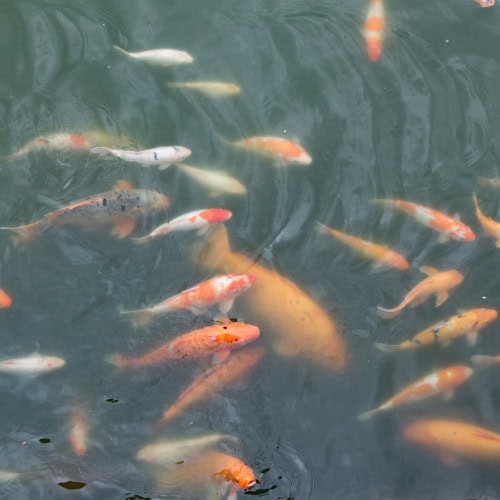
The most reliable approach is to keep breeding males and females apart during the spawning period, including separation across species. If you want your koi and goldfish to share a pond year-round, plan for the possibility of young from either species and occasional crosses.
You can remove egg-covered spawning mats after a spawning if you do not intend to raise the eggs. Check attached plants too, since sticky eggs are easy to overlook among fine roots and stems. Avoid transferring eggs, fry, or unwanted adult fish into natural waterways.
How Should You Care for Unexpected Fry?
Protect the fry you intend to keep from adult fish, which eat eggs and may consume small young. Whether raising koi fry or goldfish fry, a separate, established rearing space gives them access to food without constant competition.
Newly hatched fry use their yolk sacs first, then need food small enough to swallow. Offer appropriate fine fry food in modest amounts and watch for uneaten feed.
As they grow, keep an eye on water quality and available space. If you cannot house all the survivors, arrange responsible rehoming through options for unwanted pond fish.