
You can use these methods to make a smaller pond appear bigger by extending sightlines, disguising hard boundaries, and giving the water more visual depth. A pond gains presence when your eye travels through the planting, along the shoreline, and toward a feature beyond the water.
Keep a meaningful area of open water visible from your main viewing point. Dense planting, oversized rocks, and bulky ornaments can crowd a compact pond quickly, while a few well-placed details create a fuller, more established scene.
1) Use A Curved, Asymmetrical Pond Outline
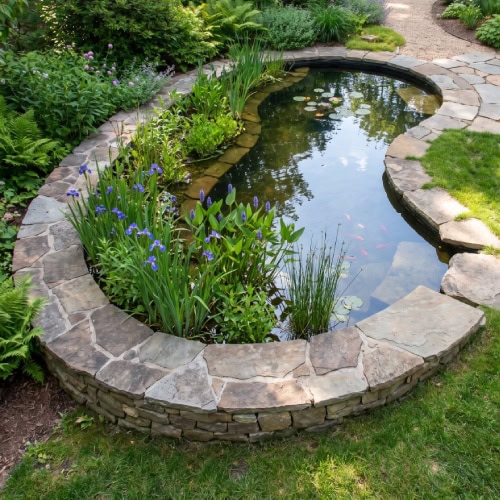
A curved, asymmetrical outline makes your pond feel longer because the full shoreline does not reveal itself at once. A kidney shape, teardrop, or loose crescent draws your gaze around bends and creates changing views from the patio, lawn, or path.
Use broad curves that suit the available footprint. Tight scallops and many tiny bays create fussy edges that are difficult to line, edge, and maintain. Give one side a slightly wider shelf for marginal plants, then leave another stretch open so you can see water from the garden.
If you are reshaping an existing pond, mark the proposed edge with a hose before moving soil. Stand at your usual viewing spots and adjust the line until it creates a longer sightline without taking over the surrounding planting space.
2) Add A Narrow Rill Or Stream Extension
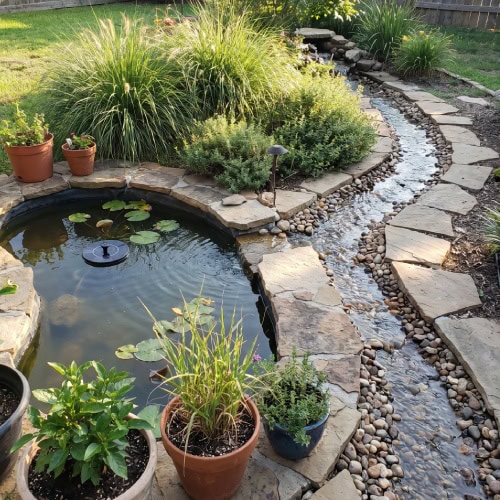
A narrow rill or stream extension makes your pond seem to continue beyond its main basin. Even a short run of moving water leads your eye away from the pond edge and gives a compact feature a greater sense of distance.
Set the rill on a gentle curve and let it disappear behind a clump of grass, a low shrub, or a planted bend. Keep its channel visibly narrower than the pond so it reads as an extension, not a competing second feature.
A pump must have enough capacity for the added lift and run, and the stream liner needs to overlap securely with the pond liner. If you keep fish, protect the intake with an appropriate prefilter and make sure your filtration still suits the pond’s total water volume.
3) Build A Compact Waterfall With Vertical Stonework
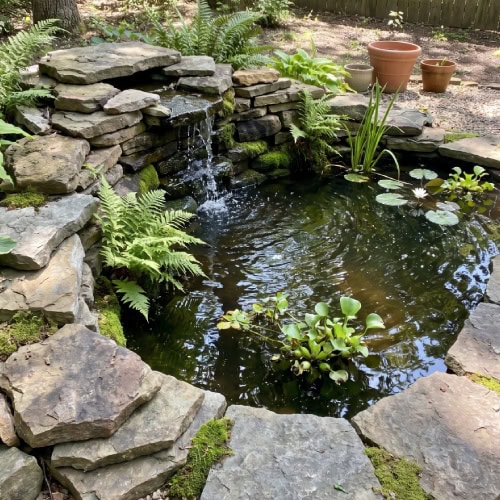
Vertical stonework gives a small pond height, which draws the eye upward and expands the feature’s visual footprint. A low waterfall tucked at the far end works especially well because it gives the water a destination beyond the visible surface.
Build with a restrained number of substantial stones, seating each one firmly and disguising gaps with smaller pieces. A waterfall that towers over a tiny basin feels out of proportion, so aim for a planted bank or compact rock face that frames the cascade.
Place the spillway where you can see and hear it from your preferred seating area. You should also be able to reach the pump, plumbing, and filter without dismantling the stonework during routine maintenance.
4) Create Depth With Layered Marginal Planting
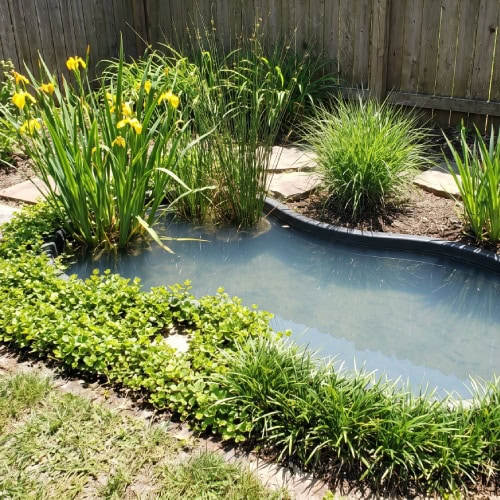
Layered marginal planting creates depth by placing low plants near the water and taller forms behind them. Your eye reads those overlapping layers as a broader, more natural pond margin.
Use short, fine-textured plants along the nearest edge so the water remains visible. Place iris, rushes, or compact grasses toward the back or far side, where their upright leaves form a soft screen and make the pond feel set within a larger landscape.
Choose plants that fit your pond’s shelf depth and sun exposure. The right plants for pond edges soften the transition from liner to garden without filling every inch of shoreline. Divide vigorous plants before they close over your viewing corridor.
5) Hide The Liner With Natural Stone Edging
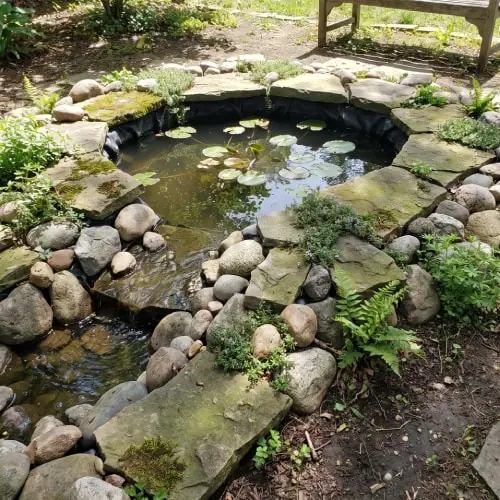
Natural stone edging makes the pond boundary recede into the landscape. When you no longer notice a visible strip of liner, the water appears to meet the garden in a more convincing, spacious way.
Use a mix of flat coping stones and irregular rocks that relate to materials elsewhere in your yard. Partly bury each stone so it looks settled, then tuck small pockets of soil between selected pieces for moisture-loving ground covers.
Leave some stones clear of foliage to preserve a clean waterline. A fully packed edge can make a very small pond look narrower and gives fallen leaves more places to collect. For additional planting options, consider plants that hide pond liner along the less-visible perimeter.
6) Add Water Lilies And Floating Plants
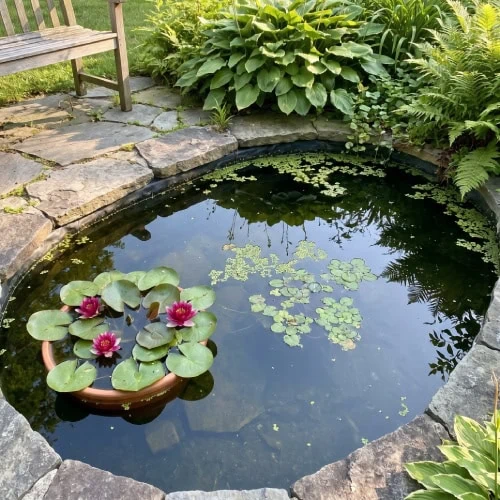
Water lilies and floating plants add scale through reflections, rounded leaves, and changing surface patterns. A measured amount of cover makes open water feel deeper while giving the pond a more complete composition.
Choose compact lilies for compact ponds, and position the container so leaves spread across part of the surface without covering your main viewing area. Browse suitable water lilies, Nymphaea by mature spread before choosing a variety.
Floating plants also create shade and shelter, though their growth needs regular attention. Remove excess growth as it gathers, especially around a skimmer, waterfall intake, or fish-feeding area. Keep a clear patch of water where reflections and fish movement remain easy to see.
7) Install A Pondside Pathway To Frame The View]

A pondside pathway frames your view and gives the water feature a deliberate approach. As you walk beside the edge, the changing angles make a small pond feel like a place to explore.
Run a narrow path along one side or toward a focal point at the far end, such as a waterfall, specimen plant, or small seat. Curving the route slightly creates a longer visual journey than a straight line across the lawn.
Use a surface that suits your garden, such as flagstone, brick, gravel, or stepping stones. Keep the path wide and stable enough for safe footing, particularly where splash, rain, or irrigation keeps the ground damp. Low planting alongside the route preserves views into the water.
8) Use Reflective Plantings Around The Water
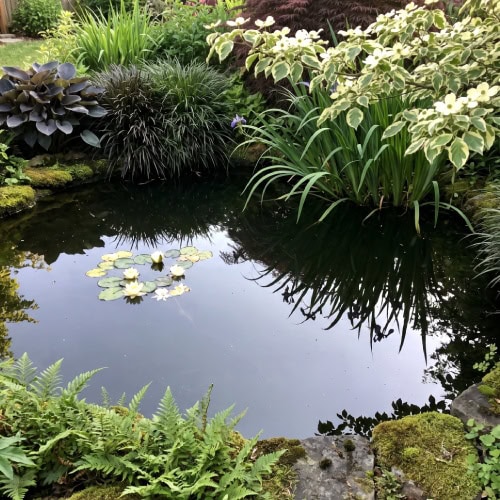
Reflective plantings double their visual effect when they are mirrored on still water. Fine grasses, arching leaves, and flowering stems at the far side of the pond create a deeper-looking scene without enlarging the excavation.
Position taller plants where their reflection remains visible from your usual viewpoint. Dark foliage gives a strong mirror image, while pale flowers and variegated leaves brighten the water surface. Avoid placing every tall plant at the near edge, where it blocks the pond from view.
You can repeat a few forms from nearby borders to carry the eye beyond the water. Grasses to plant around ponds work well for this role because their upright growth adds height without creating a heavy wall of foliage.
9) Place A Small Footbridge Across One Edge
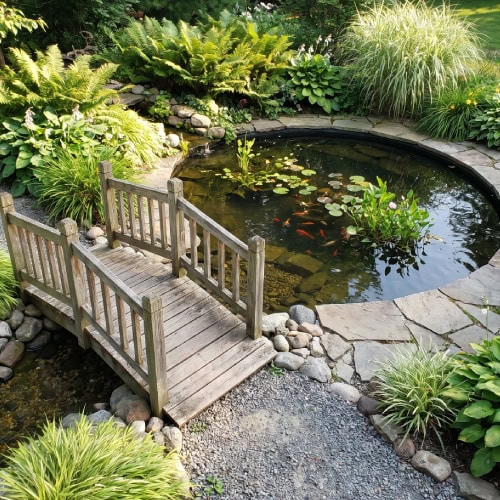
A small footbridge adds a crossing point that makes your pond feel like part of a larger garden route. Set across a narrow inlet, rill, or one tapered edge, it creates a useful focal point without dominating the water.
Choose a bridge with a modest span and open rails or no rails, depending on its height and local safety needs. A bulky bridge over the widest part of a tiny pond consumes valuable open-water space and can make the whole feature feel compressed.
Anchor the bridge on stable footings beyond the liner edge. Leave room to reach plants and equipment beneath or beside it, and use slip-resistant decking where splashed water is likely to land.
10) Blend The Pond Into Existing Garden Beds
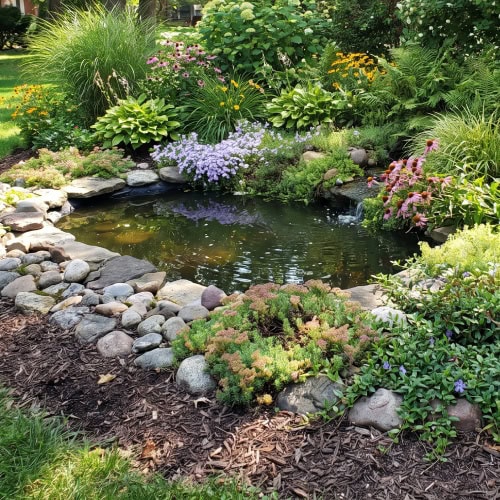
Blending your pond into existing garden beds makes it feel like a connected part of your yard. Carry mulch, stone, plant colors, and leaf textures from nearby borders toward the water so the pond has no abrupt visual stop.
Let selected border plants drift toward the pond in loose groups. Use low growers near the visible edge, medium perennials behind them, and taller shrubs farther back to create a gradual rise in height. Ground cover plants around ponds help soften bare soil between stones and established beds.
Maintain a few open viewing gaps through the planting. From your patio or favorite window, you should see water first, with the surrounding bed providing depth and a natural backdrop.