
October is a transition month for ponds. The surface may look calm, but changing temperatures and shorter days can affect the water, plants, fish, and equipment below.
A little preparation now can make the move into winter easier. Here are some common mistakes to watch for as the season changes.
1) Feeding Koi After Water Drops Below 50°F

- Ideal for monitoring pond water temperature throughout the year
- Allows for proper adjustment of water treatments based on temperature
- Important for adjusting fish feeding schedules and water treatment applications during seasonal changes

Stop feeding koi when the pond water stays below 50°F. Koi may still rise when you approach, but their digestion slows as the water cools. Uneaten food also sinks and adds waste at a time when your pond’s biological filtration is slowing.
Keep a thermometer in the pond and base feeding decisions on water temperature, measured consistently. As the water cools toward 50°F, reduce portions and remove food your fish leave behind.
Once it stays below that mark, pause feeding until spring brings warmer water and active feeding behavior. Your winter koi-feeding routine should follow those conditions, even if October brings a few warm afternoons.
2) Installing Leaf Netting After Leaves Start Falling

- 𝗥𝗲𝗹𝗶𝗮𝗯𝗹𝗲 𝗙𝗶𝘀𝗵 𝗣𝗼𝗻𝗱 𝗣𝗿𝗼𝘁𝗲𝗰𝘁𝗶𝗼𝗻 - 3/8 inch SMALL mesh size...
- 𝗛𝗲𝗮𝘃𝘆 𝗗𝘂𝘁𝘆 𝗣𝗼𝗻𝗱 𝗙𝗶𝗻𝗲 𝗠𝗲𝘀𝗵 - The koi pond cover is made of anti-aging...
- 𝗖𝘂𝘁 𝗳𝗿𝗲𝗲𝗹𝘆 & 𝗘𝗮𝘀𝘆 𝗜𝗻𝘀𝘁𝗮𝗹𝗹𝗮𝘁𝗶𝗼𝗻 - This fine mesh pond netting...
Put leaf netting up before nearby trees begin shedding heavily. Once leaves sink, a net cannot keep them out of the sludge that builds through winter.
Keep the net raised above the water and secure its edges so wind cannot blow leaves underneath. A sagging center holds wet leaves against the surface; clear that load after windy days and check that you can still reach the skimmer.
If leaves are already in your pond, skim them out before fitting the net. Netting prevents the next batch from entering, while your leaf-removal routine handles what is there now.
3) Leaving Fallen Leaves and Sludge in the Pond

- Max. Suction depth: 6 ft.
- High-power suction to a depth of 59 inch.Maximum suction depth of 78 inch.Suction hose length: 13 ft
- Power consumption: 1200-1400w
Remove fallen leaves and concentrated sludge before they spend winter decaying on the bottom. Decomposition uses oxygen and adds nutrients to the water, leaving your fish with a heavier waste load under ice and your pond with more cleanup in spring.
Skim floating material first, then empty the skimmer basket so it keeps working. Where leaves have settled, lift them carefully with a pond net or vacuum small pockets of muck.
Work in sections around resting fish to avoid stirring the whole bottom into a cloud. You do not need to strip an established pond clean; focus on the thick deposits you can see.
4) Shutting Down Aeration Without a Winter Gas-Exchange Plan

- Aquascape 2-Outlet Pond Aeration Kit, Quiet Energy-Efficient Pond Aerator with Weighted Air Stones, Airline, Check Valves, for Ponds up to...
- Oxygenates Ponds: 2-outlet pond aeration kit helps keep water healthy, clean, and clear by supporting oxygen levels in ponds up to...
- Complete Aerator System: Includes two weighted 4-inch aeration discs, two 25-foot rolls of 3/16-inch silicone airline, and preassembled...
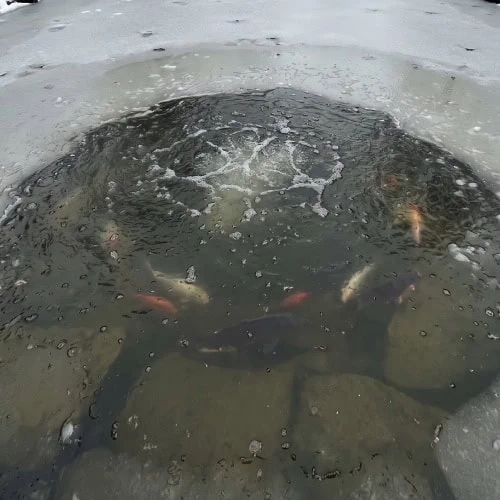
Keep a way for gases to escape if your pond is likely to ice over. Fish continue to produce waste slowly in cold water, and decaying organic matter continues to affect the pond beneath a sealed ice cover.
A winter aerator with its diffuser placed in shallower water, or a pond de-icer, can help maintain an opening. Keep a diffuser away from the deepest resting area so you do not churn the water where fish shelter.
Check the setup during cold spells, particularly after snow covers the opening. If ice seals the pond, avoid striking it to make a hole; the impact sends vibrations through the water. Your koi pond winter care needs a gas-exchange plan even when a waterfall is shut down.
5) Leaving a Vulnerable Pond Pump in Place Before a Freeze

- LARGE OUTDOOR STORAGE BOX: Fashionably store your outdoor furniture cushions, pool floats, and more. This outdoor storage bench offers lots...
- VERSATILE DECK BOX: This multipurpose outdoor storage container has a large interior with a 150-gallon storage capacity and gives you extra...
- DURABLE & ATTRACTIVE RESIN CABINET: This deck storage box is attractive and rugged and is made from strong, durable resin with a wood-plank...
Protect any pump and plumbing that cannot safely operate through freezing weather. Ice in exposed lines can block flow or damage equipment, while a frozen waterfall can send water outside the pond.
Check your pump’s instructions and trace the full water route, including hoses, a filter box, and the waterfall. If that setup needs winter shutdown, disconnect and drain the exposed plumbing before a hard freeze; clean and store the pump as its manufacturer directs.
If your system is designed to run through winter, inspect its flow and water level during cold spells. The decision about pond pumps in winter is separate from your plan to keep gas exchange going.
6) Rinsing Biological Filter Media With Chlorinated Tap Water

- API ACCU-CLEAR – Helps clear cloudy pond water of dirt, silt, and floating particles. Works quickly and improves the overall efficiency of...
- Fast and Effective – Rapidly clumps floating particles into large clusters that can be easily removed by a pond filter.
- Safety First – Our ACCU-CLEAR pond clarifier is completely safe for pets and surrounding wildlife when used as directed.
Rinse biological filter media gently in removed pond water. The media holds bacteria that help process fish waste, and chlorinated tap water can damage that colony just as your pond heads into colder weather.
Swish away enough loose debris to restore flow, leaving the media in place and damp while you work. Clear heavily clogged mechanical pads separately if your filter has them, and follow the filter maker’s instructions for each component.
Avoid scrubbing every piece spotless at once. If you use tap water for any filter maintenance, treat it for chlorine or chloramine first. Your filter-media cleaning method should preserve the living surface inside the filter.
7) Leaving Tropical Pond Plants Outside for the First Hard Frost

- DURABLE RIGIDCELL CONSTRUCTION: For superior performance and long-lasting durability in all types of weather.
- CATEGORY LEADING WARRANTY: Backed by a 10-Year Limited Warranty
- MADE IN THE USA: Rubbermaid Commercial Products BRUTE Stock Tanks are proudly made in the USA.
Move frost-sensitive tropical pond plants to suitable shelter before the first hard frost. A tropical water lily in a movable pot, for example, needs a different winter plan from a hardy lily whose roots can remain in unfrozen pond water.
Check plant labels while the foliage is still recognizable. Lift tropical pots carefully, trim dying leaves, and use the storage method suited to the species; some need warm indoor growing conditions, while dormant tubers have different needs. Inspect stored plants through winter so their water or growing medium stays in the required condition.
If you are unsure which pots can stay submerged, sort them before the forecast turns urgent using their specific pond-plant overwintering needs.
8) Skipping a Water-Quality Check Before Winter

- Contains one (1) API POND MASTER TEST KIT Pond Water Test Kit 500-Test, including 6 bottles of testing solution, 3 color cards and 4 test...
- Helps monitor water quality and prevent invisible water problems that can be harmful to fish
- Measures ornamental pond pH balance, Ammonia content, Nitrite levels and Phosphate content
Test your fish pond before cold weather limits access and makes corrections harder. Clear water alone will not tell you whether ammonia, nitrite, or pH has shifted.
Record those readings with the water temperature so you have a baseline for later checks. If a result is concerning, confirm it with a fresh test and look for likely causes such as excess food, trapped leaves, or reduced filter flow.
Make any needed water change gradually, using dechlorinated replacement water close to the pond’s temperature. Avoid a sweeping cleanout in response to a single reading; the result should guide a specific correction.
Adjusting Your October Plan
How Does Your Local First Frost Date Affect Timing?
Your local first frost date gives you a planning window for plant and equipment work. Look at your area’s forecast as that window approaches, then move tropical plants and protect freeze-sensitive plumbing ahead of the first hard frost. A forecast is more useful for that immediate decision than the month on the calendar.
Leaf drop and fish feeding run on different cues. Nearby trees tell you when netting must be ready, while pond water temperature tells you when to reduce and stop feeding. In a mild October, you may have more time for pump preparation; a sudden cold forecast narrows it.
What Changes for a Fishless Pond?
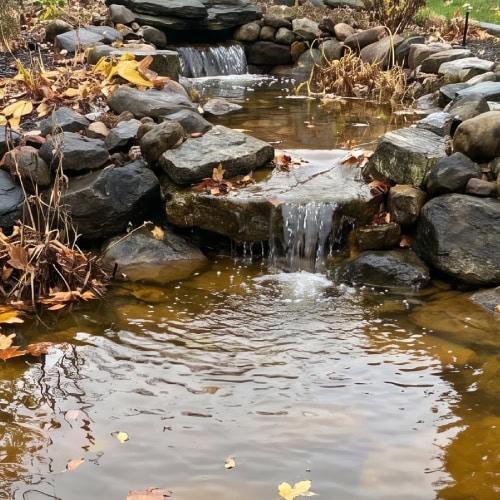
Without fish, you can leave fish-feeding decisions and fish-specific winter gas exchange out of your plan. You still need to remove leaves and sludge, protect vulnerable equipment, and shelter tropical plants. Decaying debris can leave you with murky water and a larger spring cleanup.
If your pond supports frogs or other wildlife, avoid disturbing animals sheltering at the bottom during cleanup. A wildlife pond maintenance approach keeps debris removal gentle and leaves suitable habitat intact. For any pond that freezes, check whether plants or other aquatic life still need an opening at the surface.