
You can keep a pond filter clean by removing debris before it reaches the pump, rinsing mechanical parts as flow slows, and protecting the beneficial bacteria on biological media.
Your filter is part of a living pond system. Skimmer baskets and pads catch solids, while bio-media supports bacteria that process fish waste. A clean filter should still retain a light brown biofilm on its biological components.
Watch the water returning to your pond. A weakening waterfall, a low fountain stream, or water rising around a clogged pad gives you an early chance to clean the right part without stripping the whole filter.
1) Switch Off the Pump Before Every Cleaning
Switch off and unplug your pump before opening any filter, skimmer, or intake housing. This stops the pump from drawing in loose debris while you work and prevents it from running dry after you lift out a basket or pad.
Close any valves your system uses, then let the plumbing settle for a moment before removing covers. Keep the plug and extension connections dry and above ground level. Once you reassemble the filter, confirm that the pump is primed and water is returning at its normal rate.
2) Empty the Skimmer Basket Before It Restricts Flow
Empty your skimmer basket whenever leaves, fish food, or plant debris begin covering its openings. A packed basket limits the water reaching the pump, which weakens circulation and forces debris deeper into the filtration system.
During warm weather, inspect it several times each week. Check it daily during heavy leaf fall or after a storm. If your pond collects surface debris quickly, choosing the right pond skimmer setup helps keep large material out of the pump chamber.
3) Rinse Mechanical Filter Pads With Pond Water
Rinse mechanical pads in a bucket of pond water until the trapped solids loosen and flow can pass through again. Squeeze foam pads gently under the water, and avoid scrubbing them until they look new.
Mechanical pads collect fine sediment, algae strands, and fish waste, so they need more frequent attention than bio-media. Keep a bucket beside the filter before you start. That small preparation helps you protect the bacteria that have colonized every damp surface.
For a closer look at pad and media care, use these steps for cleaning pond filter media.
4) Remove Leaves From the Pump Intake Cage
Clear leaves, string algae, and loose plant roots from the pump intake cage before they wrap around it. An obstructed cage reduces the water entering the pump and can cause the waterfall or return jet to lose strength.
Lift the pump carefully and rinse the cage in a bucket or over the pond edge. Check the impeller chamber if flow remains weak after the cage is clear. Regular intake care is one of the most effective ways to keep a pond pump from clogging.
5) Flush Pressurized Filters Using Their Backwash Setting
Use your pressurized filter’s backwash setting when the return flow drops or the unit’s pressure indicator rises above its normal reading. Backwashing pushes accumulated debris out through the waste outlet without requiring you to dismantle the canister.
Follow the sequence printed on your model, which commonly includes backwash, rinse, and filter positions. Run each stage only as long as needed for the discharge to clear. A backwash handles loose solids; open the unit for a closer inspection when flow stays restricted afterward.
6) Thin Sludge From the Biofalls or Waterfall Filter
Remove excess sludge from the bottom of your Biofalls or waterfall filter while leaving its biological media damp and largely undisturbed. Thick deposits restrict the path of water through the box and can send dirty water over the top of the filter mats.
Lift out coarse debris first, then scoop or vacuum the settled material from the base. Rinse only the dirtiest mechanical mat if it is choking flow. A waterfall filter works best when water spreads evenly across its media instead of finding one blocked channel.
7) Clean One Section of Biological Media at a Time
Clean only one portion of biological media during a maintenance session. This leaves established bacteria in the remaining media to keep processing waste while the rinsed section recovers.
Use pond water and swish the media enough to release heavy sludge. Keep the media damp throughout the job, since drying damages the bacterial film. If your filter has multiple bags, trays, or chambers, rotate through them across separate cleanings instead of treating every compartment at once.
8) Use a Pond Vacuum to Remove Bottom Sediment
Use a pond vacuum to remove bottom sediment before it breaks apart and reaches the filter. Focus on low spots, behind rocks, and around plant baskets where fish waste and decaying leaves settle.
Work in sections so you do not stir the whole pond at once. Vacuuming also lets you clean without draining the pond, which protects your fish from abrupt temperature and water-chemistry changes. A suitable pond vacuum cleaner reduces the solids load that would otherwise end up in pads and pump intakes.
9) Add a Skimmer Net During Autumn Leaf Drop
Add a pond net before autumn leaf drop begins. A net intercepts leaves before they sink, decay, and turn into sludge that clogs pads, skimmer baskets, and intake cages.
Support the net above the water where possible so leaves stay dry and are easier to remove. Clear the collected leaves frequently, especially after wind or rain.
Practical leaf-exclusion methods for ponds also reduce the nutrient load that feeds algae after the leaves break down.
10) Check Water Flow Weekly for Early Clog Warnings
Check your water flow weekly and treat a weaker return as an early maintenance signal. Compare the waterfall height, fountain pattern, or return-stream force with what you normally see when the system is clean.
Inspect the skimmer basket first, followed by the intake cage and mechanical pads. A fast drop in flow after cleaning points to a clogged impeller, pinched hose, blocked plumbing, or a filter that is undersized for the pond’s fish load. Your pond pump size also affects how well the system maintains circulation through the filter.
When Should You Clean a Pond Filter?
Clean a pond filter when debris or sludge is reducing water movement, not because a calendar says every component needs a full wash. Mechanical parts need service whenever they trap enough material to slow flow. Biological media needs a lighter touch and longer intervals.
What Flow Changes Signal a Clog?
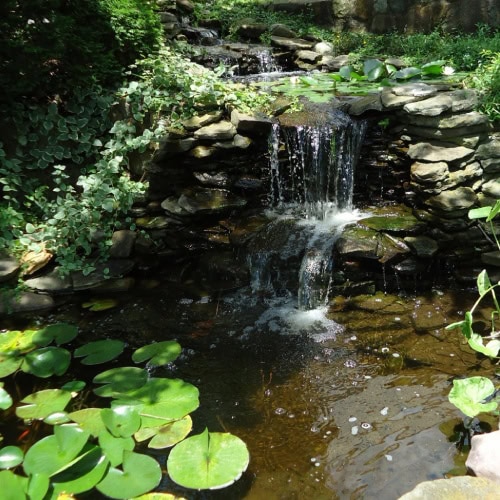
A reduced waterfall, a fountain that loses height, or a return outlet that runs unevenly signals restricted flow. Water backing up around filter mats or overflowing from a skimmer opening also points to a blockage.
Start with the easiest access points. Empty the basket, inspect the intake cage, and rinse the mechanical pad before opening biological chambers. If flow does not recover, inspect the pump impeller and plumbing for trapped debris.
How Does Filter Type Affect Cleaning Frequency?
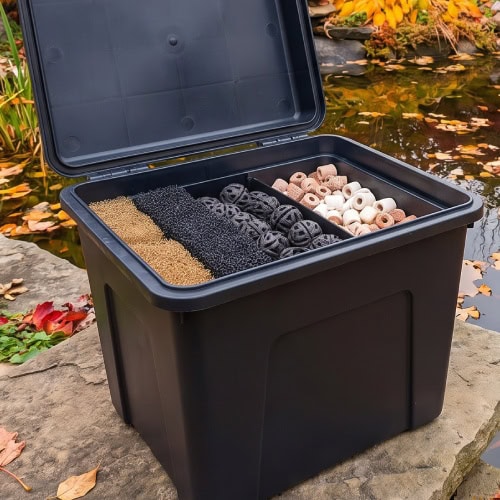
Skimmer baskets need frequent emptying because they catch large floating debris first. Mechanical pads clog faster when your pond has heavy fish feeding, suspended sediment, or seasonal plant debris.
Pressurized filters need backwashing when their flow or pressure reading indicates restriction. Waterfall filters and biofilters hold more biological media, so you should remove settled sludge and clean mats selectively while leaving much of the media intact.
When Should You Leave Biological Media Alone?
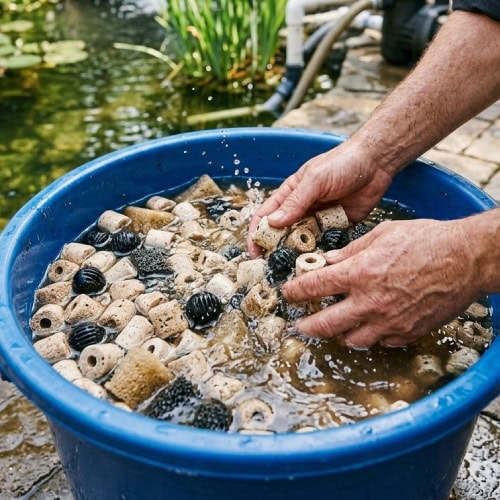
Leave biological media alone while water flow is strong and water quality is stable. The brown, slick coating on media is biofilm, and it supports the bacteria that convert fish waste into less harmful compounds.
Clean it when sludge is blocking water through the chamber or when the media is visibly packed with solids. Rinse only part of it in pond water, then give the filter time to stabilize before cleaning another section.
How to Protect Beneficial Bacteria While Cleaning
Protect beneficial bacteria by keeping biological media wet, rinsing it in pond water, and cleaning it in stages. Your goal is to restore water movement through the filter while preserving the biofilm that supports biological filtration.
Avoid soap, household disinfectants, and pressure washing on bio-media. Those practices remove or damage the bacterial colonies your pond relies on, particularly in a stocked koi pond where waste production is high.
Why Is Chlorinated Tap Water a Problem?

- Contains one (1) API POND CHLORINE & HEAVY METAL NEUTRALIZER Pond Water Neutralizer 32-Ounce Bottle
- Removes harmful-to-fish chemicals from tap water to make water safe
- Made with a super-strength, highly concentrated formula for effectiveness

Chlorinated tap water can damage the bacteria living on filter media. Those bacteria help process ammonia and nitrite produced by fish waste, so a heavily sanitized filter can leave your pond with less biological filtration after cleaning.
Fill a bucket with pond water before removing media. Swish the material gently, discard the dirty water away from the pond, and return the media to the filter promptly.
Which Filter Parts Can Be Rinsed More Thoroughly?
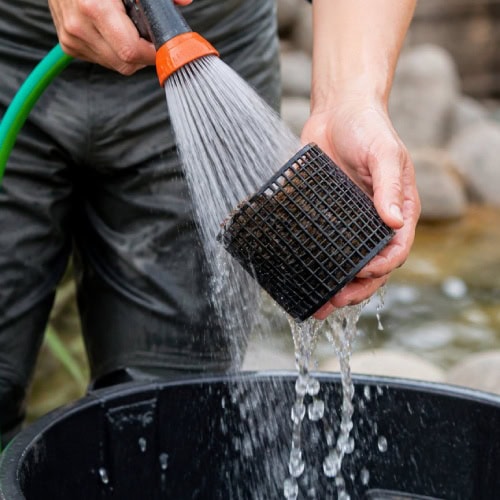
You can rinse skimmer baskets, intake cages, filter housings, and heavily soiled mechanical pads more thoroughly because their primary job is trapping solids. Keep cleaning products away from all parts that contact pond water.
Inspect foam pads for tears, flattening, and areas that remain blocked after rinsing. Replace worn mechanical media when it no longer allows dependable flow. Preserve any biological media in a separate pond-water bucket while you clean the housing.
What Should You Do With Removed Pond Sludge?
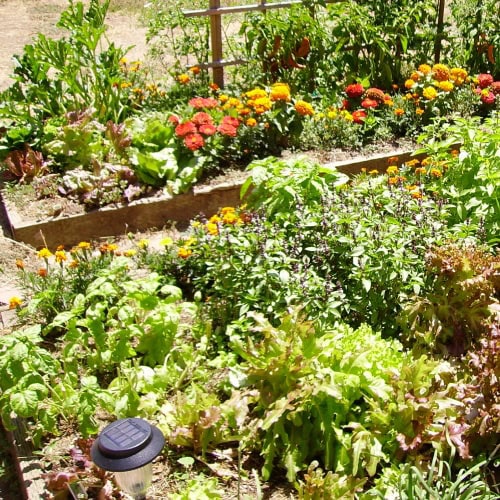
Use removed pond sludge in compost or spread it lightly around established ornamental plants if it contains no chemical treatments or invasive plant fragments. Its organic material can enrich garden soil as it breaks down.
Keep sludge out of storm drains and natural waterways. If you have treated the pond for disease, parasites, or algae, dispose of the waste according to the treatment label. You can also learn about watering plants with pond water before putting pond-derived material to use in the garden.