
Green water and stringy algae can spoil the view of your backyard pond, yet a small amount of algae is a normal part of pond health and supports the aquatic ecosystem.
To prevent algae in a pond (without chemicals), cut off excess nutrients, shade about half the water surface with plants, and keep water moving and oxygenated. This approach gives algae fewer resources while supporting fish, plants, and beneficial microbes in a healthy pond.
Chemical algaecides can deliver a fast visual change, while natural algae control works best as steady prevention. When visible algae dies in place, its nutrients return to the water and can fuel the next bloom.
What Causes Algae to Take Over a Pond?
Algae take over when strong sunlight, excess nutrients, and poorly moving warm water coincide. You can interrupt that pattern by reducing nutrient loading, increasing plant cover, and improving circulation before algae blooms gain momentum.
The Algae Triangle: Sunlight, Nutrients, and Stagnant Water
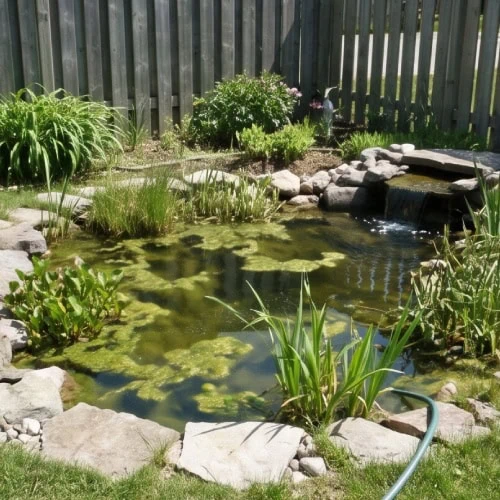
Sunlight powers photosynthesis, so direct sunlight exposure gives algae growth a head start. Nitrogen and phosphorus from runoff, fish waste, and decaying material supply food. Stagnant water keeps those nutrients available in the water column.
A pond with long daily sun exposure and little shade is especially prone to green water and surface algae mats. Moving water distributes dissolved oxygen and prevents still corners from becoming nutrient traps.
Which Types of Algae Are You Seeing?

Planktonic algae are microscopic and turn water green, often creating the familiar pea-soup appearance. String algae, also called filamentous algae, form long hair-like strands that cling to rocks, plants, and pond edges.
Floating algae mats can cover the surface and block light from aquatic plants. Blue-green algae, or cyanobacteria, can resemble paint, scum, or thick green-blue streaks. Treat suspected cyanobacteria seriously, particularly when pets, wildlife, or fish have access to the pond.
Why Warm Water and Low Oxygen Make Blooms Worse
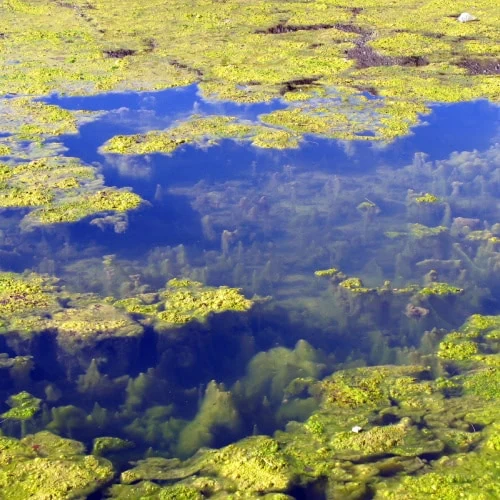
Warm water accelerates algae growth and holds less dissolved oxygen. At night, algae and other aquatic life consume oxygen, so dense blooms can leave fish stressed by morning.
Watch for fish gulping at the surface, gathering near a waterfall, or becoming unusually inactive. These signs call for immediate aeration and local professional guidance, especially when blue-green algae is present.
Reduce the Nutrients That Feed Algae
Nutrient reduction is the foundation of pond algae control because algae cannot sustain heavy growth without a steady food supply. Your goal is to stop nutrients at the pond edge and remove organic matter before it breaks down.
Stop Fertilizer Runoff, Grass Clippings, and Animal Waste

Keep fertilizers away from the pond’s drainage path, including lawn products applied uphill from the water. Fertilizer runoff brings nitrogen and phosphorus directly into the pond ecosystem.
Collect grass clippings before they blow into the water, and redirect downspouts or bare-soil runoff that carries sediment. A planted buffer around the pond catches debris and slows water before it reaches the edge. Choose suitable plants for water runoff where runoff is a recurring issue.
Animal waste also raises nutrient levels. Keep waterfowl feeding areas away from a small pond, and remove concentrated waste before rain washes it into the water.
Manage Fish Waste and Avoid Overfeeding
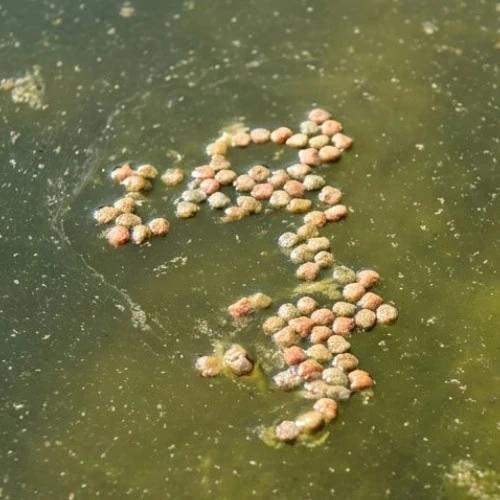
Koi and goldfish produce fish waste that becomes ammonia, then nitrite and nitrate as beneficial bacteria process it. Feed only what your fish finish promptly, and remove leftovers with a skimmer net.
Heavy stocking creates more waste than plants, filters, and microbes can process. If algae persists despite good maintenance, reducing the fish load often improves water quality more than adding another treatment.
Monitor ammonia closely when fish behavior changes, especially during warm spells.
Remove Organic Debris Before It Decays
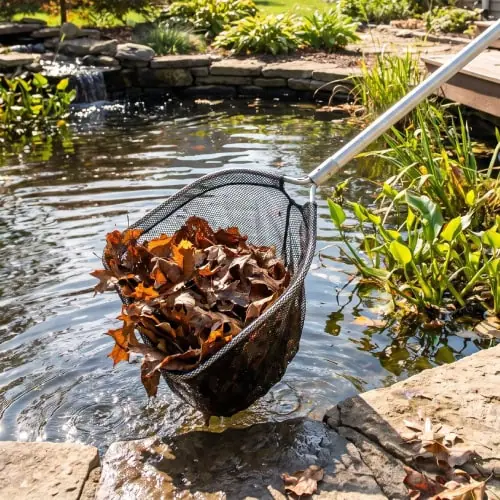
Dead leaves, spent plant material, and sludge become decaying organic matter. Use a pond skimmer and skimmer net to collect floating debris, then lift out soft algae mats before they sink.
A pond vacuum helps remove settled organic debris from accessible areas without draining the pond. Seasonal leaf netting is especially useful in fall; keeping leaves out of your pond reduces the material that would otherwise feed spring algae.
Use Beneficial Bacteria and a Pond Filter Effectively

- Once applied, Pondworx Bacteria will instantly SUPER charge bacteria that get to work on your behalf
- This concentrated formulated is designed for large ponds but also works great in water gardens, koi ponds and other water features
- Treated bodies of water may be used for recreation, fishing, and other activities immediately after applying
Beneficial bacteria colonize filter media, rocks, and planted areas, where they process fish waste and decaying material. Protect that colony by rinsing filter media in removed pond water, since chlorinated tap water can disrupt it.
A pond filter catches suspended debris and provides surface area for biological filtration. Clean the mechanical portion before flow drops, because trapped debris still releases nutrients when left in place.
Build Natural Shade, Filtration, and Water Movement
Plant cover, circulation, and aeration reduce the light and low-oxygen conditions that encourage algae. Combine floating, submerged, and marginal plants so each layer of the pond contributes to a balanced pond ecosystem.
Which Aquatic Plants Best Compete With Algae?
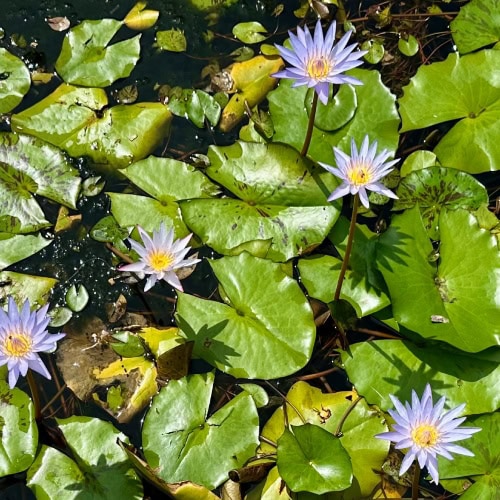
Water lilies provide broad surface shade while their roots take up nutrients. Floating plants such as water lettuce, duckweed, and water hyacinth also shade the water, though several states restrict them because of invasive-species risk. Check local rules before adding or sharing any floating plant.
Submerged plants such as anacharis and hornwort absorb nutrients from the water column. Marginal plants including cattails, rushes, irises, pickerelweed, and marsh marigold create a useful planted edge. Native aquatic plants suit local wildlife and cope well with regional conditions.
How Much Pond Surface Should Plants Cover?
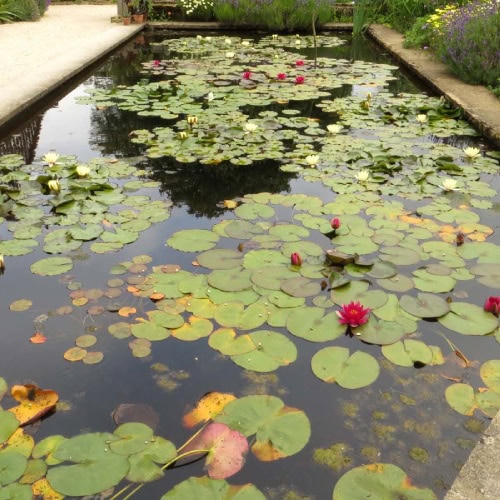
Aim for roughly one-half of the pond surface to have plant cover during the growing season.
The Royal Horticultural Society also recommends about half the surface, with enough submerged oxygenating plants to support the pond. Its pond algae guidance identifies sunny, lightly planted ponds as common trouble spots.
Keep an open area for gas exchange and fish feeding. Thin fast-spreading floating plants when they begin to blanket the entire surface.
When Do Fountains, Waterfalls, and Aeration Help?

- Aquascape 2-Outlet Pond Aeration Kit, Quiet Energy-Efficient Pond Aerator with Weighted Air Stones, Airline, Check Valves, for Ponds up to...
- Oxygenates Ponds: 2-outlet pond aeration kit helps keep water healthy, clean, and clear by supporting oxygen levels in ponds up to...
- Complete Aerator System: Includes two weighted 4-inch aeration discs, two 25-foot rolls of 3/16-inch silicone airline, and preassembled...

A fountain, pond fountain, waterfall, or air stones improve water movement and dissolved oxygen. Aeration systems are especially valuable in deep ponds, fish-heavy ponds, and sheltered basins with few wind-driven ripples.
Place air stones where they circulate water without blasting sediment from the bottom. Waterfalls and fountains provide useful surface agitation, while bottom aeration carries oxygenated water upward through more of the pond.
Should You Use Pond Dye or a UV Clarifier?

- Powerful 18 watt UV bulb for maximum cleaning results in a crystal clear pond by eliminating green water
- Easily integrates into an existing or new pond system
- For best results, connect to an OASE BioSmart biological filter
Pond dye limits light penetration and can reduce conditions that support algae, though it changes the pond’s appearance. Use only a product labeled for ponds with your type of aquatic life.
UV clarifiers treat water that passes through the unit and are most useful for planktonic algae that causes green water. They do little for attached string algae, so pair a UV clarifier with nutrient management and physical removal.
Use Chemical-Free Tools for Early Prevention and Active Growth
Chemical-free tools work best when they remove algae or reduce future regrowth without adding a new nutrient load. Manual removal, early-season barley straw, sound water circulation, and sensible stocking support natural pond algae control.
How to Remove String Algae Without Creating More Nutrients

- Heavy Duty: RakeZilla is multipurpose, heavy duty, yet lightweight aquatic weed rake, skimmer & collector! The nearly indestructable tines...
- Extra Large Rake Head: Extra Large, 40 inch wide rake head is ideal for managing lake & pond weeds, algae, leaves, & other debris in and...
- Curved Handle Grip: Available in 7ft and 11 ft handle lengths. RakeZilla's curved handle grip and adjustable length makes it easier to rake...
Twirl filamentous algae around a pond net, pond rake, or even a toilet brush, then lift it out slowly and compost or dispose of it away from the pond. A net or rake works for loose algae mats.
Remove manageable amounts over several sessions if growth is dense. Large masses of disturbed algae can cloud water and release debris, so follow up by clearing trapped fragments from the skimmer.
Avoid adding household hydrogen peroxide, natural algaecides, or chemical algaecides when your goal is chemical-free pond care. A sudden die-off can also increase organic debris and strain oxygen levels.
When Barley Straw Can Help Prevent Regrowth

- The Original And Best Selling Barley Straw Pond Treatment From Summit
- Keep Your Pond Water Clean And Clear Year-Round
- Clear your pond, fountain and fish tank naturally
Barley straw is a preventive support tool that works gradually as it decomposes in oxygenated water. Put it in a mesh bag where water moves through it early in the season, before algae becomes dense.
About 50 grams of barley straw per square meter of pond surface and replacing it after it turns black, commonly around six months, is a good starting point. Barley straw will not clear an established bloom quickly, so continue removing algae and controlling nutrients.
Why Fish and Zooplankton Are Support Tools, Not a Standalone Fix
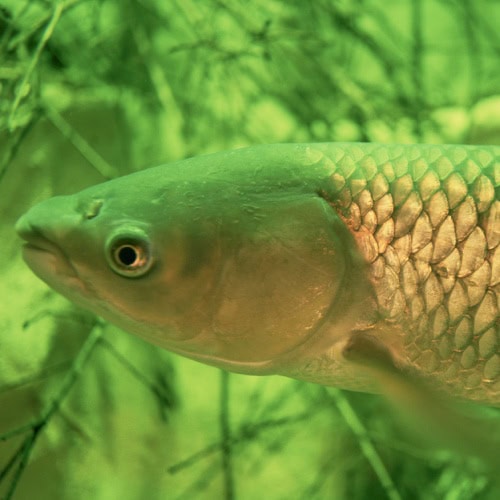
Algae-eating fish and zooplankton such as daphnia can contribute to pond health, though they cannot compensate for heavy fertilizer runoff or overfeeding. Grass carp require careful consideration because permits, stocking rules, and invasive-species concerns vary across the United States.
Goldfish and koi also graze some material while adding fish waste. Keep stocking conservative, give plants room to establish, and use pond fish that eat algae as a supplement to good maintenance.