
Keeping a pond clean is an important part of maintaining a healthy, balanced ecosystem. Over time, leaves, fish waste, and other organic matter can collect on the bottom and affect water quality.
The right cleaning approach depends on the pond’s condition, its inhabitants, and the amount of buildup. Understanding what accumulates (and how it affects pond health) is a useful first step toward keeping your water clear and your pond thriving.
1) Vacuum Settled Sludge With a Pond Vacuum

- Max. Suction depth: 6 ft.
- High-power suction to a depth of 59 inch.Maximum suction depth of 78 inch.Suction hose length: 13 ft
- Power consumption: 1200-1400w
A pond vacuum removes soft, settled pond sludge from accessible parts of the bottom with limited disturbance. It is one of the most effective tools for how to clean a pond without draining it. It works well around aquatic plants, plant baskets, flat liner sections, and pockets where thick pond muck collects.
Skim large leaves first so they do not clog the nozzle. Set the discharge hose where wastewater will not flow back into the pond, then move the nozzle slowly just above the liner. If the water clouds up, pause and let the particles settle before continuing. Keep the intake clear of fish and small wildlife.
A vacuum draws out water along with muck, so watch the pond level and refill with dechlorinated water when needed. In a delicate wildlife pond, this targeted approach protects small organisms and balances the pond ecosystem.
For equipment suited to this job, compare pond vacuum cleaners by reach, discharge arrangement, and the debris their nozzles handle.
2) Scoop Leaves and Loose Debris With a Fine-Mesh Pond Net

- The design and strength of this net allows for removal of large amounts of debris, cutting down on maintenance
- The super soft netting will not damage fish and is easy to keep clean
- Extendable handle is ideal for handling and storage
A fine-mesh pond net picks up loose leaves, dying pond plants, and decaying string algae before they decay into bottom muck. This is the gentlest option when debris is sitting on top of the liner or caught along a shallow shelf.
Approach the pile slowly and lift from underneath. Let water drain through the mesh before carrying the debris away; a heavy, full net is awkward near pond edging. Check each scoop for snails, tadpoles, or other pond life and return them to the water.
Netting does little for fine silt or sludge that passes through the mesh. Still, removing intact leaves first makes a later vacuum pass easier and reduces the material available to rot.
3) Pull Thick Muck Out With a Pond Rake

- 3-in-1 Collapsible Pond & Beach Rake - The Razer Rake is a great all-around aquatic rake. Easily remove debris with the 9-foot long handle...
- Razor Sharp Teeth for Improved Weed Removal: Sharp metal teeth are perfect for digging, cutting, and mechanical removal of weeds, algae...
- 36" Rake Head Provides a Wide Harvesting Surface: The heavy-duty rake head is designed to minimize weight without sacrificing quality. When...
A pond rake pulls matted leaves and thick organic muck toward a reachable bank. It suits shallow, firm-bottomed areas where a net cannot lift the mass in one piece.
Work in short pulls and collect each load at the edge. Give trapped water time to drain, and keep the removed material away from the shoreline so it cannot wash back in. If the rake brings up a large cloud of fine sediment, stop and switch to a tool that lifts material with less dragging.
On a lined pond, keep the tines off the liner and away from seams. A rake also snags plant roots and baskets easily, so use it only where you can see or reliably feel what lies beneath the muck. Different pond and lake rakes suit different bottom materials.
4) Pump Deep Sediment Out With a Submersible Sludge Pump

- The Tsurumi HS2.4S Submersible Electric Trash Pump comes equipped with a semi-vortex impeller and an integrated agitator, allowing it to...
- Equipped with a 1/2 horsepower motor, this submersible pump delivers powerful and reliable performance. It operates on a standard 115V power...
- The angled 2 inch discharge port provides you with flexibility in choosing compatible hoses and fittings, simplifying your setup, and...

A submersible sludge pump moves loose sediment and water out of a deep pocket that hand tools cannot reach. While a standard pond pump circulates filtered water, a dedicated sludge pump handles heavy solids without clogging on leaves or grit.
Route the discharge to a suitable collection or drainage area away from the pond. Lower the pump carefully, keep its intake clear of fish, and work one pocket at a time. Stop it before the water falls below the operating level specified by the manufacturer. Check local rules before discharging pond water.
Pumping removes substantial water along with sediment and can cloud nearby areas. For a small amount of soft muck, a vacuum gives you finer control; a pump earns its place when depth or volume makes repeated scooping impractical.
5) Break Down Residual Organic Muck With Beneficial Bacteria Pellets

- REMOVES UP TO 2 INCHES OF SLUDGE PER MONTH: Gradual-release pellets sink to the bottom and dissolve, slowly releasing concentrated enzymes...
- DEEPENS YOUR POND NATURALLY: Consistent treatment helps reduce the muck layer over time, offering a natural and affordable way to keep your...
- ELIMINATES FOUL-SMELLING ODORS: Enzymes break down and consume odor-causing bacteria, delivering a noticeable reduction in stinky pond...
Beneficial bacteria pellets help digest residual organic pond muck and decomposing organic matter, such as decaying leaves and fish waste. They strengthen biological filtration and support the nitrogen cycle by consuming waste that settles in spots tools cannot reach easily.
Follow the product label for pond volume, water conditions, and placement. Keep aeration running as appropriate, and continue removing new leaves; bacteria need suitable oxygen and warmth to work. Beneficial bacteria for ponds come in different formulations, so use one labeled for your pond.
Pellets do not lift sludge out of the water or remove mineral silt, sand, and clay. If the bottom is rising because soil washes in after rain, address that runoff and physically remove the accumulated sediment.
6) Partially Drain the Pond and Scoop Out Heavy Sediment

- Contains one (1) API POND CHLORINE & HEAVY METAL NEUTRALIZER Pond Water Neutralizer 32-Ounce Bottle
- Removes harmful-to-fish chemicals from tap water to make water safe
- Made with a super-strength, highly concentrated formula for effectiveness
Partial draining gives you direct access to heavy sediment that a vacuum, rake, or pump cannot clear. It is the most disruptive method here, so plan where the water and removed muck will go before you lower the level.
Move exposed pond plants and sensitive aquatic plants to a shaded, damp holding area. If fish must be relocated, hold them in a covered, aerated container of pond water and keep the temperature stable. Disconnect equipment that cannot operate at the reduced water level, then use a plastic scoop to lift sediment without digging into the liner.
Refill with dechlorinated tap water if needed, and return fish only after the pond water and holding water are close in temperature. Draining a garden pond takes extra planning when fish, planted shelves, and electrical equipment are involved.
Pond Bottom Cleaning Methods Compared
| Method | Best Used For | Key Benefits | Limitations |
|---|---|---|---|
| 1. Pond Vacuum | Soft, settled sludge on liner and around plants | Lifts muck while leaving pond filled and fish undisturbed | Removes pond water; ineffective on dense clay or packed gravel |
| 2. Fine-Mesh Net | Loose leaves, twigs, and floating debris | Gentle on liner; removes organic matter before it decays | Cannot capture fine silt or dissolved sludge |
| 3. Pond Rake | Matted leaves and heavy muck in shallow areas | Pulls dense debris ashore in firm-bottom sections | Can puncture liner or catch seams; stirs up fine sediment |
| 4. Sludge Pump | Deep sediment pockets hand tools cannot reach | Moves high volumes of loose waste quickly | Discharges large amounts of water; can cloud surroundings |
| 5. Bacteria Pellets | Residual organic waste in hard-to-reach spots | Digest muck continuously without manual labor or disturbance | Slow process; cannot break down sand, clay, or mineral silt |
| 6. Partial Draining | Compacted, severe sediment buildup | Provides direct access to manually clear stubborn muck | Disruptive; requires safely holding fish and replacing water |
Before You Clean!
Match the tool to what is lying on your pond bottom, and prepare to protect its living inhabitants before disturbing the muck.
How Much Muck Needs Removing?
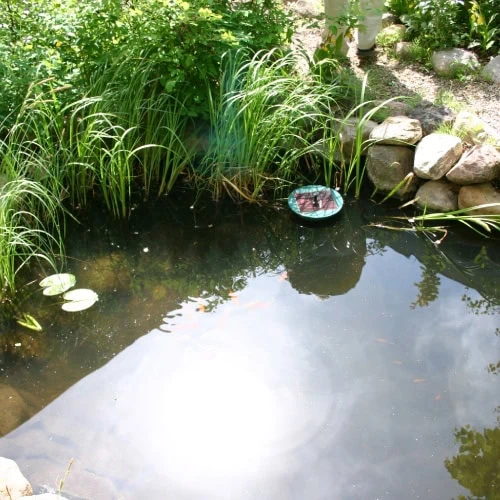
Remove loose debris and thick deposits that are filling a shallow area, burying plants, or repeatedly clogging equipment. Probe a few accessible spots with a blunt stick to see whether you have a light coating, soft organic sludge, or firm sediment. Check more than one spot: a deep pocket near the skimmer may look very different from a planted shelf.
Leave thin biofilm on the liner and rocks undisturbed. If you find black, foul-smelling muck, work in small areas and maintain aeration; churning a large deposit through the water creates avoidable stress for fish. Cloudy water alone does not tell you how much bottom material needs removing.
How Can You Protect Fish, Plants, and the Pond Liner?
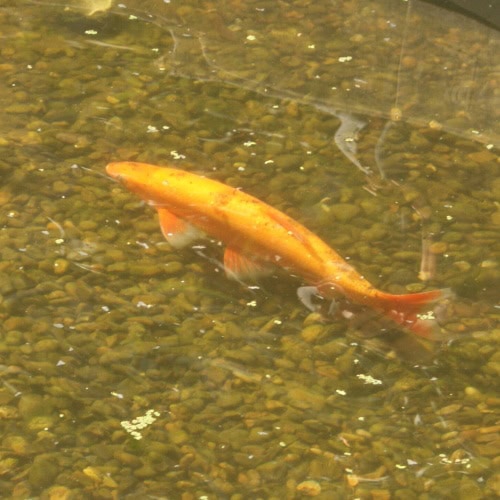
Keep fish out of suction paths and watch where each tool lands. Move slowly around plant roots, baskets, and folds in the liner. Use blunt tools on lined surfaces, and never pull a rake through an area where its tines might catch an unseen seam.
Before any major pond cleaning, check that aeration is working and have dechlorinator ready for replacement water. Rinse reusable pond filter media in pond water when it needs cleaning so you preserve its established bacteria.
If fish gasp, dart persistently, or crowd away from the work area, stop disturbing the bottom and check water quality before resuming.
Keeping the Bottom Cleaner
Consistent pond maintenance keeps debris from settling into deep layers. Catching organic waste early reduces how often you need to tackle a heavy bottom clean.
How Can You Reduce Leaves and Runoff?
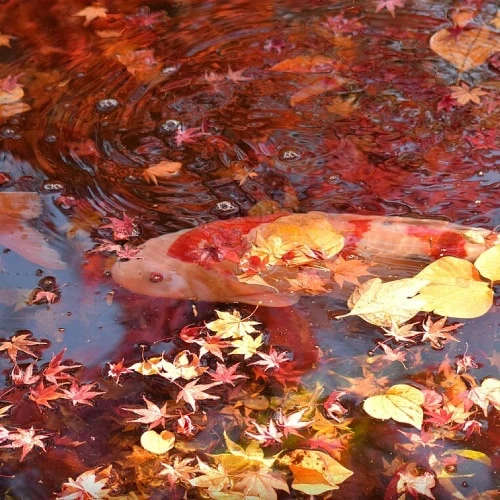
Skim fallen leaves during periods of heavy drop and clear your pond skimmer basket before it backs up. Seasonal pond netting for leaves helps where overhanging trees shed directly into the water. Remove collected leaves from the net so their weight does not pull it into the pond.
Pairing mechanical filtration with a uv clarifier also controls free-floating green algae before it dies and sinks. Keep bare soil and mulch from washing across the edge with a buffer of ground cover. Feed fish only what they consume, since leftover food adds to the organic material settling below.
When Is a Deeper Clean Necessary?
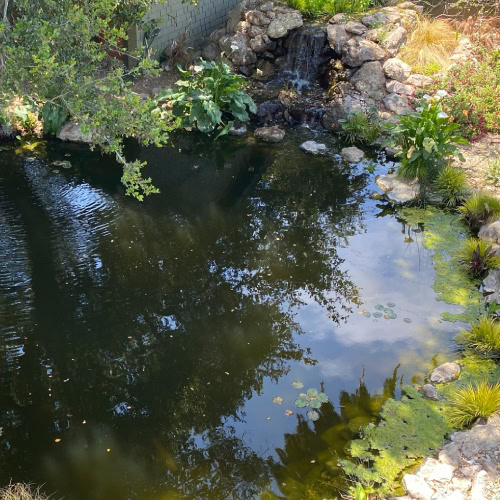
A deeper clean is warranted when sediment steadily reduces usable depth, buries shelves, or persists despite routine removal of leaves and sludge. Recheck the same bottom spots over time so you can distinguish continuing buildup from a single pocket of debris.
If a lined pond needs major excavation, or a large earthen pond has widespread silt deposits, bring in an experienced pond professional. For a manageable garden pond, start with the affected area and leave stable planted and biofilm-covered areas alone.