
Purple perennial flowers are a dependable way to add color to your garden without the need to replant every single spring. They show up year after year, offering a level of commitment that every gardener appreciates.
If you are looking for purple flower garden ideas, these plants add depth and drama to any border or bed. Incorporating purple flower garden landscaping ideas can transform your yard, whether you are planting tall purple perennial flowers for height or a perennial shrub with purple flowers to act as a focal point.
Even if your yard lacks direct sunlight, there are plenty of purple perennial flowers for shade that can brighten up dim corners. This list includes classics like lavender and salvia, alongside wildcards like Jacob’s ladder and false indigo. These plants attract pollinators and handle various soil types, making them a versatile and low-maintenance choice for any home.
1) Lavender
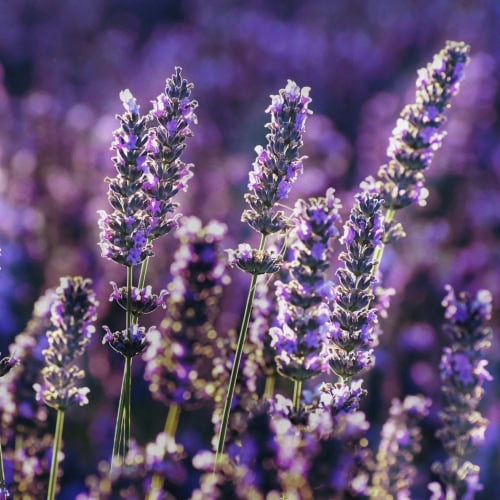
It doesn’t get more classic than lavender. This fragrant herb puts out gorgeous purple flower spikes all summer long.
Lavender loves full sun and well-drained soil, and once it’s settled in, it’s not fussy. Drought? No problem.
Bees and butterflies are all over it. There are loads of cultivars, so you can pick anything from pale lavender to deep, moody purples.
2) Salvia
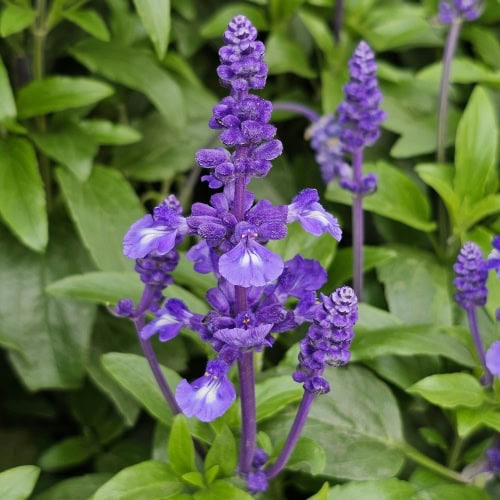
Salvia delivers vivid purple blooms from early summer into fall. It’s a breeze to care for, just give it at least six hours of sun.
May Night is a favorite with its deep purple-blue flowers, and Purple Rain’s tall spires are real showstoppers at 24 to 30 inches. Salvias shrug off drought and deer, and if you snip off old blooms, you’ll get even more flowers.
3) Coneflower (Echinacea)
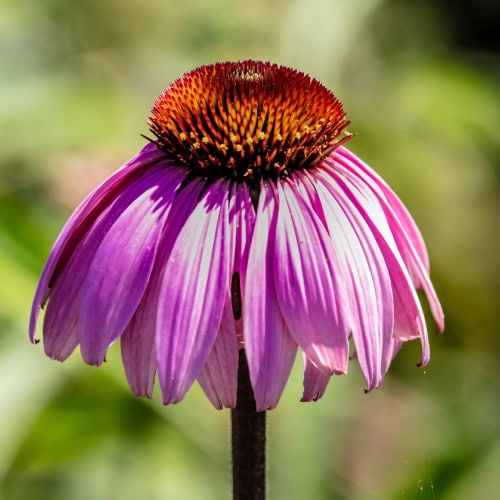
Coneflowers are just tough as nails. Native to North America, these perennials handle zones 3 through 9 and put out those unmistakable purple-pink petals with big spiky centers.
They bloom from mid-summer into fall, so you get a long run of color. At 2 to 5 feet tall, they’re not shy, and pollinators (bees, butterflies, even birds) love them.
Coneflowers don’t mind heat, humidity, or less-than-perfect soil.
4) Russian Sage (Perovskia)
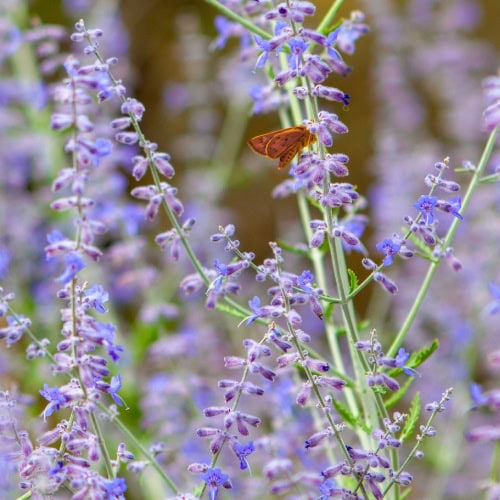
Russian Sage lights up the garden with soft lavender-blue spikes from mid-summer into fall. The silvery foliage smells nice when you brush past it, too.
Full sun and dry, well-drained soil are key, as this is a plant for those spots where nothing else wants to grow. Once it’s going, it barely needs you.
Bees and hummingbirds will show up, but deer usually won’t.
5) Bee Balm (Monarda)
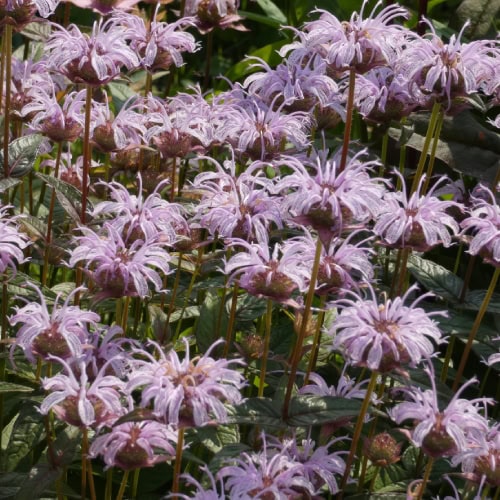
Bee balm’s got these wild, shaggy purple flower clusters – some are almost magenta! It blooms from late spring into summer, so you’ll get weeks of color.
The leaves have a minty scent, which is kind of a bonus when you brush past. Newer types like ‘Balmy Purple’ don’t get mildew as badly and stay compact, so they work in borders or even pots.
Pollinators, especially butterflies and hummingbirds, can’t resist.
6) Catmint (Nepeta)
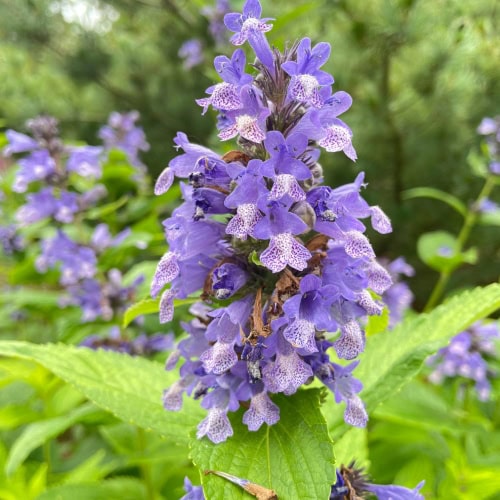
Catmint is one of those perennials you can almost forget about, as it just keeps going. The gray-green leaves smell good, and the flower spikes range from lavender-blue to pink or white, blooming from late spring into fall.
It’s usually a foot or two tall and doesn’t need much fuss. Pollinators like it, and it’s not a magnet for pests.
7) Phlox
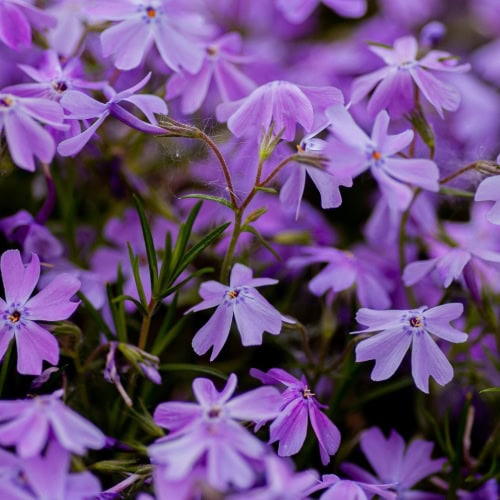
Garden phlox puts out big, fragrant purple flower clusters all summer. Butterflies and hummingbirds are drawn to it, and you’ll get color for weeks.
This hardy perennial is happy in USDA zones 4–8. Give it sun and moist, well-drained soil.
There are tall and short varieties, so you can fit it almost anywhere. It’s deer-resistant and doesn’t ask for much.
8) Delphinium
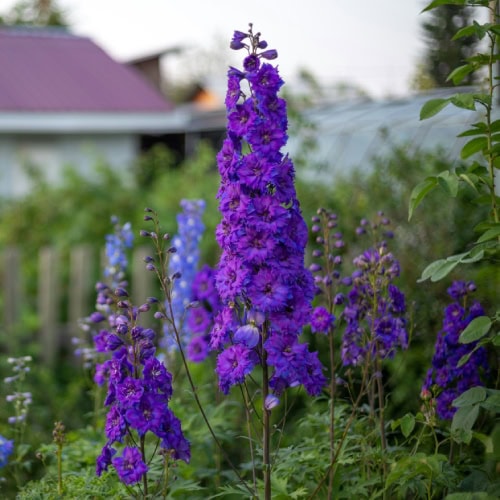
Delphiniums send up those tall, striking flower spikes that give your garden some serious vertical drama. Most bloom in blue or purple, but you’ll see the occasional white or pink, sometimes with cool contrasting centers.
You’ll get flowers from early summer into early fall, depending on the type. They’re not the longest-lived perennials, but butterflies and hummingbirds show up for the party while they last. Their height makes them perfect for the back of a border.
9) Purple Heart (Tradescantia pallida)
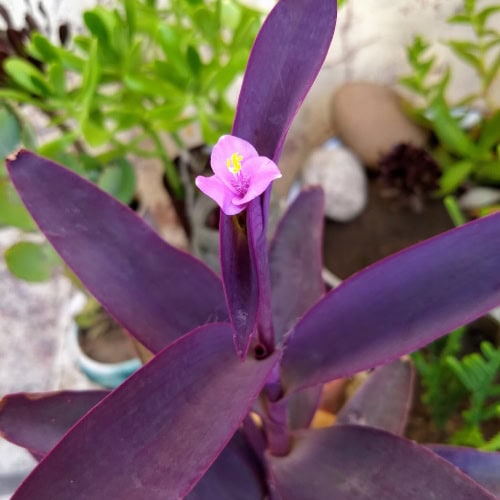
Purple Heart is a fast-growing perennial that’s all about the foliage with those deep purple leaves being are hard to miss. Native to Mexico, it trails along and really pops against green.
It works as ground cover, in containers, or even as a houseplant if your winters are cold. Likes it bright and warm, around 70–85°F.
10) Hellebore
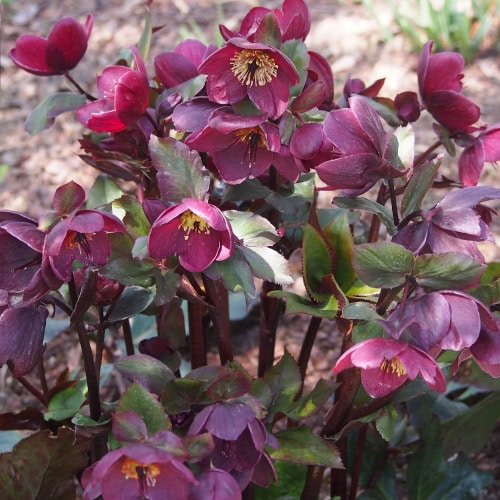
Hellebores show off purple blooms in late winter and early spring, when not much else is happening. The cup-shaped flowers range from dusky lavender to deep burgundy.
Their evergreen leaves look good year-round. They’re happiest in moist, well-drained soil with some shade, perfect for woodland gardens or under trees.
11) Ajuga
Ajuga, or bugleweed, is a go-to for shady ground cover. It stays low, just 6 inches or so, and spreads fast, making a thick carpet of glossy leaves.
In spring, usually May and June, it throws up spikes of blue to purple flowers. The foliage comes in green, purple, and burgundy, so there’s always something interesting to look at.
This cold-hardy perennial is tough enough for light foot traffic, so it works along paths.
12) Anemone
Anemones, or windflowers, have delicate, cup-shaped blooms in shades of purple; some so dark they’re nearly black! These perennials are part of the buttercup family and do well in temperate climates.
You can go for spring or fall bloomers, so it’s easy to stretch out the color. Purple anemones look great in borders, rock gardens, or grouped in masses. They spread quickly and pair nicely with asters and grasses.
13) Jacob’s Ladder (Polemonium caeruleum)
Jacob’s Ladder brings dainty purple blooms to shadier spots from mid to late spring. The flowers are deep blue to lavender with yellow centers, which is pretty eye-catching.
This clump-former gets about 18 to 24 inches tall and wide. The bright green, ferny leaves are made up of little leaflets stacked like a ladder (hence the name).
It’s happy in zones 3–8, so it works in a lot of gardens.
14) Campanula (Bellflower)
Campanula’s bell-shaped flowers come in purple, blue, pink, and white. With over 300 species, you can find tiny ground covers or upright types up to two feet tall.
They’re easy to grow, especially if your summers aren’t scorching. Blooms run from late spring into summer, and the purple varieties pull in bees and butterflies.
15) Liatris (Blazing Star)
Liatris, or blazing star, stands out with tall, fuzzy purple flower spikes that bloom from the top down in mid to late summer. It’s native to North America and does well in zones 3–9, reaching anywhere from 1 to 5 feet tall.
It wants full sun and not much else. The grassy leaves and vertical flowers attract butterflies and bees, and they’re great for cutting, too.
16) Buddleia (Butterfly Bush)
Buddleia davidii is all about those fragrant purple flower spikes, blooming from summer into fall. This shrub is low-maintenance and its arching clusters draw in pollinators.
Smaller types like Chrysalis Purple top out at around two feet, so they’re good for tight spaces or pots. Deer usually leave them alone, and once they’re established, they handle dry spells.
In colder areas, butterfly bush dies back in winter and comes back in spring.
17) Veronica (Speedwell)
Veronica, or speedwell, sends up eye-catching purple flower spikes from early to midsummer. These perennials are about as easy as it gets, which is great for anyone who doesn’t want to fuss.
The flowers open from the bottom up, making a cool vertical accent. ‘Purple Illusion’ has rosy purple blooms over dark green leaves, while ‘Purpleicious’ gives you deep violet spikes that butterflies and hummingbirds both like.
Stick them in full sun with decent drainage.
18) Wisteria
Wisteria is a fast-growing climber that drips with fragrant purple flower clusters in late spring. Those blooms can get huge, sometimes 12 to 20 inches long, so it’s a real showpiece.
This vigorous perennial is happy in zones 5–9 and can scramble up 18 to 30 feet if you let it. You’ll need to give it something sturdy to climb, like a pergola or a big arbor.
19) False Indigo (Baptisia)
False indigo brings on smoky purple flower spikes in late spring to early summer. It’s a North American native, and the pea-like blooms rise above cool clover-like leaves.
It’s fine with lean soils and doesn’t mind drought once it’s settled in. When mature, you might get 50 or more flower stalks at a time!
After the blooms fade, you get dark seed pods that stick around for extra interest.
20) Viola
Violas are those charming little perennials that seem to pop up everywhere once you get them going. They’re not showy or dramatic, but they do produce loads of small, cheerful blooms in spring. Usually, they grow about 6 to 8 inches tall, and if you live somewhere with chilly weather, you’ll appreciate how well they handle the cold.
Their colors are mostly in the purple family, ranging from deep, velvety violets to softer lavender shades. Some varieties self-seed quite enthusiastically, so don’t be surprised if you spot them popping up in odd corners of your garden over the years.
If you’re after low-maintenance perennials, violas are a solid pick, as they’re happy in full sun or partial shade as long as the soil drains well.