
Wildflowers bring effortless beauty to any landscape. If you’re tired of replanting annuals every spring, perennial wildflowers are the perfect answer. Once established, these plants return year after year, making a wildflower perennial garden a sustainable and low-maintenance choice.
Creating a native flower garden offers fantastic garden design inspiration for anyone wanting a colorful garden with wildflowers. Whether you are looking for wild flower planting ideas or starting wildflower gardening for the first time, these plants provide reliable wild flower landscaping that supports local pollinators.
Here are twenty perennial wildflowers that return every year, offering vibrant colors and a reliable spirit from spring through late summer.
1) Black-eyed Susan
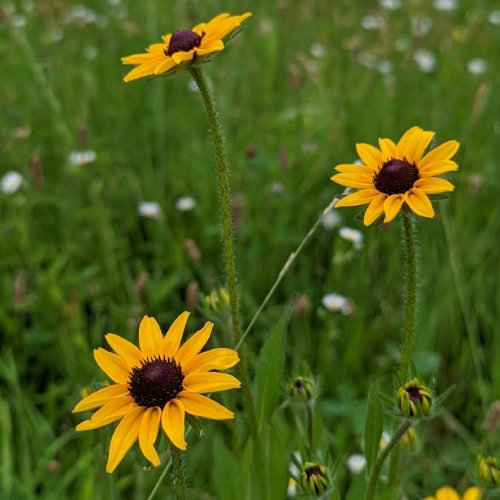
Black-eyed Susans are reliable perennials that just keep popping up every year. These cheerful North American natives have those sunny yellow petals with a dark, almost chocolatey center.
Most types are perennial, but you might run into a few that act more like biennials or just don’t stick around as long. They start blooming in mid-summer and hang on until frost. Even if some plants don’t make it, they self-seed like champs, so you’ll spot new faces in your garden each spring.
2) Purple Coneflower
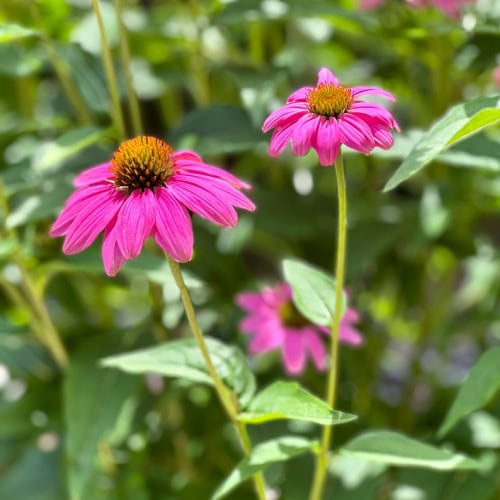
Purple Coneflower (Echinacea purpurea) is just plain tough. It comes back year after year in USDA zones 3 through 9. Those purple petals and spiky cones? Hard to miss.
After dying back in winter, it pushes up fresh growth every spring. Butterflies, bees, and even songbirds love it. Plus, it handles heat and dry spells without much fuss, which is pretty ideal if you want something that’s both beautiful and easy to care for.
3) Wild Bergamot
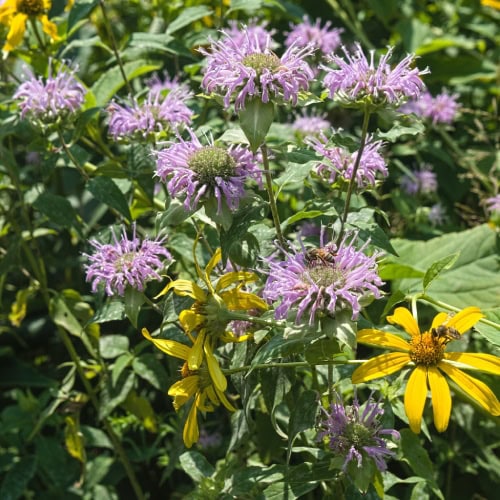
Wild Bergamot (Monarda fistulosa), or Bee Balm, is about as reliable as it gets for a perennial. Native to most of North America, it grows anywhere from 2 to 4 feet tall and puts out lavender to purple flowers from July into September.
It spreads by rhizomes and self-seeding, so you’ll see more of it each year if you let it. Likes full sun and soil that drains well.
Wild Bergamot attracts pollinators like nobody’s business, including bees, hummingbirds, butterflies. Plus, you can use it for tea or herbal remedies. Not bad for a wildflower!
4) Butterfly Weed
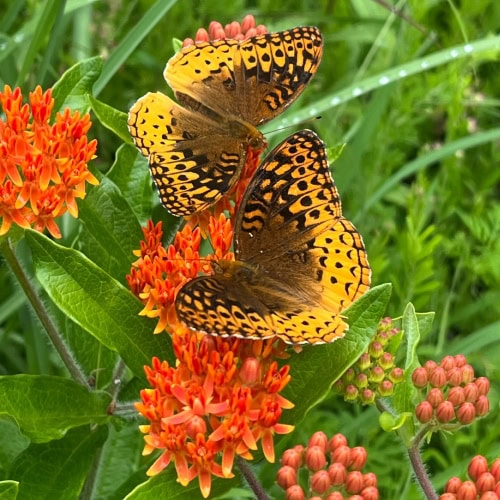
Butterfly Weed sticks around once it’s established, thanks to its deep roots. Every spring, it comes back, ready to put on a show.
You won’t have to baby this low maintenance perennial. Its bright orange blooms are a magnet for butterflies, especially monarchs.
Heads up, though, it can be slow to wake up in spring, so maybe mark where you planted it so you don’t dig it up by mistake.
5) Great Blue Lobelia
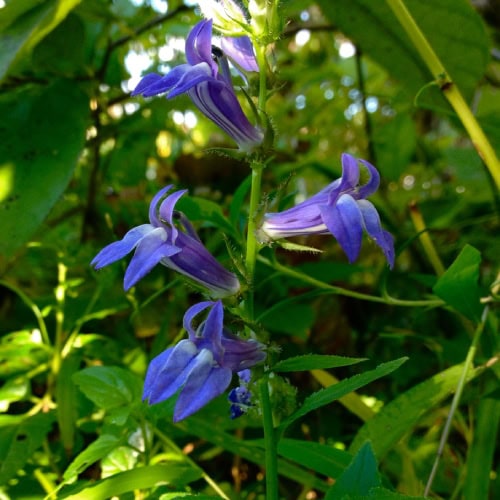
Great Blue Lobelia is another perennial you can count on, especially in zones 4 through 9. It’s native, and those tall spikes of blue flowers are pretty dramatic from late summer into fall.
It’s happiest in wetter spots, like along streams or in a rain garden. The blooms are a favorite with hummingbirds, butterflies, and other pollinators.
6) Blanket Flower
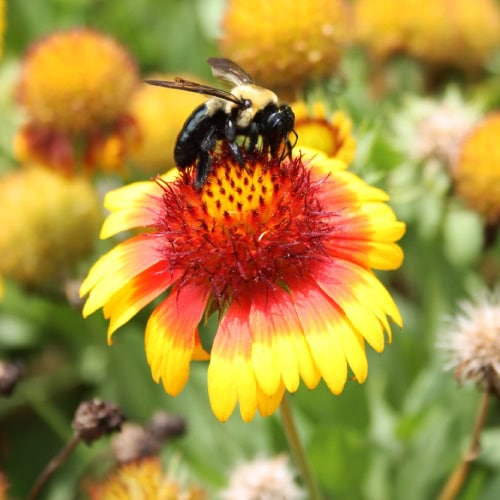
Blanket flower (Gaillardia) is a perennial wildflower that comes back each year if it likes where it’s planted. The most common ones, Gaillardia aristata and Gaillardia x grandiflora, have those fiery red, orange, and yellow daisy-like blooms.
They’re not always the longest-lived, maybe two or three years for each plant, but they’re tough, love the sun, and don’t need much care.
You’ll get color all summer long, whether you plant them in beds or let them go wild in a meadow.
7) Kansas Gayfeather
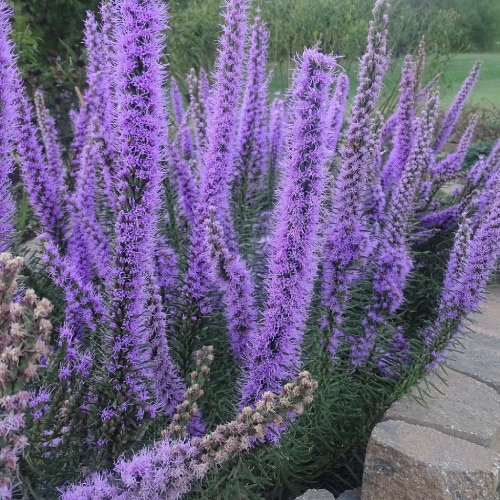
Kansas gayfeather is hard to miss! Native to the tallgrass prairies of eastern Kansas, it can shoot up to five feet tall.
Look for its stiff stems and long flower spikes, packed with disk florets that pollinators love. It’s got those narrow leaves that get smaller as you go up the stem.
8) Wild Indigo
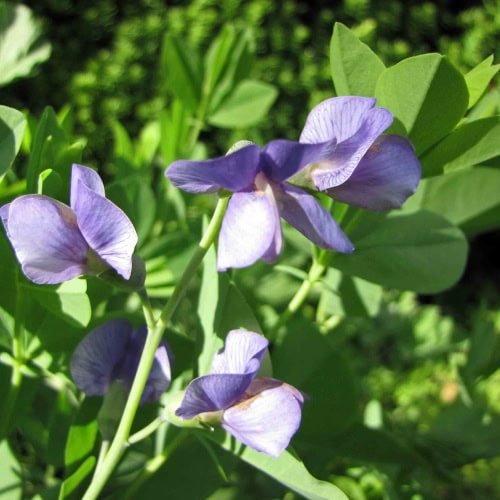
Wild indigo (Baptisia tinctoria), sometimes called false indigo, is a herbaceous perennial from the eastern U.S. It sends up spikes of pea-like flowers, in colors of blue, purple, yellow, or white, right around Mother’s Day.
It comes back reliably and, honestly, usually fills out even more with each passing year. Give it sun and soil that drains, and it’ll handle the rest.
9) Prairie Smoke
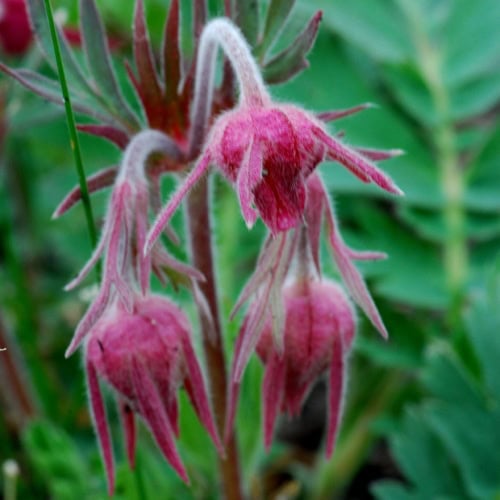
Prairie smoke (Geum triflorum) is one of those wildflowers that makes you look twice. Pink, purple, or red nodding flowers show up from April to June, and after they fade, you get those wispy, smoky seedheads.
This one’s pretty compact (6 to 16 inches tall) and likes sun with soil that doesn’t stay soggy. Its foliage turns a deep red come fall, and sometimes it even hangs on through winter.
10) Rue Anemone
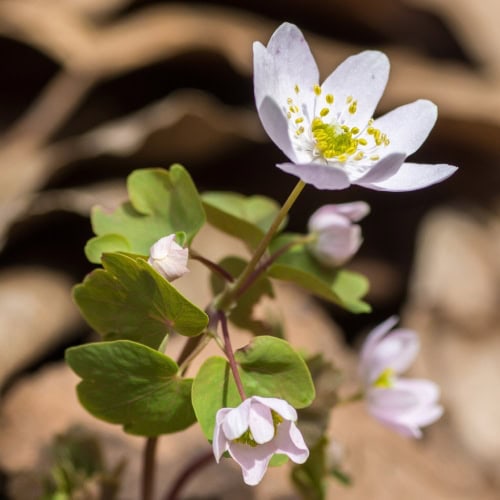
Rue anemone (Thalictrum thalictroides) is a delicate little thing that pops up every spring in woodland gardens. Its white or pale pink flowers show up from March to June, nestled among leaves that look a bit like meadow rue.
It’s happiest in dappled shade under deciduous trees. Usually stays under a foot tall, so it’s perfect for rock gardens or tucked into a shady corner.
11) Shooting Star
Shooting Star (Dodecatheon meadia) is a native perennial that really lives up to its name. Each spring, it sends up flowers with swept-back petals in white, pink, or rosy shades – they really do look like tiny shooting stars!
It likes partial shade and moist, well-drained soil. Great for woodland or rock gardens, and it gets along well with other shade-tolerant plants.
12) Virginia Bluebell
Virginia Bluebells (Mertensia virginica) are spring ephemerals that make a big impression, then vanish until next year. They bloom in April and May, starting pink and opening up to that dreamy sky blue.
They grow about 1 to 2 feet tall and want part shade. Once the flowers are done, the whole plant disappears until spring. They’ll self-seed if they’re happy, slowly forming bigger clumps.
13) Goldenrod
Goldenrod is a classic North American perennial that comes back every year with almost no attention. It lights up the garden with bright yellow flowers from late summer into fall, just when everything else is winding down.
With more than 75 species, there’s one for just about any spot. They like full sun and don’t fuss about soil. Goldenrod pulls in pollinators like crazy – bees, butterflies, you name it.
14) Wild Lupine
Wild lupine is a true perennial, sticking around year after year once it’s established. Its deep taproot helps it survive tough winters and dry spells.
It puts out blue or purple flower spikes in late spring and early summer. Wild lupine also fixes nitrogen, which is a nice bonus for your soil and anything else growing nearby. Pollinators and wildlife appreciate it, too.
15) Joe-Pye Weed
Joe-Pye Weed is a tall, sturdy perennial native to North America. It can get anywhere from 2 to 10 feet high, so it’s great for the back of borders or as a bold accent.
Pink to purple flowers show up from late July through September. It likes moist soil and sun or partial shade, such as rain gardens or wet meadows.
16) Wild Columbine
Wild columbine is a perennial you can count on to return. Native to North America, it has those cool bell-shaped flowers with spurs, blooming from mid-spring to early summer.
The plants themselves don’t live forever (maybe two or three year) but they self-seed so well you’ll always have new ones popping up. They’re happy in shady spots and don’t need much care at all.
17) Mountain Bluet
Mountain Bluet (Centaurea montana) originally hails from European mountains, but it’s a reliable perennial for gardens just about anywhere. The burgundy flower heads burst into blue-purple blooms that really stand out.
It comes back every year without you having to fuss over it. Mountain Bluet is adaptable, gives you consistent color, and brings in bees and butterflies. If you want dependable blue flowers, this one’s a safe bet.
18) Blue Flag Iris
Blue Flag Iris is a perennial that returns year after year from its rhizome. Native to North America, it shows off blue to blue-violet flowers, usually 3 to 4 inches across, from late spring to early summer.
This one loves moisture, so try it in rain gardens, near ponds, or anywhere the soil stays damp. Full to partial sun is best, and it won’t mind a boggy spot. Consistently damp soil keeps it happiest.
19) Wild Geranium
Wild Geranium is a native perennial that comes back year after year. It spreads by both seeds and underground rhizomes, slowly filling in as a groundcover.
It puts out pretty spring blooms, then the foliage takes over as a lush green carpet. Wild Geranium is right at home in woodland gardens or shady corners, and it pretty much takes care of itself.
20) New England Aster
New England Aster is that late-season superstar you can always count on to bring the garden back to life just as everything else starts to fade. This North American native puts on a serious show in late summer and fall, covered in masses of vibrant purple or deep pink flowers with bright yellow centers that the bees and migrating butterflies go crazy for.
It’s a tall one, often reaching between 3 and 6 feet, so it definitely makes a statement in the back of a flower bed. The stems are sturdy and have a slightly fuzzy, textured feel, with leaves that “clasp” the stem in a really distinct way.
It’s happiest when it gets plenty of sun and prefers soil that stays a bit moist, making it a reliable choice for adding a final, bold burst of color before winter sets in.