
Identifying poison ivy is trickier than you’d think, especially since so many plants mimic its signature look. That “leaves of three” rule? Turns out, a bunch of plants sport the same pattern, which means it’s all too easy to get mixed up while you’re out in the yard or hiking. If you spend much time outdoors, knowing these doppelgängers is honestly pretty important.
Learning to tell poison ivy apart from its innocent lookalikes can spare you a world of itching, as well as help you feel way more confident in your plant ID skills. A surprising number of plants, from climbing vines to ground covers, sport features that could fool you.
Here, you’ll find twenty plants that might trip you up, from Virginia creeper to trumpet creeper, plus some real-world tips for telling them apart from the rash-inducing villain you’re trying to dodge.
1) Virginia creeper (Parthenocissus quinquefolia)
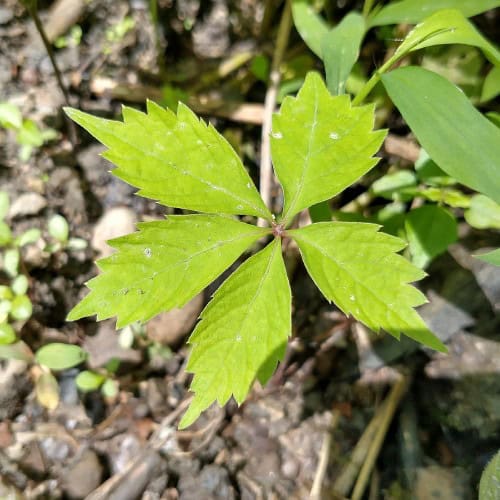
Virginia creeper is probably the most common culprit when it comes to poison ivy mix-ups. The main giveaway? Leaf count. Poison ivy always has three leaflets per leaf, but Virginia creeper goes with five.
Both are vines with jagged-edged leaflets and they’ll often pop up in the same places. Virginia creeper changes colors as the seasons shift and its vines are smooth. While it won’t trigger an allergic reaction like poison ivy, its leaves do have calcium oxalate crystals, so you might get some mild skin irritation if you handle them.
2) Boxelder (Acer negundo)
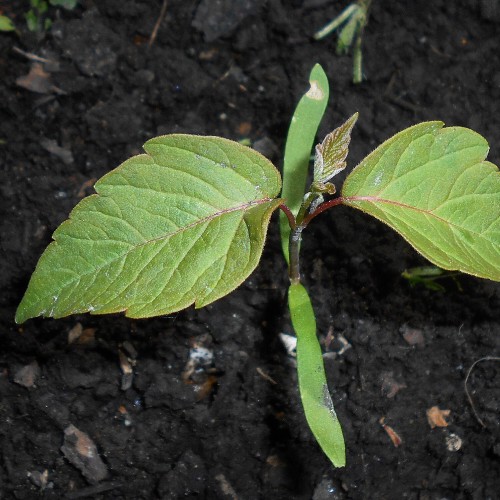
Boxelder (Acer negundo) is a native maple that’s easy to mistake for poison ivy, especially when it’s young. Those seedlings hug the ground and show off three green, serrated leaflets that look a little too much like poison ivy.
But here’s the catch: boxelder leaves are arranged in pairs, directly opposite each other on the stem, while poison ivy’s are staggered. No urushiol oil in boxelder, so you’re safe if you brush against it.
3) Fragrant sumac (Rhus aromatica)
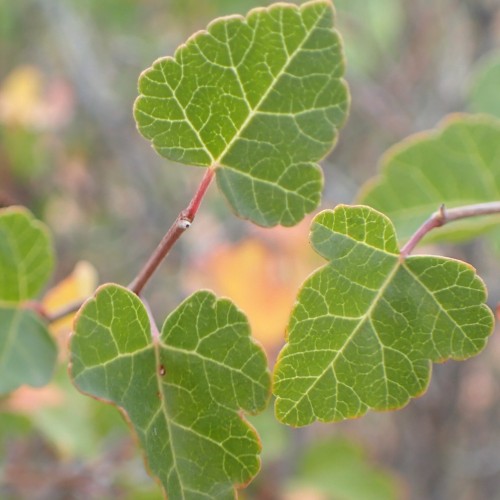
Fragrant sumac is another plant that loves to play the “leaves of three” game. This aromatic shrub usually grows between 2 and 5 feet tall, spreading out even wider.
Look closer and you’ll spot the differences: fragrant sumac’s leaves are more rounded and lack those sharp points you see on poison ivy. It also produces fuzzy red berries, while poison ivy’s berries are smooth and white.
4) Skunk bush sumac (Rhus trilobata)
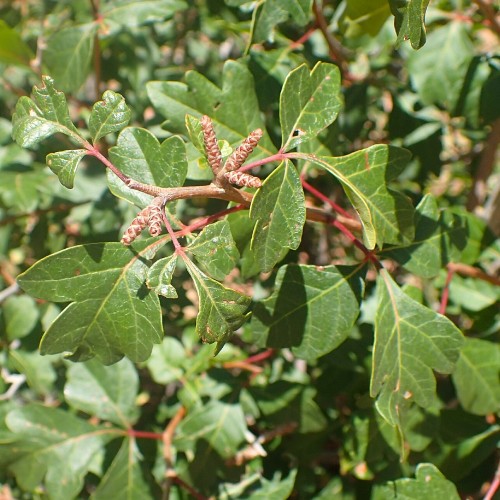
Skunk bush sumac (Rhus trilobata) is a repeat offender in the poison ivy lookalike department, thanks to its three-leaflet structure. You’ll find this shrub in plenty of the same places across North America, especially in Oklahoma and the West.
Thankfully, it’s harmless. The leaf edges are more deeply lobed and coarsely toothed than poison ivy’s, and if you crush a leaf, you’ll get a strong, skunky smell, which is where it gets its name!
5) Poison oak (Toxicodendron pubescens)
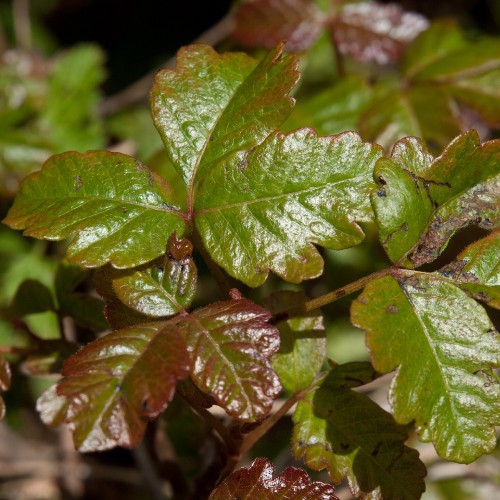
Poison oak is basically poison ivy’s close cousin, and yeah, it can give you the same itchy rash. Both have the classic three-leaf pattern, so confusion is pretty common.
What sets poison oak apart? Its leaves are lobed and rounded, looking a lot like little oak leaves. They’re usually fuzzy, and depending on the season, they might be shiny or kind of dull.
6) Mock strawberry (Potentilla indica)
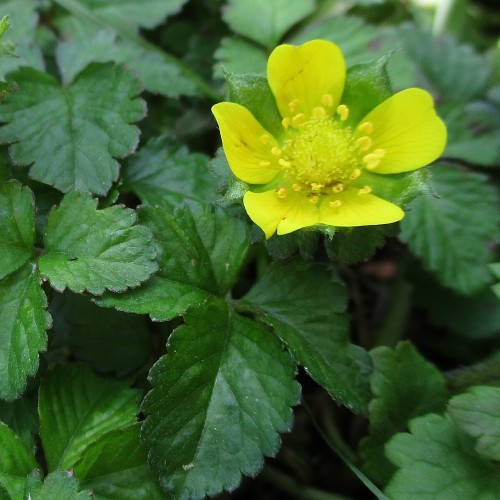
Mock strawberry often gets mistaken for poison ivy because both have trifoliate leaves; three leaflets per group. But mock strawberry puts out unmistakable yellow flowers in the spring and summer, while poison ivy never does.
The leaves are more yellowish and all connect at one central point, unlike poison ivy’s terminal leaflet, which sits on a longer stalk.
7) Jack-in-the-pulpit (Arisaema triphyllum)
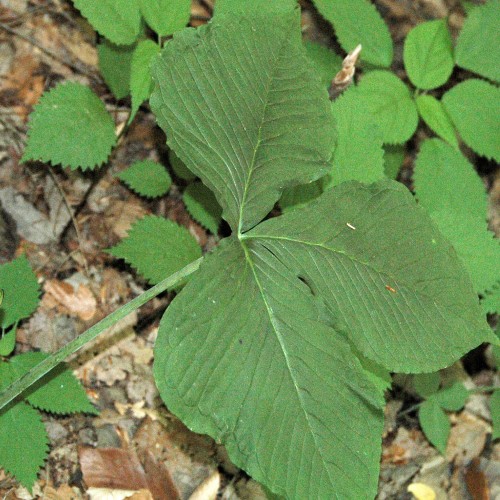
Jack-in-the-pulpit sports three large leaflets, which can throw you off in shady woods. The leaves cluster in a way that mimics poison ivy’s pattern.
But Jack-in-the-pulpit is usually taller, with broader leaves. It also produces a funky, hooded flower with green and brown stripes. Plus, it dies back in winter, unlike poison ivy, which stays woody all year.
8) American hog-peanut (Amphicarpaea bracteata)
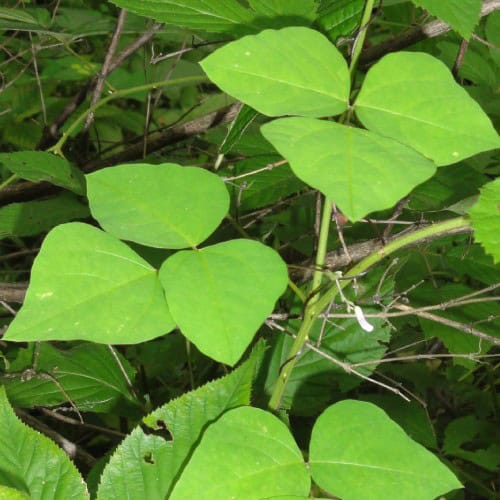
American hog-peanut is a woodland plant that shows up in the same kinds of places as poison ivy and has those three-leaflet clusters that can make you do a double-take.
The difference? Hog-peanut’s stems are thin and delicate, not thick and woody. Look for small, pea-like flowers in purple or white – something poison ivy doesn’t have!
9) Raspberry (Rubus)
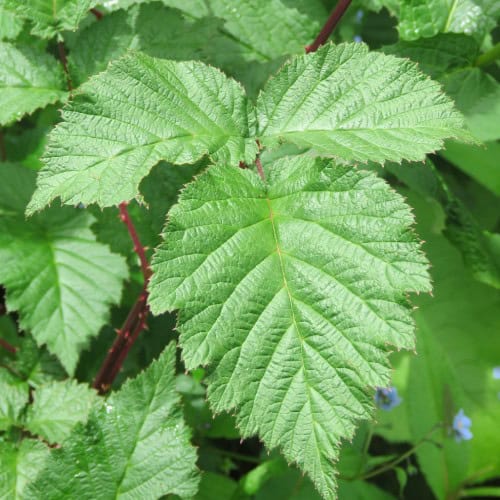
Raspberry plants can really throw you off with their three-leaf clusters. The main differences are in the texture and edge of the leaves. Raspberry leaves are toothed, a bit hairy, and not nearly as shiny as poison ivy’s.
Check for thorny stems and, when in season, red or black berries. The leaves are often a lighter green, too, just another clue to help you out.
10) Blackberry (Rubus)
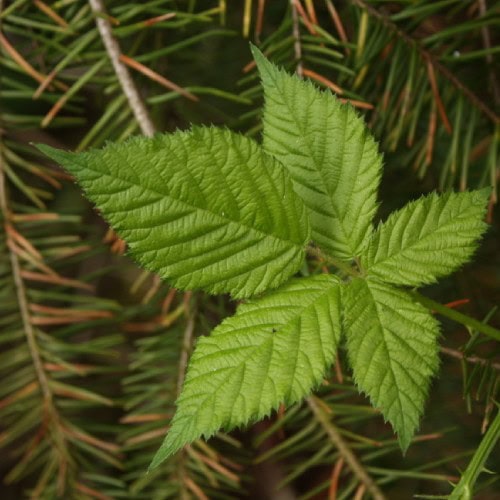
Blackberry plants also get mixed up with poison ivy, thanks to the three-leaflet setup. But blackberry stems are loaded with sharp prickles, while poison ivy’s are smooth (or sometimes hairy, but never thorny).
Older blackberry plants usually have five or seven smaller leaflets, not just three. And when berries show up, those edible dark fruits are a dead giveaway.
11) Wild rose (Rosa acicularis)
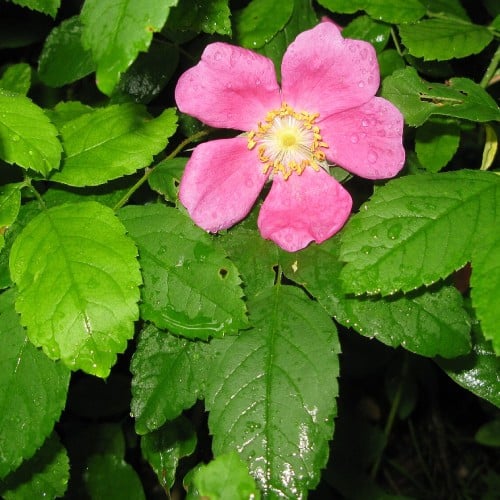
Wild rose can look a lot like poison ivy from a distance, especially since its compound leaves often have three to five leaflets.
But wild roses have serrated leaf edges and thorns along their stems. Plus, they produce pink or white flowers in bloom season, which poison ivy never does that.
12) Hop hornbeam (Ostrya)
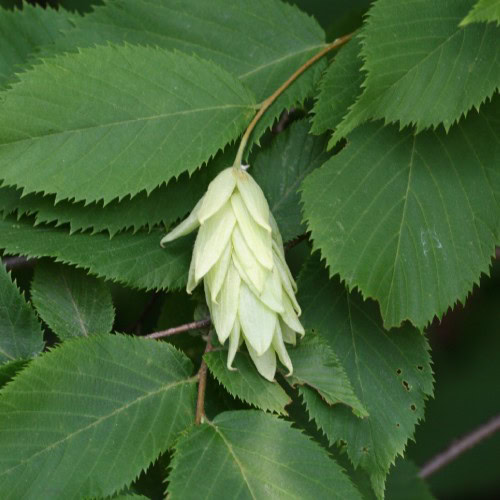
Hop hornbeam’s compound leaves might fool you into thinking it’s poison ivy at first, but the leaves are actually arranged alternately with serrated edges and a longer, more stretched-out shape.
The bark is kind of hard to miss, as it peels away in thin, shaggy strips. And in late summer and fall, you’ll see hanging clusters of papery, hop-like seed pods.
13) Virginia Waterleaf (Hydrophyllum virginianum)
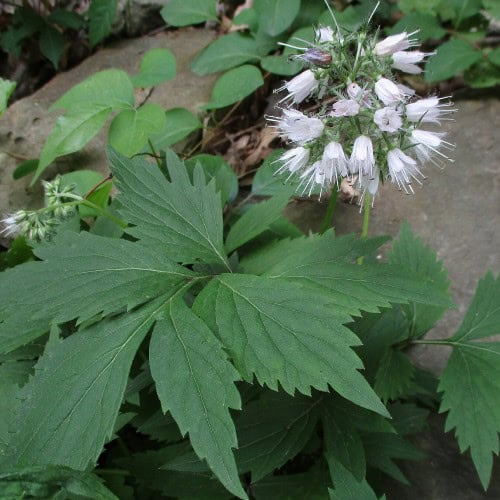
Virginia waterleaf (Hydrophyllum virginianum) sometimes looks like poison ivy when it’s young, as those lobed leaves can show up in threes. You’ll usually find this plant in moist, shady woods in eastern North America.
Look for irregular, jagged leaf edges and white splotches that look like water stains, as poison ivy doesn’t have those. Virginia waterleaf also puts out clusters of white or purple bell-shaped flowers in late spring.
14) Clean weed (Ageratina altissima)
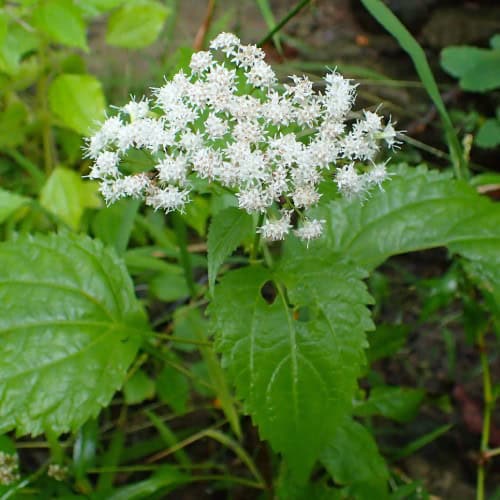
Clean weed (aka tall boneset or white snakeroot) can trip up hikers because of how its leaves grow. Sometimes they appear in groups of three, copying poison ivy’s vibe.
The leaves have big, obvious serrations, and the plant produces clusters of small white flowers in late summer and fall, something poison ivy never does.
15) Bur cucumber (Sicyos angulatus)
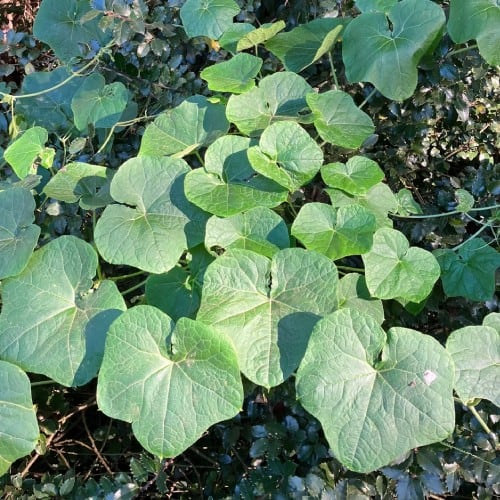
Bur cucumber features compound leaves that could pass for poison ivy’s three-leaflet pattern. The leaves alternate along the vine and have toothed edges, which is a tip-off.
This climber puts out small greenish flowers and weird spiky, bur-covered fruits. Its stems are hairy and less woody than poison ivy, and it climbs with tendrils, something poison ivy doesn’t do.
16) Climbing hydrangea (Hydrangea petiolaris)
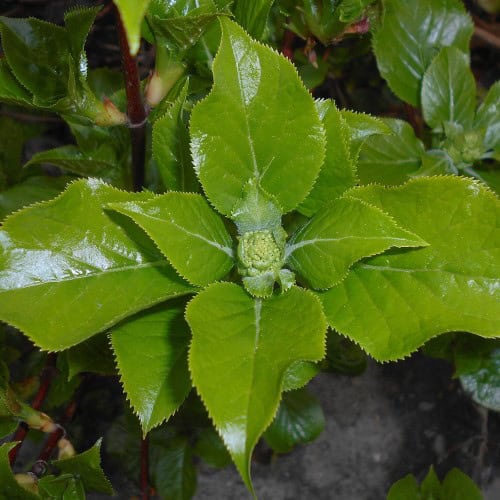
Climbing hydrangea vines have hairy stems that, at first glance, might make you think poison ivy. But look closer: the leaves are opposite, not alternate like poison ivy’s.
The leaves are simple, with mostly smooth edges (sometimes a few shallow teeth), nothing like poison ivy’s three-leaflet, irregular style.
17) Greenbrier (Smilax)
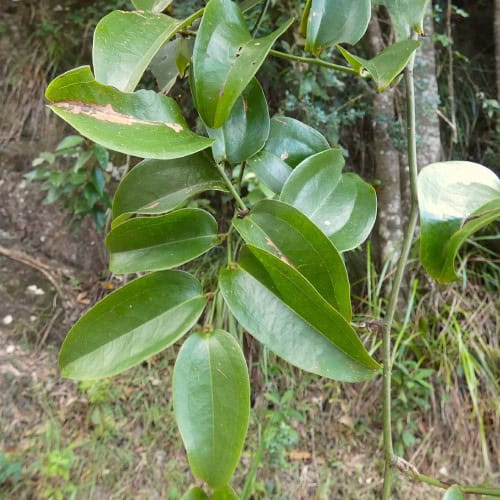
Greenbrier (Smilax species) can fool you with its climbing habit and lush green leaves, but it’s got some clear differences. The stems are thorny, and it climbs with tendrils, unlike poison ivy. The leaves are usually heart-shaped or rounded, not in threes.
Look for those distinctive thorns and, if you’re lucky, small greenish flowers or dark berries.
18) Virginia Sweetspire (Itea virginica)
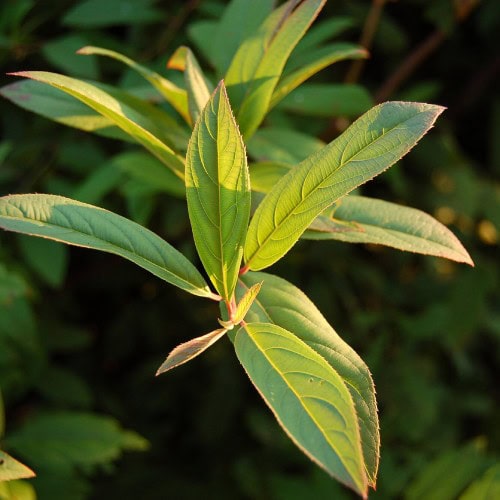
Virginia sweetspire (Itea virginica) sometimes gets lumped in with poison ivy because they grow in the same spots. But there’s nothing toxic about this shrub.
The leaves are alternate and simple, with fine teeth – no three-leaflet arrangement here. In late spring, sweetspire puts out fragrant white flower spikes, making it easy to pick out.
19) Glossy buckthorn (Frangula alnus)
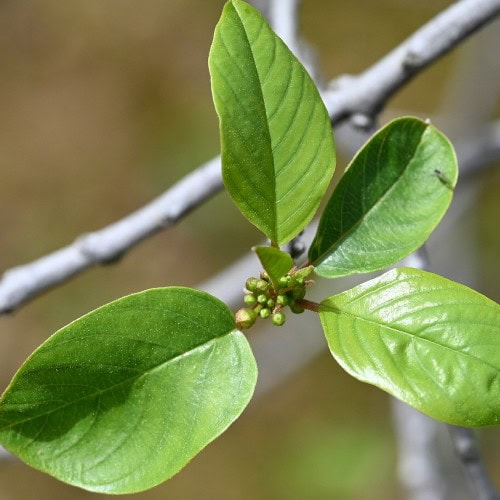
Glossy buckthorn can cause confusion if you’re scanning for poison ivy, but it doesn’t actually have the three-leaflet pattern. Its leaves are oval, shiny, and dark green, growing alternately along the branches.
Glossy buckthorn has smooth leaf edges and veins that curve toward the tip. This invasive shrub also produces small black berries in late summer, which poison ivy doesn’t do.
20) Trumpet creeper (Campsis radicans)
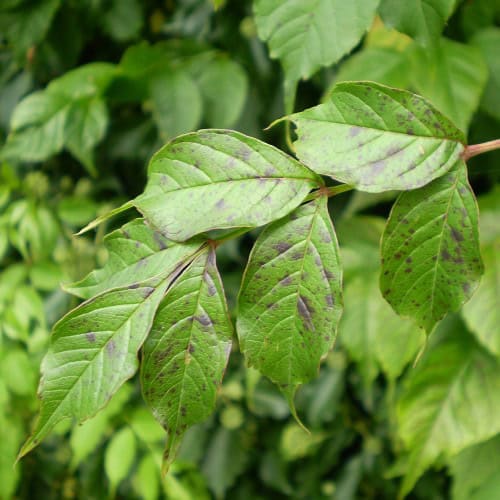
Trumpet creeper has compound leaves grouped in a way that, from a distance, might make you think of poison ivy. But take a closer look and this vine usually sports 7 to 11 leaflets on each stem, which is a lot more than poison ivy’s usual three.
You can spot trumpet creeper by its bold orange to red tubular flowers popping up in summer. Plus, if you notice aerial rootlets running along the stems, that’s another giveaway, as they help the plant cling to fences, walls, or whatever’s nearby.