
Most pond goldfish grow to about 5–9 inches long, while an occasional fish may around 16 inches ore more! If you wonder how big can a goldfish get in a pond, adult size depends heavily on variety and water conditions. The larger end is possible, but it is a poor number to use as your expectation for every fish.
Length is only part of your planning. As your fish grow, they eat more and produce more waste; a spring spawning can add young fish before you realize your pond is getting crowded.
What Size Should You Expect?
You can expect many goldfish in a pond to reach 5–9 inches, with long-bodied varieties offering the greatest potential for exceptional size. Compare fish using the same measuring method each time, since a long tail changes the number you record.
How Large Do Common, Comet, and Shubunkin Goldfish Grow?
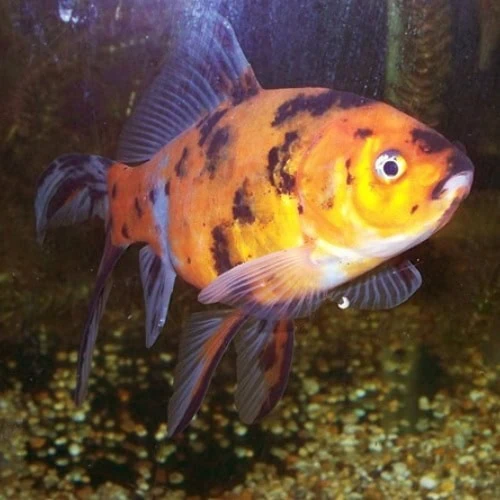
When raising active goldfish in a pond, common goldfish, comets, and shubunkins need plenty of swimming room as adults. You can use the 5–9-inch range as a practical expectation, while allowing for an individual that grows well beyond it.
A comet’s flowing tail makes its total length look especially impressive. If you compare your fish with someone else’s, check whether the measurement includes the tail. These goldfish types also differ in color and fin shape, so appearance alone tells you little about how large an individual will become.
Are Fancy Goldfish Smaller?
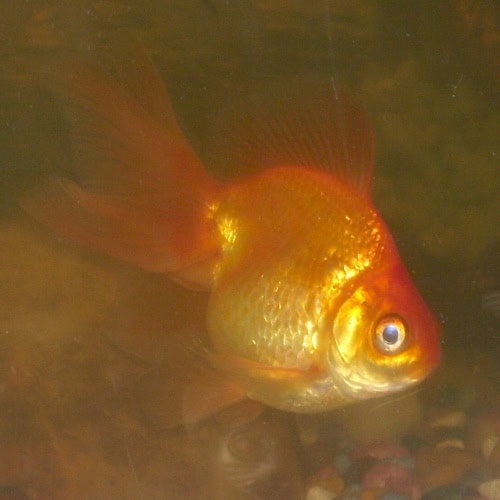
You should expect many fancy goldfish to stay shorter than long-bodied pond varieties. Their rounded bodies and ornamental fins also make them slower swimmers, which affects how comfortably they share a pond with quick common goldfish and comets.
If you keep fancies outdoors, consider the fish’s swimming ability alongside its eventual length. Easy access to food, gentle water movement, and protection from predators are particularly important. Fancy goldfish in ponds need a setup suited to their shape, not just enough space for a shorter fish.
Is a 16-Inch Goldfish Possible?
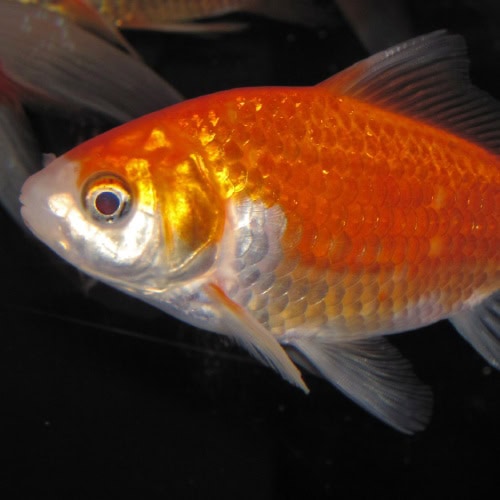
Yes, you can encounter goldfish in a pond reaching around 16 inches long, but that is an uncommon upper end. It is most relevant when you are allowing room for a long-bodied fish’s potential, not predicting the future size of a particular youngster.
You may also see eye-catching length claims that count every inch of a comet’s tail. For your own records, note whether you measure from nose to tail tip or from nose to the base of the tail. Consistency will show you whether your fish is growing, even when its fins change shape.
What Determines a Goldfish’s Adult Size?
Several factors shape overall goldfish growth over time. Your goldfish’s genes set its growth potential, while the pond environment affects how much of that potential it reaches. Space supports healthy swimming, but water quality and food remain essential in any goldfish pond.
How Do Genetics and Pond Conditions Affect Growth?
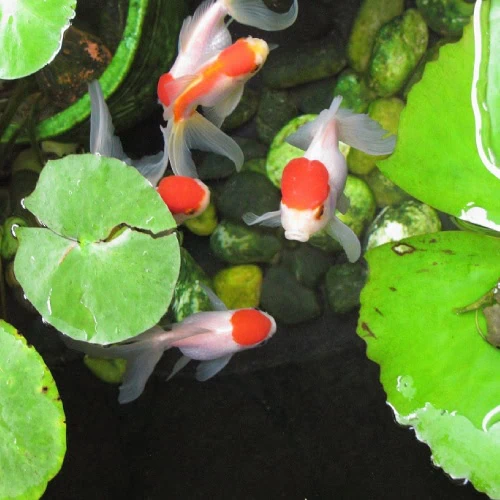
A common goldfish and a compact fancy goldfish will not develop the same body shape under identical care. Individual fish within one variety differ, too, so you cannot assign every youngster a reliable adult length.
A roomy pond gives your fish space to move and helps buffer changes in water conditions. Its usefulness depends on the number of fish living in it and how well its filtration handles their waste. As your goldfish grow, reassess the pond as a home for adult fish, even if it looked spacious when you first stocked it.
Why Do Water Quality, Oxygen, and Diet Matter?
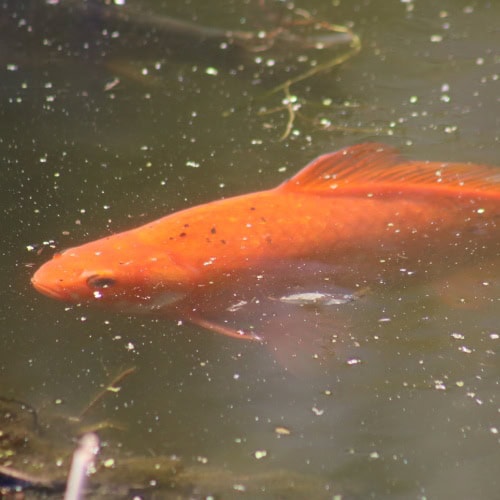
Your fish need clean, oxygenated water to feed and grow well. Waste and uneaten food place a growing load on the pond as the fish get larger; filtration, circulation, and routine water tests help you catch a problem before behavior changes.
Nutritious food supports steady goldfish growth, but extra food left in the pond degrades the water. Feed what your fish consume and adjust for the season and their appetite. Our pond goldfish feeding guide is useful when their activity changes with the water temperature.
Does a Small Pond Keep Goldfish Small?
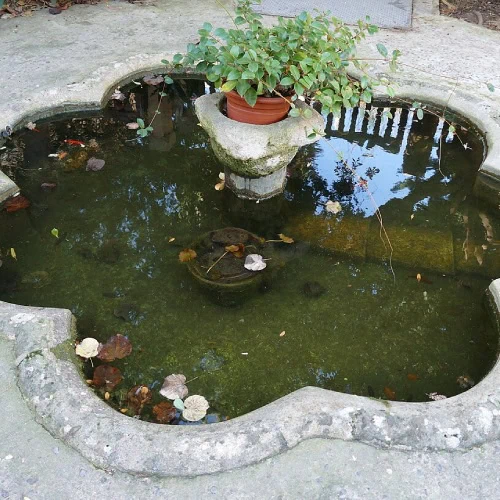
A small pond can restrict goldfish growth when crowding and poor conditions put fish under stress. You should treat slow growth in that setting as a reason to check their care, not as a safe way to maintain small goldfish.
Watch the whole pond as fish mature. If waste builds up quickly or your filter struggles to keep pace, the water volume that supported your young fish may no longer support them comfortably. Reducing crowding or improving the pond’s capacity addresses the problem without relying on stunted growth.
How Quickly Do Pond Goldfish Grow?
You will see the fastest goldfish growth while your fish are young, followed by a slower and less predictable pace as they mature. Temperature, feeding, health, and individual differences make a rigid inch-per-year schedule unreliable.
When Is Growth Fastest?
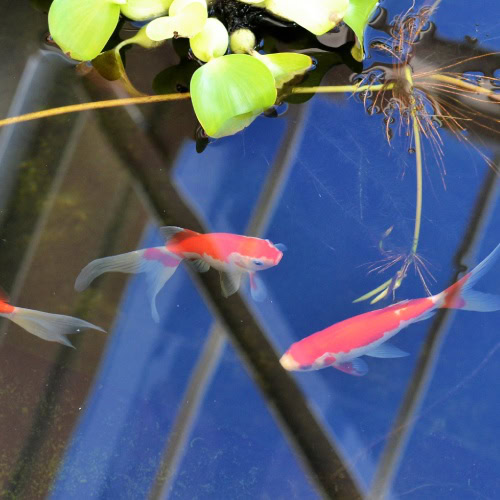
Fry change size quickly, and young goldfish in a pond continue to put on length when conditions support them. In an outdoor pond, you are likely to notice more feeding and growth during the warmer active season, with much less visible change when cold water slows their activity.
Look for a trend across seasons instead of judging your fish against an age chart. Two fish introduced at the same size can diverge without either being unhealthy. A sudden loss of appetite or poor water-test result deserves more attention than a fish growing at its own steady pace.
How Can You Track Size Without Handling the Fish?
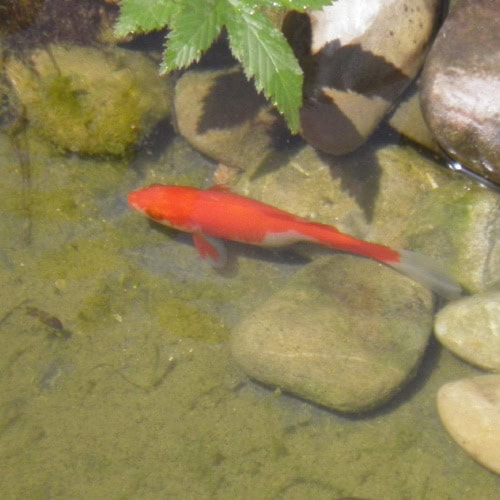
You can photograph a fish from directly above when it swims beside a known feature, such as a straight pond edge. Taking pictures at the same spot each season gives you a useful comparison without netting it.
For a closer estimate, hold a ruler beside the pond edge and wait for the fish to pass near it; keep the ruler out of the water if that makes the view clearer. Record your measurement method along with the date. Reflections, water depth, and a turning fish can distort a single image, so compare several clear views before deciding that its length has changed.
When Does Growth Become a Pond-Capacity Problem?
Your pond reaches a capacity problem when its growing fish population produces more waste or needs more oxygen than the setup can reliably handle. Adult growth raises that demand gradually, while surviving offspring can raise it unexpectedly.
How Can Spawning Increase the Fish Population?
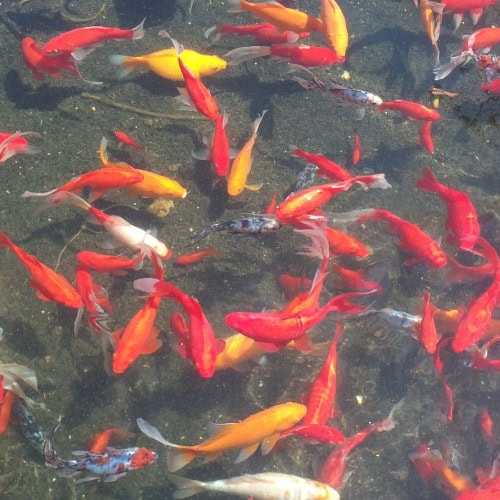
During spawning, you may see goldfish chasing through the shallows and depositing sticky goldfish eggs on plants or other surfaces. Many eggs and fry are eaten, yet enough young fish can survive in sheltered areas to change your stocking level.
Small newcomers are easy to miss among plants. Check for them as the season progresses and include them when assessing how crowded the pond is becoming. Goldfish pond stocking calls for looking at the fish your pond will support as adults, including offspring you intend to keep.
What Signs Suggest the Pond Is Overcrowded?
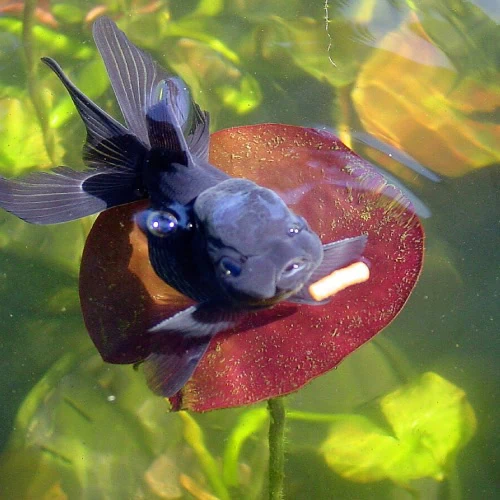
You may notice fish competing hard for food, gathering near a waterfall or aerator, or gulping at the surface, particularly around dawn. Frequent cloudy water, persistent waste buildup, and water tests showing ammonia or nitrite are further reasons to investigate.
Those signs can have more than one cause, so check water conditions and equipment before blaming fish numbers alone. If tests repeatedly deteriorate as your fish grow, account for every adult and youngster, then reduce the stocking load or increase the pond’s effective filtration and aeration.