
You’ll get the most practical nesting shelter from a well-designed wooden birdhouse, while recycled-container projects give you plenty of options for decorative family crafts. A log, cedar picket, or clean offcut offers a useful starting point for a durable backyard project.
Before choosing your design, check your state wildlife agency’s guidance for the birds you hope to host. Your entrance diameter, floor space, and mounting location should suit that species. Include drainage, ventilation, and cleaning access; leave the interior unfinished and skip entrance perches.
For fragile or heat-prone materials, keep your finished piece indoors as decoration. You’ll still enjoy the making without offering an unsuitable nesting space.
1) Natural Log Bird House

With a sound log, you get a substantial wooden shell that blends comfortably into a woodland-style backyard. Its irregular shape gives your project character without extra trim or painted details.
You’ll find this a satisfying challenge if you enjoy working with natural material. Allow for the log’s weight when considering mounting hardware, and keep cleaning access part of your design. Nearby plants that attract birds add food and cover around your nesting area.
2) Log Cabin Birdhouse from 1 Board

Choosing a one-board cabin gives you architectural detail with a manageable lumber commitment. You get the appeal of a miniature building while keeping your material selection straightforward.
Your biggest creative opportunity lies in the proportions and exterior detailing. Keep the nesting chamber suited to your target species, with cabin features confined to the outside. A modest roof overhang adds convincing cabin character while helping shelter the entrance, and restrained trim leaves fewer crevices for dirt to collect.
3) DIY Plastic Bottle Bird House

Treat your plastic bottle birdhouse as an indoor recycling craft. You’ll have an inexpensive surface for experimenting with color and roof shapes, but thin plastic provides poor insulation for a nesting shelter.
For a family activity, you get plenty of decorating freedom without committing to woodworking tools. Keep cut edges inaccessible to young children and leave glitter out of the project. If feeding birds is your goal, your DIY bird feeders need a separate design suited to food storage and regular cleaning.
4) Bird House from Picket Fence

An untreated cedar fence picket gives you a practical starting point for a modest wooden nest box. You’ll work with familiar straight boards and enjoy a weathered garden look as the exterior ages.
Your material choice deserves close attention: use sound wood with a known history, free of preservative treatment or old paint. Thin pickets need particular care around fasteners because splitting weakens the joints. You’ll get useful practice judging grain direction and planning a compact project around available board width.
5) Popsicle Stick Bird House
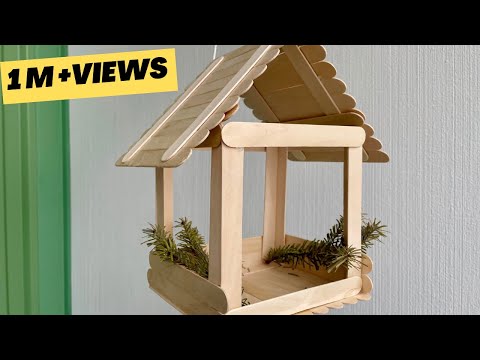
For a small-scale family craft, your popsicle stick birdhouse offers a friendly introduction to layout and repetition. Matching pieces help you explore symmetry without handling heavy lumber.
Keep your finished model indoors, where its thin walls and numerous glued joints stay protected from weather. You’ll have room to experiment with a patterned roof or painted siding without presenting the result as wildlife housing. A removable display base also makes your miniature easier to handle when you rearrange a shelf.
6) Wooden Carved Bird House

Carved exterior details give you a more demanding woodworking project while preserving a conventional nesting chamber. You get to develop tool control through shallow leaf patterns or textured siding.
Your carving should leave adequate wall thickness, especially near the entrance and hardware. Keep projecting ornaments clear of the flight path, and reserve detailed work for surfaces you’ll be able to inspect. This approach gives your craftsmanship room to show without sacrificing access to the box’s working parts.
7) Plant Pot Bird House

A plant pot birdhouse gives you a garden-themed decorative project with an appealing rounded form. You’ll find plenty of visual character in plain terracotta, particularly beside wooden garden accessories.
For this idea, keep your finished piece as decoration: ceramic weight and temperature swings complicate its use as a nest chamber. If you want a functional wildlife project with similar materials, your DIY bird bath offers a different use for a suitable shallow saucer, with attention to stable support and clean water.
8) Tea Pot Bird House

Your teapot birdhouse belongs in the decorative category, where its handle and spout supply the interest. You get a distinctive display piece with very little additional ornament.
A wooden backing gives your arrangement a stronger visual connection to the garden, especially if you enjoy mixing salvaged household objects with timber. Choose a secure display location away from overhead seating. Keep the piece indoors or in a protected display area, and close access to the vessel so it stays a garden ornament.
9) Solar Powered Camera Bird House

Adding a solar-powered camera lets you observe an occupied nest box remotely, reducing your need to approach it. You’ll enjoy this project if the electronics interest you as much as the woodworking.
Your camera arrangement needs protected wiring and maintenance access outside the nesting chamber. Keep the solar panel’s sunlight requirements separate from the box’s need for protection from excessive heat. For another remote-viewing subject, you could position an outdoor camera near a hummingbird bath without putting electronics inside a nest.
10) Coconut Shell Bird House

Working with a coconut shell gives you a compact natural-material craft with a distinctive curved surface. Your finished piece needs little decoration because the shell already has texture and rich color.
Keep it as an indoor ornament unless a species-specific design provides suitable dimensions and maintenance access. Many shells leave you with a cramped chamber, and cracks complicate secure mounting. You’ll get the most creative freedom by treating the shell as a miniature sculpture with a birdhouse-inspired opening.
11) Coconut Husk Bird House

Texture gives your coconut husk birdhouse its appeal, making it an interesting decorative companion to smoother wooden crafts. You’ll work with an irregular surface that rewards a loose, rustic design.
Keep the fibers securely contained and display your finished piece indoors. Loose strands introduce entanglement concerns, while a fibrous exterior makes inspection and cleaning difficult. If you enjoy the material contrast, pair your husk ornament with a plain wooden stand so the shape remains the focus.
12) Cardboard Bird House

Cardboard gives you an inexpensive way to explore birdhouse proportions before committing to wood. Your model becomes a useful design exercise as well as a rainy-day family craft.
You’ll be able to compare roof pitches and test how an opening panel affects access. Keep this version indoors because moisture quickly compromises cardboard’s strength. For children, drawing the intended bird beside the model adds a useful sense of scale and helps connect the craft to real nesting requirements.
13) Dried Gourd Bird House

A fully dried, sound gourd offers you a natural shell with potential for a functional nesting project. Its rounded form also gives your backyard a softer visual alternative to square wooden boxes.
Your choice needs sufficient interior space for the intended species, plus drainage and cleaning access. Check regional guidance before settling on the entrance or placement, particularly for purple martins, whose housing requires specific management. Wear suitable respiratory protection whenever your preparation work produces gourd dust.
14) Upcycled Wood Bird House

Sound, untreated offcuts let you turn leftover lumber into a useful nest box with individual character. You’ll enjoy the design puzzle of matching available pieces to a practical shape.
Use wood with a known history, and check carefully for embedded fasteners before any tool work. Different board tones provide enough decoration without extra attachments. Your remaining scraps also offer material for a separate DIY insect house, provided its design addresses the needs and maintenance of the intended insects.
15) DIY Recycled Coffee Can Birdhouse

A coffee can gives you a bold cylindrical form for an indoor birdhouse ornament. Your decorating options range from a restrained painted finish to a miniature workshop theme.
Keep the metal container out of service as nesting housing because exposed metal transfers heat readily. You’ll also need careful handling around any cut rim. A wooden cradle makes an appealing display feature and gives you a small joinery exercise, while keeping the container’s original shape visible.
16) Plastic Bottle and Grass Bird House

Combining a bottle with dried grass gives you an exercise in surface texture for a decorative model. You’ll see a familiar container take on a completely different appearance beneath a natural-looking covering.
Keep your finished piece indoors and contain every loose grass end. The covering leaves you with the bottle’s underlying heat-management problems, and weathered fibers become difficult to inspect. For your living garden, bird bath landscaping offers a practical setting for ornamental grasses placed clear of the water.
17) PVC Pipe Bird Houses

PVC pipe gives you a specialized fabrication project when you follow an established, species-specific nest-box design. You’ll work with curved components and removable fittings, bringing a different set of challenges from board construction.
Your plan needs explicit provisions for heat control, interior grip, and drainage. Smooth pipe walls deserve particular attention because fledglings need traction to reach the entrance. Choose a design supported by regional wildlife guidance, with cleaning access that remains usable after mounting.
18) DIY Milk Carton Bird House

An empty milk carton gives your family a ready-shaped canvas for an indoor birdhouse craft. Its peaked top suggests a roof immediately, leaving you free to concentrate on the decoration.
Your project suits drawing and painted patterns, with adult handling of sharp tools. A thoroughly washed and dried carton also keeps the display pleasant indoors. Keep its role decorative, since the packaging lacks the durability and dependable cleaning access you need for a maintained outdoor nest box.
19) Birch Bark Bird House

Birch bark gives your wooden birdhouse a distinctive exterior while leaving a conventional box to provide the structure. You’ll get a strong woodland character from the bark’s pale color and horizontal markings.
Use legally obtained bark from fallen material or a responsible supplier; leave living trees intact. Keep the cladding clear of movable panels so your maintenance access stays available. If you’re also attracting birds around a garden pond, choose the nest-box location for the target species’ habitat requirements.
20) DIY Tape Roll & Twig Bird House

Small tape-roll cores and twigs give you an appealing miniature-building project for indoor display. You’ll enjoy arranging uneven natural pieces around a consistent circular form.
The compact scale makes this a decorative craft, with room for experimenting before using larger woodworking materials. Keep the twig ends tidy and use a stable shelf base for easier handling. If you hang your ornament indoors, keep its cord short and securely attached, with the finished piece beyond the reach of young children and pets.