
Blue flowers are honestly pretty rare in nature, as only a handful of flowering plants actually produce true blue blooms. That scarcity makes blue perennial flowers especially prized for anyone hoping to create a peaceful, unique garden. Adding these to your space means you’ll get years of reliable color with minimal maintenance once they’re established.
To get the most out of your garden, you can select blue perennial flowers that bloom in spring for an early burst of color, or opt for blue perennial flowers that bloom all summer to keep the display going through the heat. These plants aren’t just about aesthetics; many varieties serve as excellent blue flowers for bees and other helpful pollinators.
Whether you are planting in a bright, open space that requires blue perennials full sun or searching for blue perennial flowers for shade to liven up a woodland corner, there are plenty of options for your design. From delicate bells to bold, spiky blooms, you’ll find a variety that fits your garden perfectly and keeps coming back year after year.
1) Mertensia virginica (Virginia Bluebells)
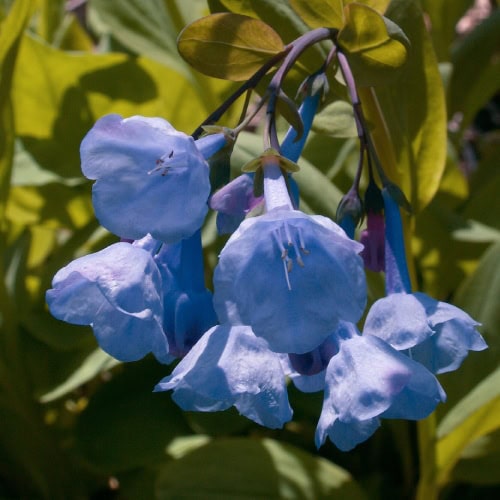
Virginia bluebells are one of those spring essentials that everyone looks forward to as soon as the ground thaws. This North American native is a classic woodland perennial, famous for its unique clusters of nodding, pink buds that open up into soft, sky-blue bell-shaped flowers.
They usually grow about 1 to 2 feet tall and have smooth, rounded, grayish-green leaves. One thing to keep in mind is that they’re “spring ephemerals”, which meansthey put on a spectacular show in the early spring and then go dormant and disappear completely by mid-summer, so they’re perfect for filling gaps before your later-blooming plants take over.
They’re happiest in moist, shady spots with rich soil and are a huge hit with early-season bees and butterflies looking for a snack.
2) Hydrangea macrophylla (Bigleaf Hydrangea)
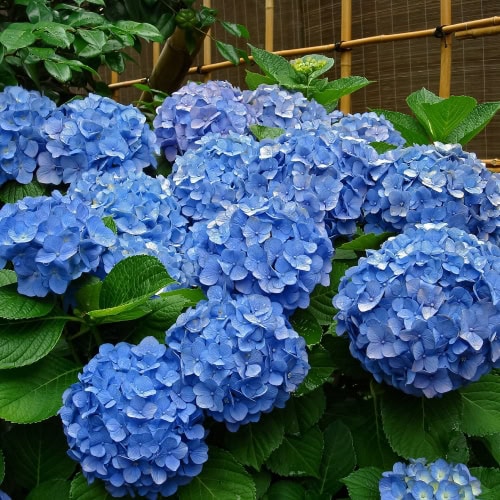
Hydrangea macrophylla (bigleaf hydrangea) can put out some amazing blue blooms, but only if you grow them in acidic soil. This deciduous shrub from Japan does well in zones 4 to 9 and is famous for those big, rounded flower heads packed with blue florets.
Lots of varieties will bloom on old and new wood, so you get flowers through most of the summer. ‘Nikko Blue’ and ‘Game Changer Blue’ are popular for a reason, just keep your soil pH below 6.0 for that intense color.
3) Corydalis flexuosa (Blue Corydalis)
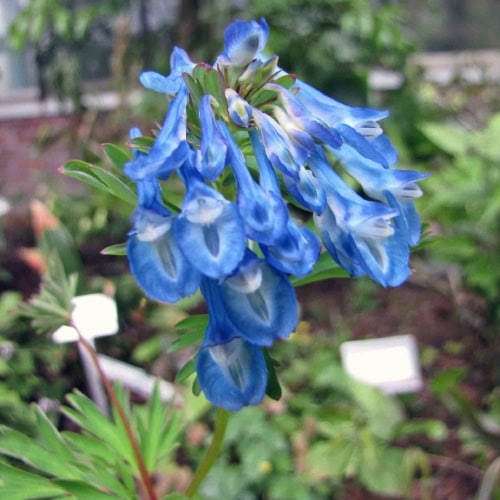
Corydalis flexuosa puts out these gorgeous aqua blue flowers in spring, and sometimes you’ll get a bonus round in late summer or even fall. It’s a compact perennial, topping out at about 12 to 15 inches, with feathery blue-green foliage that forms a nice little mound.
It’s happiest in partial shade, so you can tuck it in as a ground cover or even grow it in containers. Those tubular flowers are a magnet for bees and butterflies, and they look great alongside bleeding hearts and primroses.
4) Baptisia australis (Blue False Indigo)
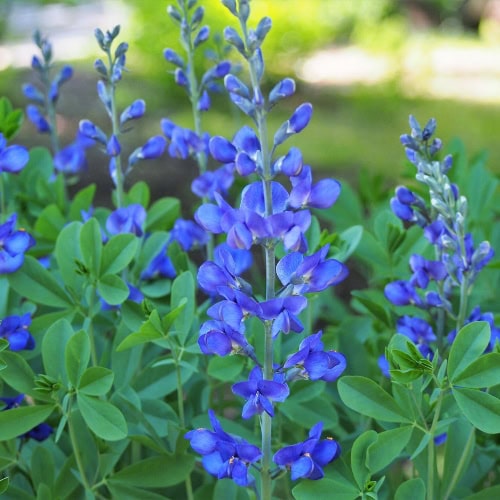
Blue False Indigo brings those bold, deep blue pea-like blooms from late spring into early summer. Since it’s native to North America, it’s incredibly tough and, unlike many other wildflowers, it’s actually very drought-tolerant once those deep roots get settled in.
It grows about 3 to 4 feet tall and wide, eventually looking almost like a small, rounded shrub with beautiful blue-green, clover-like leaves. The flower spikes are a huge favorite for bumblebees and butterflies, and even after the blooms fade, the plant stays attractive with cool, charcoal-black seed pods that rattle in the wind through the fall.
5) Amsonia tabernaemontana (Blue Star)
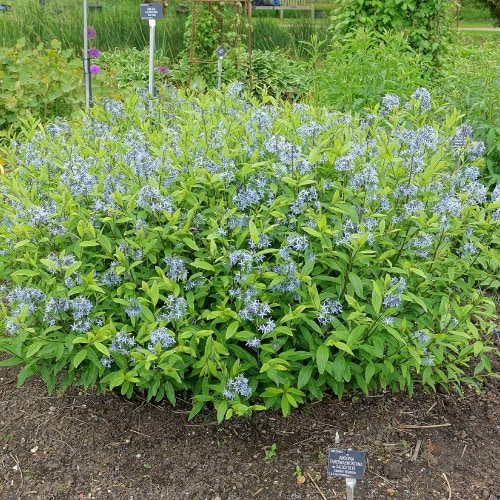
Amsonia tabernaemontana, or Blue Star, is a North American native that puts on a show with pale blue, star-shaped flowers in late spring. It forms upright clumps, usually 1 to 3 feet tall and wide, with slender, willowy leaves.
Honestly, it’s a plant that looks good all year, from those spring blooms to its golden fall color. It’s pretty much a set-it-and-forget-it perennial, thriving in moist woodlands and open fields.
6) Veronica chamaedrys (Speedwell)
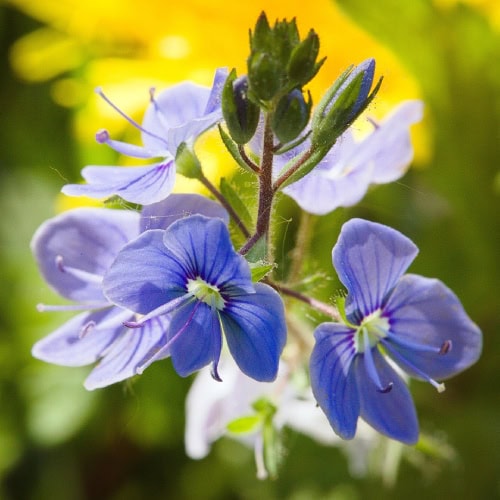
Veronica, or speedwell, sends up elegant spikes of blue, purple, pink, or white flowers through the summer. Upright varieties add height, while the low ones make a nice ground cover.
They like full sun or part shade and don’t ask for much once they’re settled in. Butterflies and hummingbirds are fans, and cultivars like ‘Sunny Border Blue’ are especially reliable.
7) Campanula rotundifolia (Common Harebell)
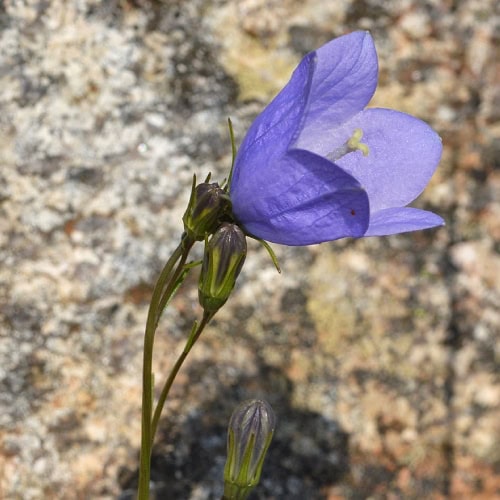
Common Harebell’s nodding, bell-shaped flowers are hard to miss, mostly in a bright, papery blue but sometimes leaning toward a soft violet. While they look incredibly delicate, these are true perennials that are surprisingly toug, and you’ll often find them clinging to rocky cliffs or tucked into open meadows across much of the northern U.S.
Their dainty blooms hang from thin, wiry stems that usually reach about 6 to 18 inches tall, and they have a remarkably long blooming season that can stretch from early summer all the way into the fall.
They’re a perfect choice for rock gardens or the front of a flower bed where their graceful, swaying stems can really be appreciated, and they’re a reliable favorite for small native bees.
8) Phlox paniculata (Garden Phlox)
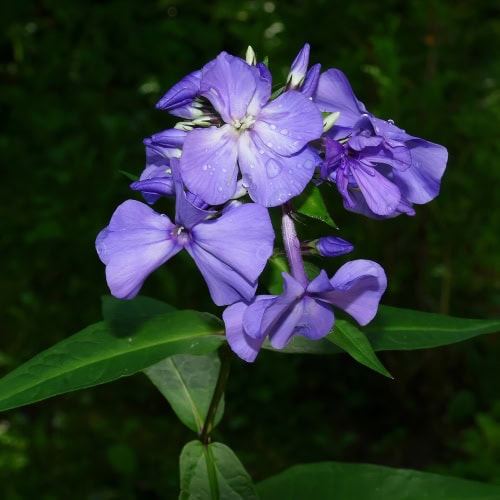
Phlox paniculata (aka garden phlox) lights up borders with blue blooms that add some nice vertical interest. Look for ‘Blue Paradise’ if you want lavender-blue flowers with white centers, or ‘Blue Flame’ for a more compact, fragrant option.
They’re summer bloomers, growing 20 to 36 inches tall, and butterflies and hummingbirds can’t resist them. You’ll get blooms from mid-summer into fall, and the foliage tends to resist disease.
9) Salvia guaranitica (Anise-Scented Sage)
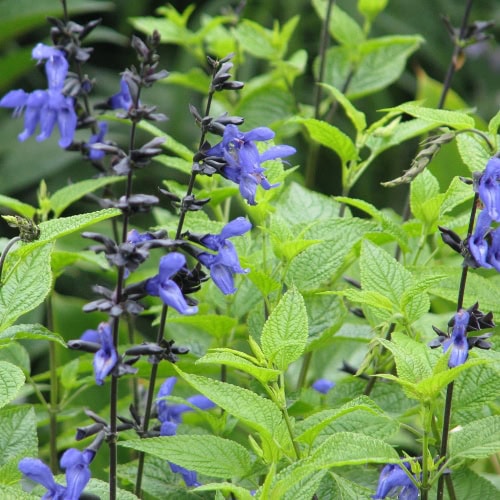
Salvia guaranitica is one of those perennials that really delivers on blue with those cobalt flowers that just keep coming from summer till frost. It can get pretty tall (3 to 5 feet) and has aromatic, anise-scented leaves.
It’s native to Brazil, so in colder places you’ll have to grow it as an annual, but in warmer zones it’s perennial. Hummingbirds and pollinators love the tubular flowers.
Stick it in sunny borders or containers for months of true blue color.
10) Conoclinium coelestinum (Mistflower)
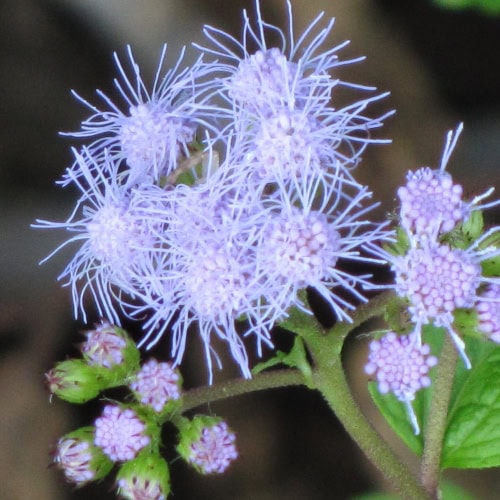
Mistflower is a late-season workhorse! With fuzzy, flat-topped clusters of bright blue or violet flowers, it puts on a spectacular show from late summer right through the first frost. It looks a lot like the annual Ageratum, but this is a hardy North American native that comes back year after year.
It usually grows between 1 and 3 feet tall and has triangular, bright green leaves that provide a nice backdrop for those “misty” blooms. It’s tough, low-maintenance, and unlike many other blue flowers, it actually thrives in moist soil and can handle a bit of partial shade.
Butterflies (especially migrating Monarchs) absolutely flock to mistflower for a late-season snack, and since deer usually leave it alone, it’s a great bet for rain gardens or sunny borders where you want a splash of blue to finish out the year.
11) Campanula (Bellflower)
Campanula is one of the few perennials that really does true blue. The bell- or star-shaped flowers come in blue, purple, and white, blooming from late spring through fall.
There’s a variety for just about every spot – Carpathian bellflower is great for rock gardens, while taller types work in cottage borders. Most are hardy perennials for zones 3 to 8 and don’t need much fuss.
12) Echinops (Globe Thistle)
Globe thistle stands out with its spiky, round flowers in blue, purple, or white from mid-summer into early fall. The blooms are about 1.5 to 2 inches across and sit on tall, stiff stems.
The foliage is deeply cut and a bit prickly, with a silvery underside. It’s drought-tolerant and deer-resistant, and is a big draw for bees, butterflies, and other pollinators.
13) Brunnera macrophylla (Siberian bugloss)
Brunnera macrophylla, or Siberian bugloss, is a real charmer with clusters of small blue flowers in mid to late spring; kind of like forget-me-nots, with little white centers.
It’s a rhizomatous perennial that grows about a foot tall and spreads up to 30 inches. The heart-shaped foliage, sometimes silver or variegated, is a bonus.
Brunnera is happiest in partial to full shade and cooler climates (zones 3 to 9). Just keep the soil moist but well-drained and it’ll stick around for years.
14) Geranium Rozanne (Cranesbill)
Geranium Rozanne is one of the longest blooming hardy geraniums out there. It produces showy violet-blue flowers with white centers from late spring straight through till frost.
It’ll grow to about two feet tall and wide, spreading nicely as a ground cover. It’s pretty heat-tolerant, resists deer and pests, and does well in USDA Zones 5 to 8.
15) Polemonium caeruleum (Jacob’s Ladder)
Jacob’s Ladder is a clump-forming perennial that usually tops out at 18 to 24 inches. Its ferny foliage is arranged in a ladder-like pattern, hence the name.
The blue, cup-shaped flowers with yellow stamens bloom in mid to late spring. It prefers partial shade and well-drained, neutral soil.
Cool summers and moist conditions help it thrive, and it’s a good pick for woodland gardens.
16) Scabiosa caucasica (Pincushion Flower)
Scabiosa caucasica has these unique blue flowers that bloom from late spring through summer. They’re about 2 to 4 inches across, with ruffled petals and a cushioned center.
It grows 18 to 24 inches tall, making it a nice addition to your cottage garden or border. The long stems are great for cut flowers.
Butterflies are regular visitors, and once it’s settled in, it doesn’t need much care. Just give it full sun and well-drained soil.
17) Aconitum (Monkshood)
Aconitum, or monkshood, produces these hooded blue and purple flowers in late summer into fall – they really do look like little medieval hoods!
It’s a stately plant for shady borders, woodland gardens, or spots near streams and ponds. There are compact cultivars like ‘Blue Lagoon’ if you want something smaller for containers.
Just a heads-up: all parts of monkshood are toxic, so be careful if you’ve got kids or pets around.
18) Platycodon grandiflorus (Balloon Flower)
Balloon flower gets its name from those puffy buds that swell up before popping open into star-shaped blooms. Each flower is 2 to 3 inches across with five pointed lobes, usually violet-blue.
You’ll get blooms from early summer through fall if you keep it happy. It forms neat mounds of green foliage, making it a tidy choice for borders, containers, or rock gardens.
19) Gentiana
Gentiana is about as true blue as it gets, with trumpet-shaped blooms from midsummer into early fall. The tubular flowers can be up to 2 inches long and show up along the stems for a pretty striking effect.
It usually grows 2 to 2.5 feet tall and spreads up to 18 inches. Gentiana likes full sun to partial shade and moist, well-drained soil. It’s best in hardiness zones 4 through 7.
20) Lithodora diffusa (Heavenly Blue)
Lithodora diffusa is one of those low, evergreen groundcovers that just lights up a garden with a burst of blue. It’s originally from the Mediterranean and usually tops out around 6 to 10 inches, but it can really spread, sometimes up to 30 inches wide. Honestly, it’s perfect for tucking into rock gardens or letting it spill over a slope.
The plant puts out these small, funnel-shaped blue flowers that keep coming through late spring and well into summer. Some folks really love the ‘Grace Ward’ variety for its deep, intense blue, while ‘Heavenly Blue’ is a bit softer in color. If you’ve got a sunny spot with soil that drains well, Lithodora diffusa is likely to be pretty happy there.