
White perennial flowers bring a timeless look to your garden, offering blooms that pop back up each year with little fuss. They’re a great way to add brightness and contrast, making them essential for white flowers landscaping or anyone looking for reliable white flowers for garden designs. Whether you’re mixing them with bold colors or going for a peaceful, all-white vibe, these plants provide lasting elegance with minimal maintenance.
For those with bright, open spaces, there are plenty of white perennial flowers full sun varieties to explore. You can start the year with white perennial flowers that bloom in spring, like bleeding hearts, and follow them up with white perennial flowers that bloom in summer such as Shasta daisies or peonies. These classics are perfect if you’re aiming for that charming white cottage garden flowers look.
From delicate shade-lovers like astilbe to showy sun-seekers, white perennials fit every garden style and light situation. Whether you’re into formal layouts or those dreamy moon gardens that glow at dusk, these plants are hard to beat for year-after-year beauty.
1) Shasta Daisy (Leucanthemum ×superbum)
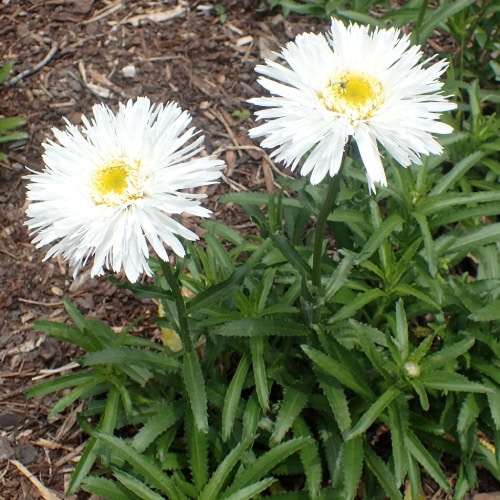
Shasta daisies are all about those crisp white petals and sunny yellow centers, kind of the classic daisy look that never really goes out of style. These hardy perennials love full sun and well-drained soil, so they’re not too picky about where you put them.
They’ll come back year after year, and once they’re settled in, you don’t have to do much. They’ll slowly spread out, filling up your beds with cheerful blooms through summer. Plus, Shasta daisies are great for cutting if you like bringing flowers indoors.
2) Peony (Paeonia)
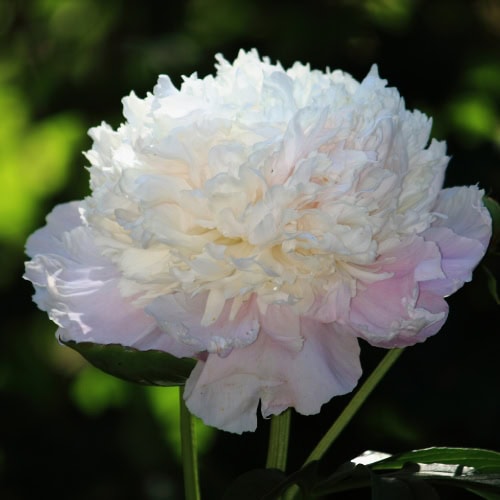
Peonies are one of those flowers that just stop you in your tracks, especially the white ones. The blooms are huge, often fragrant, and can be ruffled or double, depending on the type. They show up in late spring or early summer and look downright luxurious.
What’s cool is that peonies can live for decades with hardly any attention. Their dark green leaves look good all summer and sometimes turn reddish or gold in fall, which is a nice bonus.
3) Candytuft (Iberis)
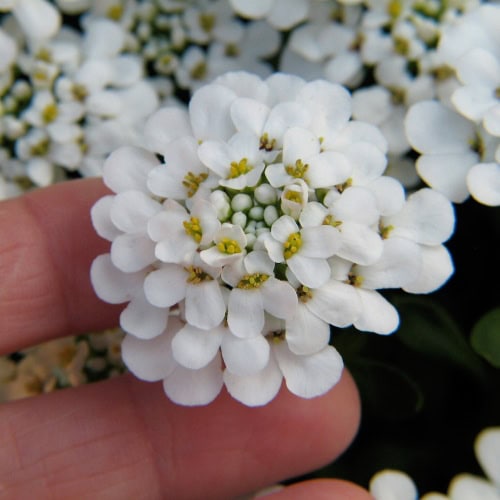
Candytuft is a tidy little evergreen perennial that throws out clusters of small white flowers in late spring and early summer. It stays pretty compact, usually no more than a foot tall, so it’s perfect for edges, borders, or rock gardens.
It’s happiest in full sun but can handle some shade, and once it settles in, you won’t have to fuss over it. Candytuft is drought-tolerant and even brings in butterflies.
4) White Anemone (Anemone nemorosa)
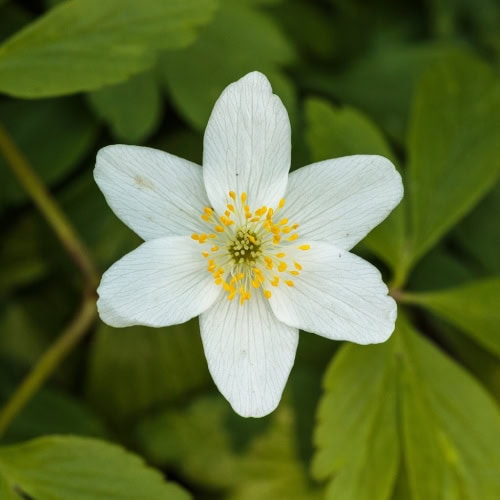
White anemones have a delicate, almost ethereal look, and they can really light up shadier spots. They spread gently, making soft carpets in woodland gardens. Most types stay under a foot tall, but some Japanese varieties can get much taller.
Their white petals and yellow centers show up in spring or fall, depending on the type. They like moist, well-drained soil and partial shade. Once they’re going, they don’t need much from you.
5) Columbine (Aquilegia)
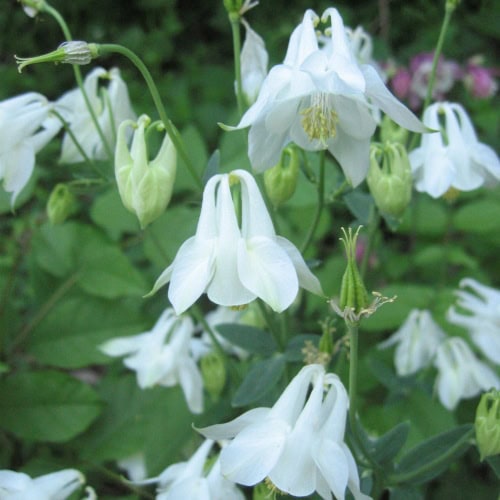
White columbine (Aquilegia) adds a little whimsy with its spurred flowers and soft, lacy foliage. The blooms appear in spring and early summer, and they look especially nice in shaded spots.
These perennials are pretty adaptable (zones 3 through 9) and work well in woodland gardens, borders, or even containers. Hummingbirds love them, and you won’t have to do much once they’re established.
6) Lily of the Valley (Convallaria majalis)
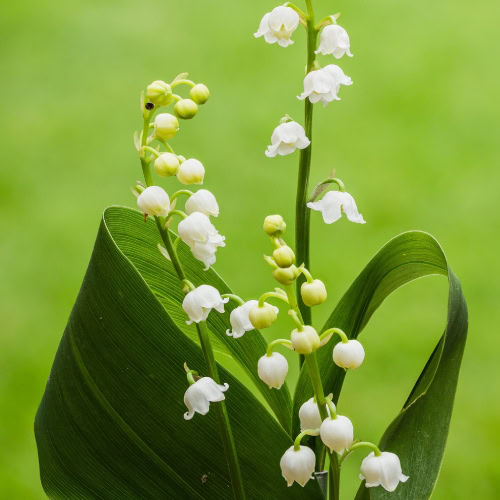
Lily of the Valley is all about those tiny, bell-shaped white flowers that dangle from arching stems in spring. The scent is sweet and unmistakable!
It thrives in partial to full shade, which is great if you have tricky spots where other flowers won’t grow. It spreads easily, forming a dense carpet that keeps weeds at bay. Once it’s in, it’s pretty much on autopilot.
7) Bleeding Heart (Lamprocapnos spectabilis)

White bleeding heart is just lovely, with heart-shaped blooms that hang delicately from arching stems in early spring. It’s a classic for shady spots, especially under trees or in woodland gardens.
Plant it in moist, rich soil and keep it watered during its growing season. It’ll go dormant when the heat hits, but don’t worry, it’ll be back next year. It’s also deer-resistant and pairs nicely with ferns or hostas.
8) White Hydrangea (Hydrangea paniculata ‘Grandiflora’)
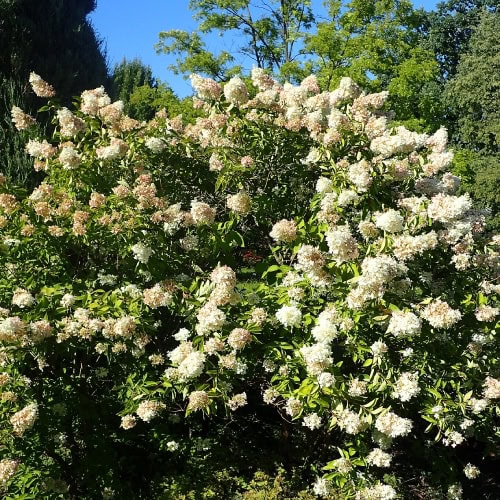
White hydrangeas are hard to beat for big, showy blooms that last from summer into fall. They like partial shade and moist, well-drained soil.
‘Annabelle’ is a popular choice for its long-lasting white flowers, but there are also panicle and oakleaf types that might pick up a hint of pink or green as they age. With their huge flower clusters, white hydrangeas are real standouts in any garden.
9) Japanese Anemone (Eriocapitella japonica)
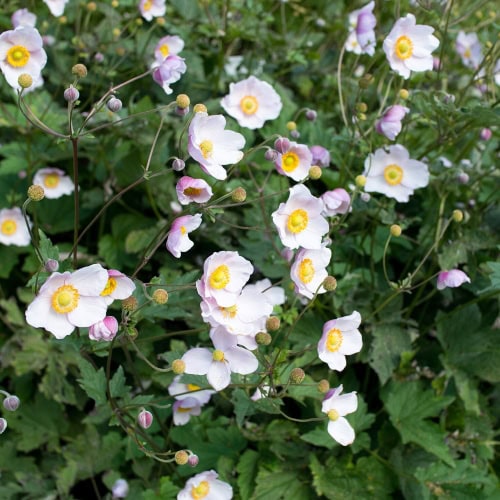
Japanese anemone is a late-season bloomer, sending up elegant white flowers from late summer into fall, just when most other perennials are winding down. The yellow centers and tall, wiry stems give them a graceful, airy look.
They’re happy in moist, well-drained soil and partial shade, and once they’re established, they’ll spread nicely. The ‘Honorine Jobert’ variety is especially striking and can bloom for weeks.
10) White Coneflower (Echinacea purpurea ‘White Swan’)
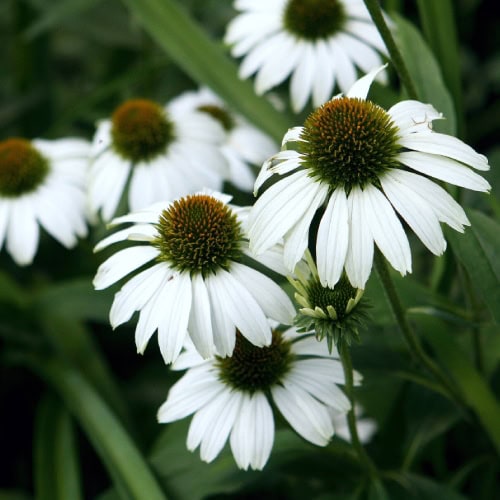
White Coneflower (Echinacea) stands out with its bright white petals and golden centers. Native to North America, it loves full sun and brings in pollinators all summer long.
It’s sturdy, doesn’t need staking, and is super low-maintenance. White Coneflower is great for cutting gardens, and the blooms dry well for herbal uses too. It grows reliably in zones 3 through 9.
11) White Astilbe (Astilbe japonica)
White astilbe lights up shady spots with feathery plumes in early to midsummer. It likes moist, well-drained soil and partial shade, so it’s a winner for woodland gardens or spots near water features.
The foliage forms a nice mound, and you can plant astilbe among hostas or in groups for a soft, layered look. The flowers are lovely fresh or dried.
12) White Phlox (Phlox subulata)
White phlox gives you options! Creeping types stay low and bloom in spring, covering the ground with white flowers, while taller garden phlox bloom mid-to-late summer with fragrant clusters.
The taller kinds draw in hummingbirds and butterflies and come in disease-resistant, compact forms that work well in borders or cottage gardens.
13) White Salvia (Salvia apiana)
White Salvia, especially Salvia nemorosa ‘White Profusion’, puts out pure white flower spikes from late spring through summer. It’s a compact plant, about 16 to 20 inches tall, and has a nice rounded shape. Full sun is best, and it’s hardy in zones 3 through 8.
It’s a pollinator magnet but not a favorite of deer or rabbits. Deadhead the spent flowers, and you’ll get more blooms.
14) White Gaura (Gaura lindheimeri)
Gaura, sometimes called wandflower or bee blossom, has delicate white blooms that look like little butterflies on tall, airy stems. It brings a sense of movement to borders and containers.
It flowers from late spring to fall and handles heat, drought, and humidity without complaint. Compact types reach about 12 to 24 inches tall, so they fit nicely in rock gardens or perennial beds.
15) White Iris (Iris germanica)
White iris is elegant and dependable, with blooms from late spring into early summer. It’s hardy in zones 3 to 9 and needs a cold winter to really thrive.
You’ve got options here: bearded, Siberian, and dwarf crested types all come in white. Siberian iris is especially tough, and dwarf crested makes a great ground cover for part-shade areas.
Once established, irises don’t ask for much and bring in pollinators too.
16) White Foxglove (Digitalis purpurea)
White Foxglove puts up tall spires of bell-shaped flowers, adding vertical drama to your beds. The blooms are pure white, sometimes with faint speckles inside.
It’s usually grown as a biennial, but it can self-seed and stick around for years. Plants get 2 to 4 feet tall, are deer-resistant, and do best in zones 4 through 9.
17) White Wild Indigo (Baptisia alba)
White wild indigo is one of those stately, long-lived perennials that really anchors a garden bed. This North American native starts the season with tall, elegant spikes of creamy white, pea-like flowers that stand out beautifully against its clean, blue-green foliage. It’s incredibly tough and drought-tolerant once those deep roots get settled, so you don’t have to fuss over it much.
It usually grows about 3 to 4 feet tall and wide, giving it a shrub-like presence. Even after the blooms are gone in early summer, it stays interesting with cool, charcoal-black seed pods that rattle in the breeze all through the fall. It’s a great choice for a sunny spot where you want something low-maintenance but high-impact.
18) Culver’s Root (Veronicastrum virginicum)
Culver’s root is an absolute standout if you’re looking for some vertical drama in the garden. This native perennial produces unique, candelabra-like spikes of tiny white flowers that can reach up to 5 feet tall, making it a perfect backdrop for shorter plants.
It blooms in mid-to-late summer, and you’ll notice it’s a massive hit with honeybees and butterflies who love the nectar-rich spikes.
The leaves grow in neat whorls around the stem, giving it a very structured, clean look that holds up well even before the flowers arrive. It prefers full sun and soil that stays a bit moist, so it’s a reliable choice for rain gardens or damp borders where it can really stretch out and reach its full height.
19) White Turtlehead (Chelone glabra)
White turtlehead is a fun, late-season bloomer that gets its name from the unique shape of its flowers, as they look just like the heads of snapping turtles peeking out from the stems.
This North American native is a lifesaver for the garden in late summer and fall when other plants are starting to wind down, offering clusters of creamy white, hooded blooms that stay vibrant for weeks.
It’s a moisture-lover through and through, so it’s the perfect pick for those soggy spots, pond edges, or rain gardens where other plants might struggle. It usually grows about 2 to 3 feet tall with sturdy, dark green leaves, and it’s a primary host plant for the Baltimore Checkerspot butterfly, making it a must-have for anyone looking to support local wildlife.
20) Bellflower (White Campanula)
White Campanula, better known as bellflower, shows off these delicate, bell-shaped blossoms that stick around from late spring right into early fall. It’s a tough little perennial, happy in full sun but honestly, it’ll cope just fine with a bit of shade too. The deep green leaves really set off those crisp white flowers, don’t they?
You’ll run into favorites like ‘White Clips’ or ‘Pearl White,’ both of which grow in neat little mounds. They’re just right for rock gardens, borders, or even tucked into containers if that’s your thing. Maintenance? Pretty minimal, honestly. Plus, they’re deer resistant, which is a relief if you’ve got hungry visitors wandering through.