
Shady corners in the garden can be a bit of a puzzle, but there are plenty of wildflowers that like shade and actually prefer those low-light nooks. Lots of folks figure that if the sun’s hiding, you’re stuck with a bland patch of green, but starting a wildflowers garden can prove otherwise. These adaptable plants have learned to make the most of life under tree canopies, along chilly north borders, and anywhere the sun’s not exactly generous.
If you know which varieties to pick, you can turn those dim spots into vivid, lively spaces using various wild flowers garden ideas that’ll draw pollinators and don’t need a ton of fussing over. Whether you’re after early spring color or something that’ll hang on until the last gasp of fall, shade-tolerant garden wild flowers deliver a surprising range of colors and textures.
By incorporating specific wild flower planting ideas, you might end up with a woodland wonderland or just fill in a stubborn patch where nothing else seems to work. Ultimately, wild flower landscaping is the perfect way to bring life to the most neglected parts of your yard.
1) Virginia Bluebells
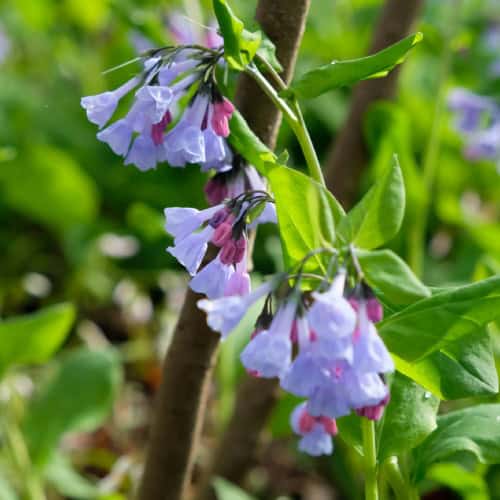
Virginia Bluebells (Mertensia virginica) are native perennials that really come alive in partial to full shade. These spring ephemerals push out clusters of bell-shaped flowers, starting pink, then shifting to blue as they open up.
They’re happiest in moist, rich soil and usually top out around 16 to 24 inches tall. If you’re patient, Virginia Bluebells will spread out under trees and along shady borders, eventually forming those gorgeous colonies you see in woodland gardens.
2) Golden Ragwort (Packera aurea)
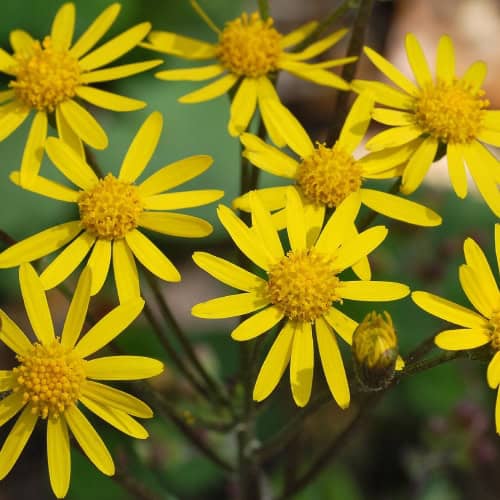
Golden Ragwort has a knack for lighting up shady corners with its bright yellow, daisy-like blooms that pop up early in spring. This native perennial tends to form thick mats of heart-shaped, semi-evergreen leaves, and honestly, it’s a pretty solid choice if you’re after groundcover in moist, partly shaded areas.
It’s surprisingly tolerant of shade compared to most ragworts, but you’ll see it do just fine in anything from full sun to dappled light. Golden Ragwort spreads by rhizomes and seems happiest in wet to moderately moist soils with plenty of organic matter mixed in.
3) Foamflower (Tiarella cordifolia)
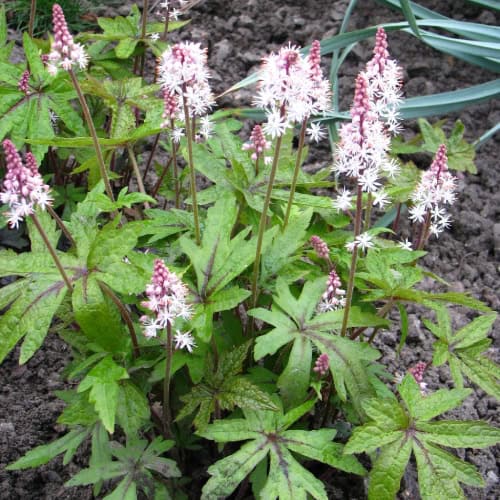
Foamflower is one of those native wildflowers that’s just made for shady woodlands. It stays low, about 8 inches tall, and spreads gently by runners, making for a soft ground cover.
The airy white or pale pink flowers pop up in spring, floating above heart-shaped leaves. Foamflower is happiest in moist, humus-rich soil, somewhere between part and full shade. It’s not fussy, either, as once it’s in, it’s pretty much set!
4) Blue Cohosh (Caulophyllum thalictroides)
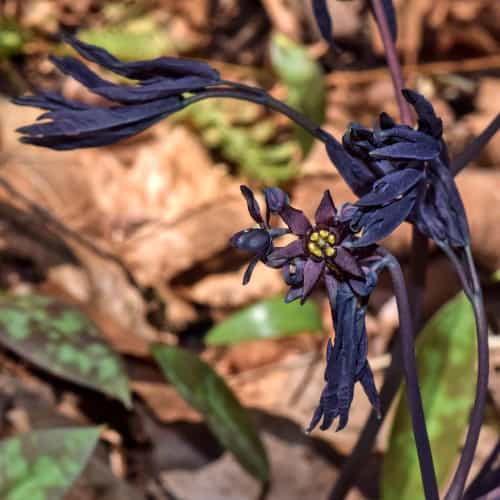
Blue Cohosh is a native perennial that’s right at home in shaded woodlands with rich, moist soil. Its blue-green foliage emerges with a hint of purple in spring, and the plant puts out small, yellow-brown or greenish flowers in mid to late spring.
Later, you’ll spot clusters of blue, berry-like seeds, which are pretty striking, but don’t eat them (they’re poisonous!!). Depending on where you plant it, Blue Cohosh can grow anywhere from 1 to 4 feet tall.
5) Jacob’s Ladder (Polemonium caeruleum)
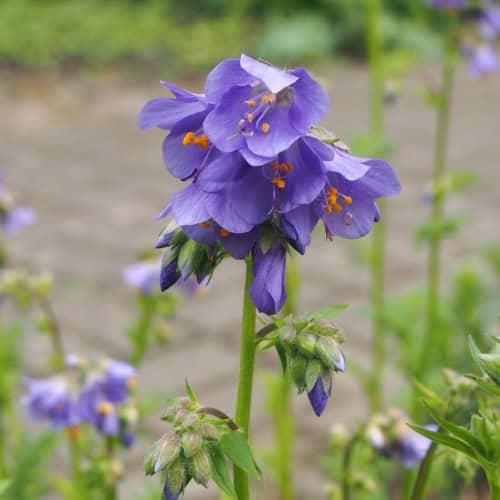
Jacob’s Ladder is a solid pick for shady gardens, especially if you like a bit of blue. This clump-forming perennial sends up cup-shaped blue flowers with yellow centers from late spring into early summer.
Its name comes from the way its leaves are arranged, like rungs on a ladder, with up to 27 little leaflets. It grows 18 to 24 inches tall and prefers well-drained, neutral soil that stays a bit damp. Jacob’s Ladder is happiest in partial shade and cooler temps.
6) Woodland Phlox (Phlox divaricata)
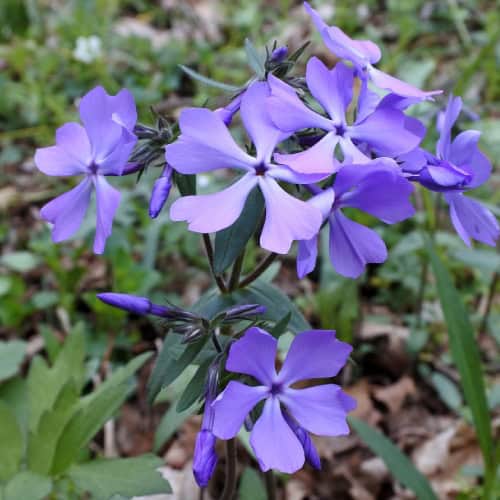
Woodland Phlox is another native that just loves shade, especially in eastern North America. It’s a low-grower, only 6 to 15 inches tall, and spreads into soft mats of foliage.
Mid to late spring brings clusters of fragrant, five-petaled flowers in shades of lilac, blue, or lavender. Butterflies, bees, and even hummingbirds can’t resist.
Give it partial to full shade and moist, well-drained soil with plenty of organic matter, and it’ll be happy.
7) Bleeding Heart (Dicentra spectabilis)
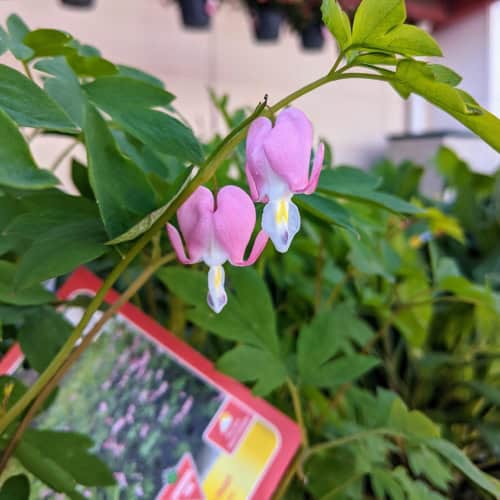
Bleeding heart is hard to miss, with its signature heart-shaped pink and white flowers dangling from arching stems. This perennial is a natural fit for woodland gardens and shady spots with dappled light.
It’s actually native to eastern Asia, but it pairs beautifully with ferns and columbines. Bleeding heart blooms in late spring, and if you’ve got moist, loose soil, it’ll form impressive clumps in your shaded borders.
8) Dutchman’s Breeches (Dicentra cucullaria)
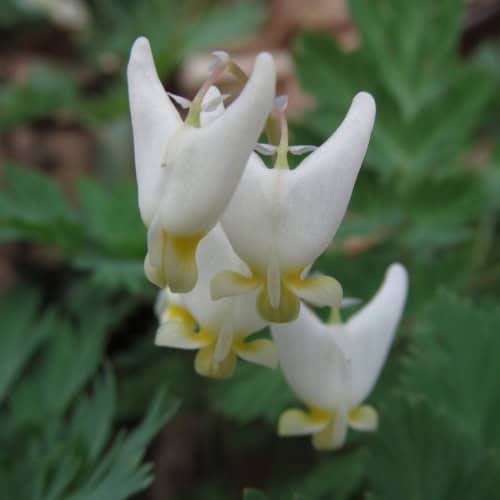
Dutchman’s Breeches is right at home in the shady, moist woodlands of eastern North America. Its quirky white flowers, shaped like upside-down pantaloons, show up in early to mid spring on arching stems.
The plant’s ferny, blue-green foliage emerges alongside other spring ephemerals. It likes humus-rich, slightly acidic soils, and can even handle a bit of clay.
By late summer, Dutchman’s Breeches goes dormant, so it’s a good pick if you want something that pops up and then quietly disappears.
9) Toad Lily (Tricyrtis hirta)
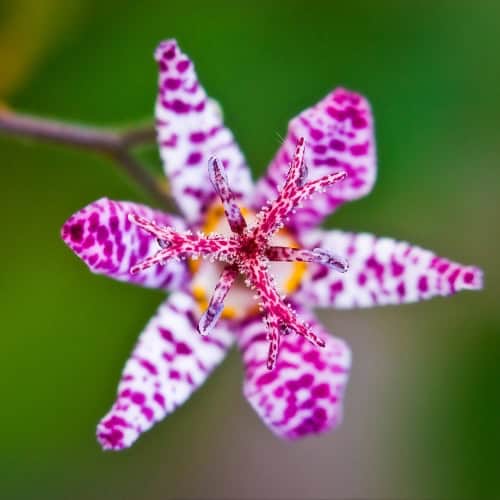
Toad Lily is a real treat for the late season, with its exotic, orchid-like flowers showing up from late summer into fall. The blooms are tiny but packed with intricate spots and patterns; definitely a conversation starter.
This Japanese native is perfectly happy in partial to full shade, especially with moist, rich soil. Plant it with hostas or ferns for a layered woodland effect.
Pollinators like bees and butterflies love it, too. Once it’s settled in, Toad Lily doesn’t ask for much.
10) Jack-in-the-Pulpit (Arisaema triphyllum)
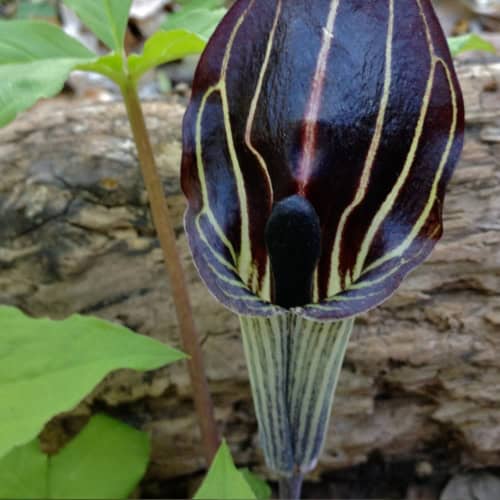
Jack-in-the-Pulpit is one of those wildflowers that’s just plain fun to spot in the woods. Native to eastern North America, it grows about 1 to 2 feet tall and features a funky flower structure: a spadix (“Jack”) tucked inside a hooded spathe (“pulpit”).
It usually puts out one or two leaves, each split into three leaflets, shading the flower underneath. When early fall rolls around, clusters of bright orange-red berries appear, giving the plant a second act after its spring bloom.
11) Columbine (Aquilegia canadensis)
Wild columbine is a charmer for partial to full shade, and it’s a go-to for woodland gardens. Its red and yellow bell-shaped flowers nod on slender stems in spring, making it a magnet for hummingbirds.
It’s not picky about soil, just average, well-drained, and moderately moist works. Even though it prefers shade, established columbine can handle full sun if you keep it watered.
12) Lungwort (Pulmonaria officinalis)
Lungwort is a bit of a secret weapon for early spring color in the shade. Its pink and blue flowers can show up as early as March, which is always a welcome sight.
The foliage is pretty interesting, too, with big leaves with silvery spots and blotches that keep things lively after the flowers fade. Lungwort’s great for brightening up those dark corners where other perennials just don’t seem to thrive.
13) Purple Coneflower (Echinacea purpurea)
Purple Coneflower is usually a full sun kind of plant, so it’s not really for deep shade. It’s a North American native that likes well-drained soil and lots of light, growing up to 4 feet tall.
If you’ve got a spot with 4 to 6 hours of sun, you might get away with it, but honestly, it’ll look and bloom better with more sun. The purple-pink flowers with raised centers are a summer highlight for pollinators.
14) New England Aster (Symphyotrichum novae-angliae)
New England Aster can handle a bit of light shade, but honestly, it’s at its best in full sun. This native perennial can get pretty tall (up to 6 feet) and produces purple to pink daisy-like flowers from late summer through October.
It’s got hairy stems and leaves that clasp the stem, and pollinators love it when other flowers are fading out. Rich, well-draining soil is best.
15) Virginia Stock (Malcolmia maritima)
Virginia Stock is more of a sun-lover than a shade plant, so it’s not really suited for dark garden corners. This Mediterranean annual from the mustard family puts out fragrant pink, purple, white, and lavender blooms from spring to fall.
It stays low (only around 6 to 12 inches tall) and is great for edging or rock gardens. It’s easy to start from seed, but make sure it gets plenty of sun and well-drained soil.
16) White Wood Aster (Eurybia divaricata)
White Wood Aster is one of those tough natives that actually prefers partial to full shade. It’s a solid choice for woodland gardens where other flowers just won’t bloom. The plant puts out lots of small white flowers with yellow centers (that turn red after pollination) in late summer and fall.
Stems can reach up to 2.5 feet, and it’s especially useful in dry shade. Plus, pollinators love it, and it’s about as low-maintenance as they come.
17) Solomon’s Seal (Polygonatum biflorum)
Solomon’s Seal is a North American wildflower that’s almost made for shaded gardens. Its arching stems (1 to 3 feet tall) are lined with neat rows of leaves.
Come late spring, you’ll notice small tubular flowers in colors of yellow-green or white, dangling beneath the stems, and later on, bluish-black berries show up in fall.
It’s adaptable, handling anything from half-shade to full shade and average, slightly moist soil. Even drier shade isn’t a dealbreaker, so it fits right into woodland plantings.
18) Wild Ginger
Wild ginger is a humble but lovely ground cover from eastern North America, and it’s totally fine with shady spots. It creeps along by rhizomes, creating dense mats of glossy, heart-shaped leaves, usually about 3–6 inches wide.
In spring, you might spot its tiny, purplish-brown flowers hiding under the leaves. Wild ginger does best in rich, moist soils, especially under deciduous trees, so it’s a winner for those shadowy garden areas.