
Shady corners in the garden really don’t have to be boring or empty. Actually, plenty of gorgeous shade wildflowers are perfectly happy in low-light spots, bringing bursts of color and texture to those dim patches under trees or along a north-facing fence.
If you are looking for wildflower garden ideas, these plants are pros at thriving beneath a canopy, making them a great place to start when you want to liven up your space!
Incorporating wildflowers for shade is a fantastic way to add some vibrancy and a natural feel to places where sun-lovers just won’t make it. Whether you are planning a specific wildflower garden bed or exploring broader wildflower landscaping, these shade loving flowers offer something for just about every garden style.
From dainty spring blooms to bold, leafy groundcovers, there are many wild flower planting ideas to help you create an easy wildflower garden. Plus, these tough plants aren’t just pretty; they’re also a big help for pollinators and local wildlife, giving your garden a little ecosystem boost!
1) Virginia Bluebells
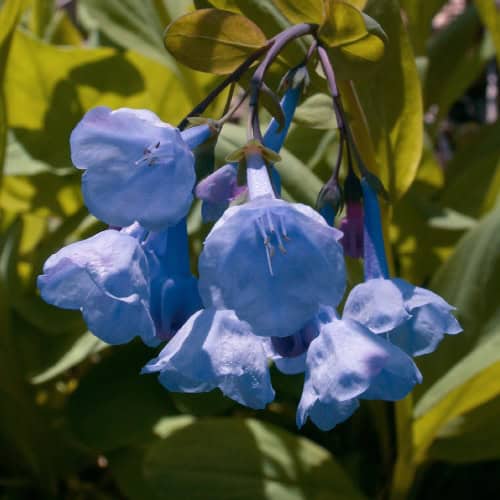
Virginia Bluebells are one of those fleeting spring wildflowers native to eastern North America. They’re happiest in partial to full shade with moist, rich soil; think that crumbly, dark stuff you find under old trees.
The flowers start out as pink buds in early spring, then shift to a dreamy blue as they open up. It’s a neat little color trick that really pops in a shady spot.
They usually top out around 16 to 24 inches tall and are a magnet for bees and butterflies hunting for early nectar. Hardy from zones 3 to 8, they’re a reliable pick if you’ve got the right spot.
2) Trillium
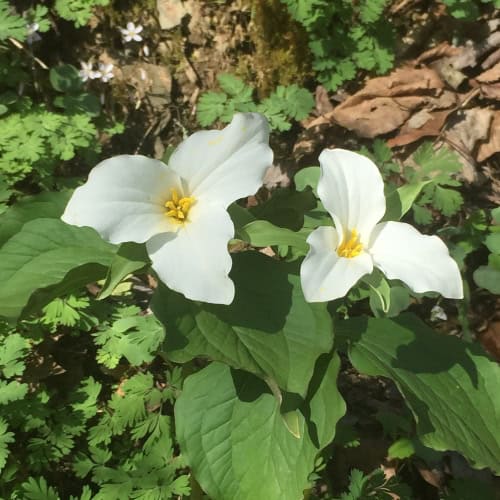
Trilliums are instantly recognizable thanks to their three-petaled flowers, which light up shady woodlands every spring. They bloom from April through June, showing off white or purple flowers perched above whorled leaves.
Don’t expect instant gratification, as they’re slow growers, often taking up to seven years to flower, and they stay pretty compact at around 1.5 feet tall. But once they settle in (zones 3-9), they’re about as low-maintenance as it gets for a shade plant.
3) Wild Ginger
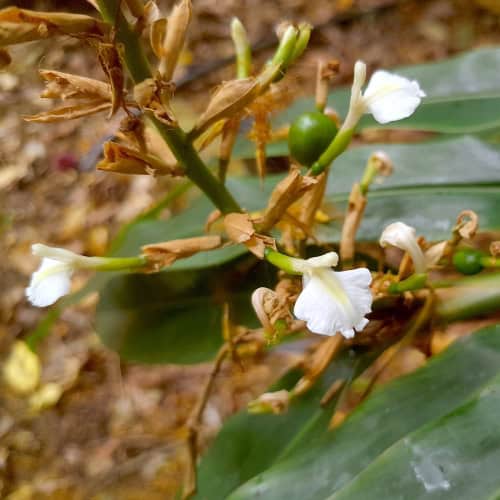
Wild ginger is a classic for shaded woodlands across North America. It’s a low-growing groundcover with heart-shaped leaves that can fill in bare patches under trees pretty quickly.
It spreads by rhizomes and handles zones 2 through 8 without much fuss. If you’re tired of the same old groundcovers, wild ginger is a solid alternative for naturalized areas. Just give it moist, well-drained soil and it’ll pretty much take care of itself.
4) Solomon’s Seal
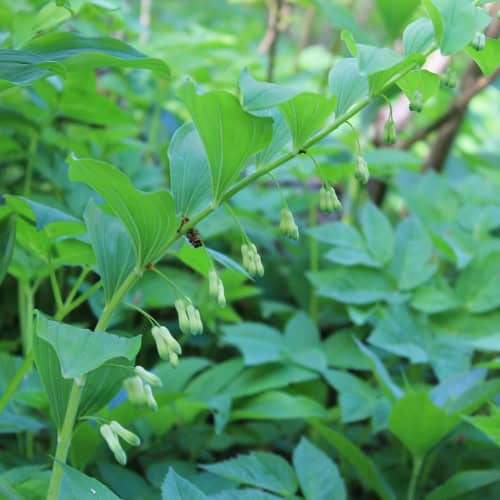
Solomon’s Seal is all about graceful, arching stems and slender, lance-shaped leaves. In late spring, it hangs dainty white or cream flowers beneath its stems; subtle, but really lovely up close.
It prefers cool, moist, slightly acidic soil (here’s more on that), and it spreads slowly by rhizomes, making it useful for erosion control in shady spots. The foliage turns a rich golden yellow in fall, so you get a little bonus color late in the season.
5) Foamflower (Tiarella)
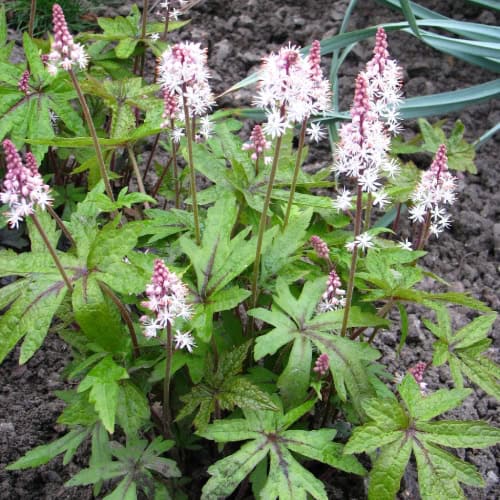
Foamflower is one of those little woodland perennials that quietly steals the show in spring. It’s low to the ground, around 8 inches or so, and spreads by stolons to form a dense, attractive carpet.
Come spring, it sends up frothy white or pinkish flower spikes that look a bit like, well, foam. Early pollinators love it (see more). Plant foamflower in moist, humus-rich soil under trees or shrubs, but keep it out of harsh sun to prevent leaf scorch.
6) Jack-in-the-Pulpit
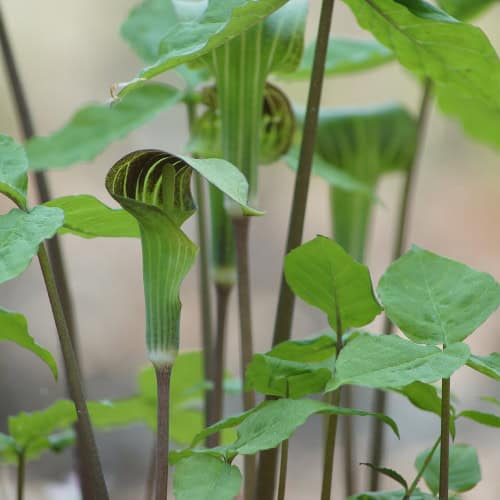
Jack-in-the-Pulpit is a bit of an oddball, but that’s what makes it fun for shady gardens. It has these hooded flowers in spring, then bright red berries in late summer.
It’s happiest in moist, rich soil with steady shade, basically, it wants to feel like it’s in the woods. Once it’s settled in, it doesn’t need much from you, which is always a win.
7) Columbine
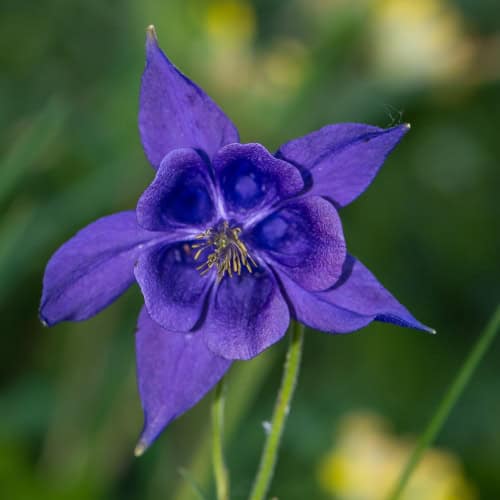
Columbine (Aquilegia) is known for its nodding, spurred flowers in a rainbow of colors in red, yellow, blue, purple, you name it. They’re natural woodland dwellers, so partial to full shade is just fine.
The blooms are a favorite with hummingbirds and other pollinators from late spring into summer. Columbine fits in just about anywhere: cottage gardens, naturalized patches, even rock gardens.
8) Bleeding Heart
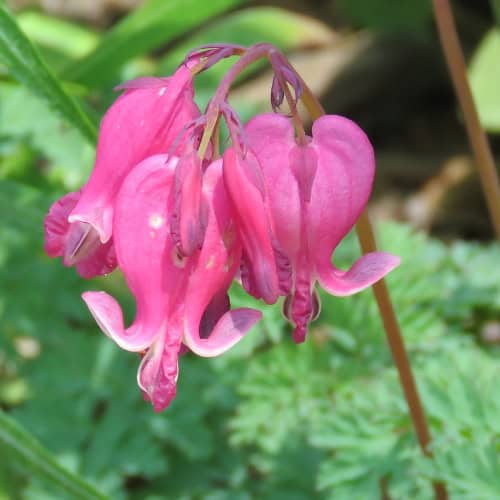
Bleeding heart is famous for its heart-shaped flowers dangling from arching stems in pink, red, or white. It needs partial to full shade and well-drained, humus-rich soil.
The classic type (Lamprocapnos spectabilis) blooms in early spring, bringing a touch of elegance to woodland gardens. There are also native versions that are surprisingly tough for how delicate they look.
9) Hepatica
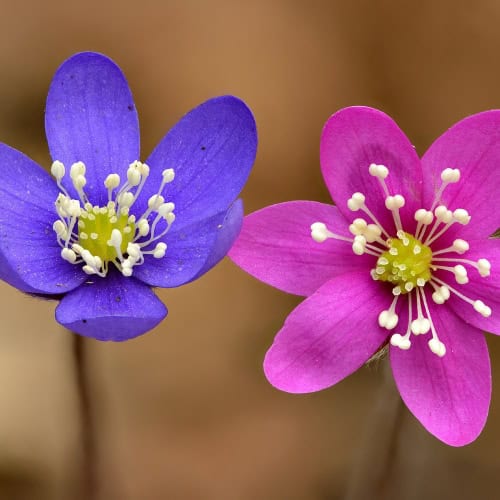
Hepatica is one of those early spring bloomers, with star-shaped flowers in purple, pink, blue, or white. It’s a woodland wildflower at heart, happy in partial to full shade, perfect for planting under trees.
It prefers well-drained soil but can handle a little extra dampness. The flowers close up at night and whenever it rains, which is kind of a quirky little detail for your garden.
10) Mayapple
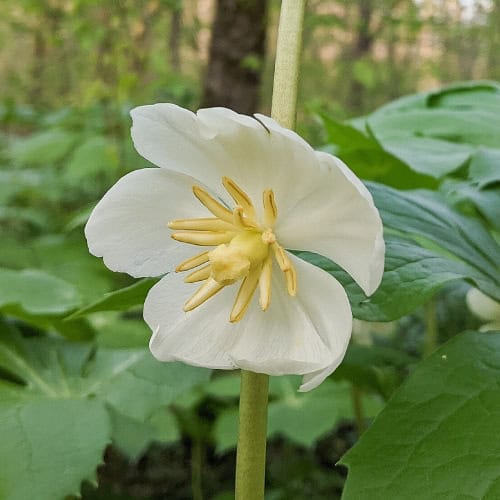
Mayapple (Podophyllum peltatum) is a classic for woodland gardens, loving full to dappled shade. Its umbrella-like leaves create a cool, leafy groundcover.
It grows about a foot to 18 inches tall and spreads naturally. In spring, it produces small white flowers, followed by edible fruit. Just remember: roots and leaves are toxic, so be careful if you have curious pets or kids around.
11) Dutchman’s Breeches
Dutchman’s Breeches (Dicentra cucullaria) is one of those blink-and-you’ll-miss-it spring wildflowers, with white blooms shaped like tiny pantaloons. It pops up from March to May, then disappears as the foliage dies back.
It likes moist, well-drained woodlands with humus-rich soil. You’ll find it on shady forest floors and rocky slopes, and the delicate blooms attract bees, butterflies, and even songbirds.
12) Wild Violets
Wild violets are sweet little natives that thrive in shaded garden spots. They’re low, just 4 to 6 inches tall, and their purple-violet blooms really brighten up those dark corners.
They’re right at home in woodland settings and shady, mossy patches all over North America. Once they’re in, they need almost no attention and spread willingly.
They’re great as ground cover under trees or along the edge of a shady border.
13) Solomon’s Plume
Solomon’s Plume (Maianthemum racemosum) adds a bit of elegance to shady gardens, with arching stems and fluffy white flower plumes. It’s a native perennial that does well in partial to full shade, so it’s a good pick for tricky low-light spots.
In spring, you get fragrant flower clusters, then decorative red berries in summer and fall. It spreads slowly by rhizomes, forming handsome colonies in rich soil, and the foliage has a nice stair-step effect that’s surprisingly eye-catching.
14) Jacob’s Ladder
Jacob’s Ladder is a perennial that really appreciates shade, thriving in USDA zones 3 through 8. It naturally grows in damp, shaded areas, such as forest floors and riverbanks, especially in Appalachia and the Great Lakes region.
The plant’s bell-shaped flowers come in blue, purple, white, yellow, or pink, blooming from late spring into early summer. Its foliage has a neat, ladder-like arrangement that gives the plant its name.
Go for moist, well-drained, organic-rich soil in partial to full shade for best results.
15) Wild Sweet William
Wild Sweet William is all about clusters of fragrant flowers in white, blue, or violet, blooming from spring into early summer. This woodland phlox likes partial shade and brings in butterflies and hummingbirds.
It’s easy to tuck into rock gardens, borders, or wild patches, and doesn’t ask for much in return, just a bit of moisture, especially in summer. The sticky, hairy stems are a quirky bonus.
16) Anemone (Windflower)
Anemones are graceful perennials with delicate, poppy-like flowers in blue, pink, or white. They grow from tubers and can reach anywhere from 1 to 4 feet tall, depending on the type.
They’re happy in partial or dappled shade, thriving in woodland spots or under trees. Give them moist, well-drained soil and they’ll slowly spread, forming carpets of color that brighten up shady areas.
17) Coral Bells (Heuchera)
Coral bells are a go-to for adding foliage color to shadier parts of the garden. Native to North America, they do well in partial sun or dappled shade across zones 4 to 9.
There are tons of varieties, all with different leaf colors and shapes. They form tidy mounds and send up slender stems topped with bell-shaped flowers in spring and early summer.
They’re deer-resistant and handle a range of conditions. If you want multi-season interest and a pop of color, coral bells are a solid bet for woodland gardens or containers.
18) False Solomon’s Seal
False Solomon’s Seal (Maianthemum racemosum) lights up shady gardens with clusters of white flowers in late spring to early summer. It grows 2 to 3 feet tall, with arching stems and evenly spaced leaves.
The blooms last for about three weeks, drawing in bees and beetles. After flowering, it produces berries that turn bright red by fall for a splash of late-season color.
It’s a native North American wildflower that likes partial shade and moist soil.
19) Blue Cohosh
Blue Cohosh (Caulophyllum thalictroides) is at home in shaded woodland areas throughout eastern North America. It puts out clusters of small yellowish-green flowers in spring, each with six petals and standout yellow stamens.
It does best with steady moisture and dappled shade under trees. By late summer, the flowers give way to unusual blue berries that add a bit of drama to the garden.
Once it’s settled in, blue cohosh is pretty much hands-off.
20) Barrenwort (Epimedium)
Barrenwort shows off these delicate, spurred flowers in shades of white, yellow, pink, and purple right at the start of spring. The blooms float above heart-shaped leaves which sometimes get those cool burgundy and gold highlights as the seasons change.
This plant stays pretty low to the ground and honestly seems happiest in partial to full shade. It’s a lifesaver for those tricky spots under trees where hardly anything else wants to grow. People often use it for groundcover in woodland gardens, along shaded borders, or tucked into rock gardens. Once it’s settled in, barrenwort doesn’t really mind if things get a bit dry.