
Spring might hog the spotlight when it comes to flowering trees, but summer has its own magic if you know where to look. Honestly, a lot of folks miss out on the incredible blooms native trees offer during the hotter months, probably because we’re all so used to those classic spring show-offs.
Whether you’re drawn to the lemony scent of magnolias or the quirky flowers of buttonbush, summer-flowering natives have a way of keeping your landscape interesting long after spring’s big act is over.
1) Sweetbay Magnolia (Magnolia virginiana)

The Sweetbay Magnolia hangs onto its bloom season from mid-spring all the way into summer, showing off creamy white, lemon-scented flowers. It’s native up and down the eastern US and usually sticks to 15-20 feet tall if you’re up north.
What’s cool about this one? The leaves are glossy and dark green, but the silvery undersides really catch the sun. After the flowers, you get these funky cone-like fruits.
It’s one of those rare magnolias that doesn’t mind wet soils at all, so if you’ve got a boggy spot or a pond edge, this is your tree. Up north, it’s more of a multi-stemmed shrub, but down south, it’ll keep its leaves and act like a true evergreen.
2) Tulip Tree (Liriodendron tulipifera)
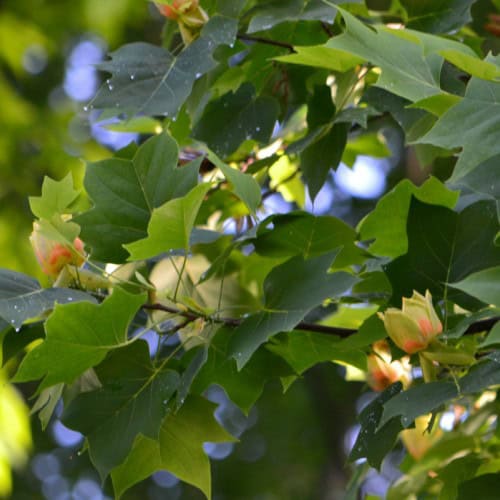
Tulip trees are easy to spot, with those four-lobed leaves and their impressive size. They’re part of the magnolia family and are honestly some of the tallest trees you’ll find in the east.
Late spring brings out their tulip-shaped flowers, which are pretty wild – orange, yellow, and green, all in a goblet shape, popping up after the leaves.
You’ll see upright, cone-like seed clusters following the blooms. The tree itself has a straight trunk and a tidy, pyramidal shape that looks great in big yards.
When fall rolls around, the leaves turn a brilliant golden-yellow. The thick, furrowed bark and long lifespan make it a solid pick for anyone wanting an impressive specimen tree.
3) Serviceberry (Amelanchier spp.)
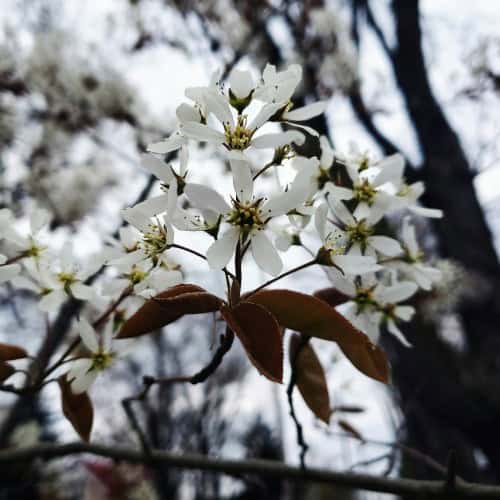
Serviceberry is a bit of a cheat for this list since it actually blooms in early spring, not summer. Its white flowers show up in April, long before the leaves.
The trees hit 15-25 feet and handle a range of conditions across North America. Even though they’re not summer bloomers, serviceberries bring edible berries in June and have killer fall color.
Wildlife are all about these trees as apparently, 58 different species use them in Virginia alone.
4) Eastern Redbud (Cercis canadensis)
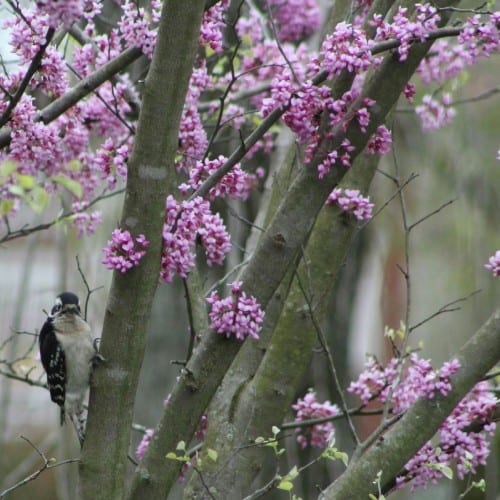
Eastern redbud is another one that jumps the gun, blooming early in spring. Its pinkish-purple, pea-like flowers pop in March or April but definitely before summer.
This native gets up to 20 or 30 feet, with a rounded crown and those classic heart-shaped leaves. It’s a real showstopper in fall, too.
It fits nicely as an understory plant in a mixed forest and has a vase-like structure that gives it a bit of elegance.
5) Black Locust (Robinia pseudoacacia)
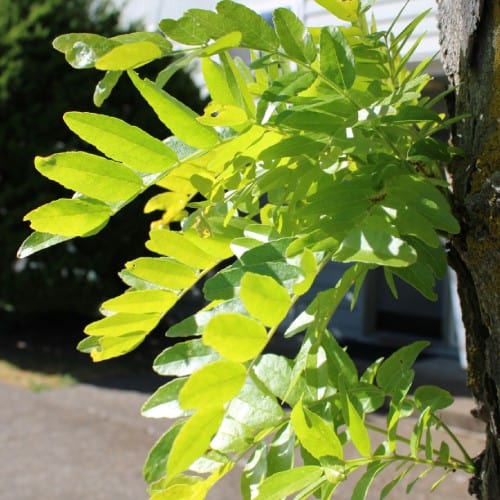
Black locust is a late-spring or early-summer bloomer, bringing fragrant white flowers in drooping clusters that smell amazing and draw in pollinators.
It’s a fast grower, reaching anywhere from 30 to 80 feet. The leaves are made up of a bunch of little ovals, and while it’s native to the east, black locust has spread just about everywhere.
You’ll get those pea-like white flowers from May through June, hanging in big racemes against the dark foliage.
6) Fringe Tree (Chionanthus virginicus)
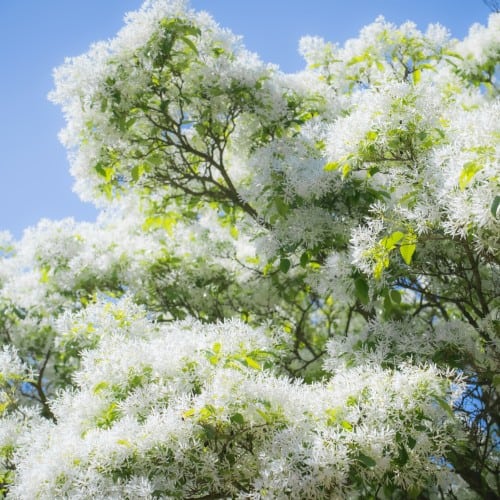
Fringe tree is a total standout, putting on a wild show from late May into June. The flowers are these fragrant white clusters that look almost like ribbons or fringe, hence the name!
It grows 12-20 feet tall and has a nice rounded shape, perfect as a specimen plant. If you get a female tree, you’ll see dark blue fruits in summer, which birds go nuts for.
It’s pretty adaptable, but it’s happiest in moist, well-drained soil. If you’re after a sweet scent during its blooming period, plant it somewhere close to a walkway or patio.
7) Chinkapin Oak (Quercus muehlenbergii)

Chinkapin oak does flower in late spring, but honestly, most folks grow it for its other perks. It’s part of the white oak group and spreads across central and eastern North America.
This one usually gets up to 40-60 feet, with a broad, open crown. Unlike most oaks, it actually loves alkaline soils, so if your pH is above 7, you’re in luck.
The acorns are small and sweet and wildlife, especially squirrels and birds, can’t get enough once the tree’s mature (which takes a while, not gonna lie).
8) Buttonbush (Cephalanthus occidentalis)
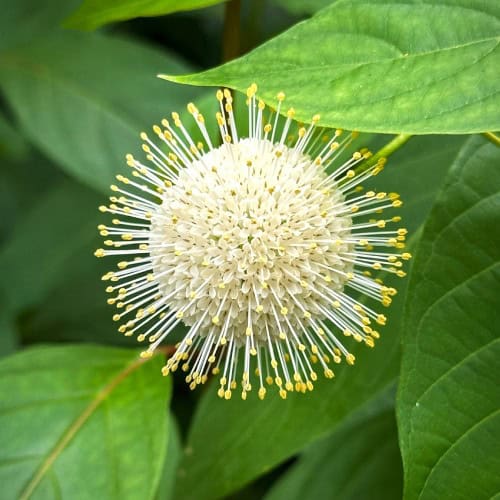
Buttonbush is right at home along ponds, streams, and wetlands all over the US. It’s more of a shrub, reaching 6 to 12 feet tall and just as wide.
Summer is when buttonbush shines, with its weirdly cool white flower clusters that look like pincushions. The globe-shaped blooms show up from June through September, with little styles poking out all over.
If you want to attract birds and butterflies (over two dozen bird species, apparently), this is your plant. Just don’t try it in dry spots, as it really needs wet soil or even standing water.
9) American Smoketree (Cotinus obovatus)

American Smoketree is all about that “smoke” effect in summer – fluffy, pinkish-purple plumes that cover up the spent flowers.
It grows 20-30 feet tall and does best in rocky, tough spots down in the southeast. The tree’s pretty chill about poor soils and doesn’t need much fussing over.
Summer brings those airy seed heads that give the tree its name, making it look like it’s surrounded by a soft haze.
Once it’s settled in, you can pretty much ignore it. It handles drought and disease better than most, so it’s a go-to for harder locations.
10) Mountain Laurel (Kalmia latifolia)
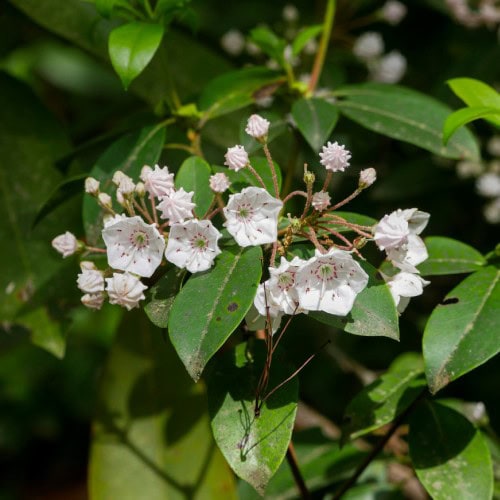
Mountain laurel brings a burst of bell-shaped flowers from late spring into early summer. This broadleaf evergreen shrub is native from New England down to Florida and west to Indiana, usually topping out at 5-15 feet but sometimes stretching taller in perfect spots.
It does best in partial shade, where a lot of other flowering plants just give up. The evergreen leaves are glossy, and the pink buds open up to reveal pale pink or white flowers.
11) Golden Rain Tree (Koelreuteria paniculata)
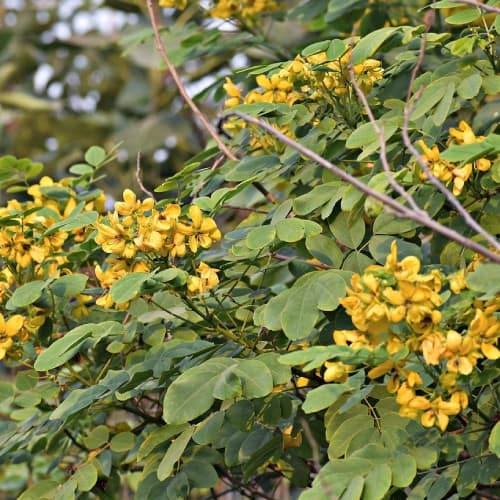
Golden Rain Tree is one of those trees that really lights up a summer landscape. Its bright yellow flower clusters usually show up in July, and they’re hard to miss.
This deciduous tree gets up to 30 or 40 feet, with a nice rounded crown. It grows at a moderate pace, but not too fast, not too slow.
Once the flowers finish, you’ll see papery seed capsules by mid-August. They look like little lanterns and stick around into fall, adding a bit of extra interest.
12) Carolina Silverbell (Halesia carolina)
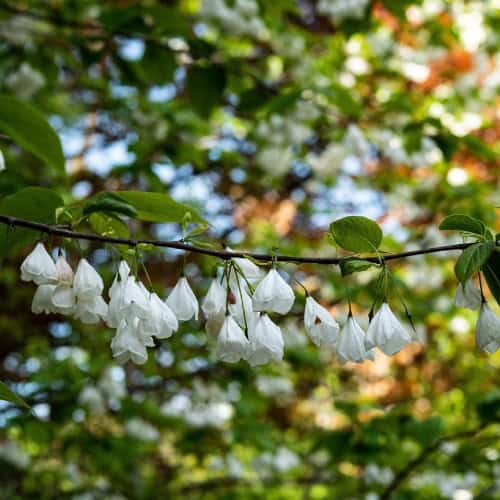
Carolina silverbell is more of a mid-spring bloomer, with bell-shaped white flowers that hang in clusters before or with the leaves.
It’s a native of the southeast, growing 20-40 feet tall and doing well in partial shade. You’ll find it mostly in the Appalachians and Piedmont.
After flowering, it produces four-winged seed pods that last into winter. It’s a good pick for woodland gardens, especially as an understory tree.
13) Southern Magnolia (Magnolia grandiflora)

If you want huge summer flowers, Southern Magnolia is tough to beat. The blooms are massive – 8 to 12 inches across – and the scent is strong and citrusy.
Most of the flowers come in late spring, but you’ll still get some popping up through the summer. Each one has thick petals in that classic saucer shape.
This evergreen can hit 60 to 80 feet, and the dark, glossy leaves look great year-round. It’s native from North Carolina to Texas, but honestly, you’ll see it just about everywhere these days.
14) Basswood (Tilia americana)
Basswood is a summer bloomer, with clusters of pale yellow, fragrant flowers that show up in early to mid-summer. The blooms hang in drooping groups and are a magnet for bees.
It usually grows 50-80 feet tall, with heart-shaped leaves that are bigger than your hand. Native to the east, basswood is fast-growing and throws a lot of shade.
Beekeepers love it for the nectar-rich flowers, which make top-notch honey. After flowering, you’ll see small, winged seed pods that ripen by late summer.
15) Flameleaf Sumac (Rhus copallinum)
Flameleaf Sumac brings on clusters of small yellow-green flowers from July into August. The blooms appear in dense, feathery panicles, usually 4 to 8 inches long.
This native shrub gets up to 20 or 30 feet and starts out pretty compact before opening up with age.
Female plants are the ones that put on the best flower show, which later turns into red fruit clusters by fall. Birds rely on these berries during the winter months.
16) Eastern Hop Hornbeam (Ostrya virginiana)
Eastern Hop Hornbeam isn’t flashy, but it does flower in late spring and early summer. The male catkins show up first, then female flowers, which become the tree’s signature papery, hop-like fruits.
You’ll find it in forest understories across eastern North America, usually 25-40 feet tall. The bark looks shredded, and the wood is seriously tough.
Summer brings clusters of pale green, sac-shaped fruits that hang from the branches like hops. The husks stick around through winter, adding visual interest when everything else is bare.
17) Flowering Dogwood (Cornus florida)
If you’re thinking about dogwood blooms, they actually show up in early spring. The white or pink bracts open before the leaves in April and May.
Your native dogwood grows 15-30 feet tall with a broad, flat-topped look. It’s the state tree of Virginia and does well all over the east.
During summer, it has dark green leaves that turn reddish-purple in fall. Birds and critters love the red berries that come after the flowers.
18) American Holly (Ilex opaca)
American holly blooms from April to June with small, greenish-white flowers. It’s native throughout the eastern and south-central US, stretching from Massachusetts down to Florida and west to Texas.
Male and female flowers show up on different trees in late spring. Female trees are the ones that produce the iconic red berries, which ripen in October and stick around through winter.
In gardens, these trees usually hit 15-30 feet, but wild ones can get up to 50. They’re happiest in moist, acidic soils and can handle anything from full sun to partial shade.
Birds are all about those bright berries, making American holly a solid pick if you want a wildlife-friendly yard.
19) Persimmon (Diospyros virginiana)
If you’ve got a native American persimmon tree, you’ll probably spot its lovely blooms from late spring into early summer, usually around May. The flowers are kind of understated: pale yellow and bell-shaped, showing up right after those glossy green leaves.
On female trees, flowers pop up solo, while male trees tend to show off with small clusters. You’ll need both male and female trees around if you want to see fruit, but only the ladies will actually produce those sweet, orange persimmons.
This deciduous tree can get pretty tall, anywhere from 30 to 80 feet, and it’s surprisingly adaptable to all sorts of soil across the eastern and central U.S. Growth isn’t exactly fast, but it’s tough and reliable, so if you’re patient, this native species will reward you.
20) Service Tree (Sorbus americana)
Service Tree (maybe you know it as American Mountain Ash) brings a burst of delicate white flowers to the garden in late spring and early summer. Those clusters of small, five-petaled blooms? They’re honestly a lovely sight, especially when the rest of the yard still feels like it’s waking up.
This deciduous tree usually tops out somewhere between 15 and 30 feet, with a narrow, rounded crown that doesn’t overwhelm the space. Its compound leaves have 13 to 17 leaflets, and when fall rolls around, they shift to a pretty bright yellow. It’s one of those changes you can’t help but notice.
Once the flowers have done their thing, bright orange-red berries show up and stick around through winter, and birds seem to love them. If you’re up north or dealing with cooler weather, this cold-hardy tree’s right at home, especially in well-drained soil.