
Spring wildflowers are really the first signs that winter’s finally letting go as, suddenly, there’s color everywhere, splashing through gardens and woodlands. These tough little plants have figured out how to bloom early, sneaking in their show before the trees get their leaves and block out all the sun.
Growing native spring wildflowers in your garden supports local pollinators and gives you a seasonal display that just keeps coming back.
A lot of these are what gardeners call spring ephemerals, as they do their whole life cycle in just a few weeks. From the crisp white petals of bloodroot to the quirky yellow bells of trout lilies, each species brings something special to your yard.
1) Bloodroot (Sanguinaria canadensis)
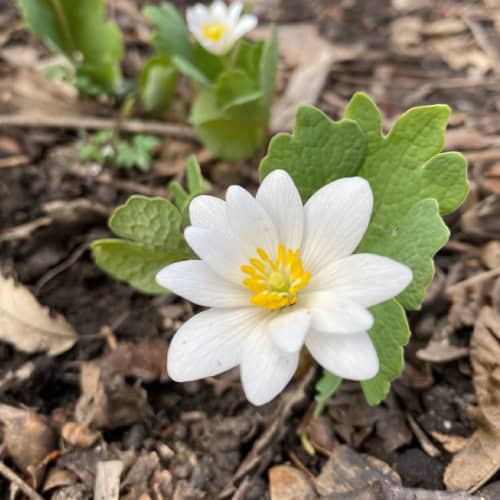
Bloodroot is often one of the first wildflowers you’ll spot in North American woods. It’s a native perennial, popping up with bright white flowers that have 8 to 12 skinny petals, usually in March or April.
The plant’s not very tall (approx. 6 to 10 inches) and the leaves are kind of weird, lobed and wrapped around the stem at first. If you break it, you’ll see that signature red sap, which is where the name comes from.
It’s happiest in damp, shady forests and woodland edges all over eastern North America.
2) Trout Lily (Erythronium americanum)
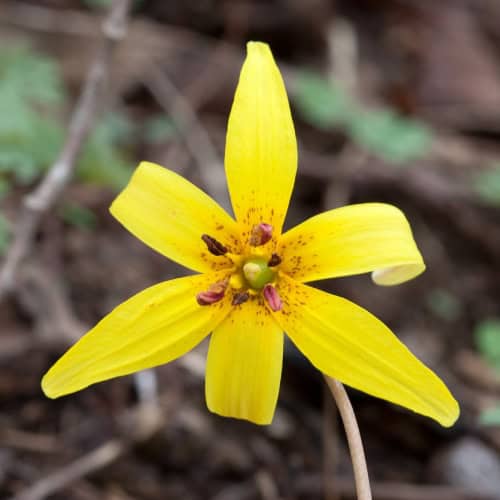
Among the first to bloom in spring, trout lily dots the forest floor with nodding yellow flowers with six petals, which show up before the trees even think about leafing out.
The name? It’s the leaves. They’ve got these green and brown splotches that look just like trout markings. If you see a yellow-flowered trout lily, chances are it’s this one.
It likes shady, moist places, such as forests near streams. Over time, it’ll spread by seeds and corms, forming nice little colonies if you let it.
3) Virginia Bluebell (Mertensia virginica)
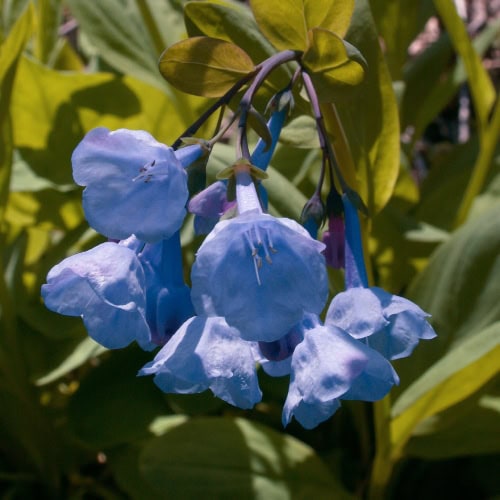
Virginia bluebells are spring ephemerals too, and they’re native to eastern North America. These perennials get about 1 to 2 feet tall and prefer moist, rich woodlands and floodplains.
The flowers start as pink buds, then open into soft blue trumpets. Sometimes, you’ll see pink, purple, and blue on the same plant as the flowers change color.
They’re a big deal for early pollinators, especially bees and butterflies. After they bloom and set seed, the whole plant goes dormant by midsummer, so don’t worry if they vanish, they’ll be back next year.
4) Dutchman’s Breeches (Dicentra cucullaria)
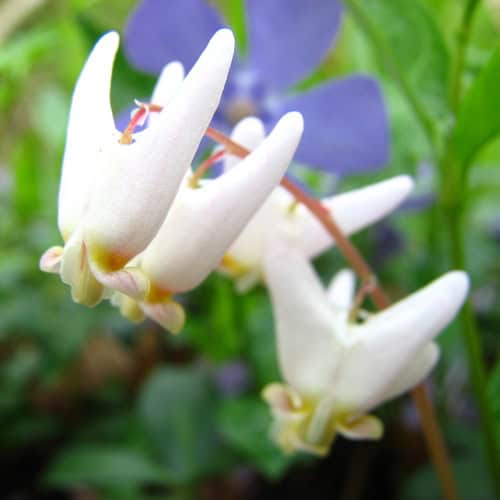
Dutchman’s breeches is another spring ephemeral native to eastern North America. You’ll see it in cool, shady woods, usually blooming sometime in March or April.
The foliage is really finely cut, almost ferny, usually grayish or bluish-green. The flowers are white and hang in rows from arching stems, looking a bit like upside-down pants (hence the name), with yellow tips for a little extra flair.
It grows up to a foot tall and disappears by late summer, finishing up its business quickly.
5) Spring Beauty (Claytonia virginica)
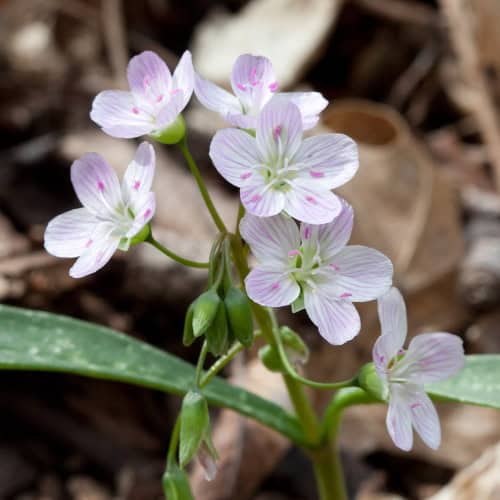
Spring Beauty is always one of the first woodland wildflowers to show up. It’s a delicate little perennial with starry white or pale pink flowers, streaked with pink veins.
The stems are thin, with just a couple of narrow, grass-like leaves. You’ll see them in early to late spring, scattered across moist woods, meadows, and prairies in the east.
Bees love them, and they’re a lifeline for pollinators that need nectar and pollen before anything else is blooming.
6) Jack-in-the-Pulpit (Arisaema triphyllum)
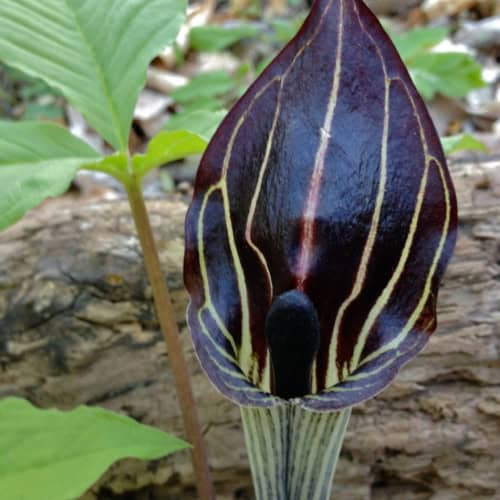
Jack-in-the-Pulpit is a bit of an oddball, but you’ll spot it in shady, damp woods all over eastern North America. It’s got this weird hooded flower (the spathe) that hides a spadix covered in tiny blooms.
The spathe can be green or deep purple, often striped. Expect to see it from April into May.
It’s a long-lived plant, and some stick around for decades, slowly spreading from a corm. By fall, you’ll notice clusters of bright orange-red berries on the stalk.
7) Mayapple (Podophyllum peltatum)
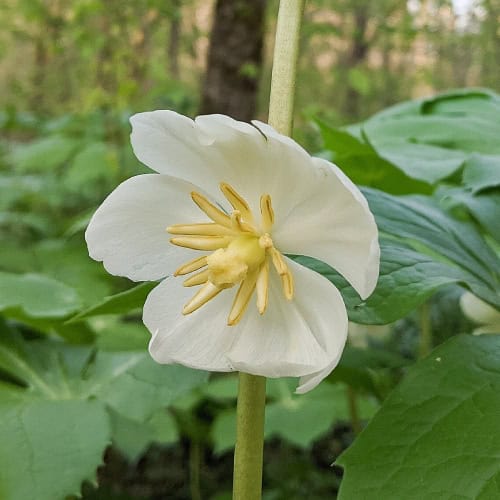
Mayapple is a woodland perennial with big, umbrella-like leaves, sometimes a full foot across! Each plant gets about 12 to 18 inches tall and spreads out by rhizomes.
The leaves come up early and are divided like fingers on a hand. Look for a single white flower in May, tucked underneath the leaves, but only on plants with two leaves.
They like dappled sun and moist, rich soil, and will take over a shady patch if you let them.
8) Wild Ginger (Asarum canadense)
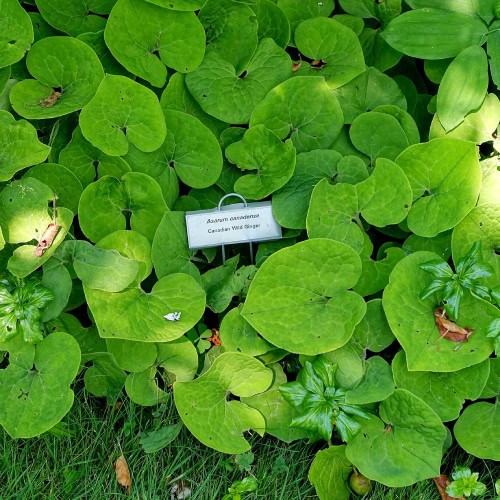
Wild ginger is a low, creeping perennial from eastern North America, perfect for shady gardens. The heart-shaped leaves make a dense groundcover in rich, damp soil.
It spreads slowly by rhizomes and hides its weird little jug-shaped flowers under the leaves. Fun fact: it’s a host plant for the Pipevine Swallowtail butterfly, so it’s a real win for pollinator gardens.
9) Shooting Star (Dodecatheon meadia)
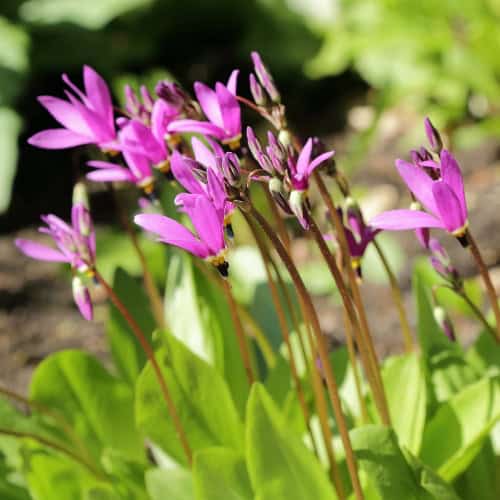
Shooting Star is a real show-off in spring, with its nodding flowers in pink, purple, or white. The petals are swept back, and the centers are yellow and red, giving them that “shooting star” look.
You’ll see it in prairies, open woods, and meadows in the central and eastern U.S. The flower stalks are leafless and shoot up from a rosette of lance-shaped leaves in mid-spring. Moist to moderately dry soil with decent drainage works best, and it’ll take sun or partial shade.
10) Wood Anemone (Anemone quinquefolia)
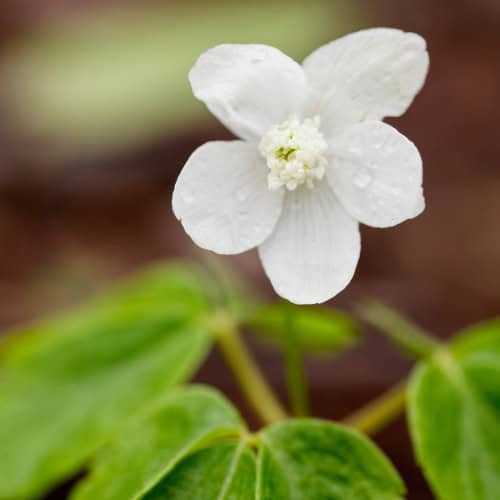
Wood anemone is a dainty spring wildflower blooming early in the season in eastern North American woods. The white, star-shaped flowers usually have five sepals and a center of creamy stamens.
They grow 6 to 12 inches tall, and sometimes the undersides are tinged pink or rose. In the garden, they prefer shade and moist, acidic soil.
Wood anemone is a true ephemeral, as once it’s done flowering, it vanishes until next year.
11) White Trillium (Trillium grandiflorum)
White Trillium is a classic spring wildflower; maybe the most loved in North America. It’s easy to spot: three big white petals on each flower, blooming from April through June.
It likes shady woodlands and rich, damp soil. The plant grows from a rhizome, with three broad leaves in a whorl under the flower.
White Trillium is hardy in zones 3 to 9, so gardeners in most places can give it a try.
12) Yellow Trout Lily (Erythronium americanum)
Yellow trout lily is all about those nodding yellow flowers with petals that curve back, showing up in early to mid spring. They bloom before the trees leaf out, grabbing as much sun as they can.
The leaves are mottled with silvery maroon, looking just like trout patterns. It grows in moist woods and slowly forms colonies, but don’t be surprised if it takes years for a patch to really get going.
After flowering, it disappears for the rest of the year.
13) Rue Anemone (Thalictrum thalictroides)
Rue anemone is a gentle woodland wildflower, usually blooming from March to May. The flowers are white or pale pink, with five to ten sepals and a bunch of yellow stamens.
It’s a small plant, maybe nine inches tall, and likes partial shade and well-drained, slightly moist soil with some organic matter.
The flowers cluster above whorls of three-lobed green leaves. Like a lot of spring ephemerals, it goes dormant by midsummer.
14) Hepatica (Hepatica nobilis)
Hepatica is one of the first wildflowers to bloom in the woods, sometimes even before the snow melts. The flowers come in blue, purple, pink, or white, with five to twelve sepals for that classic star shape.
You’ll notice the three-lobed leaves, which hang around all winter and can get some neat marbling. The flowers pop up on hairy stems before the new leaves come in, usually between February and April, depending on the weather.
15) Bloodroot’s Early Bloom
Bloodroot is one of those first wildflowers you’ll see in early spring, sometimes even before the snow’s gone. Look for pure white petals around a bright yellow center, standing about six inches tall.
It blooms before the trees leaf out, soaking up the available light. Each flower only lasts a few days, so you’ve got to catch them while you can.
16) Virginia Waterleaf (Hydrophyllum virginianum)
Virginia Waterleaf gets 12 to 24 inches tall and is pretty common in moist, deciduous forests. The leaves look like they’ve been splashed with water, hence the name.
Clusters of bell-shaped flowers in white, pink, or pale blue bloom from May into June, and the long stamens stick out, attracting bees and other pollinators. This native perennial spreads by rhizomes, making nice colonies in the shade.
17) Golden Ragwort (Packera aurea)
Golden Ragwort brings a pop of yellow to your early spring garden, with daisy-like flowers on slender stems. It spreads by rhizomes, forming a dense groundcover, and the heart-shaped basal leaves stick around through winter.
It’s at home in moist, shady spots, along woods and streams. Usually about 1 to 2 feet tall, and pollinators love it when it blooms from February to April.
18) Large-flowered Bellwort (Uvularia grandiflora)
Large-flowered Bellwort is easy to spot with its drooping yellow blooms in early spring. This woodland perennial grows 12 to 20 inches tall, and the bell-shaped flowers have six twisted petals.
The leaves are lance-shaped and wrap around the stem, giving the plant a vase-like look. You’ll find it in shady spots across eastern and central North America, and it’s a reliable returner for woodland gardens.
19) Blue Cohosh (Caulophyllum thalictroides)
Blue Cohosh grows in rich woods under maples and oaks, reaching 2 to 3 feet tall. The foliage comes up blue-green with a hint of purple in spring, making it pretty striking!
It has small, greenish-yellow to brownish flowers in mid to late spring, which turn into bright blue berries by summer. Birds love the berries, and they add a splash of color to shady gardens.
20) Solomon’s Seal (Polygonatum biflorum)
Solomon’s Seal adds a touch of quiet elegance to any shady spot, thanks to those lovely, arching stems. Native to North America, this perennial usually tops out somewhere between 1 and 3 feet, and honestly, it just seems happiest tucked into moist, shaded corners.
Come spring, you’ll spot little bell-shaped flowers, sort of greenish-white or maybe more of a creamy shade, dangling shyly beneath the leaves. They stick around for about three weeks before eventually giving way to deep blue berries as summer winds down. And just when you think it’s done, the foliage puts on one more show, turning a bright, cheerful gold in the fall.