
Nature definitely has a playful side, especially when it comes to some houseplants. Certain species look so polished, geometric, or oddly vibrant that you’d swear they were manufactured. These real plants have waxy leaves, wild patterns, or colors so bold they practically scream “artificial”, but nope, they’re alive and need the same care as any other plant!
A surprising number of popular houseplants fall into this “is it real?” category. Some have thick, shiny foliage; others, perfectly striped leaves or quirky shapes. They really flip your expectations of what living greenery should look like. These oddballs are always conversation starters, and still offer the air-purifying perks and growth cycles of genuine plants.
1) Ficus elastica (Rubber Plant)
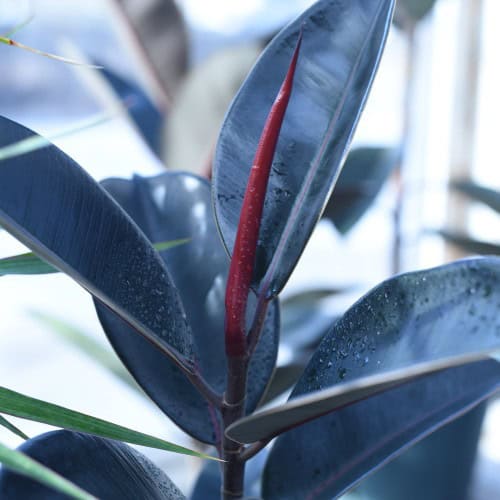
The Rubber Plant sports thick, glossy leaves with a waxy shine and symmetry that almost seems fake. Its deep green foliage stays so flawless and uniform, it honestly looks like it could be made of plastic.
You’ll see the leaves keep their stiff, polished look, rarely showing the wear and tear you’d expect from a real plant. That consistency and smooth texture really gives off “factory-made” vibes.
2) Sansevieria trifasciata (Snake Plant)
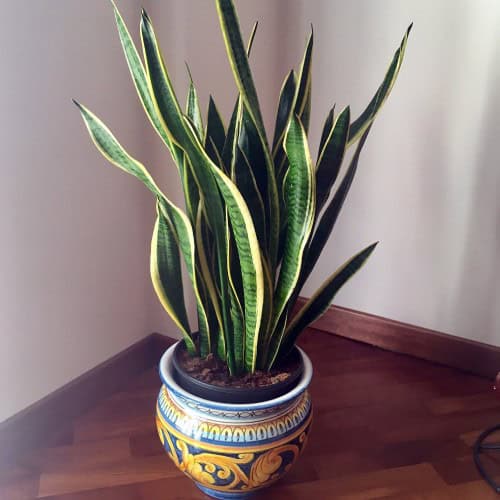
The Snake Plant’s stiff, upright leaves are marked with striking horizontal bands, giving it a nearly geometric pattern. Those sword-like leaves stand so rigidly vertical, it’s no wonder folks often mistake them for fakes.
The texture is waxy and almost leathery, and the leaves hold their shape stubbornly. There are more than 70 varieties, each with their own distinct patterns and colorsl sometimes so perfect, it’s a little suspicious.
3) Zamioculcas zamiifolia (ZZ Plant)
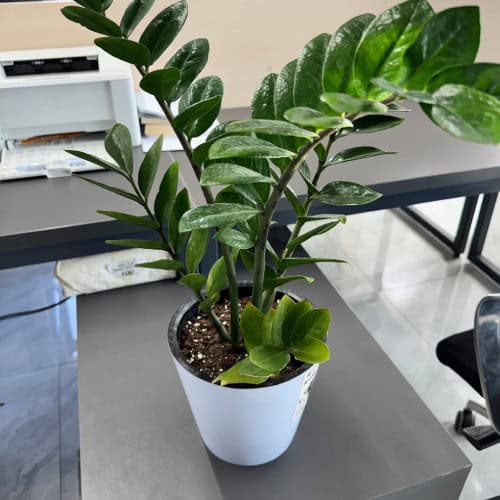
The ZZ plant’s leaves are so glossy and waxy, you might poke one just to check if it’s real. Each stem grows upright, with leaflets arranged in such perfect symmetry and shine, it almost feels like cheating.
They start off a bright green and deepen to a rich emerald as they mature. With that smooth, uniform look, it’s honestly one of the most convincing “fake” plants you can actually grow indoors.
4) Agave americana (Century Plant)
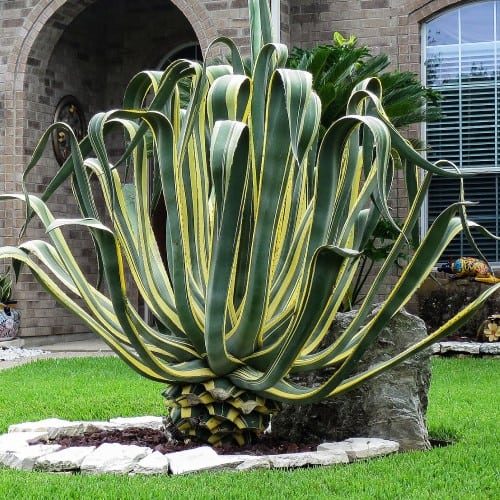
Agave americana’s thick, sculptural leaves fan out in a dramatic geometric pattern. The blue-green coloring and bold structure really make it seem more designed than grown.
That symmetrical rosette and those stiff, pointed leaves? They give off a strong architectural vibe, almost like someone engineered the plant. It’s called the “century plant” because it grows so slowly, eventually flowering once before dying—nature’s dramatic exit.
5) Aspidistra elatior (Cast Iron Plant)
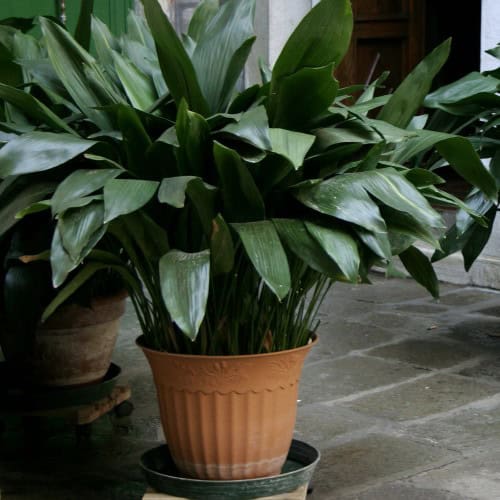
The Cast Iron Plant is as tough as its name suggests, but its flawless appearance can make you do a double-take. Native to Japan and Taiwan, it’s got these glossy, deep green leaves that sometimes seem just too perfect.
Leaves can reach two feet long and have a waxy, even finish that’s suspiciously similar to faux foliage. They arch out gracefully, creating a symmetry that almost feels staged.
6) Alocasia amazonica (African Mask Plant)
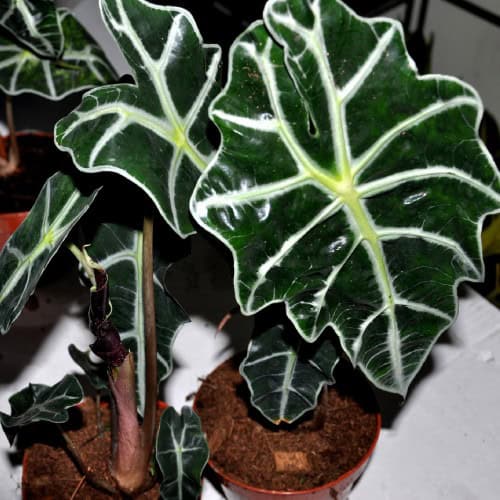
The Alocasia amazonica has dark green leaves with bold white veins that look almost painted. The shield-shaped foliage is so glossy and precise, it’s hard not to wonder if it’s real.
This hybrid’s patterns are so symmetrical and the wavy edges so crisp, it’s basically begging you to touch it just to double-check. Guests will probably ask if it’s a real plant or just a clever decoration from the craft store.
7) Calathea orbifolia
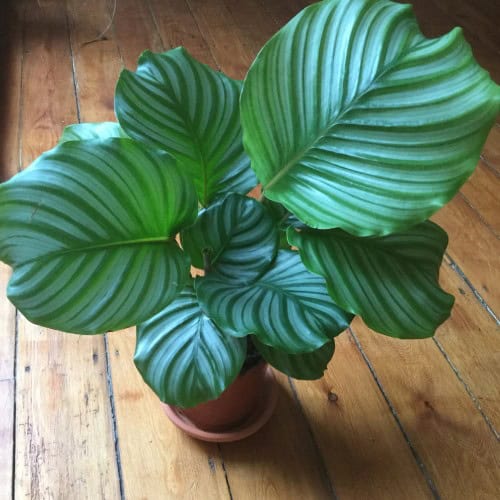
The Calathea orbifolia’s big, round leaves are streaked with silvery-green stripes that look a bit like someone took a paintbrush to them. The symmetry is almost unnerving at first glance.
This tropical plant shows off broad, patterned foliage with veining so detailed, it’s hard to believe it’s not the work of an artist. The contrast between the dark and light green is striking enough to be a centerpiece, no fake enhancements needed.
8) Euphorbia tirucalli (Pencil Cactus)
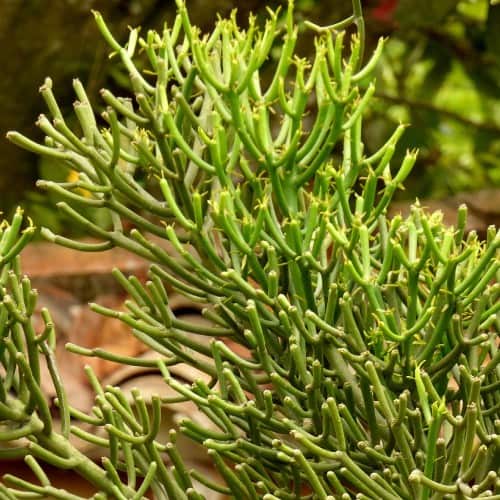
Despite the name, the Pencil Cactus isn’t a cactus at all. It’s a succulent with thin, stick-like stems that shoot up like a bunch of green pencils.
The stems are so uniform and bright, they look almost synthetic. Some types even show off orange and red tones, making them seem even more otherworldly.
This plant skips traditional leaves, relying on its photosynthetic stems to soak up the sun.
9) Beaucarnea recurvata (Ponytail Palm)
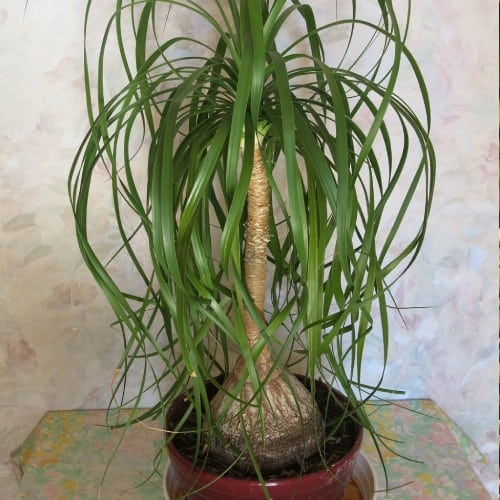
The Ponytail Palm’s swollen, bulb-like base is hard to ignore – it actually stores water for the plant! From the top, long, skinny leaves spill down like a fountain or, well, a ponytail.
Its unusual proportions and sculpted look make it seem more like a piece of art than a living thing. The thick trunk narrows sharply as it goes up, giving it a shape that’s almost too perfect.
Honestly, the first time you see one in a shop, it’s hard not to wonder if it’s just a quirky plastic prop.
10) Haworthia fasciata (Zebra Plant)
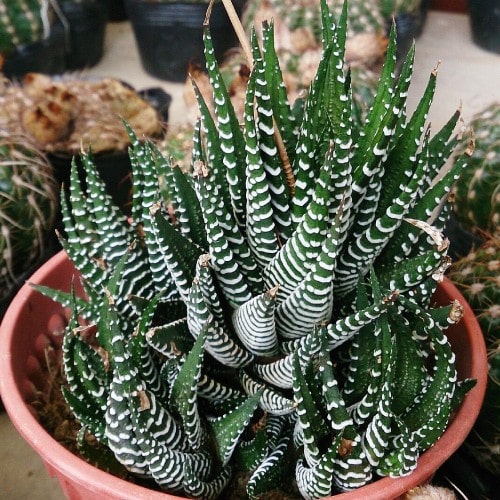
The Zebra Plant is named for the bold white stripes across its dark green leaves. The raised bands are so perfectly spaced, the whole thing feels more manufactured than natural.
This compact succulent from South Africa arranges its thick, pointed leaves into a tight rosette. The white bands are actually raised bumps, creating a geometric look that feels oddly precise.
11) Monstera deliciosa (Swiss Cheese Plant)
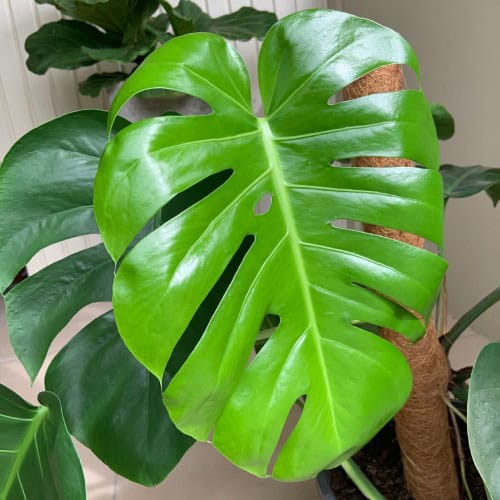
The Monstera deliciosa has those big, glossy leaves with natural holes and splits that give it a signature look. As it matures, those fenestrations appear, making the plant look almost too perfect to be real.
Indoors, it can get massive, with leaves up to three feet wide! The dramatic perforations and deep cuts honestly look like someone took scissors to each leaf, but it’s all nature’s handiwork.
12) Ceropegia woodii (String of Hearts)
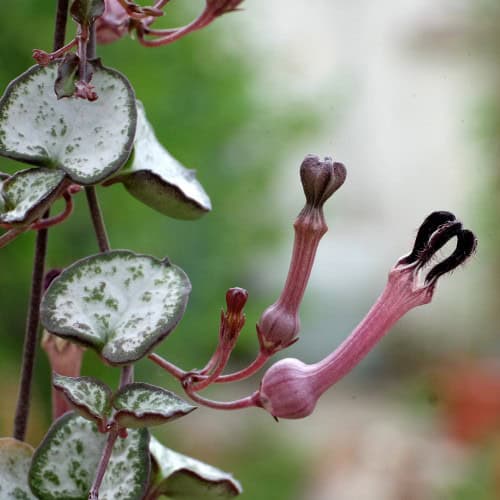
String of Hearts grows trailing vines covered in tiny, heart-shaped leaves that are so perfectly shaped, you’d think they were punched out by a machine. The marbled patterns in silver, green, and pink look almost painted.
The stems are so thin and delicate, it’s hard to believe they’re real, and they can grow several feet long. The plant even puts out little lantern-shaped flowers, just adding to the “is this real?” effect. It’s basically living jewelry.
13) Spathiphyllum wallisii (Peace Lily)
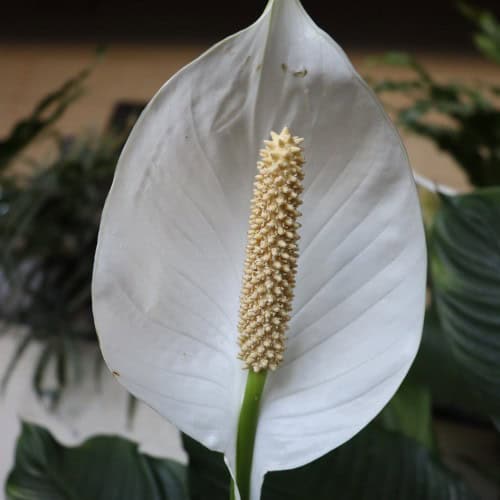
The Peace Lily’s glossy white blooms stand above deep green foliage with such neatness, they almost look store-bought. The flowers keep their shape and color so well, it’s easy to see why people think they’re fake.
The spathe (that white “petal”) is so symmetrical, it could pass for a prop. Plus, since it thrives with barely any fuss, its flawless look is even more suspicious.
14) Philodendron ‘Birkin’
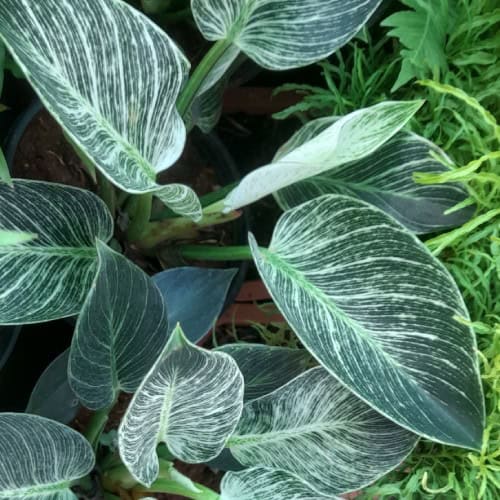
Philodendron ‘Birkin’ is so perfectly patterned, it’s easy to mistake for something artificial. Its dark green leaves are streaked with crisp white pinstripes that look almost painted; so even, it seems unreal.
This compact plant keeps up its striking contrast year-round with minimal fuss. The symmetry and glossiness make it as ornamental as any fake plant out there.
15) Dracaena marginata (Dragon Tree)
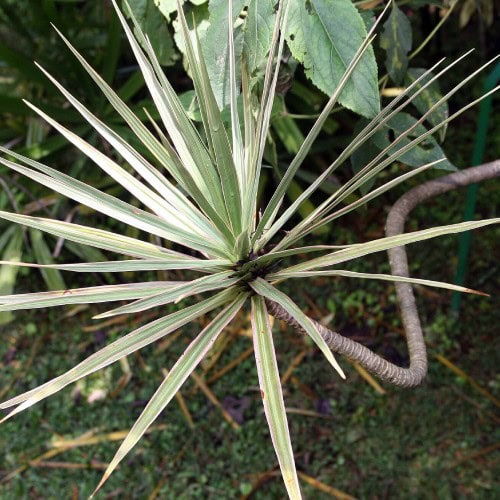
Dracaena marginata grows slender, upright stems topped with spiky tufts of narrow leaves. Its bold, sculptural form looks more like a modern art piece than a plant.
The leaves cluster in tight rosettes with sharp, pointed ends that seem too neat to be natural. Some varieties have red or purple edges, adding a striped effect that looks almost painted.
Your Dragon Tree keeps its precise structure all year, which only adds to the illusion.
16) Nephrolepis exaltata (Boston Fern)
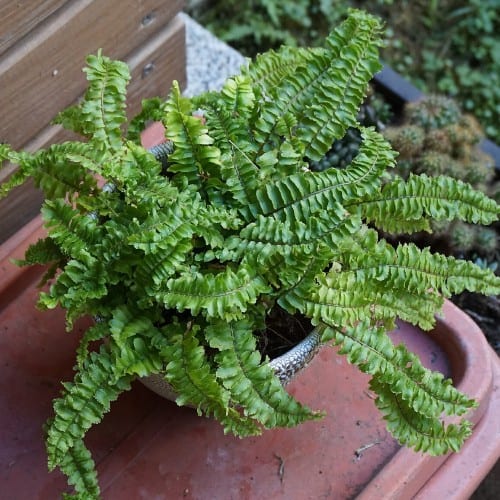
Boston Ferns are so symmetrical and tidy, they’re often mistaken for fakes. The feathery fronds arch out in such perfect form, people assume they’re plastic.
Each little leaflet is spaced and shaped identically, giving a manufactured vibe. The lush, dense texture makes these ferns look more like a decorator’s touch than a wild plant.
17) Pilea peperomioides (Chinese Money Plant)
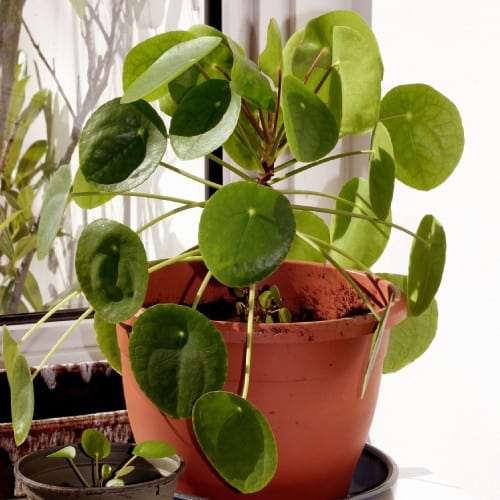
The Chinese Money Plant has perfectly round, flat leaves that look just like green coins stuck on thin stems. Each leaf sits like a pancake, so symmetrical and smooth it feels mass-produced.
Native to China’s Yunnan Province, it usually tops out at around a foot tall. The glossy surface and perfect circles make it a real conversation piece; guests will probably tap the leaves just to check!
18) Cryptanthus bivittatus (Earth Star)
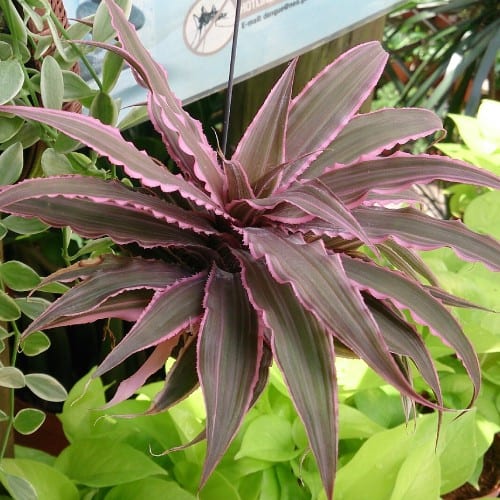
The Earth Star grows in a rosette that forms a near-perfect star, with wavy leaves striped in vivid colors – green, pink, red, yellow. The effect is so bright and symmetrical, it seems more like a plastic decoration than a bromeliad.
Native to Brazil, this little plant usually has 10 to 20 leaves, all radiating out flat. With its bold color bands and smooth texture, it’s easy to see why people think it’s fake at first glance.
19) Tradescantia zebrina (Wandering Jew)
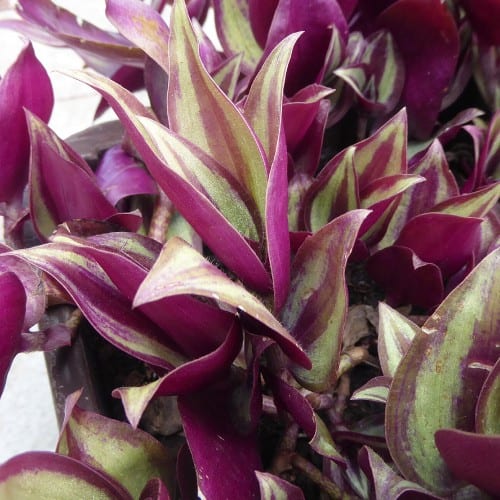
Tradescantia zebrina’s glossy leaves are striped in bold purple and silver, with a metallic sheen that feels almost too perfect. The symmetry and color patterns really make it look like a designer’s project, not a houseplant.
This fast-growing houseplant thrives in indirect light and is super easy to propagate. It’s a great pick if you want to blur the line between natural and artificial in your plant collection.
20) Dypsis lutescens (Areca Palm)
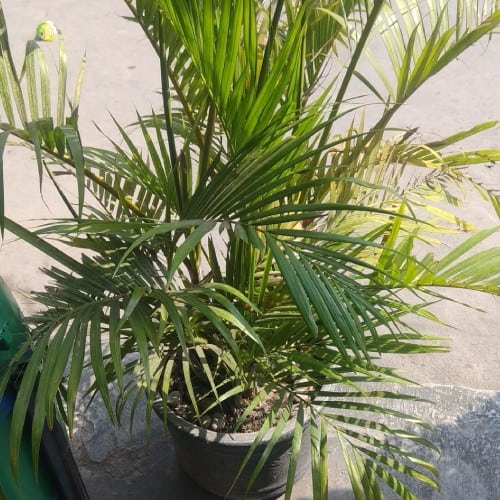
The Areca Palm comes with these ridiculously symmetrical fronds, arching out from a bunch of skinny trunks. Honestly, sometimes it looks more like a prop from a movie set than an actual plant.
Its feathery fronds show off those bright yellow-green leaflets, all lined up a little too perfectly along the stems. There’s this odd, almost plastic sheen to the whole thing, especially if you catch it from across the room.
Weirdly enough, it keeps that tidy, showroom look on its own, which just makes it seem even more like a fake.