
Poison hemlock is one of the most dangerous plants in North America, capable of causing serious harm or death if ingested or improperly handled. The challenge lies in the fact that numerous other plants share similar physical characteristics, making accurate identification critical for safety. Understanding which plants resemble poison hemlock helps you avoid potentially fatal mistakes while foraging, gardening, or hiking.
Learning to distinguish poison hemlock from its lookalikes can protect you and your family from accidental poisoning. Some of these similar plants are equally toxic, while others are completely harmless or even edible.
This guide covers 17 plants commonly confused with poison hemlock, ranging from wild carrots and parsley relatives to other members of the carrot family that share distinctive features like umbrella-shaped flower clusters and fernlike leaves.
1) Queen Anne’s Lace (Daucus carota)
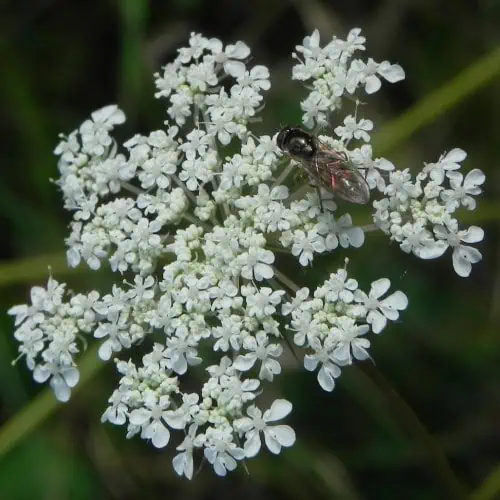
Queen Anne’s Lace is the most commonly confused plant with poison hemlock due to their nearly identical white umbrella-shaped flower clusters. Both plants belong to the Apiaceae family and share similar heights of 2 to 4 feet when mature.
You can distinguish Queen Anne’s Lace by its hairy stems, while poison hemlock features smooth stems with purple blotches. The wild carrot root of Queen Anne’s Lace emits a carrot-like smell when crushed, a characteristic poison hemlock lacks.
2) Angelica (Angelica archangelica)
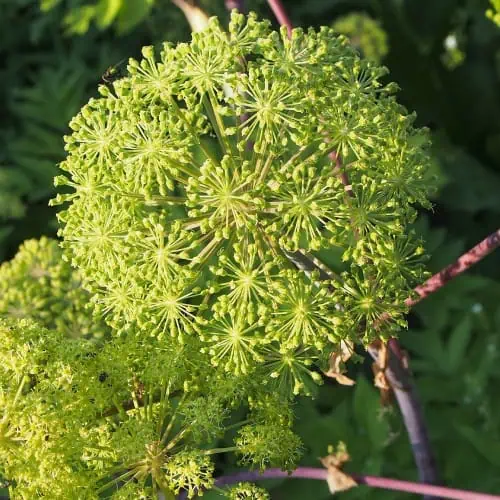
Angelica closely resembles poison hemlock with its tall growth, finely divided leaves, and white umbrella-shaped flower clusters. This aromatic herb from the Apiaceae family can reach similar heights and shares the same wetland habitats as hemlock species.
The key difference lies in toxicity. Angelica has culinary and medicinal uses, while poison hemlock contains deadly alkaloids. You should note that angelica has wider, more irregularly lobed leaves and distinctive leaf sheaths at the base.
Always verify identification with an expert before harvesting, as these plants often grow in overlapping areas.
3) Giant Hogweed (Heracleum mantegazzianum)
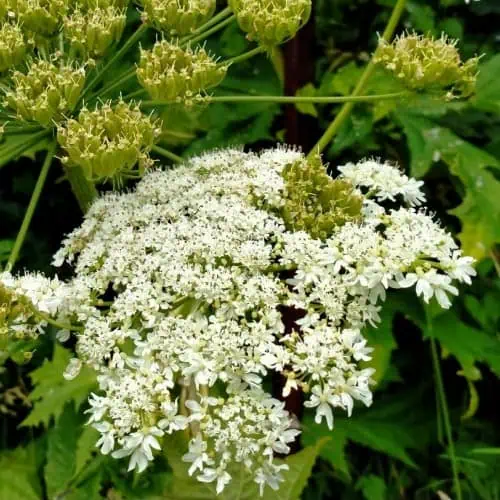
Giant hogweed resembles poison hemlock with its white umbrella-shaped flower clusters and membership in the carrot family. This plant grows much larger than poison hemlock, reaching heights of up to 20 feet.
You can identify it by its thick stems with purple blotches and coarse hairs. The leaves grow exceptionally large, sometimes reaching several feet in length. Its flowers form massive flat-topped clusters that can span two feet across.
4) Water Hemlock (Cicuta maculata)
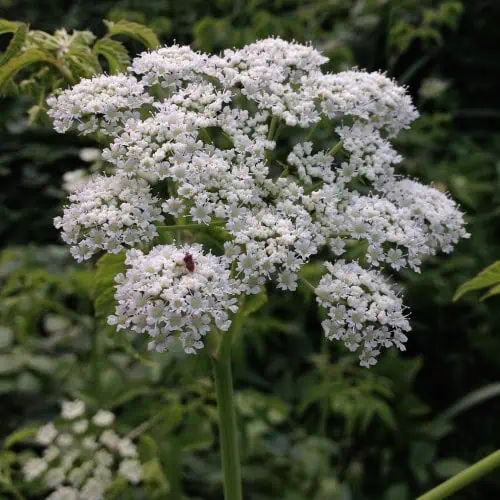
Water hemlock belongs to the same Apiaceae family as poison hemlock, making it a frequent lookalike. You’ll find it growing in wet habitats like marshes, stream banks, and meadows throughout North America.
The plant features tall hollow stems that can reach up to 8 feet, compound leaves, and clusters of small white flowers arranged in umbrella shapes. Water hemlock is actually more toxic than poison hemlock, containing cicutoxin concentrated in its roots and base.
You can distinguish it by purple striping on stems and cross partitions at the nodes.
5) Wild Parsnip (Pastinaca sativa)
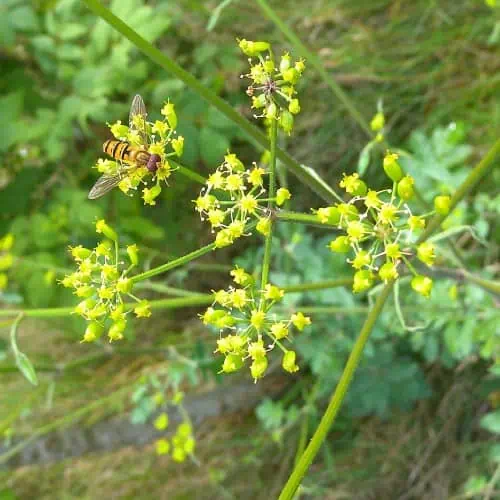
Wild parsnip stands out from poison hemlock with its distinctive yellow umbrella-shaped flower clusters. Both plants belong to the carrot family, but this visual difference makes identification easier.
You’ll notice wild parsnip grows 2 to 6 feet tall with celery-like leaves and deeply grooved green stems. The plant produces flat-topped yellow blooms during summer.
Exercise caution around this plant. Its sap causes severe skin burns and blisters when exposed to sunlight, making it dangerous despite lacking the toxicity of poison hemlock.
6) Carrot (Daucus carota ssp. sativus)
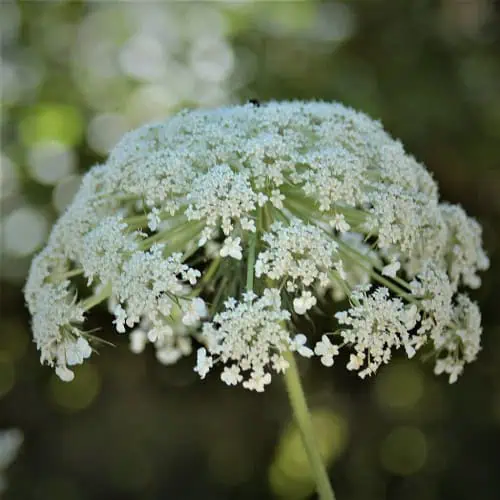
Cultivated carrots can resemble poison hemlock when you observe their feathery, fern-like foliage. The leaves of both plants feature deeply cut segments that create a similar appearance.
You’ll find that garden carrots belong to the same family as poison hemlock, the Apiaceae family. This botanical relationship explains why their leaf structures share common characteristics. Unlike poison hemlock’s smooth, purple-blotched stems, carrot plants typically have hairy stems and lack toxic properties.
7) Fool’s Parsley (Aethusa cynapium)
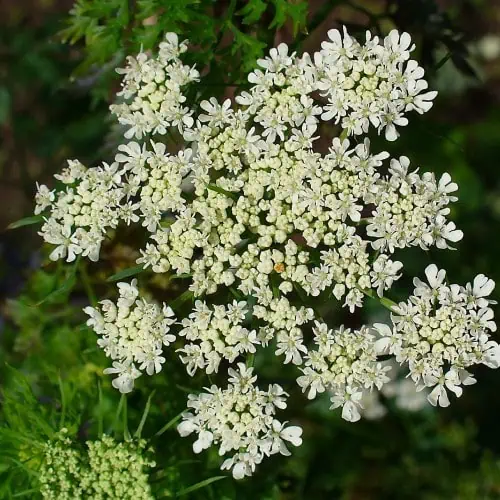
Fool’s Parsley is a poisonous European plant that closely resembles poison hemlock with its white flowers and parsley-like leaves. You can distinguish it by its smaller height of approximately 2.5 feet and the presence of three to four long, drooping bracts at the base of each flower cluster.
The plant contains cynopine, a toxic alkaloid found throughout its structure. Unlike poison hemlock, the toxins in Fool’s Parsley break down when dried, making it safe after the drying process.
8) Cow Parsley (Anthriscus sylvestris)
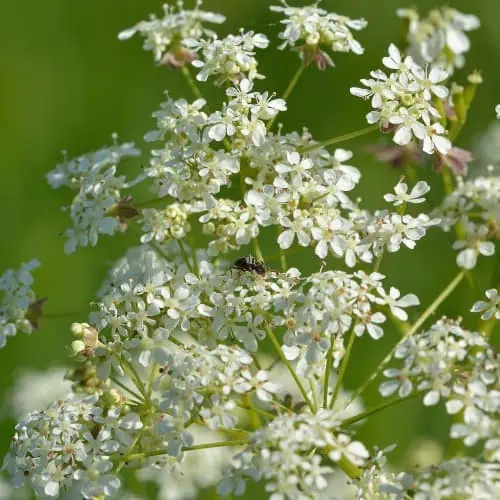
Cow parsley, also called wild chervil, closely resembles poison hemlock in appearance. This short-lived perennial features delicate, fern-like leaves and clusters of white flowers that can cause confusion.
You can distinguish cow parsley by its hairy stems and leaf undersides, whereas poison hemlock has smooth stems with purple spots. The plant grows in wild areas and produces lacy white flower umbels atop sharply cut foliage.
Exercise caution when identifying cow parsley due to its similarity to toxic species in the Apiaceae family.
9) Hemlock Parsley (Conioselinum chinense)
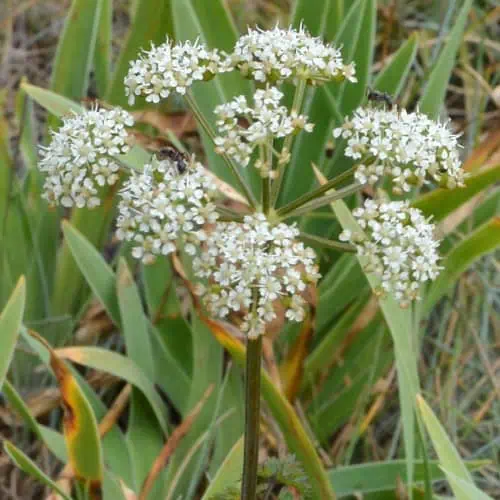
Hemlock parsley is a perennial herb that grows 1 to 5 feet tall with smooth, unspotted stems. You’ll find this plant in wetland habitats like swamps, stream banks, and forested seeps.
The leaves resemble wild carrot, while the white flowers look very similar to poison hemlock. However, unlike poison hemlock’s purple-spotted stems, hemlock parsley stems remain unmarked and green throughout the growing season.
10) Yarrow (Achillea millefolium)
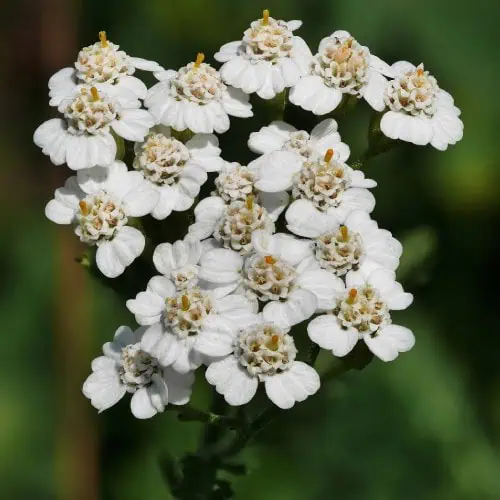
Yarrow shares poison hemlock’s white umbrella-shaped flower clusters, making initial confusion understandable. However, you can distinguish yarrow by its distinctive feathery, fern-like leaves that appear soft and delicate.
Mature poison hemlock grows significantly larger than yarrow, typically three to four times the size. The most reliable identifier is examining the stem, poison hemlock displays purple spots while yarrow stems remain smooth and green.
Both plants bloom during summer months in similar habitats, requiring careful identification before handling.
11) Elderberry (Sambucus nigra)
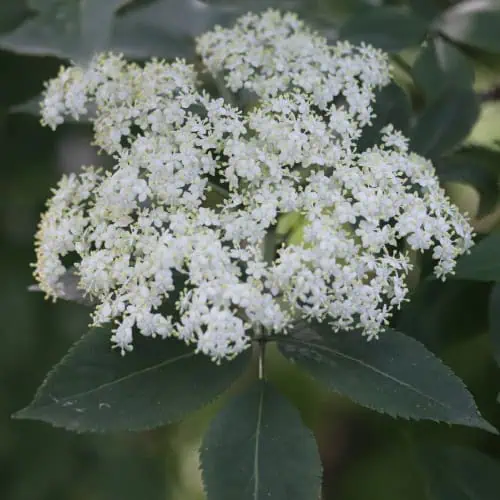
Elderberry produces clusters of small white flowers in flat-topped arrangements that can resemble poison hemlock’s umbels from a distance. The European elderberry grows as a large shrub or small tree, reaching heights of about 20 feet at maturity.
The key difference lies in the berries. Elderberry develops dark purple to black berries, while poison hemlock produces small ribbed seeds. Elderberry also has compound leaves with serrated edges and lacks the purple blotching found on poison hemlock stems.
12) Lovage (Levisticum officinale)
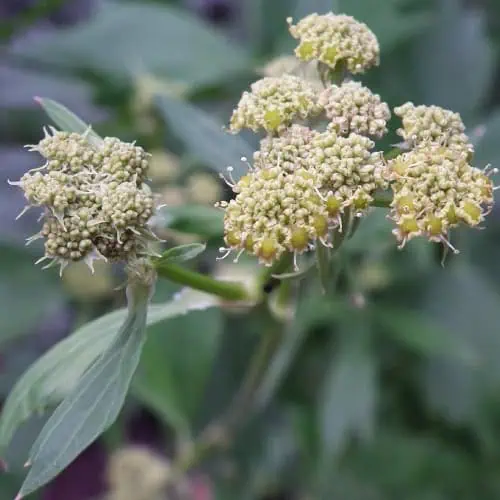
Lovage is a tall perennial herb from the carrot family that can resemble poison hemlock due to its height and umbrella-shaped flower clusters. The plant features dark green, glossy leaves that are deeply divided and larger than parsley, with hollow stems that support small yellow-green flowers.
You can find lovage growing in herb gardens, where it may reach considerable heights. While the plant shares the Apiaceae family with poison hemlock, lovage is cultivated for culinary use and has a distinctive celery-like scent that helps differentiate it from its toxic lookalike.
13) Sweet Cicely (Myrrhis odorata)
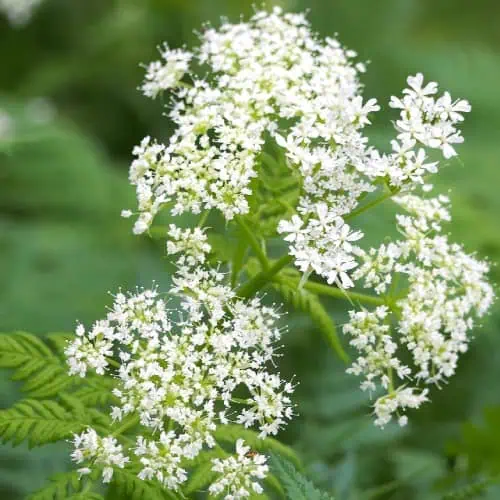
Sweet cicely is a herbaceous perennial from the Apiaceae family that shares visual similarities with poison hemlock. You’ll notice both plants have similar leaf structures and white flower umbels, which can make identification challenging.
However, sweet cicely lacks the distinctive purple blotches on its stem that characterize poison hemlock. When you break the stem or crush the seeds, sweet cicely releases a distinctive aniseed scent that poison hemlock does not have. All parts of sweet cicely are edible and feature an anise-like flavor.
14) Golden Alexanders (Zizia aurea)
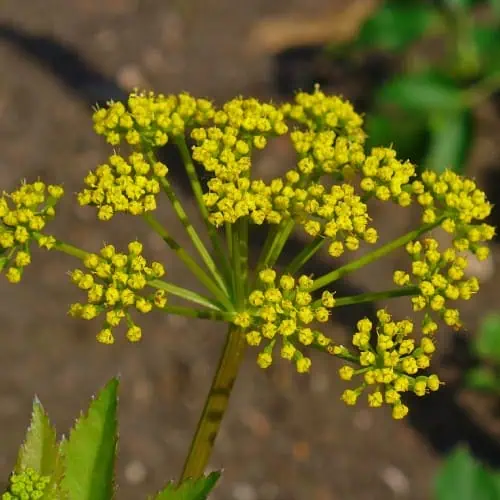
Golden Alexanders produces flat-topped clusters of small yellow flowers that can resemble poison hemlock’s white umbels in structure. This native perennial grows 1 to 3 feet tall and belongs to the same Apiaceae family as poison hemlock.
You can distinguish Golden Alexanders by its bright yellow flowers, which bloom in late spring. The plant features serrated leaves that are generally lanceolate or ovate in shape, different from hemlock’s fern-like foliage.
15) Hog Peanut (Amphicarpaea bracteata)
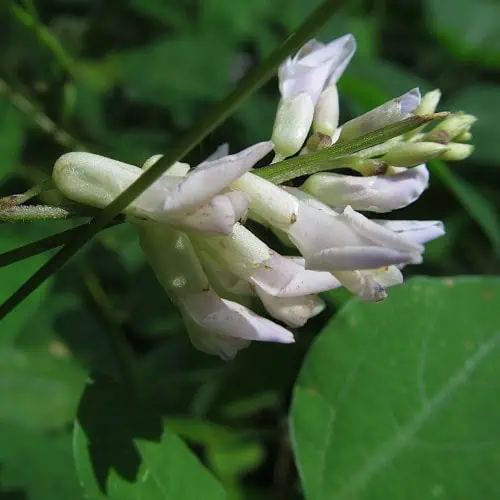
Hog peanut is a vining plant native to eastern North America that you might confuse with poison hemlock in certain growth stages. This annual to perennial legume produces compound leaves that can appear similar to hemlock’s finely divided foliage at first glance.
You can identify hog peanut by its climbing habit and small pea-like flowers, which are typically pale purple or creamy white. The plant produces two types of flowers, including underground cleistogamous flowers that develop into seeds beneath the soil surface, similar to peanuts.
16) Water Parsnip (Sium suave)
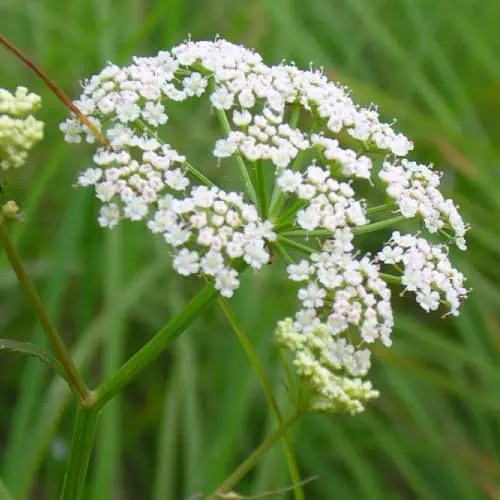
Water Parsnip grows in wetlands throughout North America and closely resembles poison hemlock in its white flower clusters and overall structure. This perennial reaches 2 to 6 feet tall with serrated, deeply divided leaves arranged along hollow, ridged stems.
You’ll find this plant in marshes, wet meadows, ditches, and shallow water areas. While Water Parsnip is technically edible, you should avoid consuming it due to its dangerous similarity to deadly water hemlock, which shares the same habitats.
17) Wild Celery (Angelica venenosa)
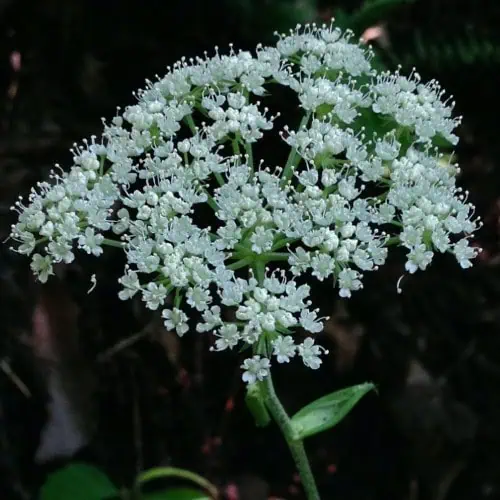
Wild celery shares the characteristic umbrella-shaped flower clusters with poison hemlock, making visual confusion possible in the field. This native plant grows in woodland areas and along stream banks throughout eastern North America.
You can distinguish wild celery by its smooth, purple-tinged stems that lack the prominent purple blotches of poison hemlock. The plant also produces a distinct celery-like aroma when crushed, unlike hemlock’s musty smell.