
The ocean’s packed with more plant life than most folks ever imagine. Sure, everyone’s seen those photos of kelp forests waving in the currents, but there’s a crazy range of marine plants down there; everything from microscopic algae to hulking kelp and even trees that have figured out how to deal with saltwater. They’re all doing their part: making oxygen, building habitats, cycling nutrients. The ocean would be a mess without them.
Diving into the variety of ocean plants shows just how complex and important marine ecosystems are. Here’s a look at twenty different plant types you’ll find in ocean waters, from all sorts of algae to seagrasses and even coastal trees. You’ll see how these organisms have adapted to saltwater life and why they matter for marine biodiversity.
1) Giant Kelp
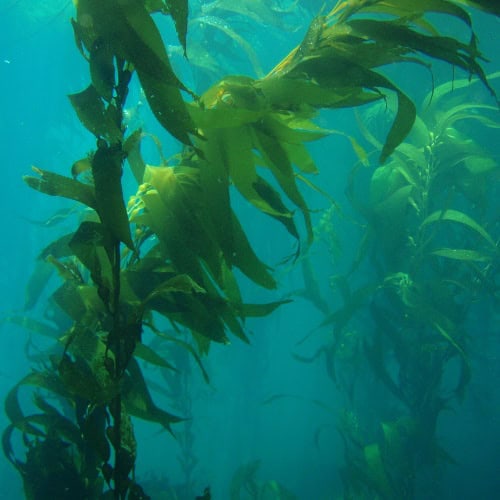
Giant kelp is a true heavyweight among marine algae, sometimes stretching up to 175 feet long. It looks like a plant, with big green blades, towering structure, but it’s actually a type of brown seaweed.
It’s got a holdfast to anchor it to the ocean floor, a stemlike stipe, and those broad blades soaking up sunlight and nutrients. The gas bladders? They keep the whole thing upright so it can sway with the currents. It’s kind of mesmerizing if you ever get to swim through a kelp forest.
2) Seagrass
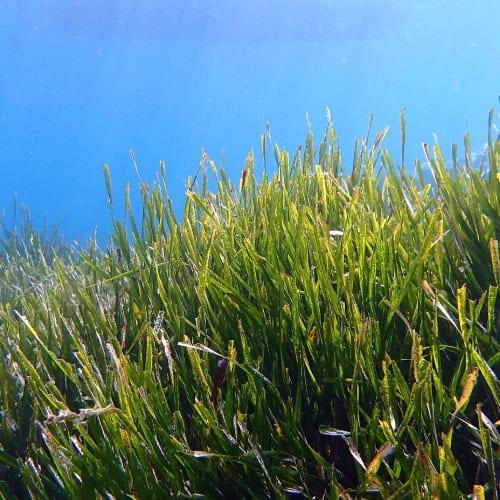
Seagrass is a flowering plant that’s taken the plunge back into the ocean after evolving on land around 70 to 100 million years back. Unlike seaweed, it’s a true plant, and there are about 60 species doing their thing in sandy or muddy seabeds.
They produce flowers and seeds underwater, can spread by rhizomes, and their long, narrow leaves create these underwater meadows. Marine animals love them, and they’re pretty great at holding the seafloor together and storing carbon, too.
3) Red Algae (Rhodophyta)
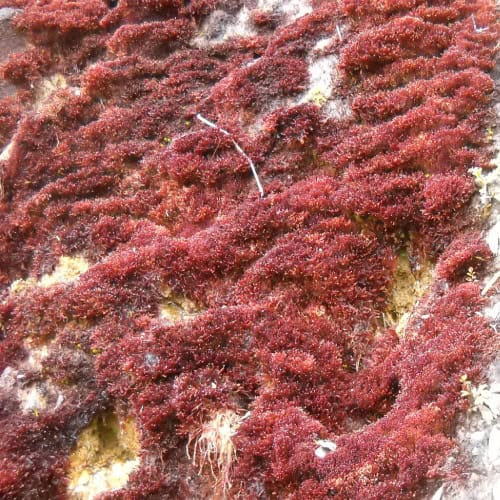
Red algae are ancient; one of the oldest groups of eukaryotic algae! There are around 6,000 species, mostly hanging out in the ocean. Their colors are all over the place: rose red, maroon, brown, even greenish sometimes.
You’ll spot them in tropical and warm temperate coastal areas, but they’re not picky, as cold oceans work too. They grow everywhere from intertidal zones down past 200 meters, usually clinging to rocks or other plants.
4) Green Algae (Chlorophyta)
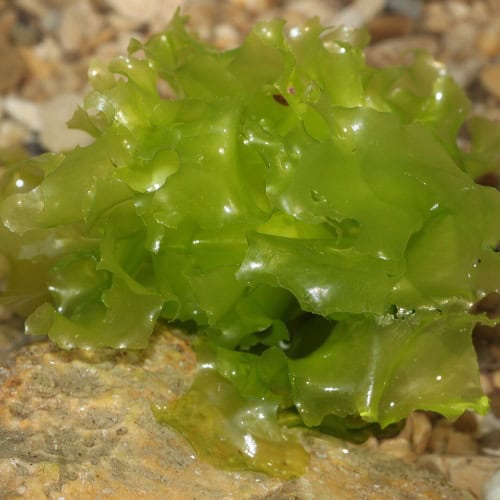
Green algae are about as close to land plants as you’ll get in the ocean. Over 7,000 species, thriving from shallow to deep waters. They’re big on diversity.
Think sea lettuce and Caulerpa, with some forming thick mats, while others look like delicate feathers. Their green color? That’s chlorophyll a and b, just like in your houseplants.
5) Brown Algae (Phaeophyceae)
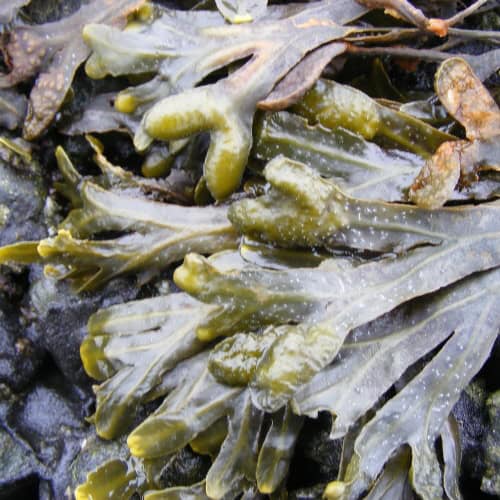
Brown algae are multicellular and have this classic brown-to-olive look, thanks to a pigment called fucoxanthin. You’ll mostly find them in cold coastal waters, where they can form massive underwater forests.
Some species, like kelp, get gigantic and create habitats for all sorts of marine creatures. There are about 1,500 species in this group, from tiny seaweeds to those vast kelp forests.
6) Sargassum
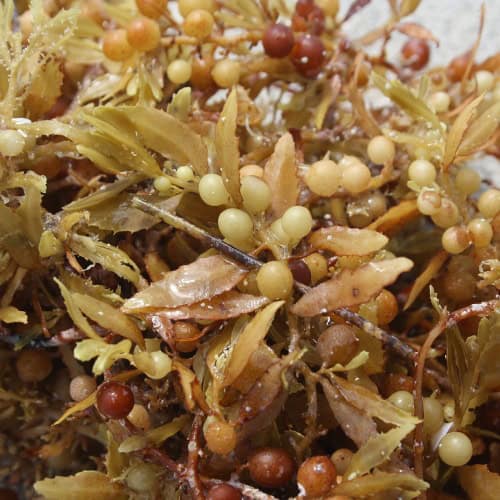
Sargassum’s a brown algae that floats right at the surface, held up by these little gas bladders called pneumatocysts. Some species never even bother with the seafloor, as they just drift, forming thick mats in tropical and temperate waters.
These floating jungles are a hotspot for all kinds of life, including turtles, fish, crabs, seabirds. The Great Atlantic Sargassum Belt is truly something, stretching from Africa’s coast to the Caribbean. It’s one of the biggest algae formations out there.
7) Coralline Algae
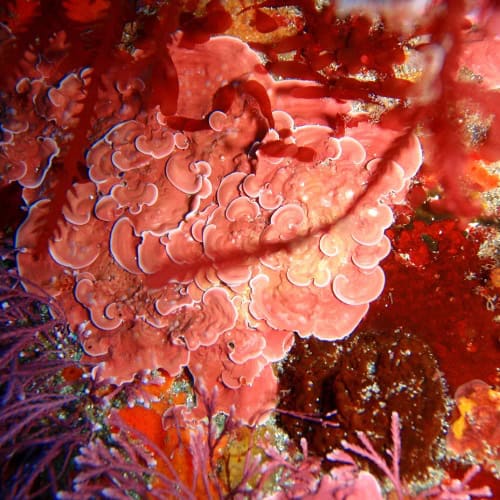
Coralline algae are a type of red algae that get tough by depositing calcium carbonate in their cell walls. That gives them a hard, almost rock-like feel. The colors are wild, such as pink, purple, yellow, even white or gray-green.
They come in two basic forms: encrusting types that spread over surfaces, and branching types that stick up. You’ll find them from shallow tide pools down to about 100 feet. In coral reefs, they’re a big part of what keeps the whole thing glued together.
8) Mangrove Trees
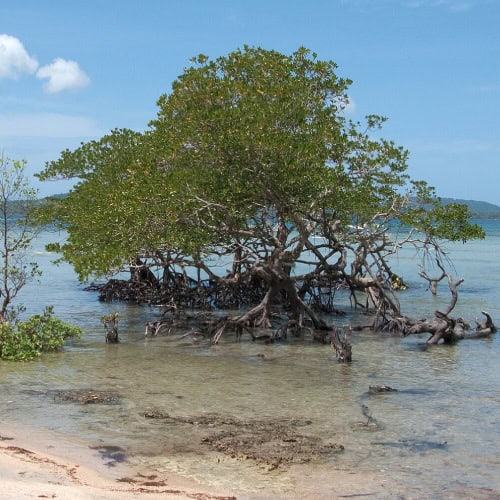
Mangrove trees are survivors, growing where saltwater meets land; places where most plants would just give up. These salt-tolerant trees have wild root systems that let them live in low-oxygen mud and handle changing tides.
There are about 80 mangrove species around the tropics and subtropics. Their prop roots and pneumatophores stick up out of the water, bringing oxygen to the roots and keeping the shoreline stable.
9) Zostera
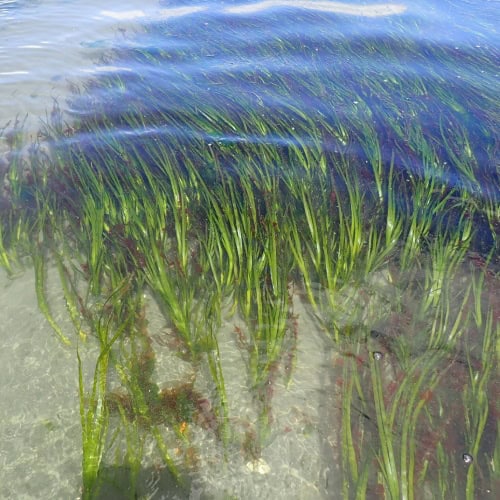
Zostera, or eelgrass, is a genus of seagrasses with about 15 species. These marine flowering plants show up in temperate and subtropical coastal waters all over, growing in shallow, sheltered places like bays and estuaries, usually at depths of 0 to 10 meters.
Zostera marina is the main one, with flat green blades that can stretch up to 60 centimeters. They form big beds that are a lifeline for all sorts of marine life.
10) Caulerpa
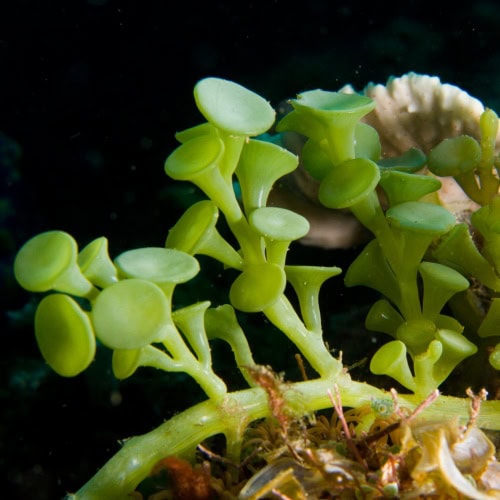
Caulerpa is a green algae genus with over 100 species, mostly found in the tropics. What’s wild is that it’s technically unicellular, but it grows to look like it has roots, stems, and leaves.
Some Caulerpa species are native to the Caribbean and Indian Ocean, but a few have gone rogue and become invasive elsewhere. They grow fast, can outcompete native seagrass, and sometimes take over whole areas, which isn’t great for biodiversity.
11) Halophila
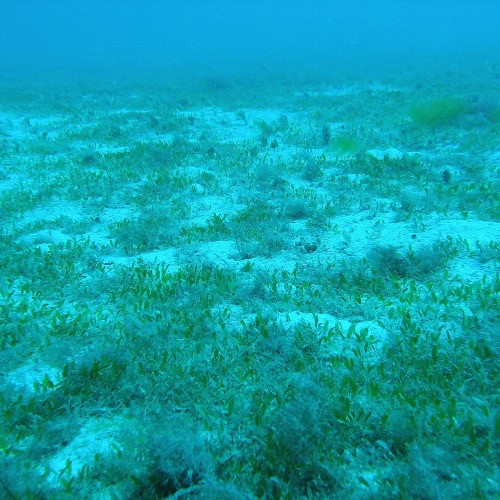
Halophila is a seagrass genus in the Hydrocharitaceae family. These are true flowering plants that spend their whole lives submerged. There are about 10 species in warm tropical and temperate waters, such as the Caribbean, Indian, and Pacific Oceans.
They grow from rhizomes and provide important habitat for marine life. If you live near the coast, your local ecosystem might depend on Halophila for nursery grounds and as food for manatees and sea turtles.
12) Padina
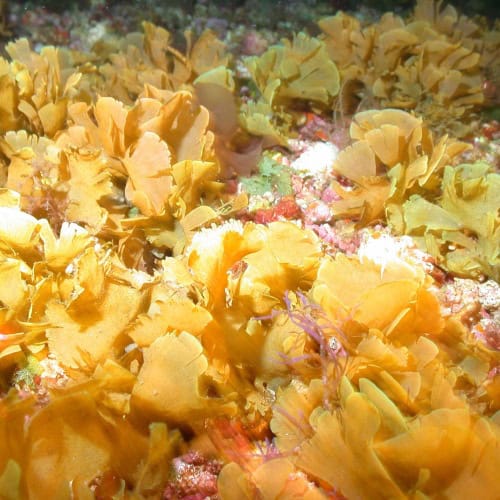
Padina is a brown algae that stands out with its soft, curly, fan-shaped blades. It’s actually the only calcified brown algae, so it needs a good amount of calcium to grow properly.
Padina shows up in lots of places, and Padina sanctae crucis is especially common on imported live rock. It’s useful in marine ecosystems and sometimes in aquariums, just make sure there’s enough calcium if you’re keeping it at home.
13) Codium
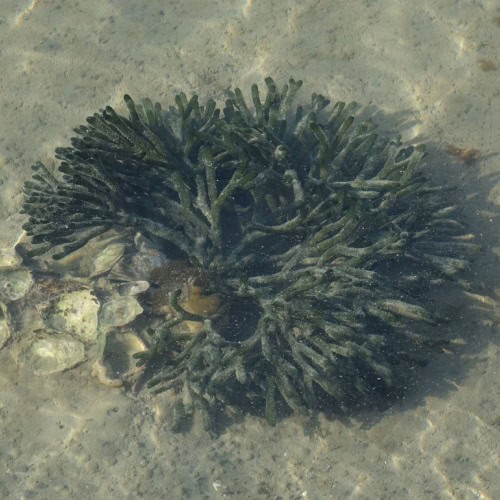
Codium is a green marine algae genus with a soft, velvety feel. It grows in rocky tide pools and attaches to hard surfaces in all sorts of marine spots.
There are about 125 Codium species worldwide. Some, like Codium fragile, have thick, finger-like fronds that can reach over a foot long. These algae offer habitat and food for marine animals, including sea slugs and other creatures.
14) Laminaria
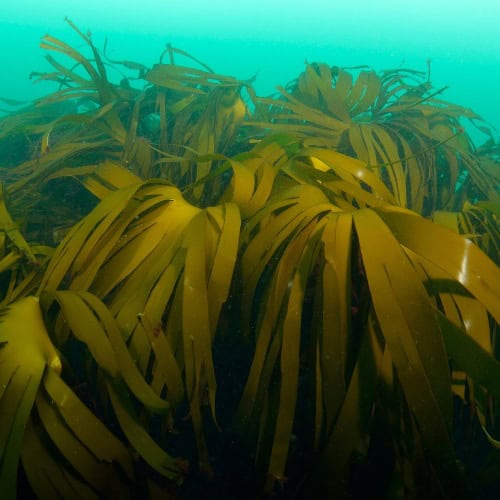
Laminaria is a brown algae genus, basically another kind of kelp. Around 30 species live in the cold Atlantic and Pacific Oceans, mostly along rocky shores just below the tide line.
These seaweeds have long, leathery blades and can form dense kelp forests, making it prime real estate for fish and invertebrates along the coast.
15) Gracilaria
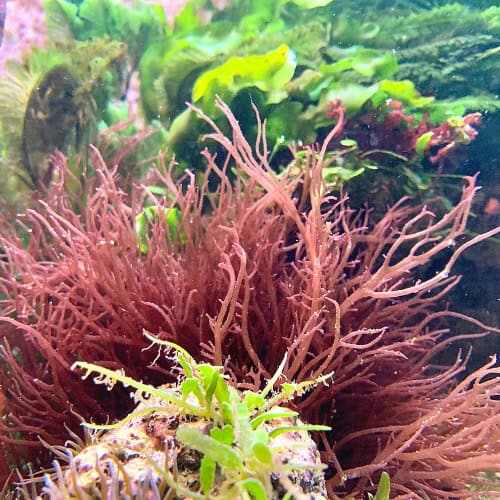
Gracilaria is a red seaweed found in shallow coastal waters, such as bays and estuaries. It grows in branching clumps on the ocean floor.
It’s a shelter and food source for marine life, and its holdfasts help keep sediments in place. Gracilaria likes warm water (20–30°C) and stays pretty shallow, usually less than 10 meters deep. It’s also valuable for agar production and aquaculture.