
If your garden gets loads of sunlight, you’re lucky; there’s a whole world of perennial flowers full sun varieties just waiting to show off. These plants that do well in sun really shine with six or more hours of direct light, and these heat and sun tolerant plants actually seem to prefer the high temperatures, often shrugging off drought better than species that hide in the shade.
When planning your yard, exploring different full sun perennial garden designs can help you create a space that looks vibrant all season. You can use full sun perennials landscaping techniques to add depth and structure, such as placing tall perennial flowers full sun at the back of your borders or using white perennial flowers full sun to provide a crisp, bright contrast against more colorful blooms.
These full sun perrenial landscaping ideas ensure your garden doesn’t just survive the heat but thrives in it. Many of these varieties are also perfect for a full sun pollinator garden, attracting bees and butterflies with ease!
1) Blue False Indigo (Baptisia australis)
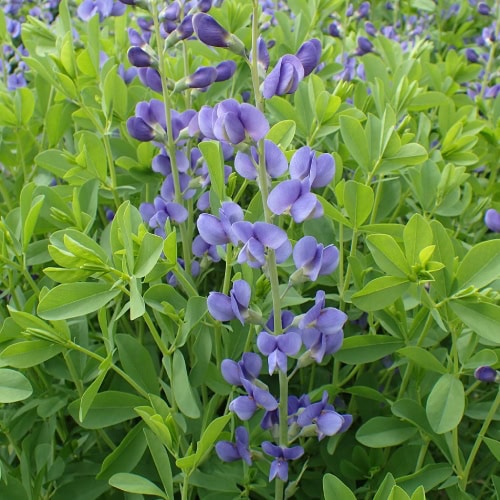
Blue False Indigo is one of those plants that just feels right in a sunny garden. The striking blue, pea-like blooms come back every year, and it’s honestly hard to beat that classic North American prairie vibe. Full sun and well-drained soil? Blue False Indigo is all in.
Stick it in the back of your flower beds where it has room to grow, as once it’s established, you can pretty much forget about it. Bees and butterflies will thank you for the early summer nectar, and while you won’t be making tea with it, you’ll have plenty of cool, charcoal-black seed pods that rattle in the wind to enjoy long after the flowers are gone.
2) Black-eyed Susan (Rudbeckia hirta)
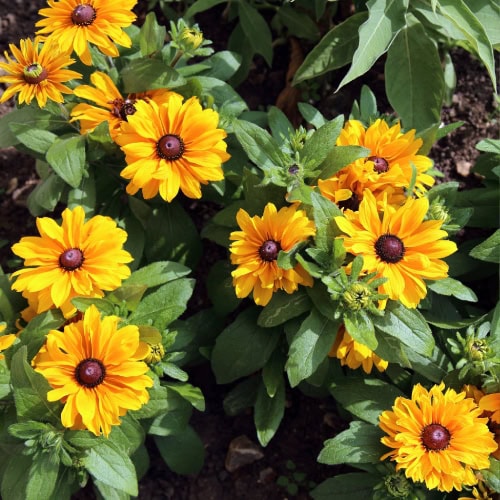
Black-eyed Susan is a classic wildflower from North America that just loves the sun. You get bright yellow to orange petals around those dark, almost chocolatey centers, and they keep blooming from spring into summer.
They’re not picky about soil and will handle clay, loam, sandy – as long as it drains! They like it a bit acidic, pH under 6.8 if you’re measuring. Most grow 1 to 3 feet tall, spreading 1 to 2 feet, so they’re great for borders or a prairie look.
3) Daylilies (Hemerocallis)

Daylilies are about as easygoing as it gets. Give them six hours of sun and they’ll reward you with trumpet-shaped blooms in just about every color but true white or blue.
The grass-like clumps stay neat at 1 to 1.5 feet tall. Each flower lasts just a day, but the plant is generous with blooms from late spring to fall. Daylilies don’t fuss about heat, drought, or pests.
4) Coneflower (Echinacea)
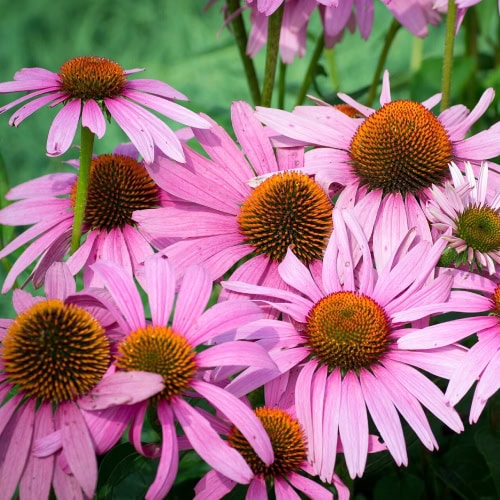
Coneflowers are tough North American natives that don’t mind the heat. Give them 6 to 8 hours of sun and they’ll reach 2 to 4 feet high, showing off daisy-like blooms.
Pick from purple, pink, red, orange, white, yellow, even green. They start up in June and keep going into August or later. Plant them in well-drained soil, spaced out a bit, and you’ll get pollinators galore.
5) Tickweed (Coreopsis)
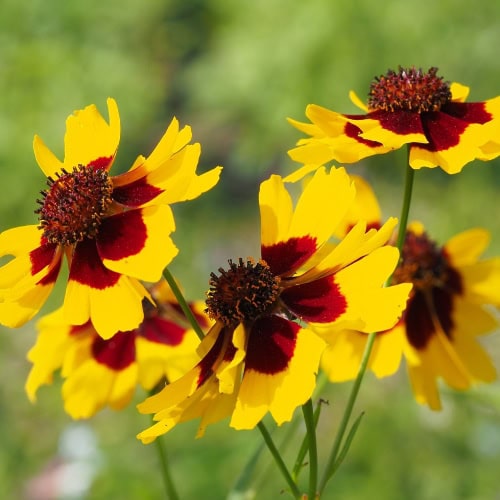
Coreopsis (tickseed) is one of those plants you can count on for summer color. There are over 80 species, with flowers in yellows, pinks, and reds.
They’ll do best with six hours of sun and soil that doesn’t stay soggy. Once they’re going, drought doesn’t really bother them. Stick them in borders, beds, or containers as coreopsis just keeps blooming from early summer to early fall.
6) Salvia
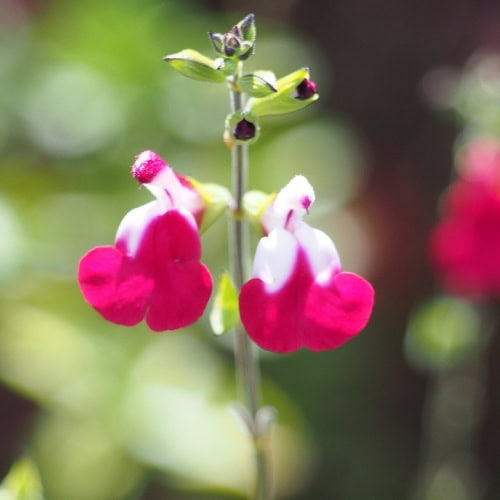
Salvia is a real workhorse for sunny gardens, giving you color from summer into fall with barely any effort. Plant it where it’ll get 6 to 8 hours of sun and make sure the soil drains well.
These guys love the heat and butterflies love them back. Deer, not so much. Depending on the type, space them out a bit, as they can vary from 1 to 6 feet apart. Many salvias bloom more than once a season.
7) Blanket Flower (Gaillardia)

Blanket flowers are show-offs in the best way with daisy-like blooms in reds, oranges, and yellows that last all season. Native to North America, they hit about 24 inches tall and spread around 20 inches.
They’re ridiculously drought tolerant and don’t need much from you. Full sun, well-drained soil, and they’ll bloom right up to frost. Bees and butterflies can’t resist them, and you don’t need to fertilize.
8) Blazing Star (Liatris spicata)

Blazing Star is basically the definition of low-maintenance for a sunny garden. This native perennial likes it sunny and can handle a variety of soil types, featuring tall, fuzzy purple spikes that show up in the heat of mid-to-late summer.
Unlike most spiked flowers, these bloom from the top down, adding a really unique vertical look to your flower beds. Just give them well-drained soil and plenty of sun. Blazing Star is tough, handles zones 3-9, and pollinators (especially Monarch butterflies)absolutely love it.
9) Stiff Goldenrod (Solidago rigida)

Stiff Goldenrod is hard to miss with its bright, flat-topped yellow flower clusters and sturdy, upright stems. It blooms from late summer into fall, usually stands 3 to 5 feet tall, and absolutely demands full sun to put on its best show.
It’s happy in almost any soil, including heavy clay; honestly, the tougher the spot, the better, as its rigid stems mean it won’t flop over like other tall plants. Once it’s settled, you can almost ignore it. It’s perfect for adding a late-season burst of gold to a low-water garden.
10) Rattlesnake Master (Eryngium yuccifolium)
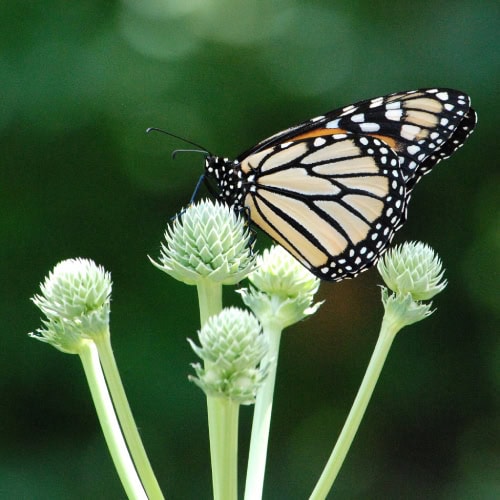
Rattlesnake Master is one of those perennials that just keeps going and looks like nothing else in the garden. Hardy from USDA Zones 3-9, it’s not fussy about climate. You get unique, sword-like silvery-green leaves that look like yucca, plus tall stalks topped with bristly, white, globe-shaped flower heads.
The blooms stick around through much of the summer and eventually turn into architectural seed heads that look great even in winter. Rattlesnake Master likes full sun and doesn’t care much about soil type once its deep taproot is established, making it a no-brainer if you want something easy, drought-tolerant, and visually striking.
11) Bee Balm (Monarda)
Bee balm is wild with its tubular flowers that light up the garden in summer and bring in hummingbirds, butterflies, and bees. Native to North America, it grows 2 to 4 feet tall and loves full sun, though in really hot places it appreciates a little afternoon break.
Plant it in moist, well-drained soil and give it space for air to move around. It spreads fast, so you’ll want to divide it every few years to keep things under control.
12) Shasta Daisy (Leucanthemum)
Shasta daisies are the picture of summer: white petals, yellow centers, and blooms from late spring through summer. They’re hardy, love full sun, and don’t ask for much.
Most reach 2 to 4 feet tall and spread over time. They’re great for borders or cottage gardens, and make nice cut flowers too.
13) Yarrow (Achillea)
Yarrow’s flat-topped flowers come in white, yellow, pink, or red and can handle full sun and poor, dry soil without complaint.
The foliage is ferny and attractive, and plants usually grow 1 to 3 feet tall. Yarrow is great in borders or containers, and it’s a magnet for pollinators from late spring through summer.
14) Phlox
Phlox is versatile, with nearly 70 species ranging from low, creeping forms to tall types that reach 2 to 4 feet. Most love full sun, so be sure to give them about 6 hours and you’ll get the best blooms.
You can pick from creeping, woodland, or garden phlox depending on your style. The fragrant flower clusters come in white, pink, purple, and blue, blooming from spring to late summer. They like well-drained, fertile soil and are reliably deer-resistant.
15) Gaura
Gaura’s delicate, butterfly-like flowers float on thin stems from late spring right through autumn. It’s tough, needs 6 to 8 hours of sun, and doesn’t care much about soil, as long as it drains well and they aren’t left soggy for too long.
Once it’s going, gaura shrugs off drought and heat. It fits nicely in sunny borders, especially when it can lean on neighboring plants for a little support.
16) Butterfly Weed (Asclepias tuberosa)
Butterfly Weed is pretty much a must if you want pollinators. The bright orange flowers show up all summer, and the plants reach 1.5 to 2 feet tall. Full sun and well-drained soil are the main requirements.
It actually prefers sandy or rocky spots and, with its deep taproot, handles drought like a champ. After the first year, you can pretty much leave it alone.
17) Lupine
Lupines send up gorgeous spires of flowers in colors of purple, pink, blue, yellow, and white. They want six hours of sun for the best show and sturdy stems.
Plant them in spring or fall in well-drained soil. They usually grow 1 to 4 feet tall and bloom for 3 to 5 weeks from late spring into early summer. As legumes, they even help enrich your soil.
18) Penstemon
Penstemon, or beardtongue, is a North American native that loves full sun. It gives you colorful, tubular flowers mainly in spring and early summer, though some types bloom again later on.
Most stay between 1 and 3 feet tall. They’re happiest in well-drained soil and, once established, don’t need much water. Hummingbirds and pollinators are big fans.
19) Gaillardia aristata
Gaillardia aristata, another blanket flower, is all about those bold, daisy-like blooms in reds, oranges, and yellows from late spring through fall. It’s tough, thrives in full sun and well-drained soil, and doesn’t mind drought.
You don’t have to fuss over it, as it actually likes poor to average soil better than rich. The flowers attract butterflies and bees, and the seedheads feed the birds.
20) Veronica (Speedwell)
Veronica, or Speedwell, brings a burst of color with upright spikes of flowers in blue, purple, pink, or sometimes white. They’ll show off from spring all the way into fall, which is honestly pretty impressive. This perennial really prefers full sun, so aim for at least six hours of direct light. It’s surprisingly adaptable, growing in zones 3 through 9.
Give your veronica some space (about 15 to 18 inches apart) in well-drained soil. Depending on which type you go for, the plants can end up anywhere from a foot to four feet tall. If you snip away the spent blooms, you’ll get more flowers and, well, the plants just look neater.