
“Fish pond” shows up as a noun, just a regular one, meaning a spot, natural or man-made, where fish are kept.
You might find yourself saying, “The fish pond in my backyard attracts dragonflies,” or maybe, “We’re planning to install a fish pond near the patio.” It’s a pretty flexible phrase, working like any other two-word noun in English.
If you’re writing about landscaping, aquaculture, or even office design, using “fish pond” correctly can help you get your point across. The term pops up in all kinds of conversations, from folks chatting about backyard projects to business types talking about office perks.
If you know how to use it in a sentence, you’ll find it easier to talk about water features and what they’re for.
How Do You Use Fish Pond in a Sentence
Once you see “fish pond” as a noun phrase for a body of water meant for fish, it’s pretty simple to use. You’ll find it in all sorts of settings, from describing a backyard project to discussing landscaping at work.
Common Usage Examples
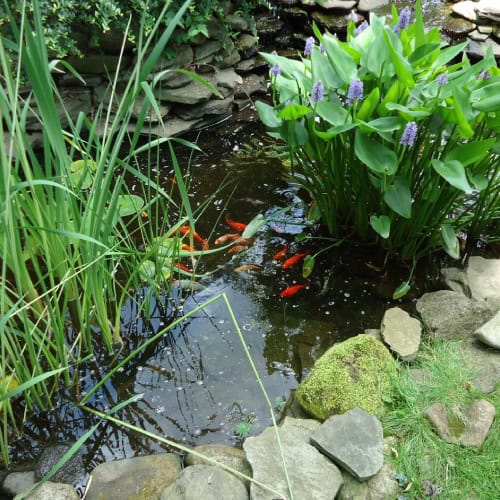
You can stick “fish pond” in different spots in a sentence, depending on what you want to say. For a subject, maybe: “The fish pond attracts local wildlife every morning.” If you’re talking about a place: “We built a fish pond near the patio for weekend relaxation.”
It works in questions too: “Have you checked the water quality in your fish pond lately?” Possessive forms are common: “my fish pond,” “the office’s fish pond.” And if you want a little action: “She feeds the koi in her fish pond twice daily.”
Here are a few ways you might use it:
- Descriptive: “Their backyard fish pond features colorful goldfish and water lilies.”
- Instructional: “Clean your fish pond filters monthly to maintain healthy water conditions.”
- Comparative: “A fish pond requires less maintenance than a swimming pool.”
- Planning: “Installing a fish pond adds value to residential properties.”
Definitions and Synonyms
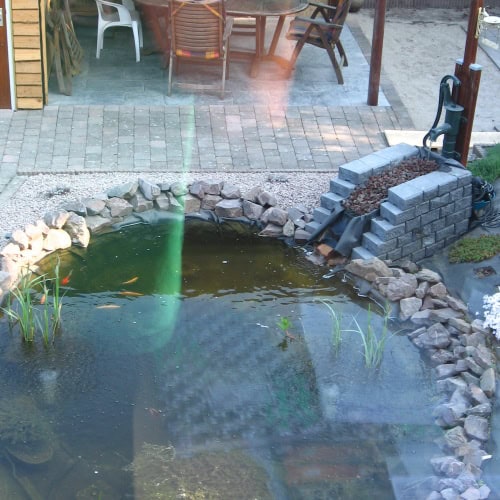
A fish pond is just what it sounds like: an artificial or natural body of water where people keep or raise fish. These ponds can be tiny backyard features or big commercial setups. The phrase covers everything from ornamental koi ponds to working aquaculture facilities.
You’ll see some synonyms, depending on what you mean. “Fishpond” (all one word) is fine too. “Koi pond” is more specific, for Japanese carp, and “garden pond” leans into the decorative side. If you’re talking about farming, “aquaculture pond” fits better.
Other related terms pop up as well. “Water garden” usually means more plants, “ornamental pond” is about looks, and “stock pond” or “fish farm” are for larger, agricultural uses. The word you choose depends on what kind of pond you’re actually talking about.
Contextual Meaning in Everyday English
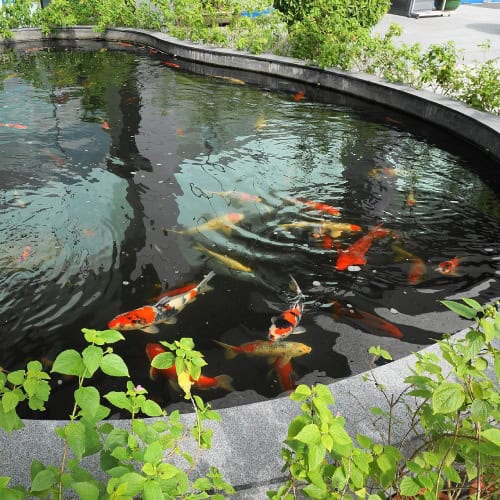
What “fish pond” means really depends on the conversation. If you’re talking about someone’s yard, it’s probably a decorative pond for relaxing or showing off. Like, “Adding a fish pond transformed our plain backyard into a peaceful retreat.”
In business, fish ponds are often seen as nice-to-have amenities. Office managers might talk about them as stress-busters, and real estate agents sometimes mention them as selling points. Landscapers see them as a professional service that takes some know-how.
On the farming or aquaculture side, “fish pond” is all about raising fish for food or sale. In classrooms, teachers might use fish ponds to explain biology or ecology. The meaning really comes from the words around it and the situation.
Practical Applications and Language Insights
If you’re writing about fish ponds in a more technical or academic way, you’ll probably end up discussing ecosystems, environmental balance, or even scientific research. The term comes up in sustainability talks and biological studies, especially where aquatic ecosystems are involved.
Fish Pond in Educational and Scientific Contexts
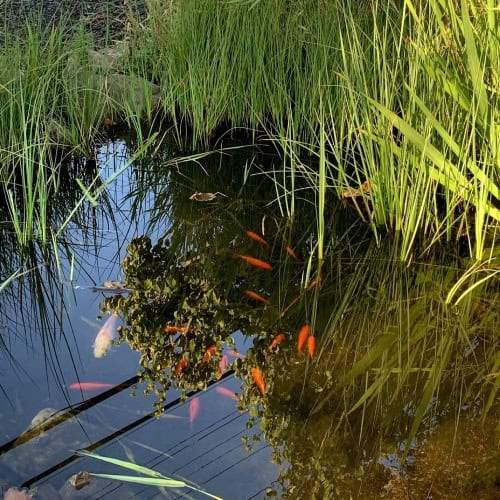
“Fish pond” can be handy when talking about controlled aquatic environments in research. Scientists mention fish ponds when they’re studying aquatic biology, water chemistry, or how different species behave. For example: “The research team monitored oxygen levels in the fish pond to assess habitat quality for native species.”
Teachers use fish ponds as hands-on learning tools for biology students. You might see something like, “Students collected water samples from the fish pond to analyze pH levels and nutrient concentrations.” It’s a straightforward way to bring environmental science to life.
If you’re writing about aquaculture operations, you’ll want to be specific. For instance: “The commercial fish pond maintained optimal temperature ranges between 68-75°F for tilapia production.” Technical reports and academic papers rely on this kind of terminology to describe managed ecosystems.
Using Fish Pond in Environmental Discussions
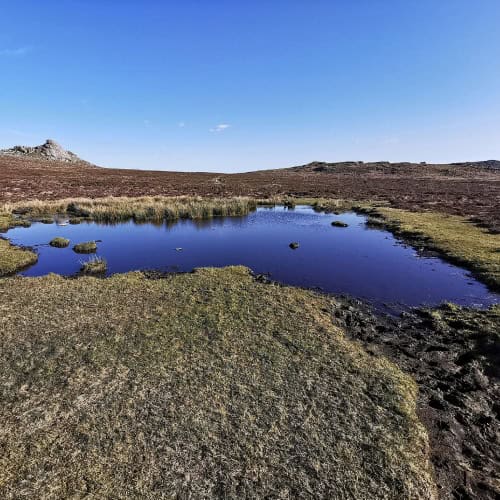
When it comes to environmental writing, fish ponds can be linked to bigger ecological issues. You might focus on habitat preservation: “The restored fish pond now serves as a refuge for declining amphibian populations.”
Climate change comes up, too. For example: “Rising temperatures caused algae blooms in the fish pond, disrupting the existing biological balance.” It’s a way to connect what’s happening locally to broader trends.
Water quality management is another angle. You could say, “Agricultural runoff affected the fish pond’s water clarity, reducing light penetration for aquatic plants.” Conservationists often use fish ponds as examples of fragile ecosystems that need protection.
Policy discussions might include lines like, “Local ordinances require buffer zones around residential fish ponds to prevent contamination.” In these cases, fish ponds are tied to watershed health, pollution, and biodiversity concerns.
Connections to Food Webs and Ecosystem Terminology
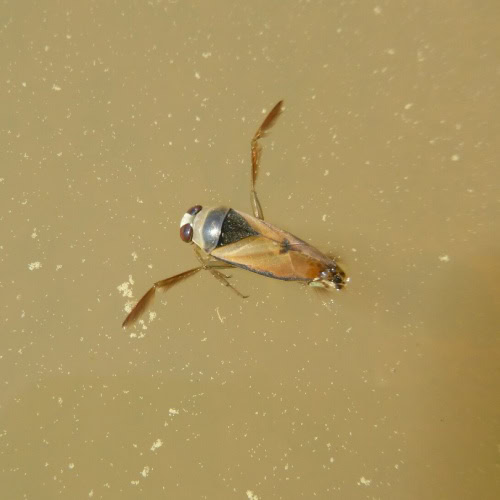
Fish ponds are like tiny, self-contained food web experiments, where you can actually see energy moving from one organism to another. Think about it: the food web here has algae as the primary producers, zooplankton munching away as primary consumers, and then fish acting as the secondary consumers. It’s kind of fascinating how each group relies on the others.
The whole idea of trophic levels makes a lot more sense once you look at a fish pond. For example, predatory fish sit right at the top of the pond’s food web, keeping the numbers of smaller species in check. It’s a pretty clear way to see how ecological hierarchies play out, even if it’s on a small scale.
And then there’s nutrient cycling, which is one of those things that’s easy to overlook but so important. Decomposers in the pond break down all sorts of organic stuff, and in doing so, they release nutrients that help plants grow and keep the food web going. It’s a neat little loop, really.
Of course, when people get involved, things shift. For instance, adding extra feed to a fish pond can throw off the natural food web, sometimes making predatory fish less interested in hunting native insects. It’s a reminder that even small changes can ripple through the system.