
Flowers that start with letter K are a pretty quirky, fascinating bunch. When looking for things that start with K for your garden, you’ll find that some are well-known staples, while others are rare enough that you might only see them in a botanic garden.
This list of K flower names covers 20 different varieties, from bold succulents to cheerful perennials.
Whether you are researching specific plant names or just looking for pretty flower names to add to your collection, these plants that start with K offer something for everyone. You’ll find both familiar flower names and a few surprises in this guide.
1) Kalanchoe
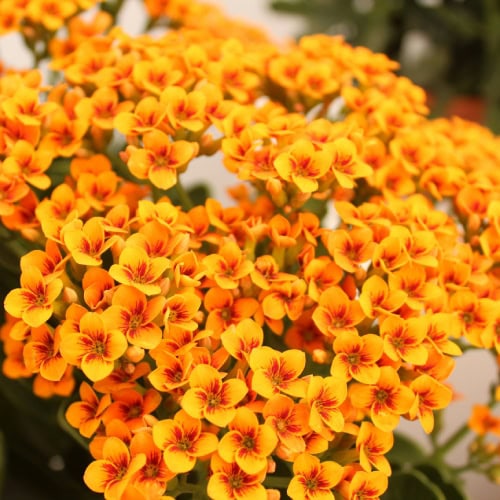
Kalanchoe is a tropical succulent with thick, fleshy leaves and punchy flower clusters. Outdoors, it’s happy in zones 8 and up, but it’s just as popular as a houseplant anywhere cooler.
The blooms pop in reds, oranges, yellows, and pinks – pretty much the whole warm spectrum. This plant barely asks for anything: bright light, a little water now and then, and it’ll reward you with long-lasting color. Honestly, it’s perfect if you’re not the most attentive gardener.
2) Knapweed
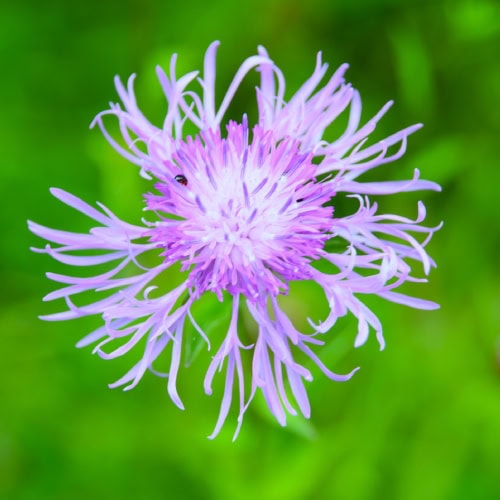
Knapweed (sometimes called Hardheads) sports round, spiky flower heads in shades of pink, purple, or white. It’s a tough perennial and a favorite among pollinators thanks to its nectar-rich blooms.
Its globe-shaped flowers add a bit of wild texture to meadows and borders. Knapweed isn’t fussy, and you’ll see it in all sorts of places, from open fields to the edge of a garden bed.
3) Kalmia
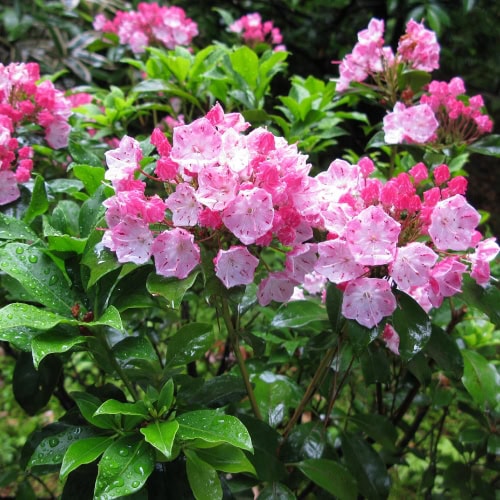
Kalmia puts out clusters of delicate, cup-shaped flowers in late spring or early summer. The colors range from pinks and whites to reds, often with eye-catching markings.
This evergreen shrub likes acidic soil and a bit of shade, so it’s right at home in woodland gardens. Just a heads up: every part of Kalmia is toxic, so maybe skip it if you’ve got curious pets or kids running around.
4) Kniphofia
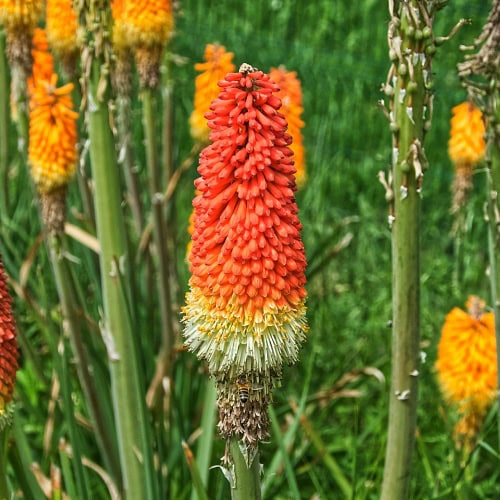
Kniphofia, better known as red hot poker or torch lily, throws up bold, vertical spikes that look like they’re on fire: reds, oranges, yellows, you name it. Hummingbirds and butterflies can’t resist.
They’re happiest in full sun and well-drained soil. Depending on the variety, you might get blooms from spring all the way into fall.
5) King Protea
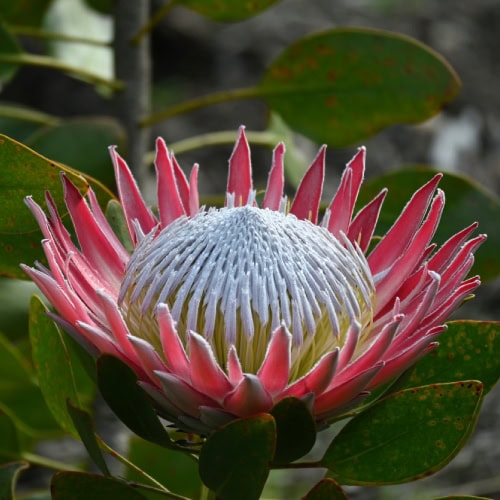
The King Protea has been South Africa’s national flower since 1976, and it’s easy to see why. This evergreen shrub stands tall, with thick stems and those unmistakable, massive blooms surrounded by colorful bracts.
It’s got a sculptural vibe, almost like a living piece of art. The King Protea brings a bold, unique look to any garden, and its symbolism of diversity and transformation is pretty cool, too.
6) Kirengeshoma palmata
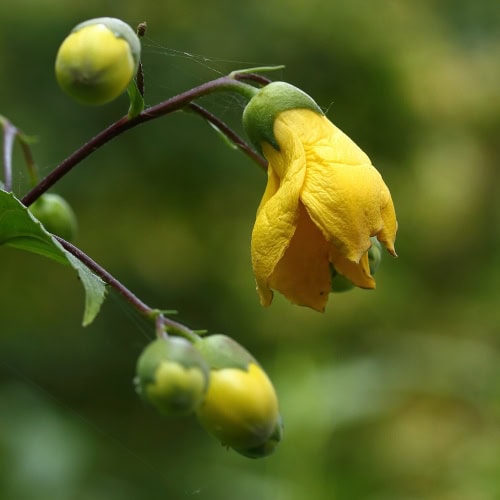
Kirengeshoma palmata, or Japanese wax flower/yellow wax bells, is a perennial from the Hydrangea family. It’s native to Japan and Korea’s mountains.
You get elegant, pale yellow, bell-shaped flowers in late summer to early fall, right when most other blooms are calling it quits. It grows 2 to 4 feet tall, with broad, hand-shaped leaves and arching stems.
Give it partial to full shade and keep the soil moist. It’s a solid pick for stretching your garden’s season.
7) Kumquat flower
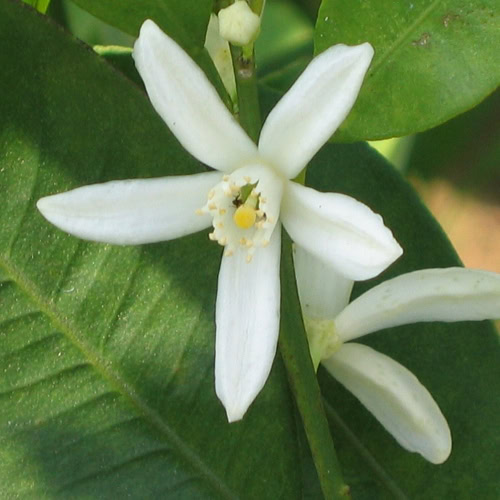
Kumquat flowers are tiny white blossoms that show up on citrus trees before the fruit sets. They’re fragrant (imagine a sweet, citrusy perfume) and draw in pollinators during spring and summer.
Each flower has five delicate petals, either solo or in little clusters. Soon enough, they’ll turn into the small, orange kumquats everyone loves. The flowers themselves add a nice ornamental touch, even if you’re just after the fruit.
8) Kerria japonica
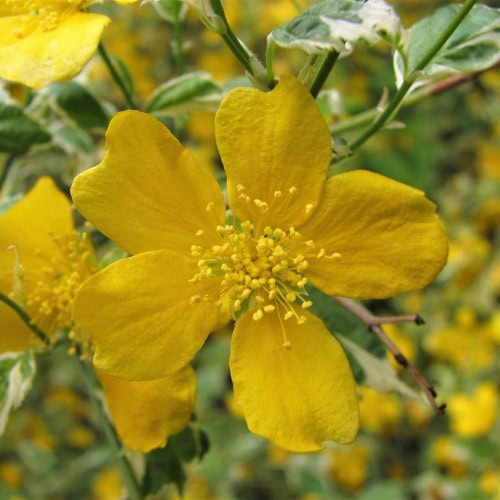
Kerria japonica is a deciduous shrub from China and Japan, and it’s part of the rose family. The bright yellow flowers show up in spring and really light up the garden.
It can get pretty tall and adapts to a range of conditions. The blooms also last well in cut arrangements; pair them with tulips or daffodils for a cheerful combo.
9) Kochia
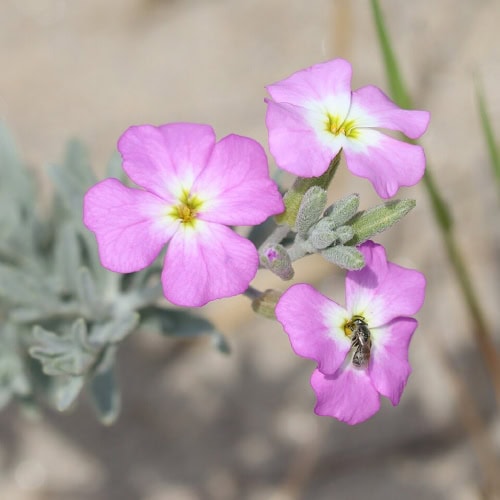
Kochia, sometimes called burning bush or summer cypress, is an annual that’s mostly grown for its fluffy, feathery foliage. The flowers? Tiny, greenish, and honestly, you might not even notice them tucked among the leaves.
It’s easy-going, but likes full sun, well-drained soil the best. If you want a low-maintenance filler or just love the texture, Kochia’s worth a shot.
10) Knautia
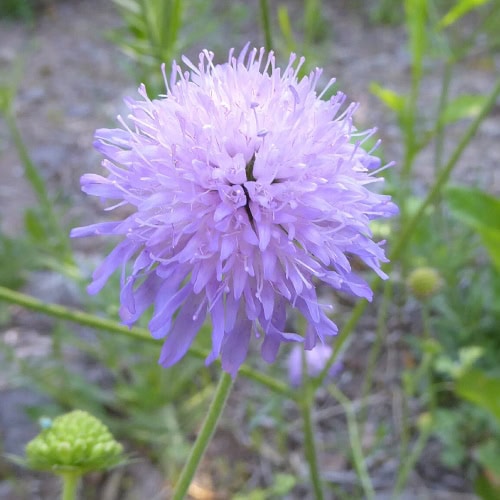
Knautia’s pincushion-like flowers come in deep crimson or purplish-red, popping up on wiry stems from summer into fall.
It’s a bee and butterfly magnet and grows to about 2 feet tall. Stick it somewhere sunny with good drainage, and you’ll get a nice splash of color and texture for borders or bouquets.
11) Kohleria
Kohleria is a tropical plant from Central and South America, known for its tubular flowers in shades of red, orange, or pink, often speckled for extra flair.
It works as a houseplant or outside in warm climates. Partial shade, well-draining soil, and moderate watering keep it happy. Even when it’s not blooming, the fuzzy leaves keep things interesting.
12) Kangaroo Paw
Kangaroo Paw is an Australian native with some of the quirkiest blooms around – tubular flowers that really do look like a kangaroo’s paw. The plant itself has long, slim green leaves.
Pollinators, especially hummingbirds, love it. The flowers come in bold reds, yellows, oranges, and pinks, making them perfect for adding color and texture to your garden or for cutting.
13) Kalimeris
Kalimeris brings out daisy-like flowers all summer and fall. It grows in neat clumps, with dark green leaves as a backdrop.
You’ll see light blue blooms packed into dense mats. It’s low-fuss, just give it sun and it’ll add a soft, cottage feel to your beds. Minimal maintenance is needed once it’s settled in.
14) Kosteletzkya
Kosteletzkya is a mallow family genus with hibiscus-like flowers. These perennials prefer marshes and wetlands, thriving where most other flowers balk.
The blooms are pink to lavender, with five petals, and they keep coming through summer and fall. Kosteletzkya virginica (seashore mallow) is a good pick for moist, sunny gardens.
These salt-tolerant plants bring in butterflies and other pollinators.
15) Kennedia
Kennedia is a group of climbing plants from Australia, known for their bold, pea-shaped flowers. These vigorous vines throw out blooms in red, coral, or scarlet, drawing in birds and insects.
They do best in warm climates with well-drained soil and sun to partial shade. In spring and summer, you’ll get a real show on trellises, fences, or even as ground cover.
16) Kerria
Kerria is a multi-stemmed, deciduous shrub that lights up shady spots with its yellow spring flowers. It’s a good choice for those tricky, low-light areas where other shrubs give up.
The blooms show up on arching stems, giving a nice cascading effect. Maintenance is a breeze, just a little pruning, and you’ll get reliable color in shady borders year after year.
17) Karpatiosorbus
Karpatiosorbus is a pretty rare group of trees and shrubs with small, white spring flowers in clusters. Pollinators are fans.
These plants come from the mountains of Central Europe, often growing in rocky, alpine places where it gets cold.
The flowers turn into little berry-like fruits later on. Karpatiosorbus species are valued for their ornamental looks and their role in native ecosystems.
18) Kumquat blossom
Kumquat blossoms show up on citrus trees before those oval fruits appear. The white flowers have a sweet, subtle scent that’s hard to miss in spring and early summer.
You can grow kumquats in pots or in the ground if you’re somewhere warm. The simple, five-petaled flowers are elegant and add a touch of charm, even if you’re after the fruit.
19) Korshinsk Peony
The Korshinsk peony is a rare perennial from Central Asia’s mountains. Its yellow flowers appear in late spring, a nice change from the usual pink or white peonies.
It’s tough and does well in well-drained soil with lots of sun. You can grow it in USDA zones 5–8, and it tops out around 18 to 24 inches when mature.
20) Kigelia africana
Kigelia africana, or the sausage tree (yep, that’s really its name), stands out in Africa thanks to its odd, sausage-shaped fruits dangling from the branches. It usually grows somewhere between 10 and 15 meters tall, with these striking bell-shaped flowers with deep maroon petals streaked with yellow veins.
The flowers dangle from long, ropey stalks and open up at night, giving off a rather funky smell that, for some reason, pollinators seem to love. This tree does well in tropical climates and might keep its leaves all year or drop them, depending on how much rain is around.