
After months of bleak winter, March finally signals a change – tiny hints of green poking through the cold earth, promising that the garden’s not dead after all.
Early spring flowers that bloom in March are like a jolt of energy as suddenly, there’s color and life, even while most of the yard still looks pretty barren. These tough plants shrug off cold soil (and the occasional stubborn patch of snow) to liven up your outdoor space.
You’ve got options: classic spring bulbs, hardy perennials, and even some shrubs that don’t seem to care if it’s still chilly. In milder zones, some flowers pop up before February’s even over, while others wait till March is in full swing. Besides being good for the soul, these early bloomers are a lifeline for bees and butterflies just waking up and looking for food.
1) Crocus
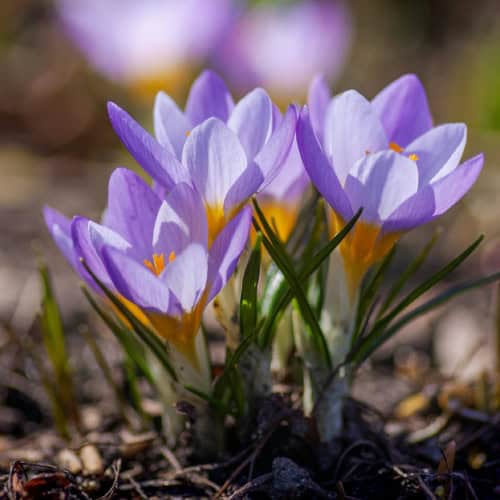
Crocuses are honestly the little show-offs of early spring, sometimes poking up right through the snow. These cup-shaped blooms come in purples, whites, yellows, and even stripes; tiny, but hard to ignore.
You can go with snow crocus for the earliest blooms, or Dutch crocus if you want something a bit bigger (but a tad later). They’re super low maintenance and tend to multiply on their own, so you’ll get more flowers every year without much fuss.
2) Snowdrops (Galanthus)
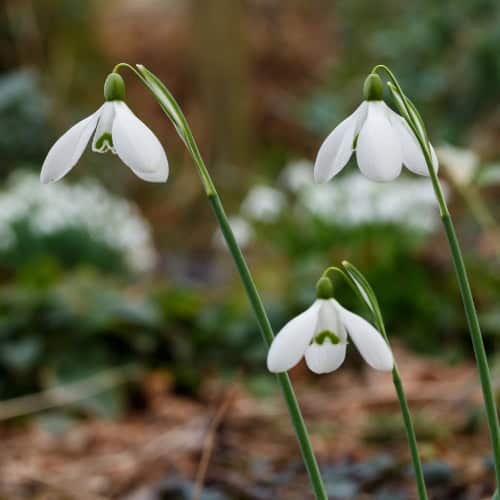
Snowdrops are usually the first to make an appearance, even when the ground’s still frozen. Their white, bell-shaped flowers with green markings look delicate, but don’t let that fool you, as they’re pretty tough.
Plant the bulbs in autumn, about 5cm apart and 5–7cm deep. They’ll do fine in sun or partial shade, as long as the soil’s moist but drains well. Once they’re happy, they’ll come back every year without much help. Oh, and they’re cold tolerant in zones 3 to 8.
3) Daffodils (Narcissus)
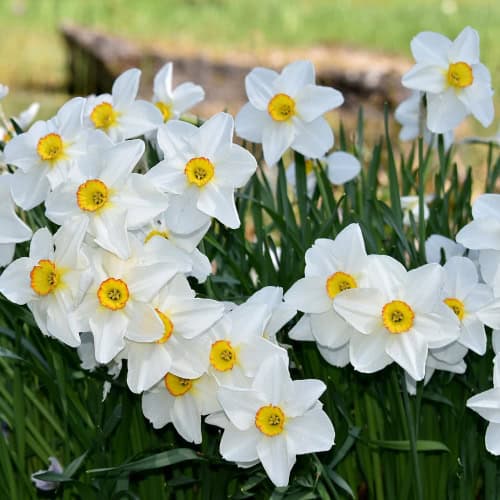
Daffodils are the old reliable of spring, popping up in yellows, whites, oranges, and even pinks. Get the bulbs in the ground in fall, around 2–4 inches deep, and you’re set.
They’re happy in USDA Zones 3 to 9 and don’t need much attention after planting. If you mix up varieties with different bloom times, you can stretch out your daffodil season and keep that color going for weeks.
4) Hellebores (Lenten Rose)
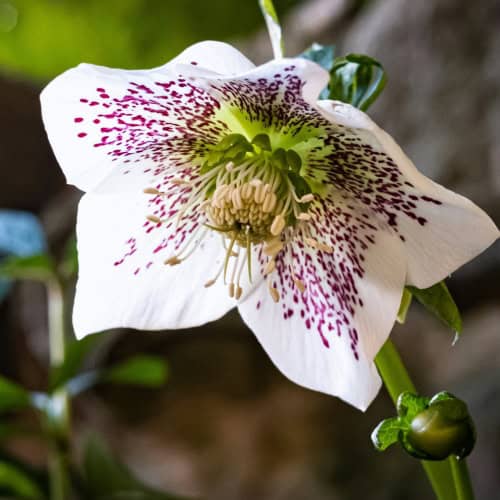
Hellebores are the rebels that bloom while everything else is still asleep, sometimes as early as February and even through snow. The flowers come in white, pink, purple, green, and nearly black and are pretty striking!
Their evergreen leaves keep things looking nice all year, and the blooms can hang around for months. Hellebores like shade and, once they settle in, don’t ask for much, making them perfect for gardeners who’d rather not fuss.
5) Primroses (Primula)
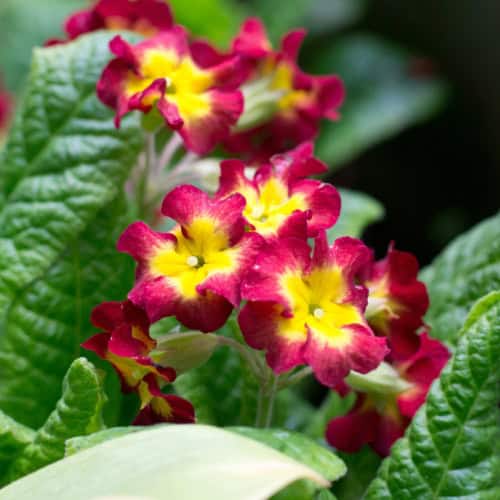
Primroses are all about brightening up those dreary early spring days. They’re low to the ground but pack a punch, with blooms in basically every color: soft pastels, bold yellows, pinks, purples, and whites.
With so many species out there, you’ll find something for just about any spot. Most primroses like a bit of shade and soil that stays moist but not soggy. They’re great for borders, containers, or woodland corners; plus, their leaves look nice even after the flowers are done.
6) Siberian Squill (Scilla siberica)

Siberian squill is all about those intense blue, nodding flowers that show up in early to mid-spring. Each bulb sends up a few stems, and each stem has a handful of blooms.
It’s one of the earliest perennials to bloom, only a few inches tall, with grass-like leaves at the base. Try planting it in woodland gardens, rock gardens, or as a groundcover for a blue carpet effect.
7) Winter Aconite (Eranthis hyemalis)
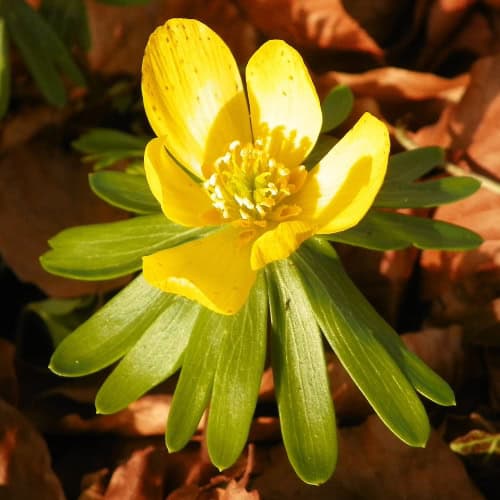
Winter aconite doesn’t waste time, as it’s often out before the crocuses. These tiny perennials have bright yellow, cup-shaped flowers with a green “collar” of leaves.
The blooms are only about an inch across and sit low to the ground, but they’re hard to miss. The foliage comes up after the flowers and is a nice rich green, divided into several lobes.
This low-maintenance plant loves woodland spots and will spread on its own once it’s happy.
8) Lungwort (Pulmonaria officinalis)

Lungwort is another early riser, blooming right alongside tulips and other spring bulbs. The flowers are tubular and bell-shaped, often pink and blue at the same time, so you get this really cool two-tone effect.
The leaves are silver-spotted and stick around for most of the season, adding a bit of sparkle to shady spots. It prefers moist, well-drained soil and usually tops out at 20 to 40 centimeters.
9) Vinca minor (Periwinkle)
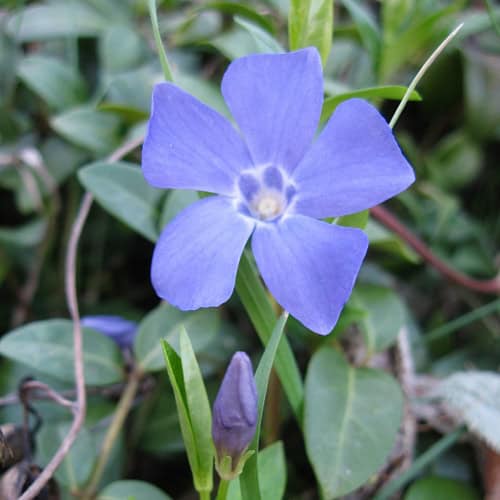
Vinca minor, or periwinkle, is a reliable groundcover with glossy green leaves that stick around all year. The blue-lavender flowers show up in early spring and keep coming on and off into fall.
These star-shaped blooms are especially good for shaded spots that need a little something. It’s low-maintenance and fills in bare patches with almost no effort.
10) Glory-of-the-Snow (Chionodoxa)
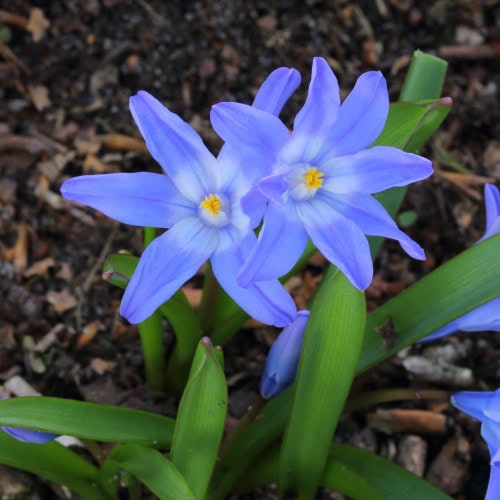
Glory-of-the-snow gets its name for a reason, as it blooms so early, you might still have snow on the ground. These little bulbs produce star-shaped flowers in blue, pink, or white, each with a white center.
Plant them in fall for a burst of color in early spring. They’re pretty easygoing about sun and soil, and work well in rock gardens, borders, or under deciduous trees.
11) Bloodroot (Sanguinaria canadensis)
Bloodroot is a native ephemeral you’ll spot in early spring woodlands across eastern North America. The white flowers have 8 to 12 petals and bright yellow centers, usually blooming March through April.
The flowers pop up on stalks about 6 to 10 inches tall, each wrapped in a unique, lobed leaf. Bloodroot thrives in shaded spots, perfect if you’re after that woodland garden vibe.
12) Pasque Flower (Pulsatilla)
Pasque flower is one of the first perennials to bloom, and it’s a real treat. Pulsatilla vulgaris produces bell-shaped purple or blue flowers with golden yellow centers, about 2 to 3 inches wide.
The blooms show up before the feathery, fern-like leaves really unfurl. One plant can crank out 30+ blossoms in early spring, offering important nectar for bees when not much else is around.
13) February Daphne (Daphne mezereum)
February Daphne is one of those shrubs you’ll notice for its scent alone, as its rosy-purple flowers with a strong fragrance appear in late winter or early spring, before the leaves.
The blooms grow right on the bare stems, making them pop even more. The shrub gets about 3 to 5 feet tall and likes partial shade and well-drained soil. After flowering, red berries show up in summer for extra interest.
14) Japanese Apricot (Prunus mume)
Japanese Apricot is a tree that puts on a show in late winter or early spring, with fragrant flowers in white, pink, or deep rose, sometimes before the leaves even show up. The scent is kind of almondy and sweet.
It can grow 15 to 30 feet tall and likes full sun and fertile, well-drained soil. Since it blooms on last year’s wood, you’ll want to prune right after flowering if you need to shape it.
15) Arabis (Rock Cress)
Arabis is a low-growing perennial that covers itself in clusters of small, four-petaled flowers in colors of white, pink, or rose between March and May.
Rock cress likes rocky or sandy soil, so it’s great for rock gardens, borders, or as groundcover. The fragrant blooms can spill over slopes and edges in a really pretty way.
Some favorites are ‘Snowcap’ for pure white and ‘Spring Charm’ for carmine-pink. Pollinators seem to love them, too.
16) Jacob’s Ladder (Polemonium caeruleum)
Jacob’s Ladder brings a touch of blue to late spring and early summer gardens. The cup-shaped flowers come in blue, purple, or white, each with a pop of yellow in the middle.
The foliage is what gives it the name; neatly arranged, fern-like leaflets stacked like a ladder. It’s happy in zones 3–8 and does best in partial shade, with barely any maintenance needed.
17) Calendula (Pot Marigold)
Calendula, or pot marigold, is a cheerful annual with daisy-like flowers in shades from pale yellow to deep orange. It usually starts blooming in late spring, but in mild climates, you might see flowers even earlier.
Give it plenty of sun and well-drained soil. The plant’s aromatic leaves and long blooming season make it a fun, easy addition to beds or containers.
18) Lungwort ‘Majeste’
Lungwort ‘Majeste’ really catches the eye with its silvery-gray leaves, each one edged with just a hint of green. If you look closely in early spring, you’ll spot clusters of pink bell-shaped flowers, and then (almost magically) they shift to blue as they age.
This semi-evergreen perennial usually tops out around a foot tall, but it’ll stretch out to cover about two feet across. It seems happiest tucked away in cool, shady spots with moist soil; think woodland nooks or those forgotten, shadowy corners of your garden that could use a little spark. If you ask me, it’s a bit of an underrated gem for shade lovers.