
Yes, your koi can learn to recognize you in the practical sense: they remember familiar people and the routines that come with them. When you walk toward the pond and a fish rises to meet you, its response reflects experience. It also leaves a fair question: does that koi know you, or does it know that someone at the pond edge means dinner?
Many pond keepers wonder whether koi fish recognize their owners or simply react to mealtime cues. The clearest clues come from watching what your koi do before food appears and how they react when someone else takes your place.
What Does Recognition Mean for Koi?
For koi, recognition means using familiar cues to anticipate what happens next. Your appearance may be part of that pattern, alongside your movements and the way you approach the pond.
Which Cues Help Koi Identify Familiar People?

Your koi can see activity above the water, including where you stand and how you move. A distinctive outline or a familiar pace may give them useful clues. If you visit the same place each day, your position at the pond edge becomes a cue, too.
Koi also respond to the activity of other fish. When one confident fish swims over, others may follow; how koi interact with one another is worth keeping in mind when you interpret a whole-pond welcome.
Social dynamics often influence koi behavior when someone approaches. Watch individual fish as well as the group, especially those that hang back before approaching.
Is It Recognition or a Learned Feeding Routine?
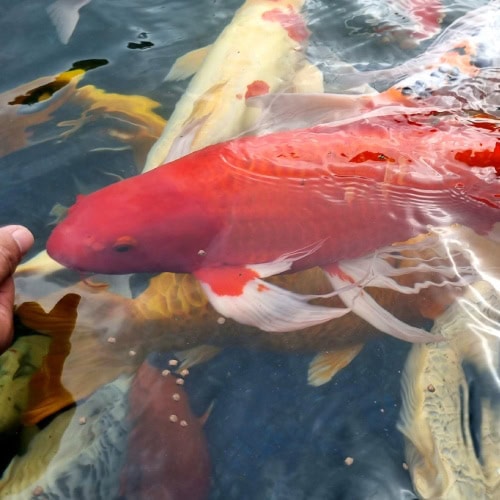
A feeding routine is one form of learning, so the two explanations overlap. If you always arrive at the same time with a food container, your koi have several reasons to gather before you toss a pellet. That response tells you they have learned the pattern; it does not isolate which cue they noticed.
A stronger sign of familiarity is a consistent response when you arrive without the usual feeding signals. Even then, keep claims about koi recognition modest. Your fish may have learned your movements, your usual spot, or a combination of cues.
What Behaviors Suggest Your Koi Know You?
Look for repeatable differences in your koi’s behavior when you and an unfamiliar visitor approach under similar conditions. A single rush to the surface is an enjoyable observation, though it gives you little basis for comparison.
Do They Approach Before Food Appears?
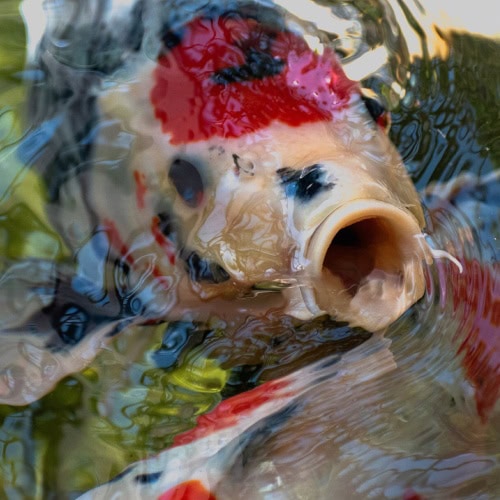
Notice when the response begins. If your koi turn toward you as you come into view, before you handle food or reach the feeding spot, they are responding to something about your arrival. If they gather only when you lift the container, the container is the clearer clue.
Watch the same fish across several ordinary visits. One may come straight to the edge while another stays deeper and joins later. Koi behavior also changes with season and pond conditions; a fish that stops greeting you while remaining lethargic or gasping needs a health check, not a recognition test. Familiarity with your koi’s normal behavior and signs of stress helps you spot that distinction.
Do They Respond Differently to Strangers?

You may see your koi hold back when a visitor walks up, then approach when you stand in the same place. This difference often suggests that koi fish recognize their owners rather than just reacting to random movement. Sudden presence or an unfamiliar person leaning over the water can also make fish wary.
For a fairer comparison, have your visitor approach calmly from the same direction while you stay out of sight. Observe at a similar time on separate days, with no food presented during either visit. Keep a note of which fish approach and how close they come; that is more useful than judging the group by its boldest member.
What Does the Research Actually Show?
Research into koi fish intelligence supports the possibility that carp can distinguish familiar visual cues. However, whether they recognize individual people remains an open question, as the most famous face-learning experiments involved other species under laboratory conditions.
Controlled studies on common carp (Cyprinus carpio) reveal strong cognitive foundations. Research by fisheries biologist Jan Beukema showed carp retain learned associations for over a year without reinforcement, proving their long-term memory capacity.
What Can Fish Learning Studies Tell Us?
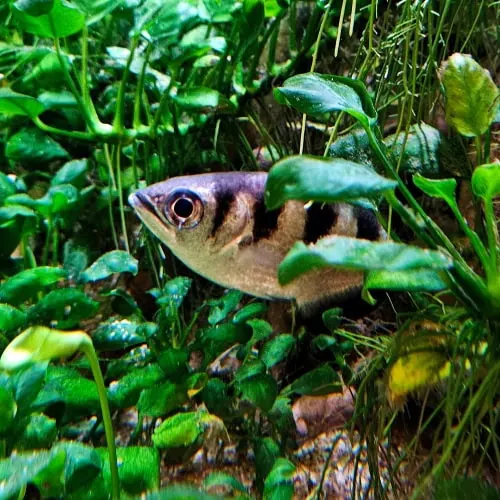
You can see why researchers take fish visual learning seriously from an experiment with archerfish. In a study of human-face discrimination in archerfish, trained fish distinguished a learned face from 44 other face images in one experiment. They also distinguished it from 18 images when color, brightness, and head-shape cues were controlled in a second experiment.
Those fish chose between images displayed on a screen and received food for correct choices. The result shows that some fish can learn a demanding visual distinction. It does not show that your koi picks your face out from other faces at the pond.
Carp also excel at multimodal sensory discrimination. In laboratory conditioning trials, carp successfully learned to distinguish between complex sensory cues, including differing acoustic rhythms and visual geometric shapes, to secure food rewards.
Discussions of koi intelligence are most useful when you keep that difference between demonstrated learning and a pond-side interpretation in view.
Can Koi Recognize Faces or Feel Affection?
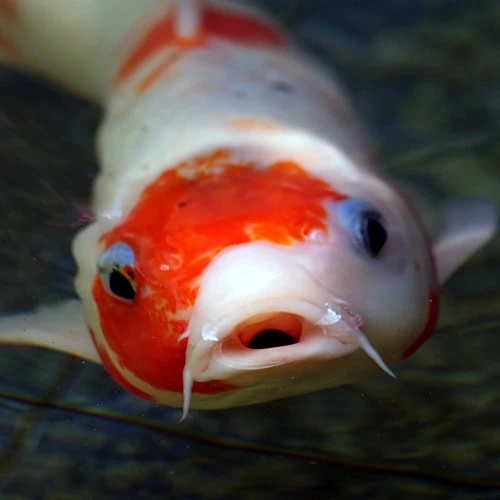
Your koi may use details of your face, but a greeting at the pond cannot tell you whether facial features are the deciding cue. Clothing, posture, movement, and location arrive together in everyday life. You would need to separate those cues to make a firm claim about face recognition.
The same restraint applies to affection. A koi that comes close or takes food from your hand is showing comfort and an expectation shaped by experience. While it feels special when koi fish recognize their owners at feeding time, you can appreciate that bond without assuming human-like feelings.
How Can You Build Familiarity with Your Koi?
Calm, consistent visits give your koi a chance to grow accustomed to you. Understanding general koi behavior makes it easier to build trust without causing unnecessary stress. Food helps establish a routine, but your quiet presence at the pond can become familiar without an added meal.
Which Consistent Interactions Help?
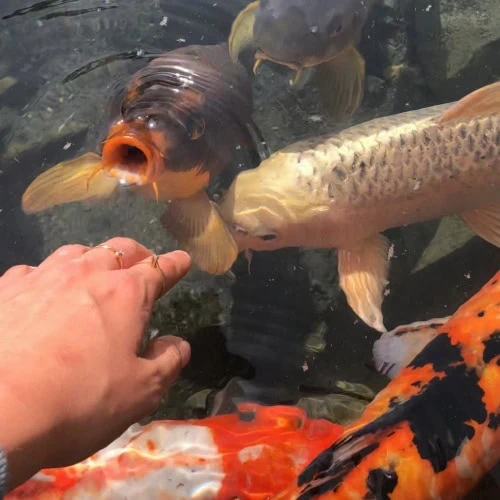
Approach at an unhurried pace and spend time near the same part of the pond. During regular meals, allow cautious fish room to come forward on their own. The gradual approach described in this koi hand-feeding guide starts with sitting nearby while the fish eat, then moving closer as they grow comfortable.
Hand-feeding is optional. If you do put a hand in the water, keep it free of lotion or other residues and let the fish choose whether to approach. Even a koi that takes food readily may dislike contact, so touching koi deserves separate thought from feeding them.
How Can You Observe Recognition Without Overfeeding?
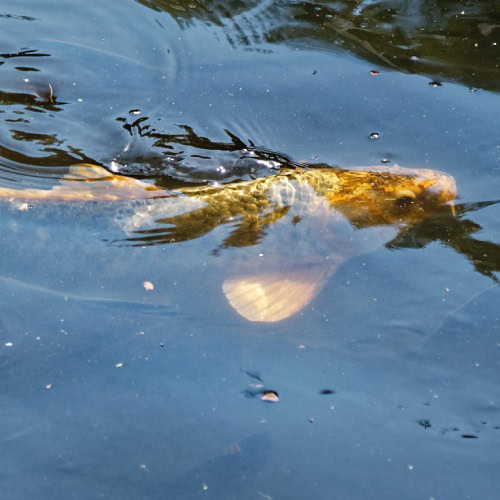
Use visits that are already part of your day. Pause at the pond before a scheduled meal, with the food out of sight, and note which fish notice you. On another day, sit nearby without feeding at all. You can compare those responses with a calm visitor’s using the same approach and position.
Keep meals on your established koi feeding routine rather than adding treats for each observation. A short note of the time, weather, fish behavior, and who approached gives you a record to revisit when seasons change or a normally eager koi stays away.
References:
- Chase (2001): Chase, A. R. “Music discriminations by carp (Cyprinus carpio).” Animal Learning & Behavior, 29(4), 336–353.
- Siebeck et al. (2010): Siebeck, U. E., Parker, A. N., Sprenger, D., Mäthger, L. M., & Wallis, G. “A species of fish that can discriminate between individuals using ultraviolet patterns on the face.” Current Biology, 20(5), 407–410.
- Newport et al. (2016): Newport, C., Wallis, G., Reshitnyk, Y., & Siebeck, U. E. “Discrimination of human faces by archerfish (Toxotes chatareus).” Scientific Reports, 6, 27523.
- Beukema (1970): Beukema, J. J. “Acquired hook-avoidance in the pike Esox lucius L. fished with artificial and natural baits.” Journal of Fish Biology, 2(2), 155–160 (see also Beukema 1969 regarding carp angling vulnerability and retention).