
Cool nights do not have to leave your water garden bare! The best fall pond plants keep their foliage, flowers, or underwater growth working as tropical plants fade, while also giving fish cover and helping you manage seasonal debris.
With the right hardy plants in place, you can carry color, structure, and better water quality from early fall into winter dormancy. Remove yellowing leaves before they sink, skim fallen tree leaves regularly, and keep plant crowns at their proper water depth as temperatures drop.
This ranking combines plants with strong cool-weather display and species worth planting in fall for a rewarding early-spring start. Your hardiness zone, pond depth, and winter ice conditions will determine which plants remain outside year-round.
Quick picks:
- Best for surface shade: Hardy Waterlily
- Best for vertical fall color: Pickerel Weed
- Best for pond-edge softness: Creeping Jenny
- Best submerged oxygenator: Hornwort
1) Hardy Waterlilies (Nymphaea)
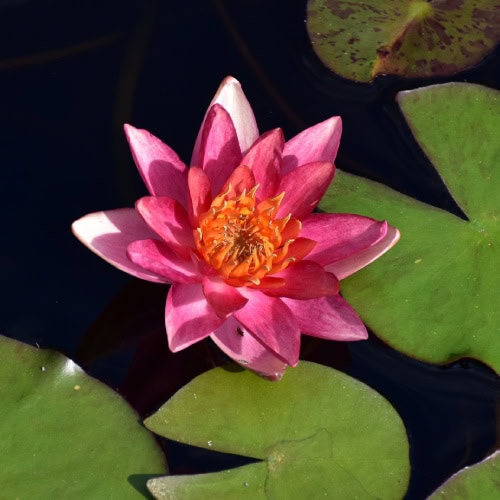
Hardy waterlilies give you floating foliage, late-season blooms, and valuable shade while autumn days remain mild. Their lily pads help shelter fish from overhead predators and reduce direct sunlight that encourages algae growth.
Choose a hardy Nymphaea variety suited to your pond size, then place its container so the crown rests at the recommended depth for that cultivar. As the water cools, flowering slows and leaves begin to yellow. Trim fading pads close to the stem before they decompose in the pond.
In cold-winter regions, move the pot to the deepest part of your pond, where the rhizome stays below the freeze line. Avoid cutting healthy green leaves too early because they continue feeding the rhizome before dormancy. You can find useful variety and placement guidance for water lilies (Nymphaea) here.
2) Pickerel Weed (Pontederia cordata)
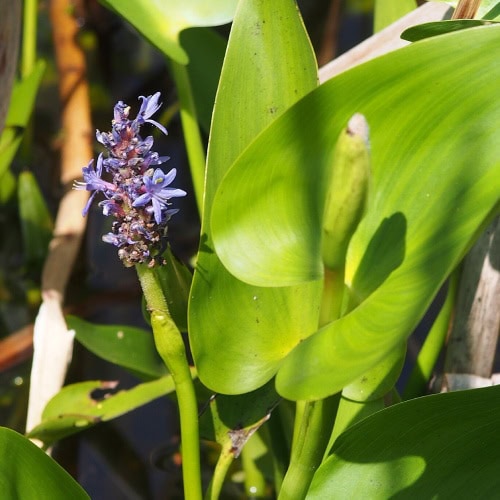
Pickerel weed keeps your pond margin upright and colorful well into the cooler part of fall. Violet-blue flower spikes rise above glossy, heart-shaped foliage, creating a strong vertical feature when summer bloomers start collapsing.
Plant Pontederia cordata in a wide aquatic basket at the shallow pond edge, with water covering the soil by a few inches. Its roots draw nutrients from the water, supporting a more balanced pond ecosystem while giving small wildlife a place to perch and hide.
After the flowers finish, leave sturdy green foliage in place until frost weakens it. Cut back soft, yellow leaves before they fall into the water. In colder zones, set the basket deeper for winter or overwinter it where its root zone will not freeze solid. Learn more about pickerelweed (Pontederia cordata) before choosing a planting depth.
3) Arrowhead (Sagittaria latifolia)
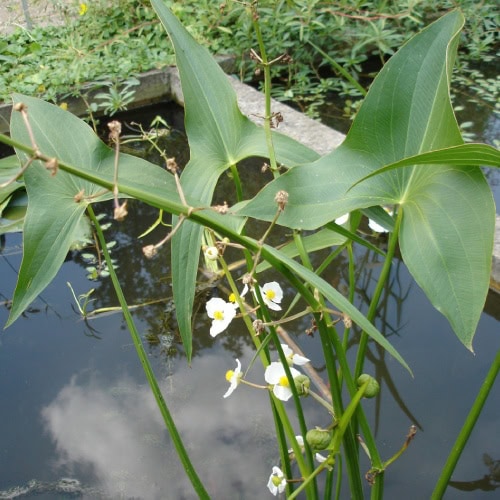
Arrowhead brings bold leaf shape and dependable shoreline structure during autumn. Its spear-like foliage stands above the water at the pond edge, where it breaks up the round forms of lily pads and trailing plants.
Common arrowhead, Sagittaria latifolia, grows best in shallow water or saturated boggy soil. Set it in a basket with the crown near the waterline, then allow room for its spreading habit. The roots help bind loose pond-edge soil, which is helpful where rain and seasonal runoff disturb the margin.
As frost approaches, arrowhead foliage dies back naturally. Remove collapsed leaves from the water and leave the tubers planted for winter. In spring, new shoots emerge from the dormant root system. Common arrowhead (Sagittaria latifolia) also suits wildlife-oriented ponds because its dense growth offers cover near the bank.
4) Sweet Flag (Acorus calamus)
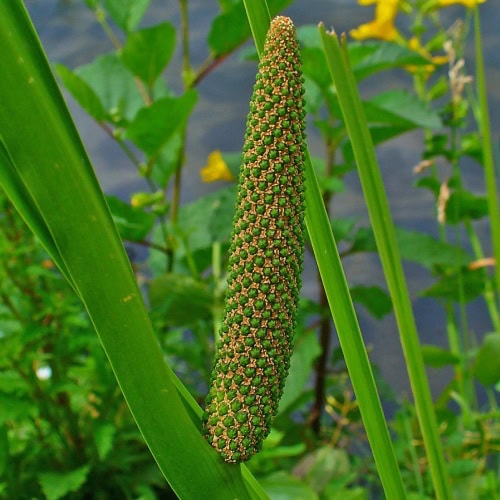
Sweet flag gives your pond a crisp, grasslike accent that holds its form after many flowering plants have faded. Its narrow leaves remain attractive through cool weather, especially variegated forms with creamy stripes.
Place Acorus in shallow water, moist soil, or a bog shelf where its roots stay consistently wet. It grows in tidy clumps, making it useful around filters, stream edges, and formal pond borders where you want reliable shape without a sprawling plant.
Comb through the foliage in fall and remove brown or torn blades near the base. Healthy leaves can remain until hard freezes arrive. Sweet flag is hardy across much of the United States, though containers benefit from being moved into deeper water where winters bring prolonged ice. Variegated sweet flag (Acorus calamus) gives you especially bright foliage against dark pond water.
5) Creeping Jenny (Lysimachia nummularia)
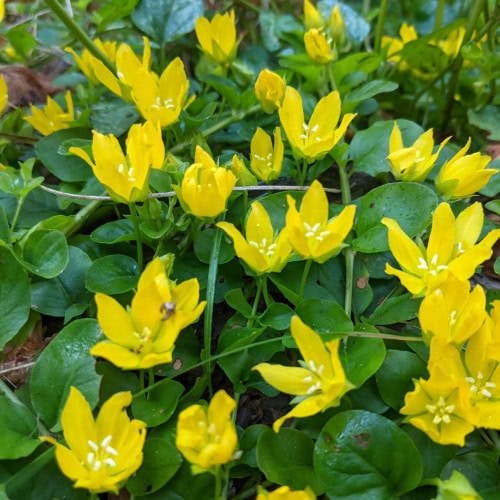
Creeping Jenny softens hard stonework with trailing foliage that turns richer gold in cool autumn weather. You can use it to blend the pond edge into surrounding beds, conceal container rims, and drape over waterfalls or low retaining stones.
Set Lysimachia nummularia in damp soil at the pond’s edge, with stems able to reach toward the water. It tolerates shallow, consistently wet conditions and roots along its spreading stems. Keep it out of the main pond basin, where loose stems can drift into skimmer openings.
Pinch back runners that cross paths with slower-growing marginal plants. Remove trapped leaves from the foliage after windy days, since wet leaf litter quickly becomes difficult to lift out. Creeping Jenny (Lysimachia nummularia) stays evergreen in mild climates and dies back neatly where winters are colder.
6) Water Hawthorn (Aponogeton distachyos)
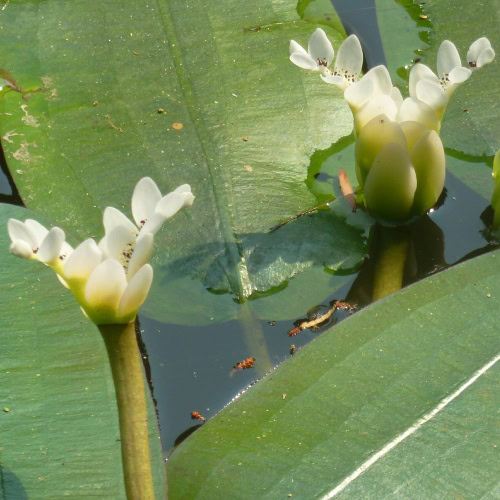
Water hawthorn is an autumn-planted aquatic that rewards you with fragrant blooms during the cool seasons. Its floating leaves and small white flowers, marked with dark centers, often appear when summer waterlilies are becoming dormant.
Plant Aponogeton distachyos in a container on the pond floor, placing it in full sun to light shade. The tuber prefers cool water and begins active growth as summer heat eases. Its floating foliage provides modest shade, while the plant’s seasonal growth fills a useful gap in the pond calendar.
Leave water hawthorn undisturbed while it is flowering. In areas with severe winter freezes, protect the tuber by placing its pot below the ice line. It enters dormancy during hot weather, so avoid discarding a quiet-looking pot in summer. Water hawthorn (Aponogeton distachyos) is especially useful when you want flowers beyond the usual summer season.
7) Marsh Marigold (Caltha palustris)
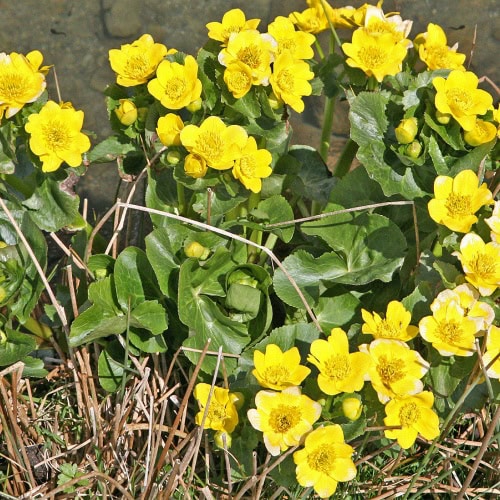
Marsh marigold establishes well in autumn and gives your pond edge bright yellow flowers early the following spring. Its rounded, rich-green leaves also provide a clean, substantial look around shallow shelves during the fall planting season.
Grow Caltha palustris in saturated soil or at the pond margin, with the crown just above water level. It fits naturally into bog gardens and damp stream edges, where its roots help hold moist soil in place. Give each plant room because mature clumps broaden over time.
Autumn planting lets roots settle while the ground remains workable. Keep the soil moist through dry spells, then allow the foliage to die back after hard frost. In regions with frozen ground, mulch the surrounding bog area lightly after the surface cools. Marsh marigold (Caltha palustris) offers its strongest display before most summer pond plants wake up.
8) Water Violet (Hottonia palustris)
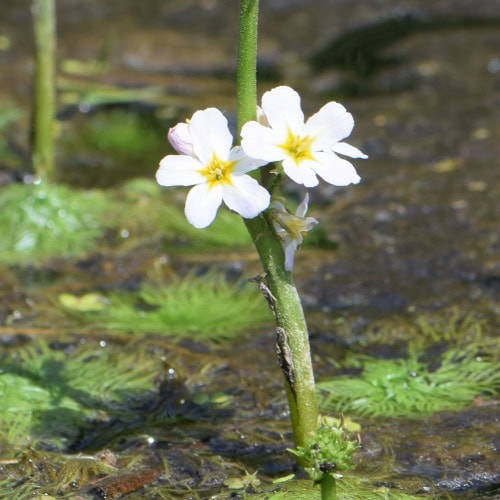
Water violet supplies delicate submerged texture and an early floral display after a fall planting. Its feathery underwater foliage creates shelter for fry and small aquatic life, while spring flower stalks rise above the surface with pale lilac blooms.
Place Hottonia palustris in calm, shallow water with fertile aquatic compost. It grows as a rooted submerged plant, so it suits quiet pond shelves and naturalistic water gardens better than turbulent waterfall pools. Clear water lets you appreciate the fine foliage beneath the surface.
Plant in early autumn while water is still warm enough for roots to settle. Keep leaf debris from collecting over its crown through fall and winter, since decomposing material reduces light and degrades water quality. Water violet (Hottonia palustris) performs best where you can give it a stable position and minimal disturbance.
9) Dwarf Cattail (Typha minima)
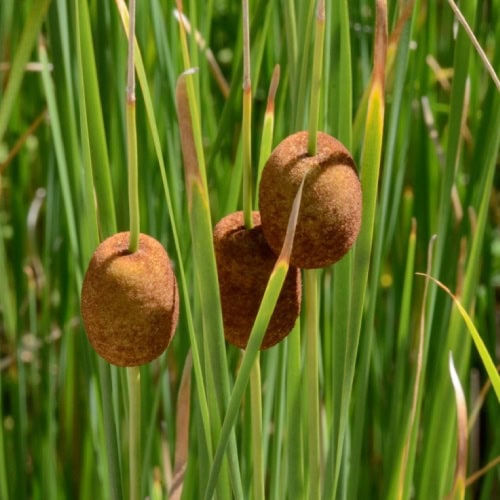
Dwarf cattail provides the familiar upright form of a cattail without overwhelming a modest backyard pond. Its narrow leaves create a useful screen at the margin, and dense root growth offers cover for fish and beneficial insects.
Plant dwarf cattail in a heavy aquatic basket on a shallow shelf. Keep the crown in a few inches of water, then monitor its spread each year. Even compact cattails expand through rhizomes, so dividing clumps prevents them from crowding neighboring marginals.
Leave green foliage standing through early fall because it adds height after flowers fade elsewhere. Once frost browns the leaves, cut them above the waterline and remove the cut material from the pond. A basketed planting keeps maintenance manageable and prevents the plant from taking over a small water garden.
10) Hornwort (Ceratophyllum demersum)
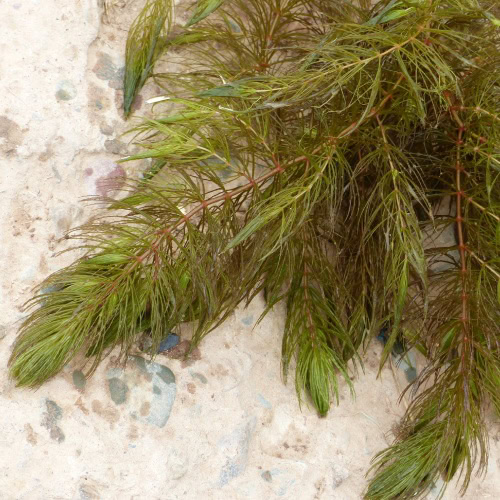
Hornwort supports autumn water quality by growing beneath the surface and releasing oxygen during daylight. Its bushy, needle-like stems give young fish and tadpoles valuable cover while helping absorb nutrients that would otherwise feed algae.
Weight a small bunch of Ceratophyllum demersum and place it in a calm area of the pond, or allow it to float freely away from the skimmer intake. It has no true roots, which makes seasonal thinning easy. Lift out excess growth before it forms a dense surface mat.
As water temperatures decline, hornwort growth slows and some stems sink toward the pond bottom. Leave healthy submerged growth in place through winter, especially in deeper ponds where it remains protected below ice. Remove browned fragments promptly so they do not add to the autumn debris load.