
Autumn puts your pond’s biological filter under pressure just as falling leaves and dying plant growth add more waste to the water. Fish also respond to cooling temperatures, so a reading that looked manageable in late summer deserves a fresh look before winter.
Your priority is to test ammonia, nitrite, nitrate, pH, KH, temperature, and dissolved oxygen, then act on changes before cold water slows filtration and fish recovery. This guide should help you spot a developing problem while a water change, debris removal, and steady aeration still have time to help.
Collect water from 6 to 12 inches below the surface, away from waterfalls, skimmers, and return jets. I prefer testing at a similar time of day, especially when you are tracking pH or oxygen, because consistent sampling makes shifts easier to identify.
Which Pond Water Tests Matter Most in Autumn?
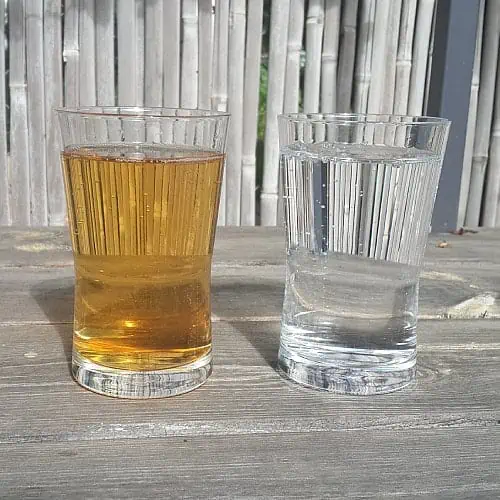
Your autumn test priority is ammonia and nitrite first, followed by nitrate, pH, KH, temperature, and dissolved oxygen. These readings show whether decaying debris, reduced filter performance, or low oxygen is placing fish under stress.
Use a liquid kit for the clearest results on ammonia, nitrite, pH, and KH. A reliable pond water test kit gives you a baseline to compare after storms, heavy leaf fall, filter cleaning, or a sudden change in fish behavior.
How to Test Ammonia, Nitrite, and Nitrate
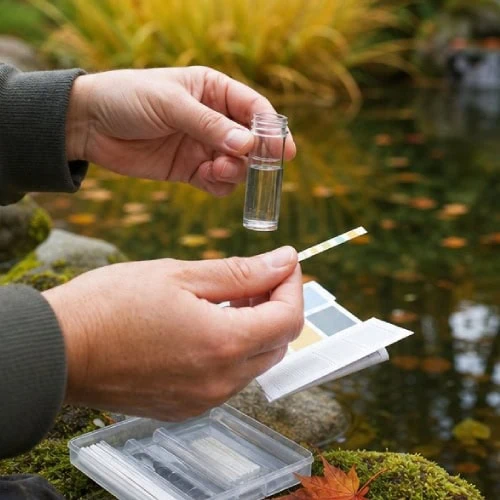
Test ammonia, nitrite, and nitrate from the same water sample, following the reagent bottle timing exactly. Shake liquid test bottles as directed, fill the tube to its marked line, and read the color against the chart in natural daylight.
Aim for zero ammonia and zero nitrite. Ammonia above 0.1 mg/L deserves prompt attention, while nitrite approaching 0.25 mg/L places added strain on fish gills and oxygen transport.
Nitrate is less immediately toxic, though a rising result points to excess fish waste, decomposing leaves, or plant material. Keep nitrate below about 40 mg/L when possible, especially if your pond has recurring algae or murky water.
What pH, KH, and GH Readings Tell You
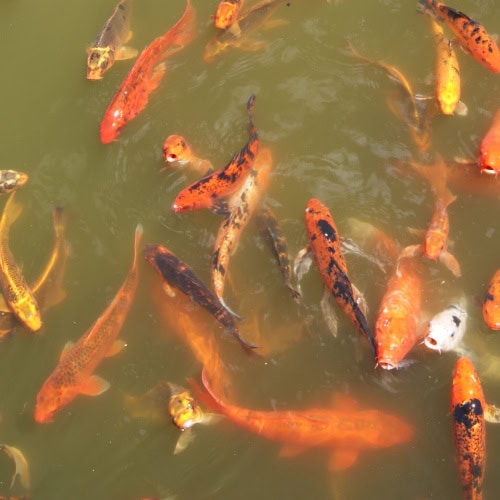
Zul32, CC BY-SA 4.0, via Wikimedia Commons
A stable pH between 6.5 and 8.5 supports most koi and goldfish ponds. Check pH at the same time of day when comparing results, since algae and submerged plants raise pH during daylight and respiration lowers it overnight.
KH, also called carbonate hardness or alkalinity, measures your water’s buffering capacity. A KH reading around 50 to 120 mg/L helps resist abrupt pH movement and supports the bacteria that process fish waste.
GH measures calcium and magnesium hardness. Your fish benefit most from a stable GH value, and a reading around 60 to 180 mg/L suits many ornamental ponds. Large swings deserve attention, especially after repeated rain or substantial water changes.
When to Check Temperature and Dissolved Oxygen

- Remote wired probe can read temperature up to 3.3 feet away
- Temperature range: -58°F~ +199°F
- Designed to be embedded or can be surface mounted
Check temperature whenever you adjust feeding, observe sluggish fish, or see a rapid weather shift. Cooling water slows fish metabolism and the bacteria in your filter, so feeding should follow water temperature and fish activity.
Use a thermometer at mid-depth, away from direct sun. Our pond water temperature guide can help you align seasonal feeding and equipment decisions with the conditions your fish experience.
Test dissolved oxygen early in the morning if fish seem stressed. Oxygen reaches its daily low point near dawn after fish, plants, algae, and bacteria have used oxygen overnight. Keep dissolved oxygen at 5 mg/L or higher; readings below 3 mg/L require immediate aeration and removal of decaying debris.
How Often Should You Test Pond Water in Fall?

- Contains one (1) API POND MASTER TEST KIT Pond Water Test Kit 500-Test, including 6 bottles of testing solution, 3 color cards and 4 test...
- Helps monitor water quality and prevent invisible water problems that can be harmful to fish
- Measures ornamental pond pH balance, Ammonia content, Nitrite levels and Phosphate content
Test weekly through active leaf fall and after any major weather event. This schedule catches changes before leaf litter settles into the pond bottom or clogs a skimmer basket.
Test every two to three days when ammonia or nitrite appears, when fish are crowded near a waterfall, or after you clean filter media. Retest several hours after a partial water change to confirm that the reading is moving in the right direction.
Once water temperatures stay consistently cool, leaves are cleared, and results remain stable, testing every two weeks is practical. Keep a dated log of readings, water temperature, rainfall, filter flow, and feeding changes.
What Autumn Test Results Mean for Your Pond
Autumn readings reveal whether your pond is processing seasonal waste fast enough for the fish load and water temperature. The useful response is usually physical maintenance first: remove debris, restore filter flow, increase aeration, and use measured partial water changes.
Why Falling Leaves Can Trigger Water-Quality Problems
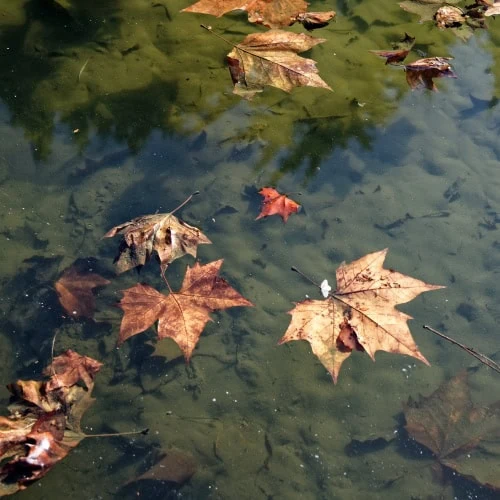
Falling leaves release organic waste as they soften and break apart. That decay uses oxygen, produces ammonia, and adds nutrients that encourage algae when water warms again.
Net leaves before they sink, empty skimmer baskets frequently, and trim yellowing marginal plants before they collapse into the water. Check the bottom around shelves and plant baskets, where wet leaf mats collect out of sight.
A pond net is especially valuable beneath nearby decididuous trees. If your pond includes wildlife habitat, leave a small area of natural cover outside the water while keeping the pond itself clear, as described in our wildlife pond maintenance guide.
What to Do When Ammonia or Nitrite Rises
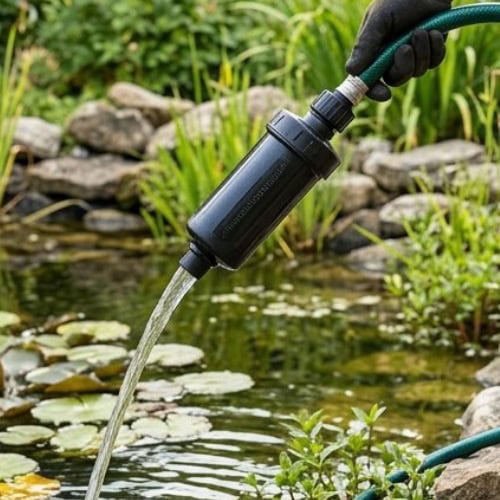
Any measurable ammonia or nitrite calls for action the same day. Stop feeding for 24 to 48 hours, remove decaying debris, check that water is moving through the filter, and add aeration.
Perform a partial water change with dechlorinated water that is close to pond temperature. See our koi pond water change guide to help you avoid sudden temperature or pH shifts while reducing diluted waste.
Avoid replacing all filter media at once. Preserve established biological media, rinse mechanical pads in removed pond water, and restore strong flow through the filter. Retest daily until ammonia and nitrite return to zero.
How to Respond to High Nitrate or Unstable pH
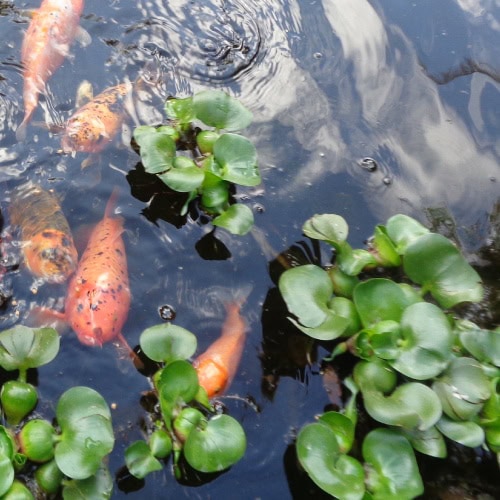
High nitrate signals that nutrients are entering or accumulating faster than plants, water changes, and filtration remove them. Remove leaf litter and excess sludge, reduce feeding, and make several modest water changes over several days.
A pH that shifts more than about 0.5 units between morning and evening points to weak KH or heavy algae activity. Test KH before adjusting pH. Raise low KH gradually with an appropriate buffer, following the product rate for your pond volume, then retest after each adjustment.
Healthy plant coverage helps use nitrate during the growing season. Remove dead foliage promptly, since decaying plants return stored nutrients to the pond water.
When Fish Behavior Signals an Urgent Problem
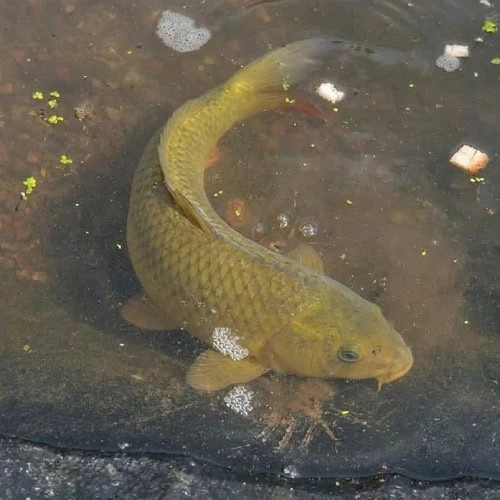
Fish behavior becomes urgent when you see gasping at the surface near dawn, fish gathering at a waterfall outlet, rapid gill movement, loss of balance, or sudden listlessness. Treat these signs as a water-quality concern until testing shows otherwise.
Add vigorous aeration immediately and confirm that pumps, waterfalls, and air stones are operating. Test dissolved oxygen, ammonia, nitrite, pH, and temperature. Remove visible debris, pause feeding, and complete a temperature-matched partial water change if ammonia or nitrite is present.
If several fish show severe distress, keep the pond aerated continuously while you retest. Avoid adding multiple treatments at once, because unstable water chemistry adds further fish stress.
How to Protect Water Quality Before Winter

- laguna-water-garden-powerheat-de-icer-1
- BC952217
- Laguna Water Garden
Protect winter water quality by entering cold weather with low debris, stable KH, zero ammonia and nitrite, and dependable circulation. Clean skimmers, check pump intake screens, and confirm that your aeration equipment runs before the first hard freeze.
Reduce food as temperatures fall and fish become less active. Uneaten food becomes ammonia, while smaller meals match the slower digestion and reduced biological filtration that accompany cold water.
Prepare winter equipment before ice forms, especially if you keep koi or goldfish outdoors. Continue checking water after heavy leaf fall, then test again before sustained freezing weather arrives.
Our dedicated koi pond winter care guide will provide you more info to on how to care for your pond and fish throughout the entire winter season.