
Shady corners in your yard don’t have to be dull or empty. There are actually plenty of shade loving perennials that love low-light spots, bringing real color and life to places where sun-worshipping plants just fizzle out. These shade tolerant perennial flowers return every year, so you won’t be stuck replanting all the time.
Knowing which perennial flowers for shade to pick lets you turn even the gloomiest patches into something lively. Whether you’re into dainty blooms or bold leaves, perennials that thrive in shade give you all sorts of options for your outdoor perennials. If you have a north-facing wall or a spot under a dense tree, finding plants that grow in full shade can help you realize your shady perennial garden ideas.
Here’s a look at twenty tried-and-true shade flowers perennial options that excel in low light. Some you’ll know, and a few might surprise you. You’ll find picks for everything from groundcovers to taller plants, each with its own personality, ensuring those dim spots become real showstoppers.
1) Hosta
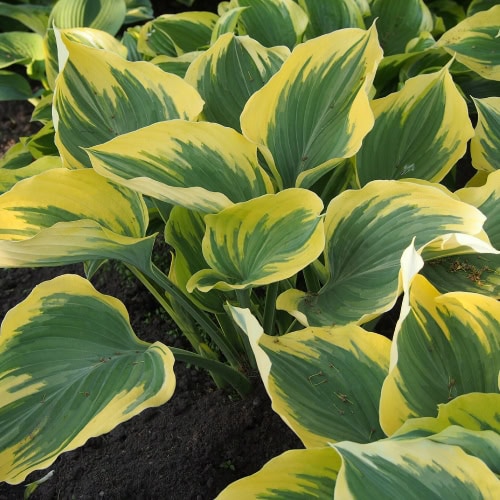
Hostas are the classic shade-loving perennials, famous for their big, lush leaves. They’re happy under trees or anywhere the sun’s a stranger.
There are tiny hostas and giants that sprawl up to 30 inches wide. You’ll spot leaves in white, gold, lime, or deep blue-green, sometimes all on one leaf thanks to their wild variegation.
They also send up pretty flower spikes, usually white or purple, that float above the foliage for a little extra flair.
2) Astilbe
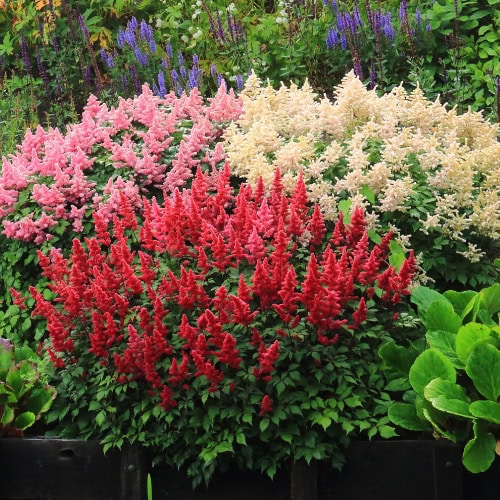
Astilbe is a real workhorse for shady beds, with its feathery plumes that pop up with almost no fuss. The ferny leaves come in greens and bronzes, so even after the blooms are done, there’s still something to look at.
You’ll get flowers in white, pink, purple, or red, standing above the foliage. Astilbe likes partial to full shade and does best in well-drained soil. It’s pretty much pest-proof and spreads slowly underground.
3) Woodland Phlox (Phlox divaricata)
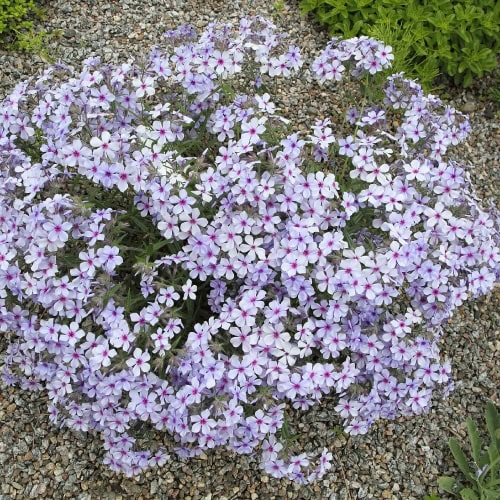
Woodland phlox is one of those plants that just feels like spring in the forest. Also called Wild Blue Phlox, it forms a low-growing carpet of fragrant, lavender-blue or pale violet flowers that really pop against the spring green.
It’s a North American native that’s perfect for naturalizing in a woodland setting or a shady corner of your yard where you want a bit of a “wild” look.
It usually stays around 12 inches tall and spreads gently to fill in gaps without being aggressive. It’s happiest in partial to full shade and loves soil that stays consistently moist. Butterflies and early-season bees absolutely love the nectar, and the sweet, delicate scent is a nice bonus when you’re walking past it in the garden.
4) Wild Bleeding Heart (Dicentra eximia)
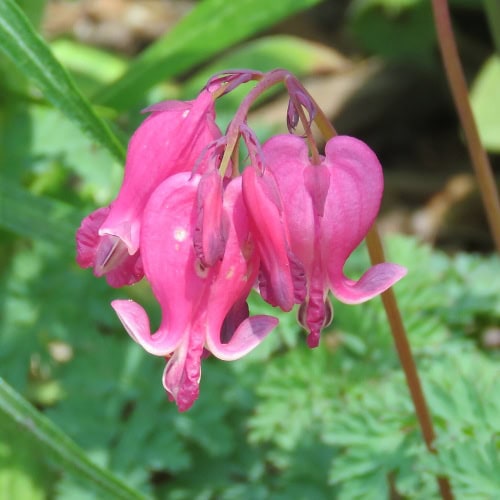
Wild bleeding heart is a fantastic native alternative to the common garden variety. While the more famous Asian version usually goes dormant and disappears as soon as the summer heat hits, this North American native has beautiful, fern-like foliage that stays lush and green all season.
It produces clusters of nodding, pink, heart-shaped flowers that can actually keep blooming off and on all summer long if it’s kept in a cool, moist spot.
It’s a bit more delicate-looking than its cousin, usually reaching about 12 to 18 inches tall, and it’s perfectly suited for those shady, damp spots under trees or along a north-facing wall. It’s a great way to keep that classic, romantic “bleeding heart” look in your garden for months instead of just a few weeks.
5) Lungwort (Pulmonaria)
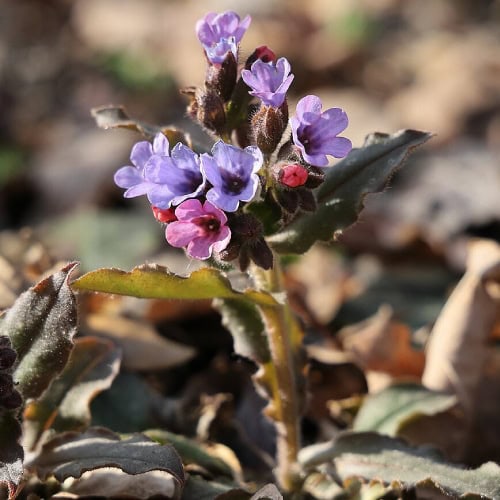
Lungwort is one of the first to bloom in spring, with flowers that magically change from pink to blue. The leaves are just as cool, with spotted silver, and they stay nice all season.
This hardy perennial does well in zones 3–8 and likes its soil moist but not soggy, in partial to full shade. It’s not too tall (8–15 inches), but it spreads out nicely, so it’s great for borders or as a groundcover.
6) Foamflower (Tiarella)
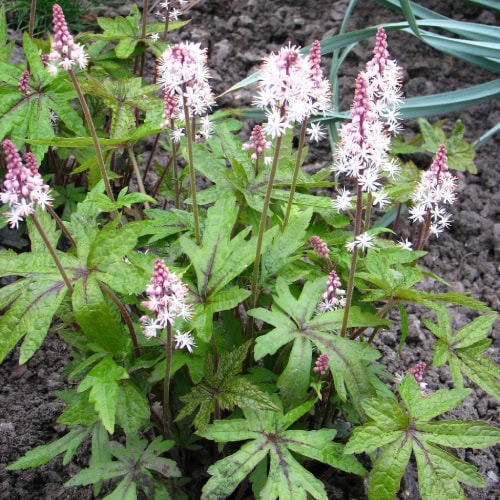
Foamflower is right at home in shady borders and woodland gardens. It puts out clouds of white or pink blooms on thin stems in mid to late spring.
This little plant stays compact (6–12 inches tall), but it spreads out to fill a space. The leaves often have burgundy centers and look good for months.
It’s fine with acidic soil and doesn’t need much fussing over. Deer leave it alone, and pollinators seem to like it.
7) Japanese Forest Grass (Hakonechloa)
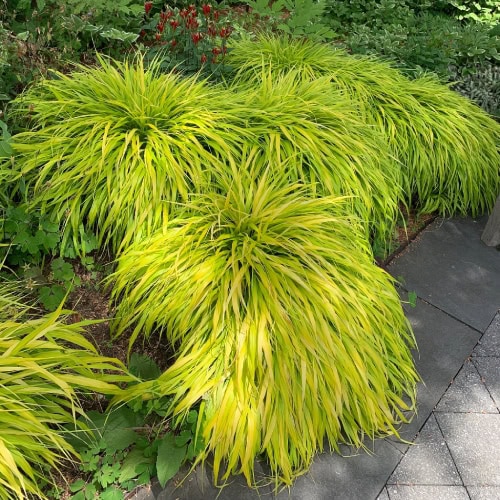
Japanese Forest Grass is all about movement and texture, with arching, graceful leaves that spill over the edge of beds or containers.
You can go for bright green types or the ‘Aureola’ variety with golden and green striped leaves. When fall hits, the foliage can turn pinkish or red.
This grass loves moisture and doesn’t need much care once it’s going. The bamboo-y vibe is a nice touch in shaded spots.
8) Virginia Bluebells (Mertensia virginica)
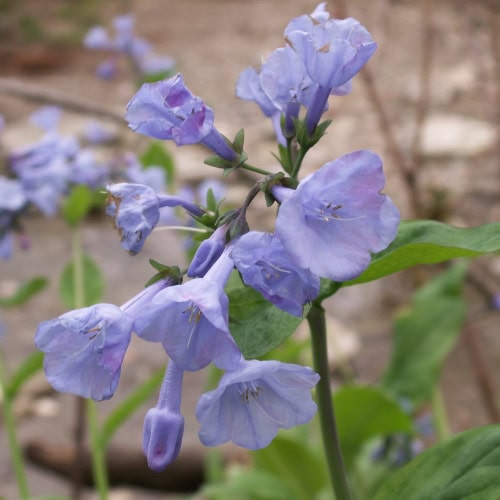
Virginia bluebells bring a burst of color in early spring, opening pink buds that turn into sky blue trumpet-shaped flowers. They grow about 1–2 feet tall and spread by rhizomes in rich, moist soil.
These are ephemeral, meaning after flowering, the foliage disappears until next year. Pair them with hostas or ferns to cover the gap. They’re low-maintenance and pollinator-friendly, too.
9) Heuchera (Coral Bells)
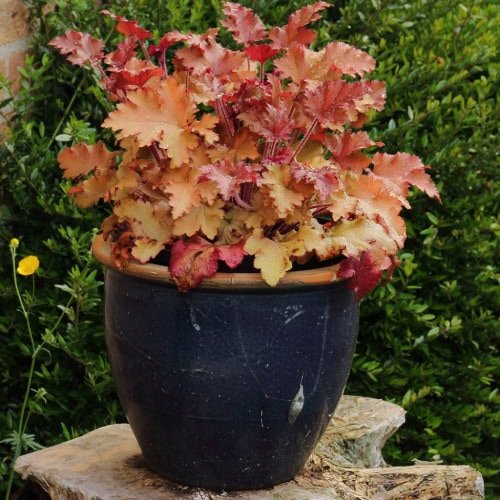
Heuchera, or coral bells, is a plant known for its stunning foliage. You’ll find leaves in deep purples, lime greens, and everything in between. They’re great in bright shade, either in beds or containers.
The plants send up delicate little bells on thin stems, but honestly, it’s the leaves that steal the show. They like moist, fertile soil and usually stay under 16 inches tall, spreading out to about 20 inches.
10) Deadnettle (Lamium)
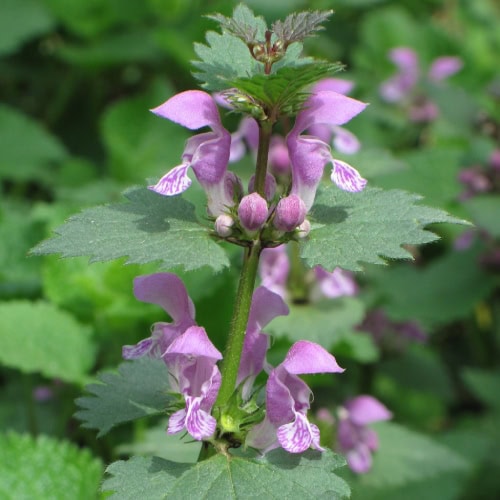
Deadnettle is a groundcover that really brightens up shady spots with its silver-patterned leaves.
It blooms in white, pink, or purple from spring into early summer, and spreads gently without taking over.
Lamium maculatum handles different soils, shrugs off deer, and keeps looking interesting even when it’s not in flower.
11) Toad Lily (Tricyrtis)
Toad lily is a bit of an oddball, but in a good way. It puts out exotic, orchid-like blooms covered in purple, pink, or white spots – really detailed if you look close. It’s from Asia and does best in shade where lots of other perennials just won’t flower.
It blooms late in the season, usually from late summer into fall. Toad lilies like moist, well-drained soil and prefer spots out of direct sun.
There are a bunch of species, most native to places like Japan and China, often growing along streams or rocky spots.
12) Jack-in-the-Pulpit (Arisaema)
Jack-in-the-Pulpit (Arisaema triphyllum) is a real conversation starter, with its hooded flower that looks like something out of a fairy tale. It’s native to North America and likes moist, shady spots, especially in woodland gardens.
The plant tops out at 1–2 feet and shows off its unique spathe in spring. By fall, you’ll see clusters of bright red berries. It plays well with hostas and ferns.
13) Sweet Woodruff (Galium odoratum)
Sweet woodruff forms a soft green carpet in shade, growing 8–12 inches tall. The leaves are arranged in whorls, giving it a tidy look.
Late spring brings a flush of tiny white flowers. If you dry the leaves, they smell like vanilla!
It spreads willingly in moist, well-drained soil, and is especially happy under trees.
14) Jacob’s Ladder (Polemonium caeruleum)
Jacob’s Ladder is right at home in shady spots, with its blue, cup-shaped flowers and neat, ladder-like leaves.
It grows 18–24 inches tall and wide, forming tidy clumps. Hardy in zones 3–8, it likes cool temps and well-drained soil, and it’s best kept away from harsh afternoon sun.
15) Brunnera (Siberian Bugloss)
Brunnera macrophylla is known for its delicate blue flowers, which look a lot like forget-me-nots in spring. The heart-shaped leaves stick around all season and make great groundcover.
It’s happy in partial to full shade, especially in woodland beds, and doesn’t need much care once it’s settled. Cooler climates suit it best, and it’s a reliable way to add color to shady borders.
16) Columbine (Aquilegia)
Columbine brings a touch of whimsy with its nodding, spurred flowers from late spring into early summer. Hummingbirds and bees can’t seem to resist them.
It does well in partial to full shade, so it’s great for woodland gardens or borders. The mound-forming foliage stays nice even after the flowers are gone.
Columbine self-sows pretty easily, so you’ll probably see new plants pop up each year.
17) Lady Fern (Athyrium filix-femina)
Lady Fern has those classic, lacy fronds that brighten up any shady spot. The fronds can get 2–3 feet tall and look especially good in moist soil, though it’s fairly adaptable.
It’s deer-resistant and doesn’t need much maintenance. The clumps work well along streams, in woodland gardens, or tucked into shaded borders.
18) Wild Ginger (Asarum canadense)
Wild ginger is a solid choice for groundcover in deep shade, with big, heart-shaped leaves that can be up to 6 inches across. It spreads slowly by rhizomes and likes rich, moist soil.
The flowers are small and purplish-brown, usually hiding under the leaves in spring. Flies and beetles handle pollination, but you might not even notice the blooms.
It’s handy for stabilizing slopes and works well in woodland gardens.
19) Foxglove (Digitalis)
Foxglove puts on a show with its tall spikes of bell-shaped blooms in colors of pink, purple, white, cream, or yellow. While some are biennial, a lot of new varieties are perennial and return each year.
They’re great for woodland edges or anywhere with partial shade and moist, well-drained soil. The tubular flowers attract hummingbirds and bees, and deer usually leave them alone.
20) Hellebore (Helleborus)
Hellebores are those shade-loving perennials that somehow manage to bloom in winter and early spring, just when you think nothing else will show up. Their flowers stick around for weeks and come in all sorts of shades: white, chartreuse, pink, and even deep purple.
You can try growing hellebores in zones 3 through 8, though it depends a bit on which variety you pick. They’re happiest in well-draining soil that’s loaded with organic matter. Oh, and the evergreen foliage? It keeps your garden from looking totally bare all year.